Arco: The Time-Traveling Animation That's Rewriting How We Talk About Climate Change

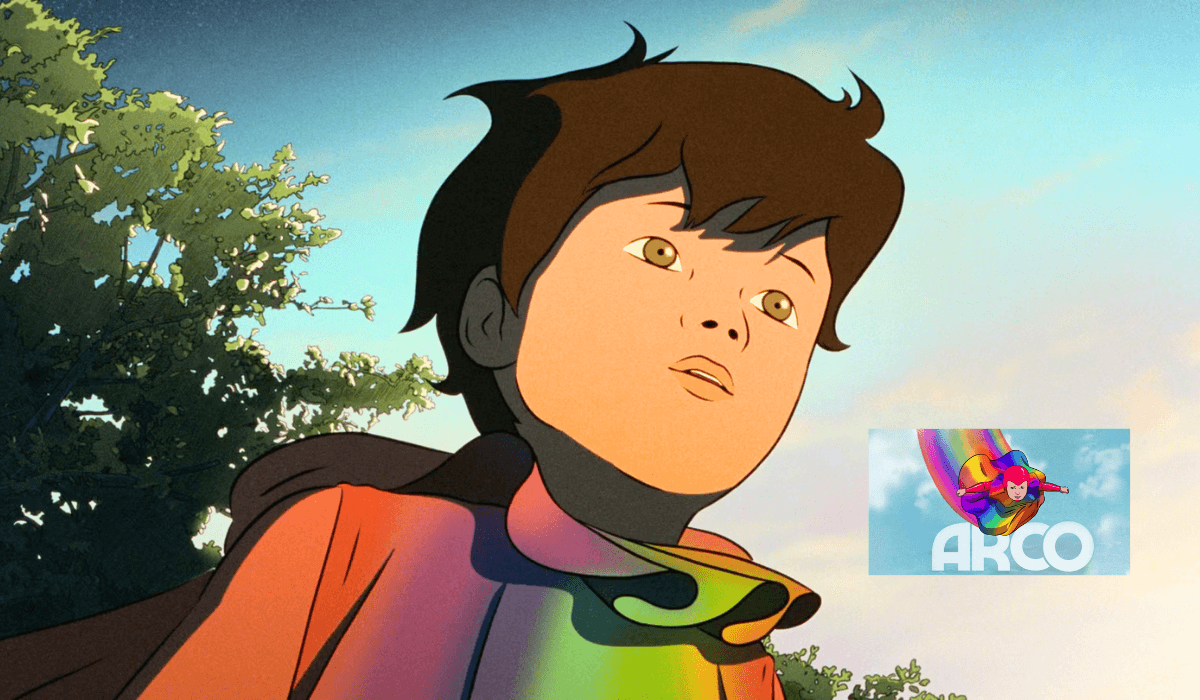
French illustrator Ugo Bienvenu didn't set out to make another depressing climate film. Instead, his debut feature imagines two distinct futures, where imagination becomes humanity's most powerful survival tool.
The animated film, backed by producer Natalie Portman, arrives in select U.S. theaters on January 23, 2026, before expanding nationwide on January 30. After winning the Cristal Award at the prestigious Annecy International Animation Film Festival and earning nominations at the Golden Globes and Critics Choice Awards, this hand-drawn odyssey is reshaping conversations around environmental storytelling.
Two Futures, One Message
Bienvenu constructs parallel worlds that feel eerily plausible. In the year 2932, humanity lives on sky platforms among clouds and gardens while Earth heals below. Time travel has become routine, allowing people to study the past and avoid repeating catastrophic mistakes.
The present day of 2075 tells a darker story. Ten-year-old Iris lives in a world where protective dome shields activate during wildfires and extreme storms. Robot nannies raise children while parents work remotely through holograms. Grocery stores run empty during climate emergencies. Technology has advanced, but nature continues its violent protest against decades of human neglect.
Young Arco, eager to experience time travel before reaching the permitted age of twelve, steals his sister's rainbow cape and attempts to visit the dinosaur era. He miscalculates badly, crash landing in 2075 instead. What follows isn't just a journey home but a friendship that illuminates how creativity and connection can outweigh despair.
Why Animation Matters for This Story
Bienvenu chose animation deliberately. The medium allows audiences to return to stories throughout their lives, from childhood through adulthood. Animated films become cultural touchstones, passed down through generations with their messages intact.
His visual approach blends influences from Hayao Miyazaki, Jean-Claude Mézières, and his own international upbringing across Paris, Los Angeles, Mexico, Guatemala, Chad, and China. The result feels both familiar and startlingly original. Bold color palettes define each era, while hand-drawn textures give the film an intimate, handcrafted quality rarely seen in contemporary animation.
The 2075 sequences mirror our present reality uncomfortably well. Emergency drills interrupt daily life. Weather patterns shift without warning. Families struggle to maintain connection amid technological conveniences that promise togetherness but deliver isolation. Bienvenu frames these details without heavy-handed commentary, trusting viewers to recognize their own world reflected back.
The Film's Core Philosophy
During the COVID-19 pandemic, Bienvenu felt overwhelmed by negativity. He drew a simple image of a rainbow transforming into a person, then shared it with his production partner Félix de Givry. That sketch evolved into the film's central premise: what if rainbows were actually time travelers?
The optimism embedded in that question drives the entire narrative. Rather than presenting climate disaster as inevitable, Bienvenu argues that knowing the future strips away agency in the present. If you believe outcomes are predetermined, why bother trying to change anything?
This philosophy resonates through Arco's journey. When Iris attempts to follow him to the future, he stops her. "No one should know the future, ever," he insists. The statement carries weight beyond its simplicity. It reframes environmental action not as preventing a known doom but as actively creating possibilities that don't yet exist.
Portman's Creative Partnership
Natalie Portman came aboard as producer after seeing early animatics. The project aligned with her environmental advocacy and longtime vegan lifestyle, but she connected with something deeper: the film's refusal to traffic in despair.
Portman and her producing partner Sophie Mas provided more than financial backing. They protected the creative vision during production, ensuring Bienvenu maintained artistic control when outside pressures mounted. The actor describes their involvement as a partnership built on trust, where the focus remained on crafting something genuinely hopeful rather than commercially safe.
The English language version features Portman alongside Will Ferrell, America Ferrera, Mark Ruffalo, Andy Samberg, and Flea. Voice actors Juliano Valdi and Romy Fay bring warmth to the central friendship between Arco and Iris. Both versions, French and English, will screen in American theaters, offering audiences different emotional textures within the same story.
Character Dynamics That Ground Abstract Concepts
Iris lives with her infant brother Peter and their robot caretaker Mikki, a yellow and black android that projects holographic versions of her parents during meals and bedtime. The technology provides presence without connection, comfort without warmth. Iris experiences the loneliness of always having someone there who isn't really there.
Arco arrives boastful about his advanced future, initially treating 2075 as primitive and backward. His vulnerability emerges gradually as he realizes how thoroughly he's miscalculated. He's a child playing with forces beyond his understanding, stuck in a world where climate chaos unfolds daily.
Their friendship develops through shared resourcefulness. They attempt to recreate the exact weather conditions needed for time travel, covering Iris's lawn with cushions and timing sprinklers to coincide with sunlight. The physics may be fantastical, but their determination and problem-solving feel grounded. They become partners in imagination, refusing to accept that solutions don't exist.
Mikki the robot provides an unexpected emotional anchor. In one striking sequence, the android frantically draws memories of Iris and Arco on cave walls, desperate to preserve experiences before they fade. Bienvenu emphasizes that consciousness emerges from accumulated experience, whether in biological or mechanical form. The moment suggests machines might understand loss and love more deeply than we credit them for.
Visual Poetry Meets Environmental Warning
Bienvenu worked primarily from his Remembers studio in Paris, leading a team that embraced traditional 2D animation techniques. The visible brushstrokes and slightly rough textures give scenes a tactile quality. Colors explode across frames in ways that feel celebratory rather than garish.
The environmental disasters register visually without becoming overwhelming. Glass domes seal neighborhoods during extreme weather. Evacuation drills happen with practiced efficiency. Empty store shelves communicate crisis without dialogue. Bienvenu presents these details as normalcy within the 2075 setting, which makes them more unsettling than any apocalyptic spectacle could achieve.
His elevated platform world works as both utopia and warning. Humanity has survived by abandoning Earth's surface, allowing the planet to heal while they cultivate gardens in the sky. The imagery draws from multiple cultural traditions, creating spaces that feel universal rather than specific to any single heritage. It suggests that survival requires adaptability, humility, and willingness to change how we relate to our environment fundamentally.
Awards Recognition and Critical Reception
Following its May 2025 premiere in Cannes, where it screened as a Special Selection, the film collected accolades steadily. The Annecy festival awarded it both the Cristal for Best Feature Film and the SACEM Award for Best Original Music. The National Board of Review named it Best Animated Feature. Nominations followed from the Golden Globes, Critics Choice Awards, European Film Awards, and London Film Critics.
Reviews highlight the film's visual distinctiveness and tonal complexity. Some critics note the story occasionally struggles to balance slapstick comedy with ecological meditation, creating jarring tonal shifts. Others praise precisely that willingness to refuse a single register, arguing it mirrors how children actually experience the world: moments of levity and gravity intermixed without clear boundaries.
The film currently ranks third on Gold Derby's Best Animated Feature Oscar predictions, trailing only KPop Demon Hunters and Zootopia 2. That positioning suggests industry recognition for work that pushes beyond formulaic approaches to family entertainment.
Why This Approach Works Better Than Preaching
Climate films often fail by lecturing audiences into submission. They present facts, statistics, and dire warnings that trigger defensiveness or numbness. People shut down when told repeatedly that catastrophe looms inevitably.
Arco takes a different path. It acknowledges environmental disaster without dwelling in it. The focus remains on characters navigating their circumstances with creativity and connection. The film trusts that showing resilient, imaginative children will inspire more action than presenting lists of things adults have failed to do.
Bienvenu deliberately avoided creating heavy-handed messaging. He wanted something children could watch repeatedly, allowing themes to sink in gradually rather than demanding immediate comprehension. The approach respects young viewers' intelligence while providing entry points for adults seeking deeper analysis.
The optimism feels earned rather than naive. These characters understand their world faces genuine peril. They see the broken systems and degraded environments around them. But they refuse to surrender agency, insisting that solutions exist if people commit to finding them together.
What This Means for Future Environmental Storytelling
Arco demonstrates that climate stories don't require misery to succeed. Audiences, particularly younger ones, benefit from narratives showing possibility alongside danger. Hope without honesty rings hollow, but honesty without hope breeds paralysis.
The film's success at festivals and with critics suggests appetite exists for environmental content that respects viewers enough to trust them with complexity. Families want stories acknowledging real problems while modeling constructive responses. They want characters who demonstrate resilience without toxic positivity, who face difficulties without pretending everything will magically resolve.
Animation provides unique advantages for this type of storytelling. It can visualize abstract concepts like time travel or distant futures in ways live action struggles to achieve convincingly. It allows filmmakers to create worlds that feel internally consistent while operating outside strict realism. And it reaches audiences across age groups, creating shared cultural references that endure across decades.
The Theatrical Release Strategy
Neon, which acquired North American distribution rights at Cannes, structured a careful rollout. An Academy-qualifying run happened in November 2025, positioning the film for awards consideration. The January 23 limited release in New York and Los Angeles allows word-of-mouth to build before the January 30 nationwide expansion.
This approach mirrors how Neon handled previous animated successes like Robot Dreams, which earned an Oscar nomination despite modest initial distribution. The company understands that animated films outside major studio systems require patience and strategic positioning to find audiences.
Offering both French and English versions provides flexibility for different viewer preferences. Some audiences prefer watching animation in its original language, while others welcome English dubbing for accessibility. Making both available acknowledges that no single approach serves everyone equally.
Final Perspective
Arco arrives at a moment when climate anxiety affects mental health across generations. Young people particularly struggle with feelings of helplessness about environmental futures they didn't create but will inherit. The film doesn't pretend these feelings lack validity, but it does insist that agency remains possible.
Bienvenu's achievement lies in crafting something genuinely original within familiar territory. Time travel stories, climate narratives, and coming-of-age friendships have been done countless times before. But this specific combination, rendered in this particular visual style and guided by this philosophical approach, creates something distinct.
The film's flaws exist. Pacing occasionally drags. Tonal shifts sometimes land awkwardly. Supporting characters lack development. But these imperfections feel appropriate for a debut feature prioritizing vision over polish. Bienvenu establishes himself as a filmmaker willing to take creative risks, embrace hand-crafted aesthetics, and trust that audiences can handle complexity.
Whether Arco captures major awards or simply finds its audience through word-of-mouth, it represents an important contribution to climate storytelling. It proves that environmental narratives can center joy, creativity, and connection rather than guilt, fear, and despair. It demonstrates that children's entertainment can tackle urgent topics without condescension or oversimplification.
Most importantly, it reminds viewers that imagination remains humanity's most powerful tool. In worlds facing seemingly insurmountable challenges, the ability to envision different possibilities and work creatively toward them matters more than any technology. That message, delivered through vibrant animation and sincere storytelling, deserves the widest possible audience.