At 81 With A Damaged Brain Chevy Chase Is Still Trying And We're Calling Him A Liar

Something feels deeply wrong about how we're responding to Chevy Chase's new documentary. An 81-year-old man with documented brain damage is being accused of lying about memory loss. A comedian who spent eight days in a medically induced coma is being told his cognitive impairment is just an excuse. A person who agreed to sit for hours of uncomfortable interviews is being mocked for not performing accountability perfectly enough.
When did we become so cruel in our demands for redemption?
The CNN documentary "I'm Chevy Chase and You're Not," which premiered on January 1, 2026, has sparked the predictable outrage cycle. Social media erupted with accusations. Think pieces dissected every uncomfortable moment. Terry Sweeney, Saturday Night Live's first openly gay cast member, responded to Chase's childhood trauma explanation with brutal dismissal. The consensus is clear: Chase's memory problems are convenient fiction, and his participation in the documentary proves nothing.
But here's what we're ignoring. In 2021, Chevy Chase nearly died. His heart stopped. Doctors placed him in a medically induced coma for eight days. He spent five weeks in the hospital fighting cardiomyopathy caused by years of drinking. When he woke up, he had to relearn basic cognitive skills by playing chess and cards. His daughter said he basically came back from the dead.
This is not a convenient excuse. This is documented medical reality that fundamentally changes how we should evaluate his memory and behavior.
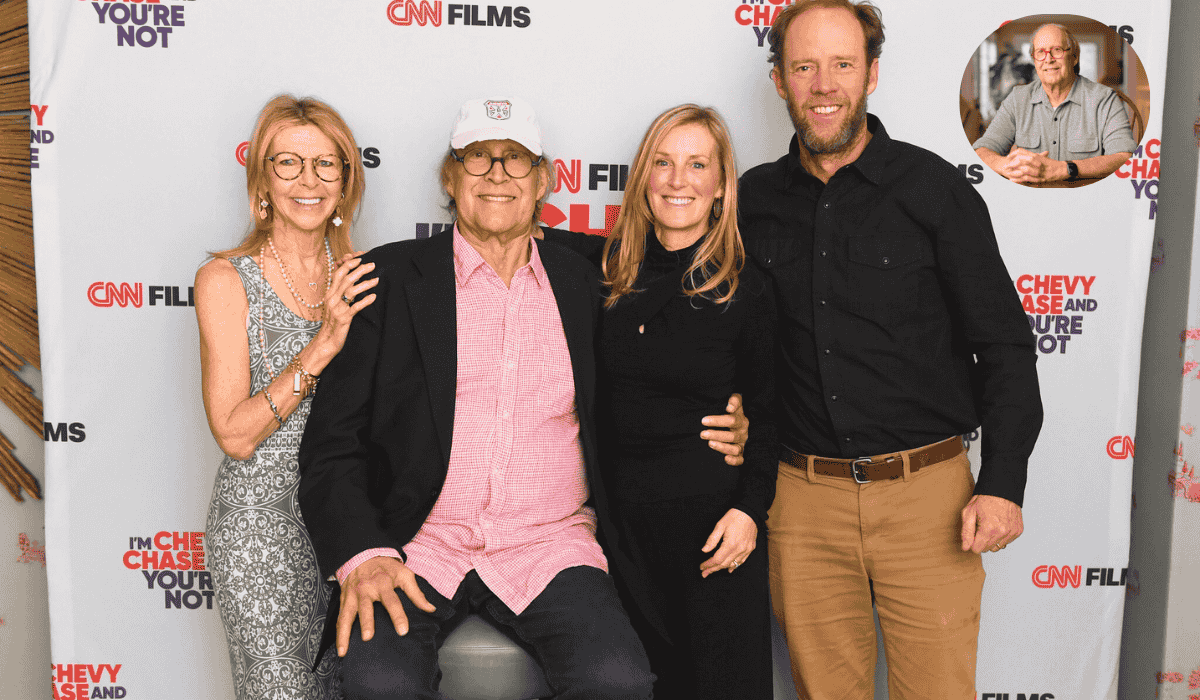
The Medical Reality We're Dismissing
Heart failure that required an eight-day medically induced coma causes significant cognitive disability, according to Chase's own doctors. His friend Peter Aaron noted in the documentary that Chase's memory gaps stem from this incident. Chase himself confirmed that doctors told him his memory would be affected permanently.
The science backs this up completely. Research from Columbia University found that heart failure leads to cognitive decline by creating calcium leaks inside brain neurons, a condition called cardiogenic dementia. This is not speculation. This is measurable brain damage.
Studies show that almost 50 percent of people with heart failure experience some kind of cognitive impairment that may impact language, memory, or executive function. The rate of cognitive problems is even higher in patients who experienced acute decompensation, exactly what happened to Chase when his heart stopped.
Medically induced comas themselves cause additional neurological damage. Research published in the journal PNAS found that prolonged anesthesia significantly alters the synaptic architecture of the brain, documenting a physical link between cognitive impairment and medically induced coma. These changes affect object recognition, memory formation, and the ability to process information.
One study noted that patients who have been placed in prolonged comas frequently experience neurological damage including memory recall and concentration problems, with some symptoms persisting for months. Another found that survivors of prolonged medically induced comas require extended physical, cognitive, and psychological rehabilitation.
This is not Chase making excuses. This is what happens to human brains when they experience the trauma his experienced. Yet we're treating his memory loss as if it's a character defect rather than a medical condition.
The Impossible Standard for Accountability
Let's be honest about what Chase did by participating in this documentary. He sat for extensive interviews knowing they would be uncomfortable. He allowed filmmaker Marina Zenovich access to his family. He agreed to confront his worst moments on camera. He opened himself up to exactly the kind of public judgment he's now receiving.
Most celebrities accused of bad behavior go completely silent. They issue carefully crafted PR statements written by crisis management teams. They lawyer up. They hide behind representatives. They never speak directly about the allegations. They certainly don't sit for hours of unscripted interviews about their worst professional moments.
Chase did the opposite. He showed up. He tried to engage with his past, even when his damaged brain couldn't fully access those memories. He allowed his family to speak candidly about his health crisis and its impact. He participated in a process designed to examine his life and career, knowing it would not be flattering.
If this doesn't count as an attempt at accountability, what does? What standard are we holding people to if participating in an authorized documentary where you confront criticism isn't enough? Have we created a system where no path back exists, no matter what someone does?
The response to the documentary suggests we have. When someone tries to be accountable and we mock them for not doing it perfectly, we're not promoting accountability. We're promoting hopelessness.
The Context That Changes Everything
Chase's behavior has been awful across decades. The AIDS sketch he allegedly proposed to Terry Sweeney in 1985 was unconscionable. Using racial slurs on the "Community" set in 2012 was inexcusable. The pattern of difficult behavior from "Saturday Night Live" through his later career is well documented.
None of that changes with a medical diagnosis. Past harm doesn't disappear because someone later becomes ill. But context matters when we evaluate present actions and future possibilities.
The Terry Sweeney incident happened in 1985. That was 40 years ago, and 36 years before Chase's heart failure and coma. The "Community" incidents happened in 2012, nine years before his medical crisis. When we demand that Chase remember and apologize for incidents from decades ago, we're asking someone with documented brain damage to access memories that may be neurologically unavailable.
Research on heart failure patients shows that cognitive impairment affects not just new memory formation but also memory retrieval. The brain structures damaged by reduced blood flow and oxygen deprivation are the same ones responsible for accessing stored memories. When Chase says he doesn't remember the AIDS sketch, he may genuinely not remember it. When he struggles to recall conflicts on set, those memories may be locked behind damaged neural pathways.
This doesn't mean Sweeney and others shouldn't be angry. Their pain is real and valid. They lived through Chase's cruelty and deserve acknowledgment. But there's a difference between wanting accountability from someone who's hiding from their past and demanding perfect recall from someone whose brain was literally starved of oxygen for an extended period.
The Age Factor Nobody Wants to Discuss
Chase is 81 years old. Even without heart failure and a medically induced coma, cognitive decline is normal at this age. Memory becomes less reliable. Processing speed slows. The ability to recall specific details from decades ago diminishes. This is just how human brains age.
Add major cardiac trauma, extended hospitalization, weeks of intensive medical intervention, and documented brain damage from oxygen deprivation. The result is someone whose cognitive function is significantly compromised through no fault of their own.
We need to ask ourselves: are we evaluating Chase by standards appropriate for an elderly person with documented neurological impairment? Or are we holding him to the same accountability standards we'd apply to a healthy 45-year-old?
The difference matters. If someone in their 40s or 50s with no health issues said they didn't remember incidents others clearly recall, skepticism would be appropriate. But when an 81-year-old who survived heart failure and a coma says the same thing, we should at least consider that medical reality might be driving those gaps.
This isn't about letting Chase off the hook. It's about basic human decency toward someone dealing with real cognitive limitations.
Why Memory Loss Seems So Convenient
I understand the skepticism. It does seem remarkably convenient that Chase can't remember the specific incidents that make him look worst. The AIDS sketch, the racial slurs, the on-set conflicts. All the things that would require the most difficult apologies are the things he claims not to recall.
But here's what we need to understand about how brain damage affects memory. It's not random. Traumatic or emotionally charged memories often survive brain injury better than mundane ones. But memories we'd rather forget, moments of shame or anger, are exactly the kind our brains naturally suppress even in healthy people. Add significant neurological damage, and those suppressed memories may become completely inaccessible.
Research on memory and trauma shows that the brain protects itself by limiting access to memories associated with shame, guilt, or emotional distress. When Chase's brain was damaged by heart failure and prolonged coma, those protective mechanisms may have become permanent barriers.
Additionally, the incidents everyone keeps asking Chase about happened during periods of high stress, conflict, and often substance use. These are exactly the circumstances under which memories are poorly formed in the first place. Chase has acknowledged past struggles with alcohol. Memories formed while drinking heavily are notoriously unreliable, even in people who never experience brain injury.
So yes, it seems convenient. But medical science explains why someone with Chase's specific history of substance use, multiple head injuries from physical comedy, and recent severe cardiac trauma might genuinely struggle to access memories of his worst behavior.
The Difference Between Explanation and Excuse
The documentary tries to contextualize Chase's behavior through his traumatic childhood. He was abused by his stepfather. His mother was emotionally neglectful. He grew up in an environment that taught him cruelty as a survival mechanism.
Many critics have rightfully noted that millions of people experience childhood trauma without becoming serial workplace abusers. This is absolutely true. Trauma is an explanation, not an excuse. Having a difficult childhood doesn't give anyone license to hurt others for decades.
But here's what I think we're missing in that analysis. When we say trauma is an explanation not an excuse, we're making a distinction that should lead somewhere productive. The explanation helps us understand the behavior's origins. That understanding should inform how we approach change and rehabilitation.
If someone's cruelty stems from learned behavior in a traumatic childhood, then the path forward involves unlearning those patterns and developing new ones. That's hard work that requires cognitive flexibility, emotional awareness, and the ability to recognize patterns in one's own behavior. These are exactly the kinds of higher-order thinking skills that become impaired with brain damage.
Chase may have spent 70-plus years unable or unwilling to confront how his childhood trauma affected his behavior. Now, at 81, with documented cognitive impairment, we're demanding he suddenly develop that self-awareness and articulate it perfectly on camera. That's not just difficult. It may be neurologically impossible.
What Yvette Nicole Brown's Silence Really Means
Yvette Nicole Brown's refusal to participate in the documentary has been widely interpreted as a condemnation of Chase. Her Instagram statement, "These are things I've never spoken of publicly and perhaps never will," suggests experiences so painful she won't discuss them.
This is powerful, and her choice deserves respect. Nobody owes their trauma to the public, even in service of a documentary about someone who caused that trauma. Brown's strategic silence protects her dignity and denies Chase the absolution of her participation.
But I think we should also consider what Brown's silence tells us about the documentary itself. She wasn't asking for the documentary to be canceled. She wasn't demanding Chase be deplatformed or silenced. She simply chose not to be part of it while making clear she has her own story.
That's not the same as saying Chase shouldn't have done the documentary. It's saying she doesn't owe him or anyone else her participation in his story. There's a distinction there that matters.
Brown gets to protect herself without preventing Chase from attempting his own imperfect process of reflection. Both things can be true. Her boundaries are valid, and his attempt at accountability, however flawed, is also worth something.
The Cruelty of Impossible Demands
I've thought a lot about what we're really asking of Chevy Chase. We want him to remember incidents from 40 years ago despite documented brain damage. We want him to demonstrate emotional growth despite cognitive impairment. We want perfect accountability from someone who nearly died and whose brain was fundamentally altered by medical crisis.
These demands are not only unreasonable, they're cruel.
This doesn't mean Chase was a good person before his heart failure. It doesn't erase decades of difficult behavior. It doesn't invalidate the pain of people he hurt. Terry Sweeney deserves to be angry. The "Community" cast has every right to refuse participation. Nobody owes Chase forgiveness.
But acknowledging all of that doesn't require us to dismiss the medical reality of his situation or mock his attempts at reflection. We can hold space for both truths: Chase behaved badly for a long time, and Chase is now an elderly man with real cognitive limitations trying his best to engage with that past.
The criticism of the documentary keeps focusing on what Chase failed to do. He didn't apologize perfectly. He didn't remember everything. He didn't show enough remorse. He didn't demonstrate sufficient growth. Every evaluation centers on deficits.
But what if we asked different questions? What did it cost Chase to participate in this documentary knowing he would be criticized? What courage did it take to sit for those interviews at 81 with a damaged brain? What does it mean that he showed up at all when so many people in his position simply wouldn't?
I'm not asking for applause. I'm asking for basic humanity in how we evaluate someone dealing with real medical limitations while attempting something genuinely difficult.
The Broader Question About Redemption
The response to this documentary raises uncomfortable questions about our culture's approach to accountability and redemption. We say we want people who've behaved badly to take responsibility. But when they try, we scrutinize every imperfection in how they do it.
We demand vulnerability but punish it when it's not performed to our satisfaction. We ask for honesty but dismiss it as excuse-making when we don't like what we hear. We want accountability but offer no roadmap for what successful accountability looks like.
If an 81-year-old man with documented brain damage participating in an authorized documentary confronting his past behavior isn't an attempt at accountability, what is? If this isn't enough, what would be? Do we even know what we're asking for anymore?
I think we've created a system where redemption is theoretically possible but practically impossible. We've moved from "actions have consequences" to "actions have permanent, irrevocable consequences regardless of circumstances." There's no statute of limitations on past bad behavior, no path forward for people who want to change, no possibility of growth or evolution.
That's not accountability. That's just permanent punishment.
The Human Element We Keep Forgetting
At the center of all this controversy is a human being. An elderly man who made mistakes, hurt people, and now faces the end of his life trying to make sense of it all with a brain that doesn't work the way it used to.
Chase is not a cartoon villain. He's not purely good or purely evil. He's a complicated person who was very talented, very difficult, and very damaged by his own childhood trauma. He achieved enormous success while leaving a trail of hurt feelings and damaged relationships. Now he's old and sick and trying, however imperfectly, to reflect on all of it.
That's actually a very human story. It's the story of someone who hurt people, got old, faced mortality, and wondered if there was any way to make peace with their past. The fact that he's doing it imperfectly, with a damaged brain that won't cooperate, makes it more human, not less.
When I watch the documentary, I don't see someone making excuses. I see someone genuinely struggling. I see an elderly man whose brain doesn't work right anymore trying to access memories that may not be there. I see someone who probably does understand on some level that he hurt people but lacks the cognitive capacity to articulate that understanding in the way we demand.
That's sad more than anything else. It's sad that Chase spent so many years being difficult instead of dealing with his trauma. It's sad that so many people were hurt by his behavior. It's sad that by the time he's trying to confront it all, his brain is too damaged to do it effectively.
Why This Matters Beyond Chevy Chase
The Chase documentary controversy matters because it reveals how we think about accountability, redemption, and human fallibility. It shows what happens when our demands for perfect accountability collide with the messy reality of human limitation.
If we can't extend basic compassion to an 81-year-old with documented brain damage trying to reflect on his past, who can we extend it to? If this attempt at engagement isn't worth anything, what would be? If medical reality doesn't factor into our evaluation of someone's accountability, what does?
These questions extend far beyond one difficult comedian. They touch on how we evaluate everyone who's behaved badly and later tries to do better. They affect how we think about aging, illness, and the limitations those impose on our cognitive capacities. They shape whether we believe in the possibility of human growth at all.
I believe people can change. I believe even flawed attempts at accountability have value. I believe we should meet people where they are, acknowledging both their limitations and their efforts. And I believe that dismissing someone's medical reality because it's inconvenient to our narrative of their moral failure is wrong.
None of this means we have to forgive Chevy Chase. Forgiveness is personal and optional. Nobody owes it to him. Terry Sweeney doesn't have to accept any apology. Yvette Nicole Brown doesn't have to break her silence. The "Community" cast doesn't have to participate in his story.
But we can acknowledge the documentary for what it is: an imperfect attempt at reflection by an impaired elderly man. We can recognize that participating in it took some courage. We can hold space for both his past bad behavior and his current medical limitations. We can extend basic human dignity even to people who didn't always extend it to others.
Most importantly, we can ask ourselves what we actually want from accountability. If the answer is "perfect memory, perfect remorse, perfect articulation of growth," then we're asking for something that's often medically impossible, especially from elderly people with brain damage.
If instead we want "genuine engagement with past behavior to the best of one's current ability," then Chase's participation in this documentary might actually qualify. It's imperfect. It's frustrating. It leaves many questions unanswered. But it's something.
And maybe in our rush to condemn imperfect accountability, we're missing the point. Maybe the goal shouldn't be perfect performance of remorse. Maybe it should be honest human struggle with difficult truths, even when that struggle is messy and incomplete.
Chevy Chase is 81 years old with a damaged brain. He's trying, however imperfectly, to look back at a complicated life. That's worth something. Not everything. Not absolution. Not forgiveness. But something.
We can acknowledge that without erasing the pain of the people he hurt. Both things can be true. And maybe learning to hold both truths at once is what actual human wisdom looks like.