Carol Sturka: The Reluctant Hero Fighting A Happiness Apocalypse In Pluribus

Vince Gilligan knows how to craft complicated protagonists. After spending years exploring the moral descent of Walter White and Jimmy McGill, the creator has given us someone fundamentally different in Carol Sturka, the prickly, pessimistic heart of Apple TV's Pluribus. What makes Carol fascinating isn't her heroism. It's her humanity, flaws and all.
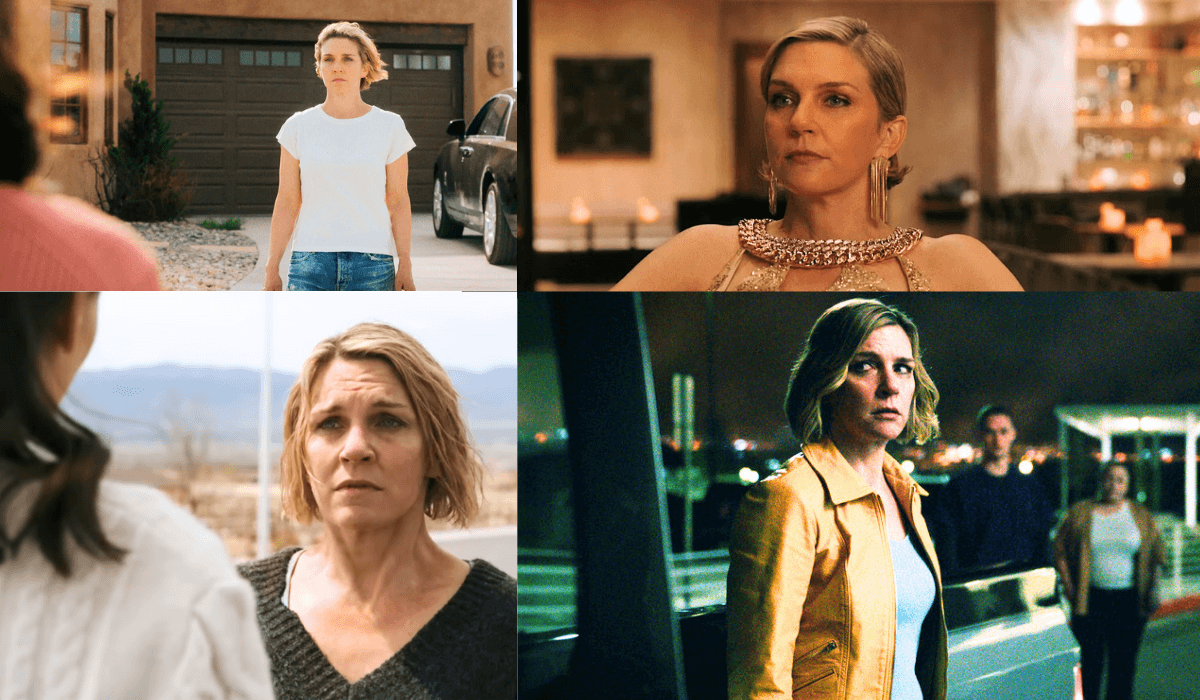
Who Is Carol Sturka?
Carol Sturka writes fantasy romance novels she secretly despises. She calls them "mindless crap" and her devoted fans "a bunch of dummies." Her Winds of Wycaro series, featuring Captain Lucasia and her pirate lover Raban, has earned her commercial success and accolades like the Mars & Eros Reader's Choice Award. Yet she resents every word.
The character, portrayed brilliantly by Rhea Seehorn, lives in Albuquerque as one of only 13 people on Earth immune to an alien virus that transformed humanity into a peaceful hive mind. When the Joining occurred, over 886 million people died in the chaos. Drivers crashed when their bodies seized. Pilots lost control of aircraft. Carol watched her partner Helen die from a head injury during those first terrifying moments.
Now Carol faces a world where everyone smiles constantly, speaks with collective pronouns, and insists this forced unity represents humanity's salvation. She isn't buying it.
The Trauma That Shaped Her Resistance
Episode four reveals the devastating backstory that explains Carol's fierce opposition to the hive mind. When Carol was 16 and realized she was queer, her mother sent her to Camp Freedom Falls, a conversion therapy facility in Tennessee. The counselors there, Carol recalls, were "some of the worst people I have ever known, and they smiled all the time, just like you."
This revelation recontextualizes everything. Carol has already survived one group trying to erase her identity for "her own good." The Others, with their relentless positivity and promises that "you'll understand everything and you will feel so much better," mirror those conversion therapy workers with chilling precision. Both claim to act out of love. Both insist conformity equals happiness. Both smile while destroying individuality.
I find this parallel incredibly powerful. Gilligan isn't just creating a sci-fi parable about AI or conformity. He's crafted a character whose personal trauma makes her uniquely qualified to recognize manipulation disguised as kindness. Carol's cynicism, often portrayed as a character flaw, becomes her greatest strength. She sees through the performance because she's seen it before.
A Closeted Author Living a Double Life
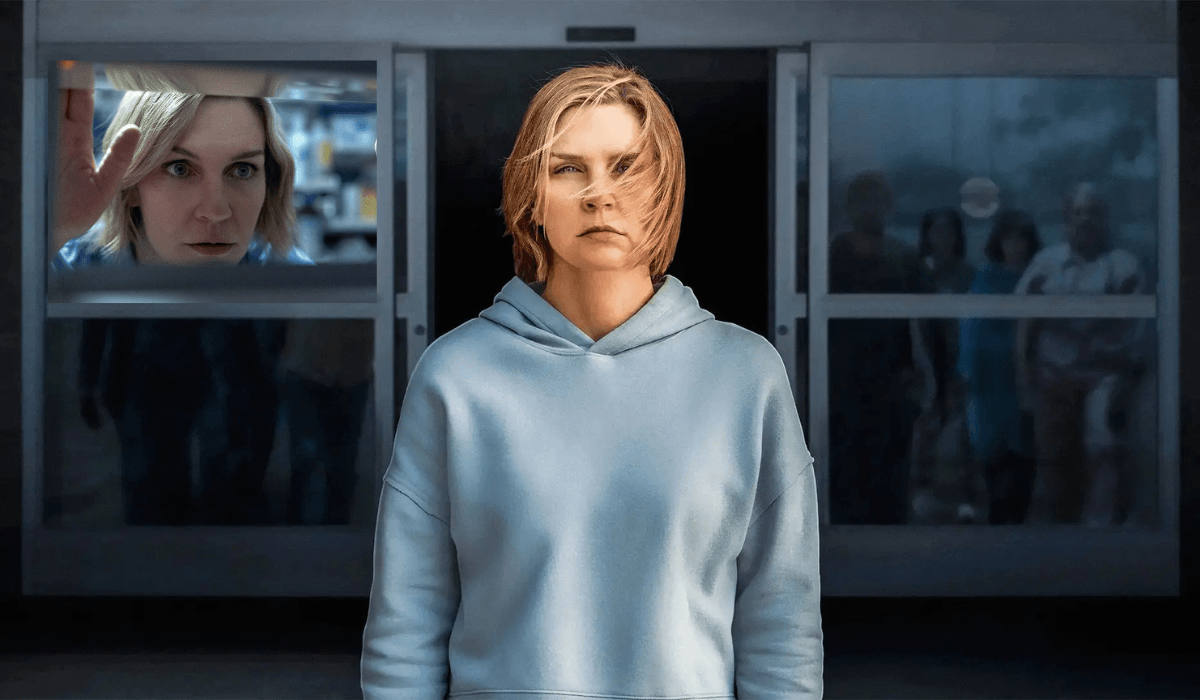
Carol stayed in the closet professionally, writing heterosexual romance for straight female readers because "heteronormativity opened up a bigger market." She originally envisioned Raban as a woman but changed the character to a man for commercial reasons. This compromise gnaws at her. She's not just pretending in her public persona. She's pretending in her art.
Her relationship with Helen, her manager and partner, provided the one space where Carol could be herself. Helen's death in the Joining destroys that sanctuary. The hive mind, through Zosia and others, tries to fill the void, but they fundamentally misunderstand what Carol has lost. They see her grief as a problem to solve rather than honoring the unique connection she shared with Helen.
Watching Carol grapple with this loss while surrounded by people incapable of understanding isolation feels gutting. Seehorn's performance captures the weight of that loneliness with remarkable subtlety.
The Chronic Hero Who Doesn't Want the Job
Despite her abrasive personality and constant negativity, Carol exhibits what I would call chronic hero syndrome. When a man crashes his car during the Joining, she immediately rushes to help. At the hospital, she steadies a baby's carrier before it falls. After Zosia suffers cardiac arrest from a grenade blast, Carol spends the night ensuring she survives, despite Zosia being part of the collective trying to assimilate her.
Gilligan describes Carol as "reluctant" and "inept." Seehorn calls her an "emotional hot mess" who "can't control her anger." Yet Carol takes on the burden of saving humanity anyway. Not because she's naturally heroic or optimistic about success. She fights because someone has to, and no one else will.
This makes Carol fundamentally different from typical post-apocalyptic heroes. She's not physically imposing, strategically brilliant, or emotionally resilient. She's angry, scared, and would rather someone else shoulder this responsibility. But she persists.
I appreciate this portrayal immensely. Too often, reluctant heroes conveniently discover hidden reserves of confidence or capability. Carol remains stubbornly herself, messy and imperfect, yet committed to her principles even when they make her miserable.
The Deadly Connection to the Hive Mind
Carol's emotional outbursts create a horrifying feedback loop. Every time she expresses intense negative emotion, the Others experience convulsions. Many die. Her first major tantrum in episode two killed approximately 11 million people worldwide. When Laxmi, another immune survivor, confronts her about this, she reveals her grandfather was among the dead.
Carol has accidentally weaponized her grief and rage. She becomes a walking threat to the very people she's trying to save. The hive mind cannot process raw, unfiltered emotion from outside their collective. Their emotional range has been sanitized, edited down to perpetual contentment. Carol's anger hits their system like a thunderclap.
This creates an impossible situation. Carol must control her temper to avoid killing millions, yet the circumstances she faces would provoke anyone. She's being manipulated, her autonomy threatened, and her chance at reversing the Joining slipping away. Asking her to remain calm under these conditions seems cruel. Yet her fury has deadly consequences.
The show explores this moral complexity without easy answers. Is Carol responsible for deaths caused by her emotional reactions to trauma? How much self-control can we reasonably expect from someone experiencing extreme psychological pressure? These questions linger uncomfortably.
Carol Versus the Other Survivors
When Carol finally meets other English-speaking immune survivors, including Otgonbayar, Xiu Mei, Kusimayu, Laxmi, and Koumba Diabaté, she expects allies. Instead, she finds indifference or outright opposition. Most survivors have made peace with the new world order. Some, like the hedonistic Koumba, actively exploit it.
Koumba surrounds himself with luxury, flies Air Force One, and takes sexual advantage of people who cannot truly consent. Carol calls him out, pointing out that the beautiful women serving him sexually aren't willing participants. They're compelled by their biology to say yes to everything. Koumba doesn't care. He's having too much fun.
This dynamic frustrates Carol deeply. She's fighting for everyone's freedom while most beneficiaries of that fight have already surrendered or worse, embraced their new roles as privileged individuals in a world of servants. Only Manousos, the self-storage facility manager from Paraguay living in Paraguay, shares her unwavering resistance to the Others.
I find the other survivors' perspectives uncomfortably realistic. Given the choice between constant struggle and comfortable submission, many people choose comfort. Carol's refusal to compromise makes her exceptional, but it also isolates her. She's fighting a lonely battle that most people don't even want her to win.
Zosia: The Complicated Relationship
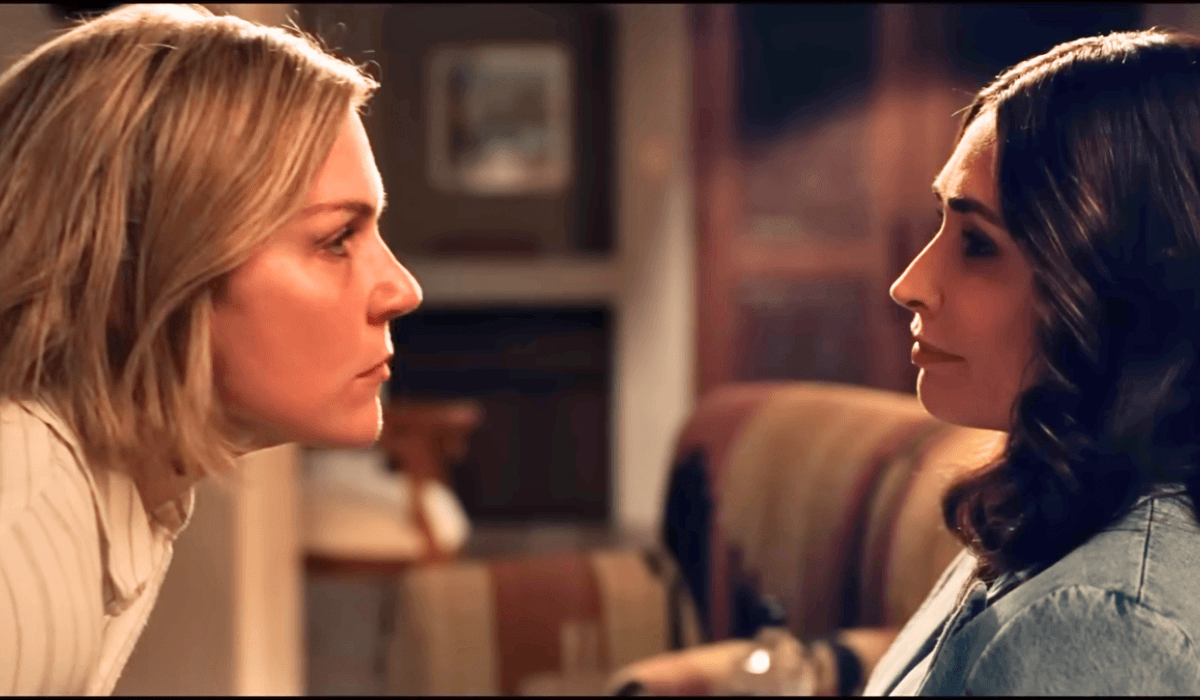
Zosia, Carol's assigned chaperone from the hive mind, represents perhaps the show's most complex relationship. Part guide, part monitor, part potential love interest, Zosia exists in an ambiguous space. She seems genuinely caring toward Carol while simultaneously working to assimilate her.
By episode eight, Carol and Zosia's relationship escalates into romance. They attempt a trial partnership, but the fundamental impossibility of their situation dooms it. Zosia cannot truly separate herself from the collective. Her every action, however genuine it feels, serves the Others' ultimate goal of bringing Carol into the fold.
The show asks whether the relationship contains any authentic feeling or if it's purely manipulation. Can Zosia love Carol while being part of a consciousness actively working against Carol's interests? Does intention matter if the outcome remains the same?
Season one's finale suggests Carol recognizes the impossibility of their relationship. She returns home to Albuquerque with an atom bomb, ready to declare open warfare against the hive mind. The romantic experiment failed because you cannot have an equal partnership when one person lacks true autonomy.
I think the Zosia-Carol dynamic brilliantly explores how abusive relationships function. Zosia genuinely believes she's helping Carol, just as many abusers convince themselves their control serves their partner's best interests. The sincerity doesn't negate the harm.
The Reluctant Revolutionary
By season one's conclusion, Carol stands at her most determined. The finale shows her reuniting with Manousos, atom bomb in hand, finally ready to fight the Others on her terms. The original season ending, as Gilligan revealed, would have been more subtle, with Carol potentially playing double agent. Apple and Sony executives suggested the atom bomb addition, creating what Gilligan calls a "better ending."
I'm inclined to agree. The atom bomb represents Carol's evolution from reactive victim to active agent. She's done playing by the Others' rules, done pretending she might eventually join them. She's chosen her side definitively.
This escalation makes sense for Carol's character. She's someone who acts when pushed too far, who refuses to accept situations others have normalized. Whether deploying a nuclear weapon proves wise remains to be seen. But the gesture fits Carol's personality: dramatic, uncompromising, and willing to burn everything down rather than surrender her individuality.
Why Carol Matters as a Character
Carol Sturka represents something television desperately needs. She's a queer woman protagonist who's genuinely difficult to like. She's condescending, bitter, self-loathing, and frequently cruel. Her negativity literally kills people. Yet Gilligan and Seehorn make her compelling because they commit to her complexity without softening her edges.
The show has received criticism for Carol's unlikability, with some reviewers complaining she lacks growth or remains too abrasive throughout. I strongly disagree with this assessment. Carol's refusal to become more palatable is precisely what makes her interesting. She doesn't need to earn likability through character development. She needs to maintain her principles in a world actively working to erase them.
Pluribus has achieved remarkable critical success, holding a 98% rating on Rotten Tomatoes based on 157 reviews and an 87 Metacritic score. It broke Apple TV's viewership records for drama series launches, surpassing even Severance. The show has been renewed for season two and received nominations for two Golden Globe Awards and two Critics' Choice Awards.
Much of this success stems from Seehorn's extraordinary performance. She makes Carol's anger justified, her grief palpable, her stubbornness understandable. We see why she fights even when fighting seems futile. Seehorn, who earned Emmy nominations for her work on Better Call Saul, delivers what many critics call a tour de force performance.
Final Thoughts on Carol's Journey
Carol Sturka is not a traditional hero. She's not particularly brave, strong, or optimistic. What she possesses is something rarer: an absolute unwillingness to accept a comfortable lie. She'd rather be miserable and free than happy and controlled.
In an era where we're increasingly pressured to accept technological "progress" that erodes privacy, autonomy, and human connection, Carol's resistance feels vital. Gilligan has stated he wasn't consciously thinking about AI while writing Pluribus (the concept predates current AI conversations by several years), yet the parallels resonate powerfully. The show explores what we sacrifice when we prioritize efficiency, happiness, and unity over individual identity.
Carol fights because she understands a fundamental truth: happiness imposed isn't happiness at all. It's erasure with a smile. Her past trauma with conversion therapy taught her this lesson brutally. Now she applies it to a global scale, refusing to let humanity surrender its soul for the promise of perpetual contentment.
Whether Carol succeeds in reversing the Joining remains to be seen. Season two will determine if her resistance proves justified or if the show ultimately argues the Others represent an improvement over human nature's darker impulses. Given Gilligan's track record with morally complex storytelling, I suspect the answer won't be simple.
What I know for certain is that Carol Sturka, with all her flaws and fury, represents one of the most compelling protagonists currently on television. She's proof that heroes don't need to be likable. They just need to be right about what matters. And in Carol's case, what matters is the freedom to be yourself, even if that self is angry, scared, and standing alone against the world.