Comedy Writer Secured Trump-Kennedy Center Domains Months Before Controversial Renaming

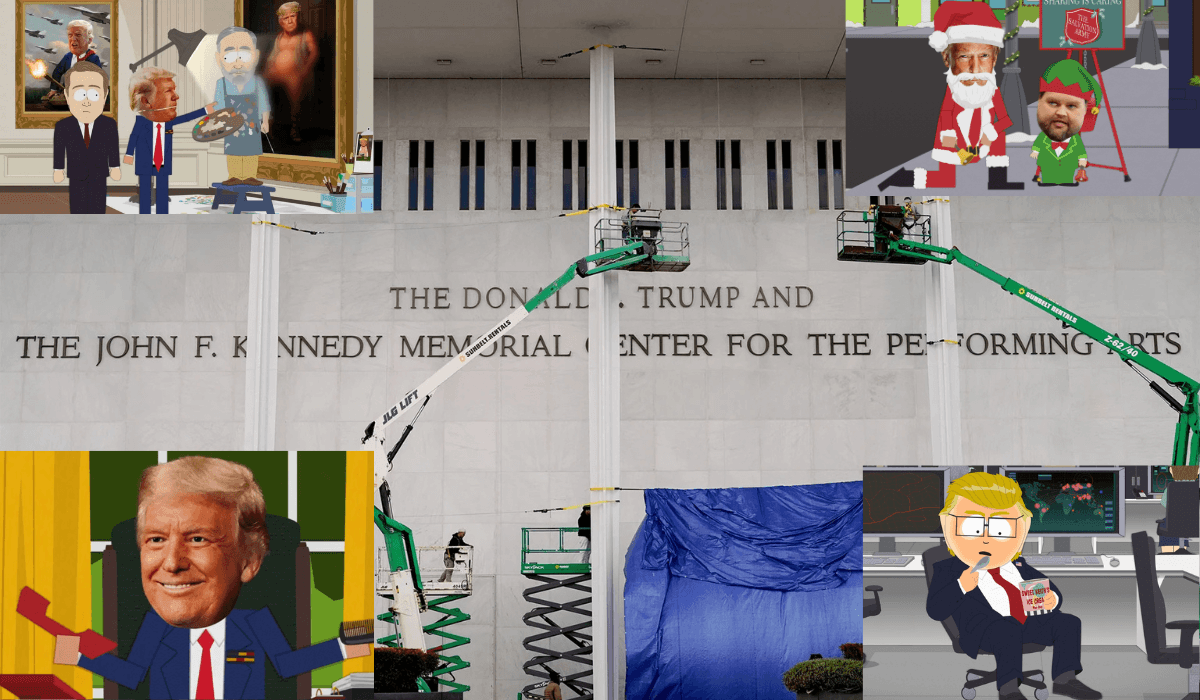
A Former South Park Writer Saw It Coming
When Donald Trump began replacing members of the Kennedy Center's board of trustees earlier this year, Toby Morton didn't need a crystal ball to predict what would happen next. The comedy writer, known for his work on South Park and Mad TV, registered trumpkennedycenter.org and trumpkennedycenter.com back in August, months before the institution's controversial name change became reality.
His prediction proved eerily accurate. In December 2025, Trump's handpicked board voted to rename the prestigious Washington arts venue "The Donald J. Trump and The John F. Kennedy Memorial Center for the Performing Arts." Workers installed new signage on December 19, just one day after the White House announced the decision.
Why This Move Raises Serious Questions
The renaming has sparked immediate controversy on multiple fronts. Legal experts, including Georgetown Law professor David Super, argue that the change violates federal law. The institution was designated as the John F. Kennedy Center for the Performing Arts under Title 20 of the U.S. Code, section 76i. According to these experts, Congress would need to pass new legislation to legally change that name.
Democratic Representative Joyce Beatty, who serves as an ex-officio member of the Kennedy Center board, disputes the White House's claim of a unanimous vote. She says she was repeatedly muted during the video call when she tried to voice her objections. Other Democratic lawmakers who sit on the board, including Senate Minority Leader Chuck Schumer and House Minority Leader Hakeem Jeffries, released a statement calling the move illegal and unauthorized.
Members of the Kennedy family have also condemned the decision. Former Representative Joseph Kennedy III, a grandnephew of President John F. Kennedy, stated that the center is a living memorial created by federal law and cannot be renamed without congressional action, comparing it to the impossibility of renaming the Lincoln Memorial.
Morton's Strategy and Background
Morton's approach reflects a broader pattern of political activism through domain name acquisition. The writer, who worked on South Park from 2001 to 2003 and provided the voice for Scott Tenorman (Eric Cartman's nemesis) in the show's iconic episode, has been purchasing political domain names since around 2019. According to reports, he now operates approximately 50 political parody websites.
His portfolio includes sites targeting figures from both major parties. Among them are mtg2026.org, which lampoons Representative Marjorie Taylor Greene of Georgia, and nancymace26.com, aimed at Representative Nancy Mace of South Carolina. He also runs resignchuck.com, focused on Senate Minority Leader Charles Schumer of New York.
When asked about his plans for the Trump-Kennedy Center domains, Morton told the Washington Post that the sites will "absolutely reflect the absurdity of the moment" with "lots of surprises." He emphasized that while some situations are hard to parody, he plans to highlight what he sees as Trump's narcissism and personal branding impulses applied to civic institutions.
The Bigger Picture on Presidential Overreach
This situation offers a window into how institutions designed to transcend individual presidencies can become targets for personal branding. Morton's statement to the Post captures the core tension: "The Kennedy Center has always been a cultural institution meant to outlast any one administration or personality. It's meant to honor culture, not ego. Once it was treated like personal branding, satire became unavoidable."
The Kennedy Center's transformation under Trump has been dramatic. After taking office in January 2025, he fired the previous board chair David Rubenstein and president Deborah Rutter, both appointed under previous administrations. He then appointed himself as board chair and filled the board with allies, including second lady Usha Vance, White House Chief of Staff Susie Wiles, and Fox News host Laura Ingraham.
Trump has also promised to eliminate programming he considers objectionable and secured $257 million in his legislative package for building repairs and maintenance. The president has claimed he is "saving" the institution, though the Washington Post reported in October that ticket sales have declined significantly since his takeover.
Real World Consequences
The fallout from the renaming extends beyond political statements. The American College Theatre Festival ended a 58-year partnership with the Kennedy Center following the name change. Jazz musician Brian Blade canceled his Christmas Eve concert at the venue, a tradition he had maintained for more than two decades. These reactions demonstrate how the politicization of cultural institutions can erode long-standing relationships and programming.
Meanwhile, Representative Beatty has filed a lawsuit asserting that the board vote is null and void due to the procedural irregularities she witnessed. The legal battle may ultimately determine whether the renaming stands or whether Congress must formally authorize any change.
Why This Matters Beyond Washington
The Kennedy Center situation represents more than a local dispute about building signage. It touches on fundamental questions about the separation between personal political power and national cultural institutions. When Congress authorized the center in 1964, just months after President Kennedy's assassination, the intention was to create a lasting memorial that would serve the nation's cultural life independent of shifting political winds.
Morton's prescient domain purchase and his subsequent activism illustrate how citizens can use creativity and foresight to respond to what they perceive as institutional overreach. Whether you view his actions as clever satire or political trolling likely depends on your broader views about the Kennedy Center renaming itself.
In my view, Morton's move reflects legitimate concern about the blurring of lines between public institutions and personal legacy building. The Kennedy Center was never meant to be a branding opportunity for sitting presidents. Its purpose was to honor a fallen leader while serving as a permanent home for American performing arts. When that mission becomes secondary to ego and political maneuvering, something essential is lost.
What Happens Next
Morton has hinted that websites will launch on his domains soon, with help from creative professionals who have reached out to contribute. He posted on social media that "a few longtime heroes" have quietly joined the effort, and the support continues to grow.
The legal status of the name change remains uncertain. While Trump administration officials proceeded with installing new signage despite legal concerns raised by experts and lawmakers, the ultimate resolution may require court intervention or congressional action. Senate Majority Leader John Thune acknowledged uncertainty about whether new legislation is needed, saying "we'll look at" the legal requirements.
For now, Morton controls the primary Trump-Kennedy Center web domains, positioning himself to shape public conversation about the controversy whenever he decides to activate those sites. His description of himself as a "Creator of Anti-Fascist Websites" suggests the content will not be flattering to the administration.
The situation serves as a reminder that in the digital age, controlling the narrative often starts with controlling the domain names. Morton recognized this reality months before most Americans knew the Kennedy Center renaming was even under consideration. His forward thinking has given him a unique platform to comment on what he clearly views as an abuse of presidential power over cultural institutions.
Whether his websites ultimately matter in the larger political landscape remains to be seen. But his successful prediction and preemptive action demonstrate that sometimes the best response to predictable overreach is simply being there first.