DiCaprio's Revolutionary Film Gets Interrupted By Real Revolution In Venezuela

The universe has a dark sense of irony. Leonardo DiCaprio was supposed to accept an award Saturday night for playing a former revolutionary in a film about border conflicts and authoritarian regimes. Instead, he found himself stranded in the Caribbean, unable to travel because of actual military strikes on Venezuela ordered by President Donald Trump.

The collision of art and reality could not be more stark, or more unsettling.
The universe has a dark sense of irony. Leonardo DiCaprio was supposed to accept an award Saturday night for playing a former revolutionary in a film about border conflicts and authoritarian regimes. Instead, he found himself stranded in the Caribbean, unable to travel because of actual military strikes on Venezuela ordered by President Donald Trump.  The collision of art and reality could not be more stark, or more unsettling.  Leonardo DiCaprio's One Battle After Another     When Fiction Meets Geopolitical Reality  DiCaprio earned the Desert Palm Achievement Award for his performance in "One Battle After Another," Paul Thomas Anderson's latest film. The movie follows Bob Ferguson, a former revolutionary who lives off-grid with his daughter. When she goes missing after his old enemy resurfaces, he must return to his former militant life to save her.  The film explores immigration, border disputes, and the human cost of political upheaval. Now, those same themes have played out in real time. Trump launched military strikes against Venezuela on January 3, targeting sites in Caracas and military bases across the country. The action aimed to dismantle the regime of President Nicolás Maduro and resulted in his capture.  The timing feels almost prophetic. Anderson's film examines what happens when authority figures use military force to solve complex social problems. And here we are, watching that exact scenario unfold while the actor who portrayed those struggles cannot even board a plane.  The Privilege That Still Could Not Escape Consequence  DiCaprio was vacationing in St. Barts with his girlfriend Vittoria Ceretti, Jeff Bezos, Lauren Sánchez, Tom Brady, and other celebrities when the strikes began. The Federal Aviation Administration imposed air restrictions across the Caribbean. Flights were grounded. Airspace closed. Even wealth and connections could not overcome geopolitical crisis.  The Palm Springs International Airport issued a statement about the ground stop affecting Southern California airspace. Major airlines canceled hundreds of flights across Puerto Rico, the Virgin Islands, Aruba, and more than a dozen destinations in the Lesser Antilles. The ground stop lifted by 4:20 p.m. local time, but DiCaprio could not make the journey in time.  "Leonardo DiCaprio is unable to join us in person tonight due to unexpected travel disruptions and restricted airspace," a festival spokesperson told Variety. The statement praised his talent and dedication but could not hide the awkwardness of celebrating cinema while people in Venezuela faced actual military conflict.  This is what modern geopolitics looks like. The lines between entertainment, politics, and human suffering blur until they become indistinguishable.  Anderson's Film as Unintentional Prophecy  Paul Thomas Anderson has always had a knack for capturing America's contradictions. His films dissect power, violence, and the fragile systems that govern our lives. "One Battle After Another" continues that tradition with a black comedy-thriller that asks uncomfortable questions about how societies respond to crisis.  The film features Chase Infiniti, Teyana Taylor, Benicio del Toro, Sean Penn, and Regina Hall alongside DiCaprio. Early responses praised DiCaprio's emotionally charged performance as a man facing relentless adversity. Festival chairman Nachhattar Singh Chandi called it a display of "emotional depth, artistic integrity and fearless commitment."  But did Anderson know how relevant his film would become? Could he have predicted that the very weekend his lead actor would be honored, the United States would launch strikes on a South American nation?  Probably not. But great art often captures the mood of a moment before that moment fully arrives. Anderson's film explores themes that have simmered in American politics for years: border conflicts, immigration pressures, the use of military force as problem-solving. The Venezuela strike did not emerge from nowhere. It represents tensions that have been building across multiple administrations.  The film holds up a mirror. The real-world events shatter that mirror into pieces.  The Human Cost Beyond Hollywood  Let's be clear about what actually happened while DiCaprio missed his award ceremony. Trump ordered strikes on Venezuelan soil. Venezuelan officials confirmed that both civilians and military personnel were killed in the operation, though specific casualty numbers were not immediately provided. The strikes aimed to capture President Nicolás Maduro and his wife, First Lady Cilia Flores, both of whom were successfully apprehended.  U.S. warships had positioned themselves in the Caribbean in recent weeks, signaling the buildup to military action. General Dan Caine, Chairman of the Joint Chiefs of Staff, confirmed that the military spent months planning the operation.  Maduro faces accusations of drug trafficking and using oil revenue to fund alleged criminal operations through what Trump designated as the Cartel of the Suns. He denies these charges. Regardless of the legal merits, military strikes on a sovereign nation carry enormous consequences. People die. Infrastructure crumbles. Refugees flee. The humanitarian toll extends far beyond canceled flights and missed award shows.  According to the Associated Press, no airline flights crossed Venezuelan airspace on Saturday. The disruption affected not just wealthy vacationers but ordinary people trying to visit family, conduct business, or return home. Several airlines waived change fees for passengers forced to reschedule, a small mercy in a chaotic situation.  DiCaprio's travel disruption is a footnote. The real story unfolds in Venezuela, where civilians face the violence of military intervention. But his situation does illustrate how quickly geopolitical decisions ripple outward, touching lives in unexpected ways.  Should Awards Shows Continue During Crisis?  Here's an uncomfortable question: Should the Palm Springs International Film Awards have proceeded at all? Is it appropriate to celebrate cinema while military strikes unfold hundreds of miles away?  The festival did continue. DiCaprio received his award in absentia, reportedly through a recorded acceptance speech played after a tribute from his "One Battle After Another" co-stars Teyana Taylor and Chase Infiniti. Other honorees appeared and accepted recognition. The show went on, as shows tend to do.  I find this deeply conflicted. Art matters. Recognizing artistic achievement serves a purpose. But the optics feel wrong. We celebrate a film about conflict while actual conflict rages. We honor performances exploring human suffering while real humans suffer.  This is not unique to this weekend. Awards shows have always existed in tension with world events. The Oscars proceeded after September 11, during wars in Iraq and Afghanistan, through pandemics and natural disasters. Entertainment does not stop because tragedy strikes elsewhere.  But maybe it should pause. Maybe we need moments of acknowledgment that say: this matters more than our celebration. The world is burning, and we should at least notice the smoke.  The Intersection of Art and Accountability  DiCaprio has built a career on choosing meaningful roles. He explores complex characters facing moral dilemmas. His environmental activism demonstrates awareness of global issues beyond Hollywood. "One Battle After Another" fits that pattern, tackling themes of immigration, authority, and resistance.  Yet here he was, vacationing with billionaires and celebrities on a $250 million superyacht when military action erupted. The contradiction is not unique to DiCaprio. It reflects a broader tension in how we engage with art about suffering while remaining insulated from that suffering ourselves.  The film asks audiences to empathize with people caught in impossible situations. The Venezuela strikes place real people in those exact situations. Can we appreciate the artistic exploration while ignoring the lived reality? Should we?  These questions have no easy answers. But they deserve to be asked.  What Happens Next for DiCaprio and the Film  DiCaprio remains nominated for Best Actor at the Critics Choice Awards on January 4 and for Best Performance by a Male Actor in a Motion Picture (Musical or Comedy) at the Golden Globes on January 11. The award season continues, and he will likely attend those ceremonies if travel permits.  "One Battle After Another" will continue its campaign. The film won Best Picture from the National Society of Film Critics on Saturday and has received nine Golden Globe nominations. The film has grossed over $200 million worldwide, far surpassing any other Anderson-directed film. Reviews have been strong. Audiences seem receptive to Anderson's vision.  But something has shifted. The movie can no longer be viewed in isolation from real-world politics. It has become entangled with actual military action in ways Anderson likely never intended. Every discussion of the film will now include this bizarre intersection of art and reality.  That may ultimately serve the film's purpose. Art should provoke discomfort. It should force us to confront difficult truths. If "One Battle After Another" becomes a conversation starter about American military intervention, immigration policy, and the human cost of political decisions, then perhaps this strange moment serves a greater purpose.  My Take on This Collision  I believe this incident reveals something crucial about our current moment. We live in an age where art and reality collide with increasing frequency. Satirical films become documentaries. Dystopian fiction becomes news. The distance between creative imagination and lived experience shrinks to nothing.  Anderson's film explores what happens when systems fail and people resort to desperate measures. Trump's Venezuela strikes represent that same dynamic, whether you support the action or oppose it. The parallels are unavoidable and deeply uncomfortable.  DiCaprio missing his award ceremony is the least important part of this story. But it serves as a perfect symbol of our fractured moment. We cannot separate entertainment from politics, art from reality, celebration from crisis. They exist in the same space, competing for attention, demanding response.  The irony is almost too perfect. A film about conflict interrupted by actual conflict. An actor honored for portraying suffering while real suffering unfolds. An award show that celebrates art while the world art depicts burns in real time.  If Anderson intended this level of cultural commentary, he succeeded beyond measure. If it's pure coincidence, then reality has outdone even his considerable imagination.  Either way, we're left with questions that matter more than any award: What is art's responsibility during crisis? How do we balance celebration with awareness? When should we pause to acknowledge that some things matter more than entertainment?  I don't have definitive answers. But I know this much: the conversation matters more than the trophy ever could.
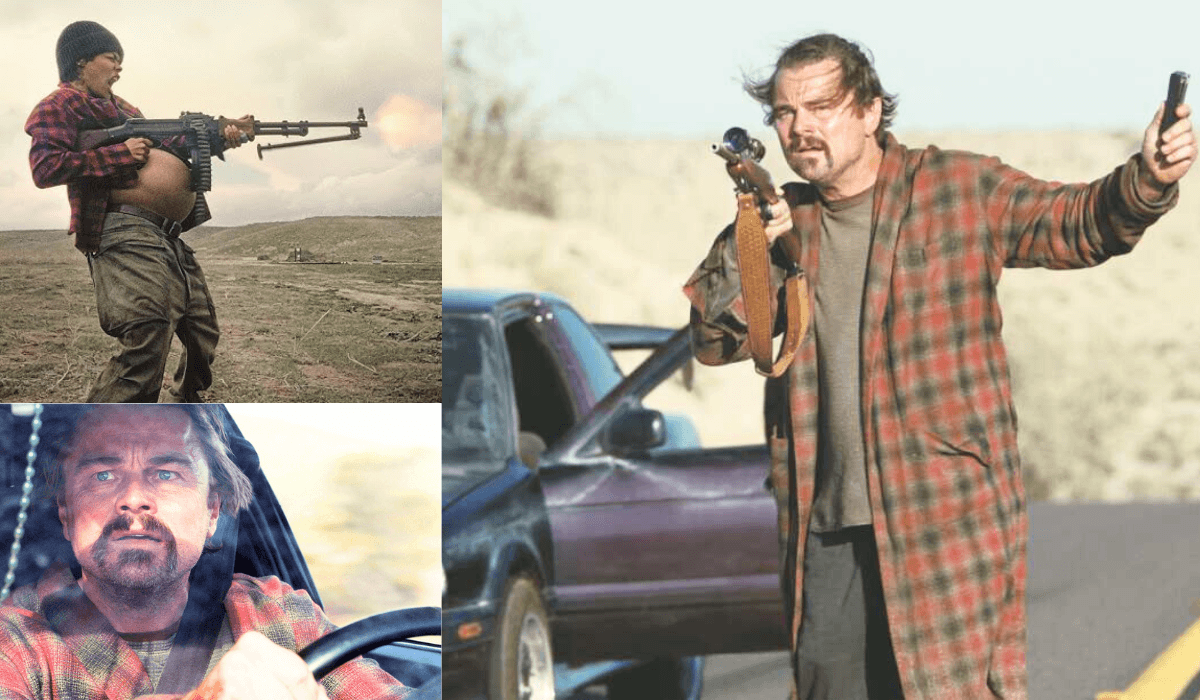
Leonardo DiCaprio's One Battle After Another

When Fiction Meets Geopolitical Reality

DiCaprio earned the Desert Palm Achievement Award for his performance in "One Battle After Another," Paul Thomas Anderson's latest film. The movie follows Bob Ferguson, a former revolutionary who lives off-grid with his daughter. When she goes missing after his old enemy resurfaces, he must return to his former militant life to save her.

The film explores immigration, border disputes, and the human cost of political upheaval. Now, those same themes have played out in real time. Trump launched military strikes against Venezuela on January 3, targeting sites in Caracas and military bases across the country. The action aimed to dismantle the regime of President Nicolás Maduro and resulted in his capture.

The timing feels almost prophetic. Anderson's film examines what happens when authority figures use military force to solve complex social problems. And here we are, watching that exact scenario unfold while the actor who portrayed those struggles cannot even board a plane.

The Privilege That Still Could Not Escape Consequence

DiCaprio was vacationing in St. Barts with his girlfriend Vittoria Ceretti, Jeff Bezos, Lauren Sánchez, Tom Brady, and other celebrities when the strikes began. The Federal Aviation Administration imposed air restrictions across the Caribbean. Flights were grounded. Airspace closed. Even wealth and connections could not overcome geopolitical crisis.

The Palm Springs International Airport issued a statement about the ground stop affecting Southern California airspace. Major airlines canceled hundreds of flights across Puerto Rico, the Virgin Islands, Aruba, and more than a dozen destinations in the Lesser Antilles. The ground stop lifted by 4:20 p.m. local time, but DiCaprio could not make the journey in time.

"Leonardo DiCaprio is unable to join us in person tonight due to unexpected travel disruptions and restricted airspace," a festival spokesperson told Variety. The statement praised his talent and dedication but could not hide the awkwardness of celebrating cinema while people in Venezuela faced actual military conflict.

This is what modern geopolitics looks like. The lines between entertainment, politics, and human suffering blur until they become indistinguishable.

Anderson's Film as Unintentional Prophecy

Paul Thomas Anderson has always had a knack for capturing America's contradictions. His films dissect power, violence, and the fragile systems that govern our lives. "One Battle After Another" continues that tradition with a black comedy-thriller that asks uncomfortable questions about how societies respond to crisis.

The film features Chase Infiniti, Teyana Taylor, Benicio del Toro, Sean Penn, and Regina Hall alongside DiCaprio. Early responses praised DiCaprio's emotionally charged performance as a man facing relentless adversity. Festival chairman Nachhattar Singh Chandi called it a display of "emotional depth, artistic integrity and fearless commitment."

But did Anderson know how relevant his film would become? Could he have predicted that the very weekend his lead actor would be honored, the United States would launch strikes on a South American nation?

Probably not. But great art often captures the mood of a moment before that moment fully arrives. Anderson's film explores themes that have simmered in American politics for years: border conflicts, immigration pressures, the use of military force as problem-solving. The Venezuela strike did not emerge from nowhere. It represents tensions that have been building across multiple administrations.

The film holds up a mirror. The real-world events shatter that mirror into pieces.

The Human Cost Beyond Hollywood

Let's be clear about what actually happened while DiCaprio missed his award ceremony. Trump ordered strikes on Venezuelan soil. Venezuelan officials confirmed that both civilians and military personnel were killed in the operation, though specific casualty numbers were not immediately provided. The strikes aimed to capture President Nicolás Maduro and his wife, First Lady Cilia Flores, both of whom were successfully apprehended.

U.S. warships had positioned themselves in the Caribbean in recent weeks, signaling the buildup to military action. General Dan Caine, Chairman of the Joint Chiefs of Staff, confirmed that the military spent months planning the operation.

Maduro faces accusations of drug trafficking and using oil revenue to fund alleged criminal operations through what Trump designated as the Cartel of the Suns. He denies these charges. Regardless of the legal merits, military strikes on a sovereign nation carry enormous consequences. People die. Infrastructure crumbles. Refugees flee. The humanitarian toll extends far beyond canceled flights and missed award shows.

According to the Associated Press, no airline flights crossed Venezuelan airspace on Saturday. The disruption affected not just wealthy vacationers but ordinary people trying to visit family, conduct business, or return home. Several airlines waived change fees for passengers forced to reschedule, a small mercy in a chaotic situation.

DiCaprio's travel disruption is a footnote. The real story unfolds in Venezuela, where civilians face the violence of military intervention. But his situation does illustrate how quickly geopolitical decisions ripple outward, touching lives in unexpected ways.

Should Awards Shows Continue During Crisis?

Here's an uncomfortable question: Should the Palm Springs International Film Awards have proceeded at all? Is it appropriate to celebrate cinema while military strikes unfold hundreds of miles away?

The festival did continue. DiCaprio received his award in absentia, reportedly through a recorded acceptance speech played after a tribute from his "One Battle After Another" co-stars Teyana Taylor and Chase Infiniti. Other honorees appeared and accepted recognition. The show went on, as shows tend to do.

I find this deeply conflicted. Art matters. Recognizing artistic achievement serves a purpose. But the optics feel wrong. We celebrate a film about conflict while actual conflict rages. We honor performances exploring human suffering while real humans suffer.

This is not unique to this weekend. Awards shows have always existed in tension with world events. The Oscars proceeded after September 11, during wars in Iraq and Afghanistan, through pandemics and natural disasters. Entertainment does not stop because tragedy strikes elsewhere.

But maybe it should pause. Maybe we need moments of acknowledgment that say: this matters more than our celebration. The world is burning, and we should at least notice the smoke.

The Intersection of Art and Accountability

DiCaprio has built a career on choosing meaningful roles. He explores complex characters facing moral dilemmas. His environmental activism demonstrates awareness of global issues beyond Hollywood. "One Battle After Another" fits that pattern, tackling themes of immigration, authority, and resistance.

Yet here he was, vacationing with billionaires and celebrities on a $250 million superyacht when military action erupted. The contradiction is not unique to DiCaprio. It reflects a broader tension in how we engage with art about suffering while remaining insulated from that suffering ourselves.

The film asks audiences to empathize with people caught in impossible situations. The Venezuela strikes place real people in those exact situations. Can we appreciate the artistic exploration while ignoring the lived reality? Should we?

These questions have no easy answers. But they deserve to be asked.

What Happens Next for DiCaprio and the Film

DiCaprio remains nominated for Best Actor at the Critics Choice Awards on January 4 and for Best Performance by a Male Actor in a Motion Picture (Musical or Comedy) at the Golden Globes on January 11. The award season continues, and he will likely attend those ceremonies if travel permits.

"One Battle After Another" will continue its campaign. The film won Best Picture from the National Society of Film Critics on Saturday and has received nine Golden Globe nominations. The film has grossed over $200 million worldwide, far surpassing any other Anderson-directed film. Reviews have been strong. Audiences seem receptive to Anderson's vision.

But something has shifted. The movie can no longer be viewed in isolation from real-world politics. It has become entangled with actual military action in ways Anderson likely never intended. Every discussion of the film will now include this bizarre intersection of art and reality.

That may ultimately serve the film's purpose. Art should provoke discomfort. It should force us to confront difficult truths. If "One Battle After Another" becomes a conversation starter about American military intervention, immigration policy, and the human cost of political decisions, then perhaps this strange moment serves a greater purpose.

My Take on This Collision

I believe this incident reveals something crucial about our current moment. We live in an age where art and reality collide with increasing frequency. Satirical films become documentaries. Dystopian fiction becomes news. The distance between creative imagination and lived experience shrinks to nothing.

Anderson's film explores what happens when systems fail and people resort to desperate measures. Trump's Venezuela strikes represent that same dynamic, whether you support the action or oppose it. The parallels are unavoidable and deeply uncomfortable.

DiCaprio missing his award ceremony is the least important part of this story. But it serves as a perfect symbol of our fractured moment. We cannot separate entertainment from politics, art from reality, celebration from crisis. They exist in the same space, competing for attention, demanding response.

The irony is almost too perfect. A film about conflict interrupted by actual conflict. An actor honored for portraying suffering while real suffering unfolds. An award show that celebrates art while the world art depicts burns in real time.

If Anderson intended this level of cultural commentary, he succeeded beyond measure. If it's pure coincidence, then reality has outdone even his considerable imagination.

Either way, we're left with questions that matter more than any award: What is art's responsibility during crisis? How do we balance celebration with awareness? When should we pause to acknowledge that some things matter more than entertainment?

I don't have definitive answers. But I know this much: the conversation matters more than the trophy ever could.

0
Save

Opinions and Perspectives

Get Free Access To Our Publishing Resources

Independent creators, thought-leaders, experts and individuals with unique perspectives use our free publishing tools to express themselves and create new ideas.

Start Writing