Did Shark Tank Star Kevin O'Leary Spank Timothée Chalamet With A Paddle 40 Times

Kevin O'Leary never planned on breaking a prop paddle over Timothée Chalamet's backside at 3:45 in the morning. Yet that's exactly what happened on the set of Marty Supreme, creating one of cinema's most unexpected behind the scenes stories of 2025.
The Shark Tank star turned actor recently opened up about filming the controversial spanking sequence that has audiences buzzing. What started as a carefully choreographed stunt evolved into something far more raw and authentic, thanks to Chalamet's stubborn commitment to his craft.
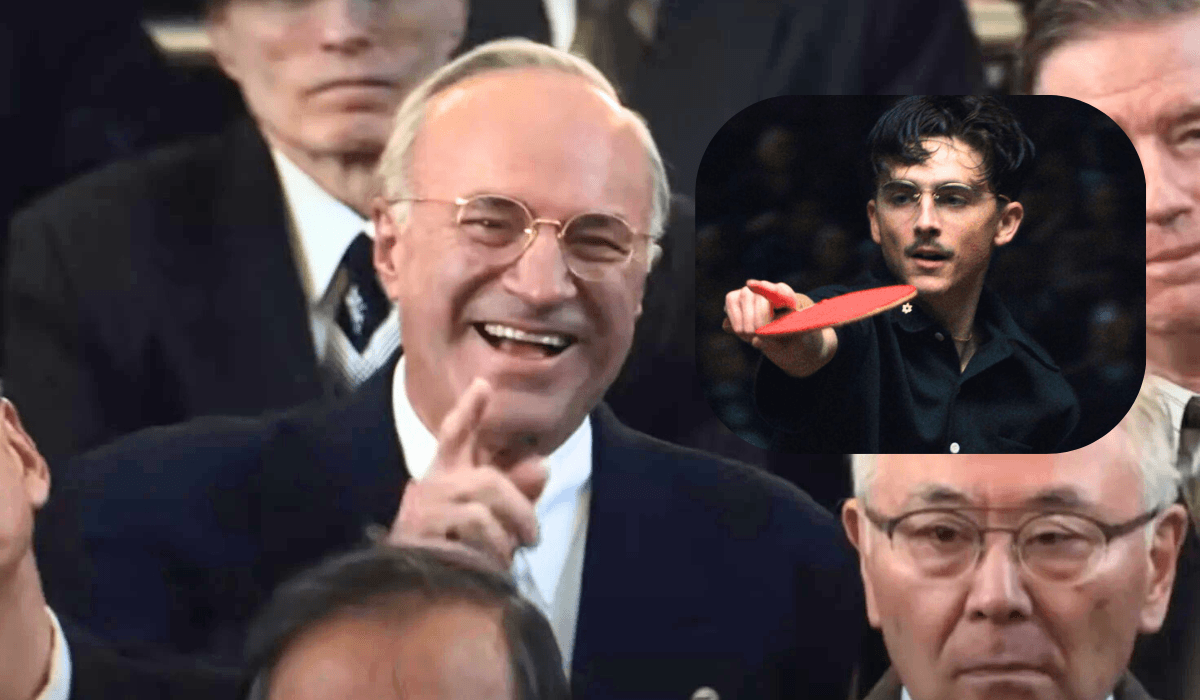
How A Business Mogul Became An Unlikely Movie Star
O'Leary makes his big screen debut in Josh Safdie's sports drama, playing Milton Rockwell, a wealthy pen manufacturer married to Gwyneth Paltrow's retired actress character. The Canadian businessman told CNN that director Safdie approached him with a uniquely honest pitch: they needed a real jerk for the role.
"Over a year ago, I got a phone call from Josh, and he said, 'I am casting for a movie called Marty Supreme, and there's a role in it called Milton Rockwell. He's the richest man in America in 1952, and we're looking for a real *******, and you're it,'" O'Leary recalled with characteristic bluntness.
The role required no acting lessons or method preparation. Safdie wanted O'Leary's natural screen presence, that same commanding persona viewers recognize from his years judging entrepreneurs on reality television. The filmmaker was betting that authenticity would trump traditional acting technique.
In my view, this casting choice represents something genuinely innovative. Rather than hire a trained actor to play wealthy and domineering, Safdie found someone who embodies those qualities naturally. It's a risky move that pays off precisely because O'Leary isn't pretending. He's channeling a version of himself into a fictional framework, creating something more unsettling than any performance could achieve.
The Scene That Required Twenty Takes And A Real Paddle
The pivotal moment arrives when Chalamet's character, aspiring table tennis champion Marty Mauser, crashes a high society party uninvited. Desperate for funding to compete in Tokyo, he begs Rockwell for sponsorship. The tycoon agrees, but with a humiliating condition: Marty must endure a public spanking with a ping pong paddle in front of Rockwell's wealthy friends.
Production initially planned to use stunt doubles and prop equipment designed to minimize impact. A fake paddle with hinges and foam padding sat ready. A body double stood prepared to take the hits. Nobody expected what happened next.
Chalamet walked onto set and rejected the entire safety plan. According to multiple sources, the young actor insisted on performing the scene himself, declaring he wanted to "immortalize" his own body on film. O'Leary tried reasoning with him, explaining the prop paddle had already broken on the first test hit and warning that using a real wooden paddle would cause genuine pain.
"He said, 'I don't give a shit. Let's do it,'" O'Leary told Entertainment Weekly. "He didn't want a stunt double. He wanted his own ass in it."
The scene stretched for hours. Director Safdie demanded roughly 40 takes, pushing for increasingly harder impacts to achieve authentic looking results on camera. O'Leary initially held back, trying to preserve his co-star's skin through multiple takes. But Safdie kept insisting the hits needed more force.
"Josh was saying, 'You've got to wind up harder,'" O'Leary remembered. Finally, he swung like a baseball bat and connected hard with Chalamet's right side. "I think his eyeballs exploded out of his head, and that's what you see."
The paddle left visible imprints on the actor's skin. O'Leary described Chalamet's posterior as "red hot" by the end of filming, with the brand name actually stamped into his flesh from repeated impacts.
Why This Moment Matters Beyond The Shock Value
The spanking scene functions as more than exploitation or controversy bait. Within the film's narrative, it represents Marty's lowest point, the moment his arrogance and ambition force him to surrender dignity for opportunity. Rockwell uses physical domination to establish power dynamics, converting Marty's dream into public submission.
O'Leary defended the scene's importance when speaking to various outlets. He views it as capital punishment for Marty's earlier actions, a necessary humiliation that sets up the character's journey to Tokyo. The businessman turned actor remained committed to his character's psychology: even now, he claims to feel unsatisfied with how much Marty suffered.
What strikes me most is how the scene interrogates American meritocracy myths. Marty believes his talent should open doors automatically. Rockwell teaches him that access requires payment, and sometimes that currency is dignity rather than dollars. The paddle becomes a tool of class violence disguised as opportunity. It's uncomfortable precisely because it reflects genuine power imbalances in worlds from finance to entertainment.
Chalamet's insistence on authenticity adds another dimension. His willingness to endure real discomfort mirrors his character's willingness to endure humiliation for advancement. Method acting often gets dismissed as pretentious, but here it serves the story's themes directly.
Box Office Success Validates The Risk
Marty Supreme opened with remarkable commercial performance considering its origins as an independent production. The film earned $875,000 from just six theaters during its limited December 19 release, achieving a per screen average of $145,933. That figure set records for both A24 and any platform release since La La Land in 2016.
The Christmas Day wide expansion proved even more successful. Initial projections suggested the film might reach $12 to 20 million over the four day holiday weekend, but it surpassed expectations by earning $27.3 million. Through its opening week, the sports drama accumulated approximately $28.3 million domestically.
These numbers carry particular significance given the film's reported $60 to 70 million budget, making it A24's most expensive production to date. For an original story without franchise recognition or source material awareness, these results demonstrate genuine audience interest rather than brand loyalty.
Critics have responded enthusiastically. Review aggregator Rotten Tomatoes shows 95 percent positive reviews from 221 critics, with many describing Chalamet's work as career defining. The film secured Golden Globe nominations and generated substantial awards season momentum.
Chalamet's promotional campaign deserves credit for building awareness. He created a satirical video pitching increasingly absurd marketing ideas to A24 executives, including flying an orange blimp across America with the film's title printed on both sides. Several of these supposedly ridiculous concepts became reality, including lighting the Empire State Building orange before the New York premiere.
The actor also designed merchandise collaborations with streetwear brands, sending custom jackets to athletes and celebrities ranging from Tom Brady to Susan Boyle. He appeared atop the Sphere in Las Vegas. He turned "Marty Supreme. Christmas Day" into a social media mantra. Every stunt aimed at cutting through the noise of a crowded holiday marketplace.
In my opinion, this represents a new model for independent film promotion. Rather than rely on traditional advertising spending, Chalamet leveraged his personal brand and social media fluency to generate viral moments. It's marketing that feels native to contemporary attention economies, where cultural conversation matters more than commercial interruptions.
The Broader Context Of Safdie's Vision
Josh Safdie directed Marty Supreme as his first solo project following the dissolution of his creative partnership with brother Benny Safdie. The siblings previously collaborated on acclaimed films including Uncut Gems and Good Time, establishing themselves as masters of anxious, high energy New York cinema.
This solo debut maintains the Safdie aesthetic while expanding its scope. The period setting required recreating 1950s Manhattan, from Lower East Side tenements to luxury hotels. Cinematographer Darius Khondji, who also shot Uncut Gems, used vintage Panavision anamorphic lenses and primarily 35mm film to capture era appropriate atmosphere.
The story draws loose inspiration from Marty Reisman, a legendary table tennis player who hustled games in New York before becoming a world champion. Safdie's interest in the sport traces back to his childhood, when eccentric Jewish immigrants played at his grandparents' home. His wife gave him Reisman's 1974 autobiography The Money Player in 2018, sparking ideas about ambition, Jewish identity, and post war American confidence.
The fictional Marty Mauser shares Reisman's general arc without replicating specific biographical details. Safdie and co-writer Ronald Bronstein built a character study exploring what drives someone to sacrifice everything for recognition in a niche pursuit. They examine rugged individualism's costs, revealing loneliness behind relentless ambition.
Safdie has spoken candidly about how his decade long struggle to make Uncut Gems informed this film's themes. He watched peers marry and have children while he poured life into script pages, sacrificing normal experiences for creative dreams. That personal perspective enriches Marty Supreme's portrayal of obsessive pursuit.
The director's casting philosophy extends beyond O'Leary. The film features roughly 140 non actors alongside professional performers, mixing recognizable faces with authentic New York personalities. Tyler Okonma (Tyler, The Creator) plays Marty's best friend. Abel Ferrara appears as an aging gangster. Fran Drescher portrays Marty's mother. This blend creates textural richness that pure Hollywood casting couldn't achieve.
What The Scene Reveals About Modern Filmmaking
The spanking sequence's production process highlights tensions between safety protocols and artistic authenticity. Contemporary film sets prioritize actor welfare, using specialized equipment and trained stunt performers to minimize injury risk. Chalamet's rejection of these protections represents either brave commitment or concerning precedent, depending on perspective.
Some might argue his choice demonstrates admirable dedication to craft. Others might worry it creates pressure for future performers to similarly reject safety measures to prove seriousness. The conversation matters because power dynamics on film sets remain complicated despite recent industry reforms.
O'Leary praised Chalamet's toughness repeatedly, calling him a "crazy trooper" who deserves Academy Award recognition for his commitment. The businessman turned actor expressed genuine respect for his co-star's willingness to endure discomfort for art.
From my perspective, the incident raises questions worth examining rather than easy answers to embrace. Artists throughout history have pushed physical boundaries to create memorable work. Dancers destroy their feet. Singers damage vocal cords through demanding performances. Method actors immerse themselves in dangerous psychology. Where does dedication become self harm? When does artistic vision justify bodily risk?
These questions extend beyond one scene in one film. They touch fundamental issues about creative labor, performer autonomy, and directorial responsibility. Safdie maintained clear communication throughout, ensuring Chalamet understood the physical demands. The actor exercised informed consent while rejecting safer alternatives. Yet the power differential between established director and ambitious young star complicates any simple reading of that consent.
I don't claim to have definitive answers. But I believe the conversation itself matters. We can simultaneously admire the artistic results while questioning whether similar situations should become normalized practice. Excellence shouldn't require suffering, even when artists volunteer for that suffering.
The Film's Cultural Moment
Marty Supreme arrives during renewed interest in sports dramas focused on niche competitions. Recent years brought films about Formula One racing, sneaker marketing, and now table tennis. These stories succeed when they transcend their sporting contexts to examine broader human drives.
Josh Safdie accomplishes this by treating ping pong as backdrop rather than subject. The matches provide structure and visual dynamism, but the real drama unfolds in Marty's relationships, his negotiations with powerful gatekeepers, his gradual recognition that talent alone doesn't guarantee success in stratified systems.
The post war 1950s setting adds resonance. This era saw American confidence surge following World War II victory, creating belief that individual merit could overcome any obstacle. Jewish Americans in particular experienced new social mobility while processing Holocaust trauma and asserting cultural pride. Marty embodies these contradictions, carrying both inherited trauma and bold optimism into his pursuit.
Contemporary audiences recognize these dynamics. We live in another period of intense meritocracy mythology, where social media amplifies stories of individual achievement while obscuring structural barriers. Marty's journey exposes the gap between democratic ideals and hierarchical reality. His talent is real, but accessing opportunities requires navigating systems controlled by people like Milton Rockwell.
The spanking scene crystallizes this power imbalance through visceral imagery. No amount of skill at the ping pong table saves Marty from humiliation when he needs something from someone more powerful. The paddle marks his body with the cost of ambition.
Awards season will determine whether Marty Supreme's critical acclaim translates into major recognition. Chalamet already secured Golden Globe nominations and appears likely for Academy Award consideration. O'Leary's debut performance has surprised observers, with some suggesting he deserves supporting actor acknowledgment.
The film's commercial trajectory remains uncertain. Strong opening numbers need sustainable momentum to justify that substantial production budget. Positive word of mouth and the traditionally lucrative post Christmas period provide advantages. Whether mainstream audiences embrace a period ping pong drama will shape A24's future willingness to fund ambitious original projects.
For Chalamet, the role continues establishing him as his generation's most versatile leading man. He's demonstrated range across blockbusters like Dune, prestige biopics like A Complete Unknown, family friendly musicals like Wonka, and now this edgy sports drama. Each project expands his capabilities while maintaining star power that drives box office results.
His promotional efforts particularly warrant recognition. Rather than rely on traditional press junkets alone, he created genuine cultural moments that made the film feel essential rather than optional. That skill matters increasingly as attention fragments across endless entertainment options.
Ultimately, Marty Supreme works because everyone involved committed fully to Safdie's vision. O'Leary embraced playing against his comfort zone. Chalamet endured literal pain for authentic performance. The crew recreated an entire era with meticulous detail. The result feels urgent and alive rather than calculated or safe.
The spanking scene will continue generating conversation and controversy. That's appropriate. Art should provoke discussion about boundaries, power, and what we demand from performers. The scene succeeds not despite its discomfort but because of it, forcing viewers to confront ugly truths about how access and opportunity actually function in American systems.
Whether you find it brilliant, exploitative, or somewhere between depends on your perspective. What's undeniable is its effectiveness at making audiences feel something strong. In an era of safe, focus grouped entertainment designed to offend nobody, that willingness to unsettle viewers feels almost radical.
Cinema needs more films willing to take genuine risks with tone, content, and casting. Marty Supreme proves audiences will show up for original stories told with conviction and craft. That's a lesson worth remembering as Hollywood charts its creative future.
Related Reads: Marty Supreme: Why I'm Done Celebrating Narcissists On Screen