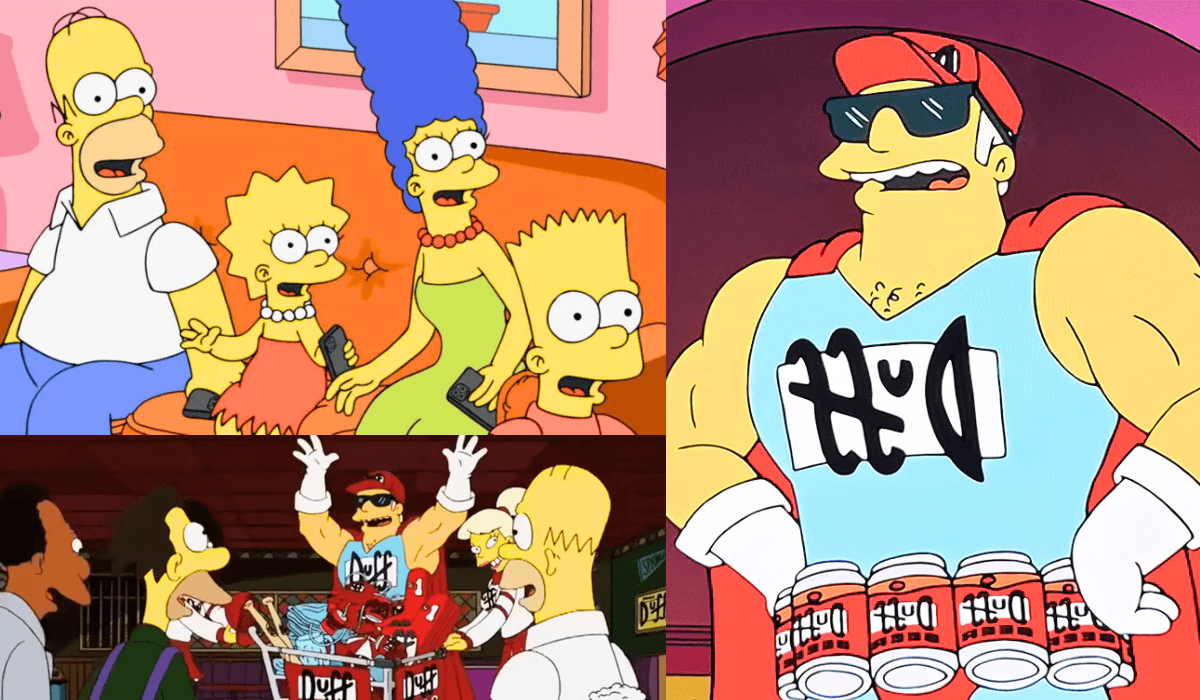
Duffman Retirement Reveals The Simpsons Is Systematically Eliminating Springfield's Population

When The Simpsons retired Duffman permanently on January 4, 2026, most headlines focused on outdated advertising and changing cultural norms. But buried in those stories was a more disturbing pattern that longtime fans have started to notice: Springfield is slowly losing its residents, one character at a time. This is not paranoia. This is not conspiracy. This is a documented trend that accelerated dramatically in recent seasons.
Over the past two years alone, The Simpsons has permanently eliminated three recurring characters from its universe. Duffman joins Alice Glick, who died in Season 37, Episode 7, and Larry "The Lush" Dalrymple, who slumped over dead at Moe's Tavern in Season 35. When you zoom out and look at the broader history, the picture becomes even clearer: Springfield is being systematically pruned.
The Recent Wave of Deaths
Alice Glick, the church organist who appeared for over three decades, keeled over onto her organ and died suddenly during a sermon by Reverend Lovejoy in the Season 37 episode titled "Sashes to Sashes." Executive producer Tim Long confirmed her death was permanent, stating she is "dead as a doornail."
This marked Alice's second death on the show. She was previously attacked by a rogue robot seal in Season 23, Episode 4 "Replaceable You," but continued appearing afterward, sometimes alive and sometimes as a ghost depending on what the episode required. This time, producers made it clear: she is gone for good.
Just months earlier, in April 2024, Larry Dalrymple died at Moe's Tavern after slumping over in his chair while Homer, Lenny, Carl, and Moe were distracted by a football game. The quiet barfly, who had been a background presence since the show's pilot in 1989, was discovered to have been dead for some time before anyone noticed.
Larry's death hit particularly hard because it exposed something uncomfortable about The Simpsons universe: these people spend years in each other's company without really knowing one another. Homer confessed he never bothered to learn anything about Larry despite decades of proximity. At Larry's funeral, the gang discovered he considered them his best friends, even though none of them knew him well at all.
Now Duffman has been retired forever, bringing the total to three significant character departures in less than two years. This represents an unprecedented acceleration of permanent removals from Springfield's population.
The Historical Pattern of Springfield Deaths
To understand what is happening now, we need to examine the full history of permanent character deaths on The Simpsons. The show has always been cautious about killing characters, preferring the floating timeline where no one ages and nothing fundamentally changes. But when deaths do occur, they tend to cluster around specific circumstances.
The most significant permanent death in the show's history remains Maude Flanders, who was killed in Season 11's "Alone Again, Natura-Diddily" when she was knocked off the top of the Springfield Speedway grandstand by a t-shirt cannon. Maude's death was not creative in origin. It resulted from a pay dispute between voice actor Maggie Roswell and Fox Broadcasting Company over travel expenses. When negotiations failed, the show killed the character rather than recast her.
Maude's death proved to be narratively significant, transforming Ned Flanders from a one-dimensional Christian neighbor into a more complex, grieving widower who struggles with faith and loneliness. The show gave Ned a genuine character arc, something The Simpsons rarely attempts with its supporting cast.
Edna Krabappel, Springfield Elementary's teacher and Ned's second wife, was retired from the show following voice actor Marcia Wallace's death in October 2013. The show handled her departure with unusual grace, showing Ned wearing a black armband and looking at her picture alongside Maude's, saying he missed her laugh. Rather than recast Wallace, the producers chose to retire the character permanently.
When Phil Hartman was murdered by his wife in May 1998, the production staff retired both Troy McClure and Lionel Hutz, two of the show's most beloved recurring characters. These characters appeared in 52 episodes and represented, according to critic Chris Turner, "the most significant contribution to the show outside of its permanent cast."
Troy McClure, the washed-up actor who hosted questionable infomercials and educational films, last appeared in the Season 10 episode "Bart the Mother," which aired four months after Hartman's death. Lionel Hutz, Springfield's incompetent lawyer, was similarly retired out of respect for Hartman.
Other permanent deaths include Bleeding Gums Murphy, Lisa's jazz mentor who died in Season 6, and Mona Simpson, Homer's mother. Rabbi Hyman Krustofsky, Krusty's father, also died permanently, passing away before he could tell his son whether he thought Krusty was funny.
Why This Pattern Matters Now
What makes the recent wave of deaths different from the historical pattern is motivation. Maude died because of a contract dispute. Edna died because her voice actor passed away. Troy McClure and Lionel Hutz were retired out of respect for Phil Hartman. These were external circumstances forcing the show's hand.
But Duffman, Alice Glick, and Larry Dalrymple represent something else entirely: creative decisions to eliminate characters who no longer serve the show's needs. These characters were not retired because of real-world tragedies or legal conflicts. They were retired because the writers decided Springfield works better without them.
This shift signals a fundamental change in how The Simpsons approaches its universe. For 35 years, the show operated on the principle that Springfield is eternal and unchanging. Characters might disappear for seasons at a time but they always remained available for future use. The show's floating timeline meant that everyone existed in a perpetual present, ready to be deployed whenever needed.
That model is breaking down. The Simpsons has accumulated too many characters over 37 seasons and 800+ episodes. The extended universe has become unwieldy, cluttered with dozens of recurring figures who appear sporadically without clear purpose. New viewers cannot possibly navigate this ecosystem without extensive prior knowledge.
By eliminating characters, the show is trying to streamline itself, to make Springfield more manageable and accessible. But this strategy reveals a deeper crisis: The Simpsons no longer knows what to do with its own creation.
The Producers Confirm the Strategy
Co-executive producers Cesar Mazariegos and Jessica Conrad recently discussed how the team evaluates whether a recurring character should be written out, specifically citing the decision to eliminate Larry the Barfly as sparking lengthy internal debate.
This confirms what the pattern suggests: character deaths are now part of active creative strategy rather than responses to external circumstances. The show is making deliberate choices about who stays and who goes, pruning Springfield's population to fit current creative needs.
When rumors spread in September 2025 that music teacher Dewey Largo had been written out off-screen, Conrad pushed back aggressively, saying "For something like this, I would welcome the riling up if you actually believe that we would kill him off camera." The defensive response suggests producers are aware that fans have noticed the pattern and are concerned about how far it might go.
The question hanging in the air: who is next? Which longtime Springfield resident will be the next to receive a permanent retirement or death?
This Is About Reducing Creative Burden
Here is my opinion on what is really happening: The Simpsons is drowning under the weight of its own continuity, and eliminating characters is a desperate attempt to stay afloat.
When the show launched in 1989, Springfield's population was manageable. Homer had coworkers at the nuclear plant. Bart had classmates at school. Marge had neighbors on Evergreen Terrace. The supporting cast existed to serve the Simpson family's stories.
But over 37 seasons, these supporting characters developed their own identities, catchphrases, running gags, and fan followings. Springfield grew from a backdrop into its own complex ecosystem with hundreds of interconnected residents, each with established relationships and histories.
This depth was once The Simpsons' greatest strength. The show could tell stories about anyone in Springfield and fans would recognize the characters and understand the references. Episodes like "22 Short Films About Springfield" worked because viewers had investment in the entire town, not just the Simpson family.
Now that depth has become a liability. The show cannot maintain consistency across 37 seasons of material. Character relationships contradict earlier episodes. Backstories change to fit new plots. The floating timeline, which once allowed infinite storytelling possibilities, now creates confusion about who knows what and when events occurred.
New writers joining the show cannot master decades of Springfield lore. Long-time writers are tired of working around the accumulated baggage. And new viewers, the audience The Simpsons desperately needs to attract, find Springfield impenetrable.
So the show is doing what any overwhelmed organization does: downsizing. Cut the characters who are not essential. Eliminate the residents who create more problems than they solve. Simplify the universe to make it manageable again.
Duffman got cut because he represents outdated satire and requires a physically demanding voice performance. Alice Glick got cut because she is an elderly character with limited storytelling potential. Larry got cut because he is entirely defined by being a background presence at Moe's Tavern.
These are rational creative decisions. But they represent something sad: The Simpsons no longer has the creative capacity to maintain the rich, detailed world it built over three decades.
The Slippery Slope Problem
The danger with this strategy is that it never stops. Once you start eliminating characters to simplify the universe, where do you draw the line?
Barney Gumble, Homer's alcoholic friend, has not had a significant role in years. Should he be next? Lenny and Carl exist primarily as Homer's coworkers. Do they serve enough purpose to justify keeping them? Comic Book Guy, the Squeaky Voiced Teen, Sea Captain, Crazy Cat Lady, Bumblebee Man, all these recurring Springfield residents could theoretically be eliminated without fundamentally altering the show.
Even more significant characters are vulnerable. Patty and Selma, Marge's sisters, primarily exist to mock Homer. Principal Skinner and Superintendent Chalmers are tied to Bart's school stories, but Bart's elementary school adventures have become repetitive after 37 seasons. Krusty the Clown, once central to the show's satire of entertainment culture, now represents the same outdated advertising world that Duffman embodied.
If The Simpsons is serious about streamlining Springfield, these characters could all be on the chopping block. The show could theoretically reduce itself to just the Simpson family and a handful of essential supporting players like Ned Flanders, Moe, and Chief Wiggum.
But at that point, is it still The Simpsons? Or has it become a generic family sitcom that happens to be animated?
The Counter-Argument: Springfield Was Always Expendable
Some will argue that I am overthinking this. The Simpsons has always treated its supporting characters as expendable tools for storytelling. These characters exist to serve the Simpson family's adventures, not as ends in themselves.
From this perspective, retiring Duffman, Alice Glick, and Larry makes perfect sense. These characters were never essential. They were background texture, and background texture can be changed or removed as needed.
This argument has merit. The show's floating timeline proves that consistency has never been a priority. Characters age and de-age as plots require. Relationships form and dissolve without explanation. Springfield's geography changes between episodes. The Simpsons has always prioritized immediate comedic needs over long-term continuity.
But I would counter that the show's willingness to sacrifice continuity for comedy is exactly what made it great. The rich, contradictory, chaotic nature of Springfield reflected real life better than shows that obsess over consistency. People do change. Relationships do evolve. Towns do grow and shrink. The fact that The Simpsons embraced this messiness made it feel alive.
Now, by systematically eliminating characters, the show is imposing order on chaos. It is choosing consistency over richness, simplicity over complexity. That might make the show easier to write, but it also makes Springfield less interesting.
What This Means for The Simpsons' Future
The pattern of character eliminations points to a show in transition, trying to figure out what it wants to be in its fourth decade. The Simpsons can no longer be the anarchic, detail-obsessed satire of the 1990s. That version of the show required writers intimately familiar with Springfield's ecosystem and audiences willing to invest in complex continuity.
Instead, The Simpsons is becoming something simpler: a family sitcom that occasionally references its own history but does not require deep knowledge to enjoy. This is probably necessary for the show's survival. Casual viewers and new audiences cannot be expected to understand 37 seasons of backstory.
But this transition comes with costs. Every character eliminated is a lost storytelling possibility. Every simplified relationship is a reduction in Springfield's complexity. Every streamlined element makes the show a little more generic and a little less unique.
The Simpsons built something extraordinary: a fully realized fictional universe that felt as rich and detailed as reality. Springfield was not just a setting. It was a character in its own right, with its own personality, contradictions, and life.
Now Springfield is being systematically dismantled, one character at a time. The show is trading depth for accessibility, complexity for simplicity, chaos for order.
Maybe this is necessary. Maybe The Simpsons cannot survive without becoming something smaller and more manageable. Maybe the rich, intricate Springfield of the golden years was always unsustainable.
But that does not make it any less sad to watch.
The Fan Reaction: "They Are Killing Off Everyone"
Fans have noticed the pattern. Social media reactions to Alice Glick's death included comments like "1st Larry, now Alice Glick. The Simpsons are killing off everyone."
This reaction captures something important: fans recognize that these deaths are not isolated incidents but part of a broader trend. They sense that Springfield is changing in fundamental ways, even if they cannot articulate exactly how or why.
The Simpsons has always had a complicated relationship with its fanbase. Many longtime viewers stopped watching years ago, convinced the show's quality declined irreversibly after Season 10 or 12. Others continue watching out of habit, nostalgia, or genuine belief that the show still produces good episodes occasionally.
But even the most dedicated fans struggle to defend the current state of Springfield. The show that once felt infinite and endlessly creative now feels constrained and repetitive. The universe that once seemed to expand with each episode now contracts.
Character deaths are the most visible symptom of this contraction. They represent Springfield becoming smaller, simpler, and less interesting. They are admissions that The Simpsons can no longer maintain what it built.
Who Will Be Left Standing?
If this trend continues, and there is no reason to think it will not, Springfield in 2030 will look very different from Springfield in 2020. Dozens of recurring characters could disappear, either through death, retirement, or quiet erasure.
The core Simpson family is safe. Homer, Marge, Bart, Lisa, and Maggie are untouchable. Ned Flanders is probably safe, given his importance to Homer's stories. Moe Szyslak likely survives as long as Homer needs a bar to frequent.
But everyone else? Vulnerable. Springfield Elementary could lose half its supporting cast. Moe's Tavern could eliminate most of its barflies. The town's eccentric residents, once a source of endless comedy, could be reduced to occasional cameos.
This future Springfield would be functional but bland. It would serve the Simpson family's needs without the rich texture that made the town feel real. It would be easier to write and easier for new viewers to understand, but it would also be forgettable.
The Simpsons built Springfield over three decades. It may dismantle it in three seasons.
All of this raises an uncomfortable question that the show seems unwilling to address directly: if Springfield has become too complex to maintain, if the accumulated continuity has become more burden than asset, if the supporting cast needs to be systematically eliminated to keep the show functional, should The Simpsons itself continue?
The show has been renewed through Season 40, meaning at least three more years of episodes. But longevity is not the same as vitality. The Simpsons survives because it is profitable and fills a programming slot, not because anyone believes it is producing culturally significant work.
By eliminating characters to make the show more manageable, The Simpsons admits it cannot sustain what made it great. That is not an argument for continuing. That is an argument for ending with dignity.
But ending is not an option as long as the show generates revenue. So instead, Springfield will continue shrinking. Characters will continue disappearing. The rich, chaotic universe will continue simplifying until it bears little resemblance to what fans remember.
Duffman is gone. Alice Glick is dead. Larry Dalrymple is dead. Who is next? And how many characters can Springfield lose before it stops being Springfield at all?
The ultimate irony is that The Simpsons is doing to Springfield exactly what it once satirized corporations doing to everything else: reducing complexity to maximize efficiency, eliminating anything that does not serve immediate needs, prioritizing short-term management over long-term value.
The show that spent decades mocking corporate short-sightedness has become the thing it mocked. It is simplifying its universe not because it makes the show better but because it makes the show easier to produce.
This is the inevitable endpoint of any long-running series that continues past its natural conclusion. The creative vision that built something extraordinary gives way to corporate management that maintains something profitable. Art becomes product. Vision becomes process.
Springfield is being strip-mined for its remaining value before the whole operation shuts down. Every character eliminated is another asset liquidated, another piece of history erased, another admission that The Simpsons is running on fumes.
The systematic culling of Springfield's population is not a creative choice. It is corporate strategy dressed up as storytelling. And like all corporate strategy, it prioritizes immediate problems over long-term consequences.
The Simpsons will continue eliminating characters until Springfield is small enough to manage. Then it will continue until the town is barely recognizable. Then it will continue because inertia is easier than ending.
And we will watch, not because the show is good, but because we remember when it was.
Duffman is retired. Alice Glick is dead. Larry Dalrymple is dead. Springfield is dying.
But The Simpsons will live forever.