Duffman Retirement Reveals The Simpsons Just Admitted Its Own Obsolescence

The Simpsons did something remarkable on January 4, 2026. In a Season 37 episode parodying Apple TV's red-hot series Severance, the show retired Duffman, the beer-swilling corporate mascot who embodied everything absurd about 1990s advertising culture. But hidden inside this seemingly straightforward plot point was something much more painful and honest: The Simpsons accidentally confessed that it, too, has become irrelevant.
When Duffman tells the Simpson family that corporate spokesmen, print ads, and TV spots are now obsolete because "today's kids can't even sing the jingles," he is not just commenting on advertising's evolution. He is diagnosing The Simpsons itself.
The Line That Said Everything
Let's examine what Duffman actually says in his final appearance. "The Duff Corporation has, uh, retired that character forever. All the old forms of advertising are now passé. Corporate spokesmen, print ads, TV spots. Today's kids can't even sing the jingles."
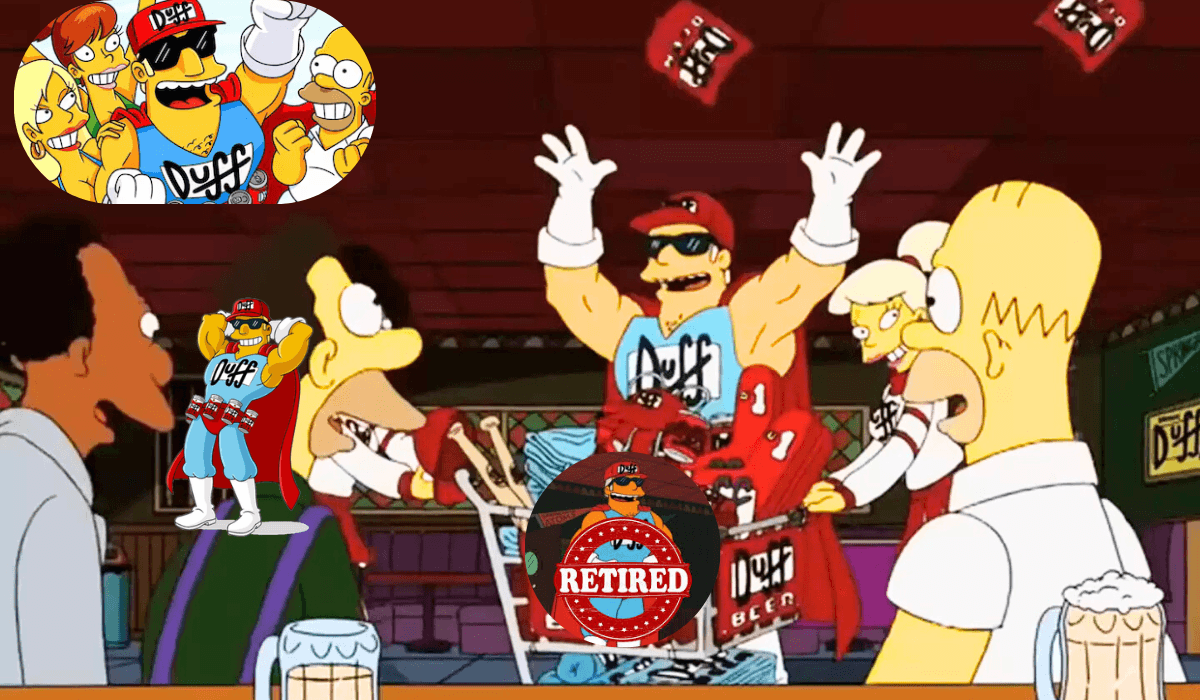
This is meta-commentary masquerading as plot. The Simpsons, through Duffman's mouth, is admitting that its entire satirical toolkit, the very mechanisms that made it culturally dominant in the 1990s, no longer connects with modern audiences. The show built its reputation on skewering advertising, consumerism, and corporate culture through characters like Duffman. But if those targets are now "passé," what does that make The Simpsons?
The irony cuts deeper when you realize The Simpsons chose to parody Severance, a show that became Apple TV's most-watched series in 2025 and earned 27 Emmy nominations, making it the most-nominated series of the year. Here is a 37-year-old show desperately reaching for relevance by parodying the hottest thing in television, while simultaneously retiring a character because old-style satire doesn't work anymore.
The contradiction is stunning. The Simpsons is doing exactly what it claims doesn't work, chasing cultural currency through outdated methods, all while its viewership collapses.
The Numbers Don't Lie About Decline
The viewership data tells a brutal story. The early seasons of The Simpsons averaged over 20 million viewers per episode, with "Bart Gets an 'F'" attracting an estimated 33.6 million viewers, still the most-watched episode in the show's history. Season 35 averaged 1.74 million viewers. Season 36 averaged 1.64 million viewers.
That represents more than a 90 percent decline from the show's peak.
To put this in perspective, Season 12 pulled in an audience of almost 15 million, but viewership has been falling steadily ever since. The show that once defined American popular culture now struggles to attract the same audience as a moderately successful cable drama.
Some will argue that all television viewership has declined due to streaming fragmentation and changing media consumption habits. This is true. The highest 30 rated shows on TV averaged a 17.7 Nielsen rating when The Simpsons debuted in 1989, compared to an 8.7 average rating in 2014-15, representing about a 50 percent decline in top show performance over 25 years.
But The Simpsons has declined by more than 90 percent. Even accounting for industry-wide trends, the show is losing its audience at nearly double the rate of its competitors.
Gen Z Doesn't Watch The Simpsons
The demographic data is even more damning. Analysis shows that The Simpsons has older audiences and does not particularly appeal to Gen Z, in contrast to shows like Rick and Morty, The Last of Us, and even Grey's Anatomy, which count roughly one-third of their viewers from Gen Z.
Think about what this means. The generation currently aged 12 to 27, the demographic that should be discovering The Simpsons through streaming and making it their own, simply isn't watching. They have no emotional attachment to Homer, Marge, Bart, Lisa, or any of Springfield's residents. They did not grow up quoting the show. They don't understand why anyone thinks "D'oh!" is funny.
To Gen Z, The Simpsons is what Bonanza or Gunsmoke was to Millennials: something their parents watched that has no relevance to their world.
When Duffman says "today's kids can't even sing the jingles," he might as well be talking about The Simpsons theme song. Gen Z doesn't know the words because they have never had a reason to learn them.
The Severance Parody Exposes Everything
The choice to parody Severance is particularly revealing. Severance became a cultural phenomenon in 2025, earning 27 Emmy nominations for its second season, including Outstanding Drama Series and nine performance category nominations. The show generated intense fan engagement, with audiences obsessively analyzing every detail, creating theories, and participating in elaborate marketing activations.
Severance transformed viewers from passive observers into active participants in its world, pioneering a slow-burn, participatory approach to television that represented everything modern prestige TV aspires to be. It was mysterious, intellectually challenging, visually distinctive, and designed for the streaming era where audiences binge episodes and dissect them frame by frame.
The Simpsons, meanwhile, remains a broadcast show airing weekly on Fox, structured around commercial breaks, designed for passive consumption. It is a relic of linear television trying to comment on streaming culture.
By choosing to parody Severance, The Simpsons revealed its own desperation. The show is no longer the thing being parodied. It has become the thing doing the chasing, hoping some of Severance's cultural heat will rub off.
This represents a complete reversal from The Simpsons' golden age, when it was the cultural touchstone that everyone else referenced. Now it references other shows, hoping audiences will recognize the connection and remember that The Simpsons is still around.
The Death of Advertising Mascots Mirrors The Simpsons' Decline
Duffman's retirement connects to a larger cultural shift that The Simpsons either doesn't understand or refuses to acknowledge. Corporate mascots and advertising spokesmen really have become obsolete, but not for the reasons the show suggests.
Joe Camel was retired in 1997 under pressure from health advocates who argued the cartoon character targeted children. Spuds MacKenzie, the Bud Light party dog, disappeared in 1989 after similar controversies about marketing alcohol to minors. The McDonaldland characters, including Grimace, Hamburglar, and Mayor McCheese, were phased out in the early 2000s as fast food companies faced criticism about marketing to children.
These mascots died because the cultural and regulatory environment changed. Companies could no longer use cartoon characters to sell potentially harmful products to children. The advertising landscape shifted toward digital marketing, influencer culture, and targeted social media campaigns.
But here is what The Simpsons misses: those mascots were retired because they worked too well at reaching children. Duffman, by contrast, is being retired because he doesn't work at all anymore. He represents a form of satire that no longer lands.
When The Simpsons created Duffman in 1997, he was brilliant because beer advertising was everywhere, corporate mascots were ubiquitous, and the show could skewer this culture through exaggeration. Duffman took the absurdity of beer advertising and cranked it up to 11, creating something ridiculous enough to be funny.
But in 2026, beer advertising looks completely different. Craft breweries dominate the cultural conversation. Hard seltzers and ready-to-drink cocktails have eaten into beer's market share. Companies market through Instagram, TikTok, and sponsored content, not through cartoon spokesmen. The entire context that made Duffman funny has evaporated.
When Your Satire Outlives Its Target
This creates an existential problem for The Simpsons. The show built its reputation on satirizing American culture, particularly the culture of the 1980s and 1990s. But what happens when that culture is so distant that younger audiences don't recognize the targets anymore?
Imagine trying to explain Duffman to someone born in 2005. You would have to first explain what beer advertising looked like in the 1990s, then explain how The Simpsons was parodying those commercials, then explain why this was considered clever. By the time you finished, the joke would be dead.
This is the fundamental problem facing The Simpsons in 2026. Most of its satirical references are aimed at a culture that no longer exists. The show is still making jokes about network television, broadcast news, and corporate culture as if we're living in 1995. Meanwhile, the actual targets that deserve satire in 2026 are TikTok influencers, cryptocurrency scams, streaming service overload, AI-generated content, and the parasocial relationships between content creators and their audiences.
The Simpsons occasionally tries to address these topics, but it always feels dated and out of touch, like your dad trying to explain memes. The show's writers, many of whom have been with The Simpsons for decades, are creating satire from a worldview frozen in amber.
The Pattern of Springfield Deaths
Duffman's retirement is not an isolated incident. The Simpsons has been systematically eliminating characters from its universe, and the pattern reveals a show in crisis.
In Season 37, the show also permanently killed off Alice Glick, the church organist. In Season 35, Larry the Barfly died. These were never major characters, but their deaths signal something larger: The Simpsons is pruning its extended universe, cutting away elements that no longer serve the show's needs.
Why? Because maintaining continuity and characterization across 37 seasons and 800+ episodes has become impossible. The show has accumulated so many characters, running gags, and callbacks that it risks collapsing under its own weight. New viewers cannot possibly understand Springfield's ecosystem without a graduate-level education in Simpsons lore.
By killing or retiring characters, the show is trying to simplify itself, to become more accessible to casual viewers. But this strategy fundamentally misunderstands why people watch The Simpsons. The depth of Springfield's world was always part of the appeal. Removing that depth doesn't make the show more accessible. It just makes it shallower.
The Simpsons Should Have Ended Years Ago
Here is my opinion, and it is one I hold with increasing conviction: The Simpsons should have ended after Season 10 or Season 12, at the height of its creative powers, before the decline became obvious to everyone.
There is no shame in ending a show while it is still good. Breaking Bad ran for five seasons and quit. The Sopranos ran for six seasons and ended. The Wire ran for five seasons and stopped. These shows are remembered as masterpieces because they ended before outstaying their welcome.
The Simpsons, by contrast, will be remembered as a show that was brilliant for about a decade and then continued for another 25+ years out of institutional momentum and corporate profits. FOX renewed The Simpsons through Season 40, not because the show is culturally relevant or creatively vital, but because it is cheap to produce and fills Sunday night programming slots.
This is not how great art should work. Great art knows when to end.
By continuing long past its expiration date, The Simpsons has diluted its own legacy. When people think about The Simpsons now, they don't think about the incredible episodes from Seasons 3 through 9. They think about the show as a zombie, lurching forward through sheer inertia.
The Duffman retirement crystallizes this perfectly. The show is literally retiring its own outdated satirical tools while continuing to exist. It has admitted that its methods no longer work but refuses to draw the logical conclusion: if your satirical framework is obsolete, maybe your show is too.
The Uncomfortable Truth About Legacy
The Simpsons changed television forever. It proved that animation could be smart, sophisticated, and aimed at adults. It pioneered a style of rapid-fire cultural satire that influenced everything from South Park to Family Guy to Rick and Morty. It created catchphrases that entered the language. It made FOX a legitimate network.
All of this is true. All of this is important. And none of it changes the fact that the show has become a shadow of its former self.
There is a painful irony in watching The Simpsons, a show that once represented the cutting edge of cultural commentary, become the thing it would have mocked in its prime. A bloated, corporate product that continues long after its creative justification has ended, sustained only by brand recognition and merchandise sales.
If The Simpsons from 1995 could see The Simpsons of 2026, it would write an episode savagely mocking itself. That episode would feature a long-running animated show that continues for decades despite losing its audience, its relevance, and its creative vision, all while corporate executives keep it on life support because it generates reliable revenue.
That episode would be devastating and funny and true. And The Simpsons of 2026 could never write it.
What Does Gen Z Watch Instead?
The audience The Simpsons has lost is not staying home and reading books. They are watching other things, and understanding what they watch reveals why The Simpsons can't compete.
Gen Z gravitates toward shows like Severance, The Last of Us, Wednesday, Succession, and Euphoria. These shows share certain qualities: visual distinctiveness, complex storytelling, moral ambiguity, and an understanding that audiences are sophisticated enough to handle mystery and nuance. They don't explain jokes. They don't hold your hand. They assume you're paying attention.
The Simpsons, by contrast, still follows a traditional sitcom structure where every episode resets to status quo, jokes are clearly signposted, and emotional arcs resolve in 22 minutes. This format worked in 1990 when audiences consumed TV passively. It doesn't work in 2026 when audiences expect shows to challenge them.
Gen Z also consumes content differently. They watch on their phones, they skip through scenes, they create TikToks analyzing shows, they participate in online communities dissecting every detail. The Simpsons is not built for this kind of engagement. It is designed for passive consumption while eating dinner.
The show's attempts to court younger audiences, like creating TikTok accounts or making references to viral trends, always feel forced and embarrassing. You cannot manufacture cultural relevance. Either your art connects with the zeitgeist or it doesn't. The Simpsons doesn't.
The Severance Comparison Makes It Worse
Let's compare what Severance accomplished in two seasons to what The Simpsons is doing in Season 37.
Severance created a fully realized world with its own visual language, mythology, and aesthetic. The Lumon Industries offices don't look like anything else on television. The show's use of color, symmetry, and retro-futuristic design creates an atmosphere of creeping dread that serves the story.
The Simpsons, meanwhile, looks exactly the same as it did in 1989. Same character designs, same yellow skin, same Springfield layout. The show is visually stuck in time.
Severance tells a story about work-life balance, corporate control, consciousness, and identity that feels urgent and contemporary. It is commenting on 2025 anxieties about technology, capitalism, and the erosion of the self.
The Simpsons is still making jokes about Krusty the Clown and Itchy and Scratchy, references that meant something in 1992 but feel ancient now.
Severance transformed viewers from passive observers into active participants, with fans obsessively dissecting each scene, looking for clues, generating theories that became weekly expectations. Twitter, Reddit, and TikTok exploded with frame-by-frame breakdowns.
The Simpsons generates no such engagement. People don't analyze episodes looking for hidden meanings. They don't create elaborate theories. At best, longtime fans watch out of habit. At worst, people have stopped watching entirely.
This is what obsolescence looks like. Not with a bang but with steady, inexorable decline until one day you realize nobody is paying attention anymore.
Should The Simpsons Retire Like Duffman?
The question hangs in the air, unspoken but obvious: if Duffman represents outdated advertising, and The Simpsons is retiring him because he no longer works, should The Simpsons itself retire?
From a creative standpoint, the answer is clearly yes. The show has nothing left to say. It is repeating itself, recycling plots, and coasting on fumes. Every season that continues dilutes the legacy of the golden years further.
From a business standpoint, the answer is clearly no. The Simpsons remains profitable. It fills a programming slot. It generates merchandise revenue. Disney, which now owns the show through its acquisition of 21st Century Fox, has no incentive to cancel it.
This tension between art and commerce has always existed, but The Simpsons has fully surrendered to the commercial side. The show exists now purely as intellectual property, a brand to be exploited, not as a creative work with something to communicate.
Duffman's retirement is The Simpsons looking in the mirror and seeing what it has become: a relic of outdated entertainment that continues only because corporations profit from it, not because anyone needs it to exist.
The show is self-aware enough to know this but not brave enough to act on it.
The ultimate irony of Duffman's retirement is that The Simpsons is commenting on its own irrelevance while simultaneously demonstrating that irrelevance. The episode aired, some people watched, a few entertainment websites wrote brief articles, and then everyone moved on. There was no cultural conversation. No viral moments. No sense that The Simpsons had done something important.
Compare this to how Severance dominated conversation throughout its Season 2 run. Every episode generated dozens of think pieces, Reddit threads with thousands of comments, TikToks dissecting tiny details. People cared deeply about what happened next.
Nobody cares deeply about what happens next on The Simpsons because nothing consequential ever happens. Duffman's retirement will be forgotten or reversed. The show will continue. Nothing will change.
When your show is commenting on obsolescence while being obsolete, when your characters are saying "today's kids can't even sing the jingles" while today's kids don't even watch your show, when you are parodying the hottest series on television to remind people you still exist, you have already lost.
The Simpsons spent 37 years satirizing American culture. In Season 37, it finally satirized itself. Whether the show realizes this or not remains unclear.
The Simpsons is renewed through Season 40. That means at least three more years of episodes that will air, be briefly discussed, and then vanish without a trace. The show will continue hitting milestone episodes: Episode 900, Episode 1000. FOX will promote these milestones as achievements. The cast will do interviews. Some people will tune in out of nostalgia.
And then everyone will forget again.
This is the fate of The Simpsons: not a dramatic cancellation or a controversial ending, but a slow fade into irrelevance, continuing indefinitely because cancellation would require someone to make a decision, and it is easier to keep producing a show that generates reliable profits than to confront the reality that it no longer matters.
Duffman got a clean retirement. He was retired "forever." His story has an ending.
The Simpsons will not be so lucky. It will shamble forward, season after season, long after everyone has stopped watching, long after it has anything left to say, long after the cultural moment that made it relevant has passed.
The show that once defined American satire has become the thing it would have satirized: a hollow corporate product that continues purely through inertia, admitting its own obsolescence but refusing to act on that admission.
Duffman is gone. The jingles have been forgotten. Today's kids are watching Severance.
The Simpsons is still here, still making episodes, still trying to convince us it matters.
Nobody is listening anymore.