Duffman Retires After 30 Years As Hank Azaria Escapes His Most Painful Simpsons Voice

The Simpsons quietly ended an era on January 4, 2026,
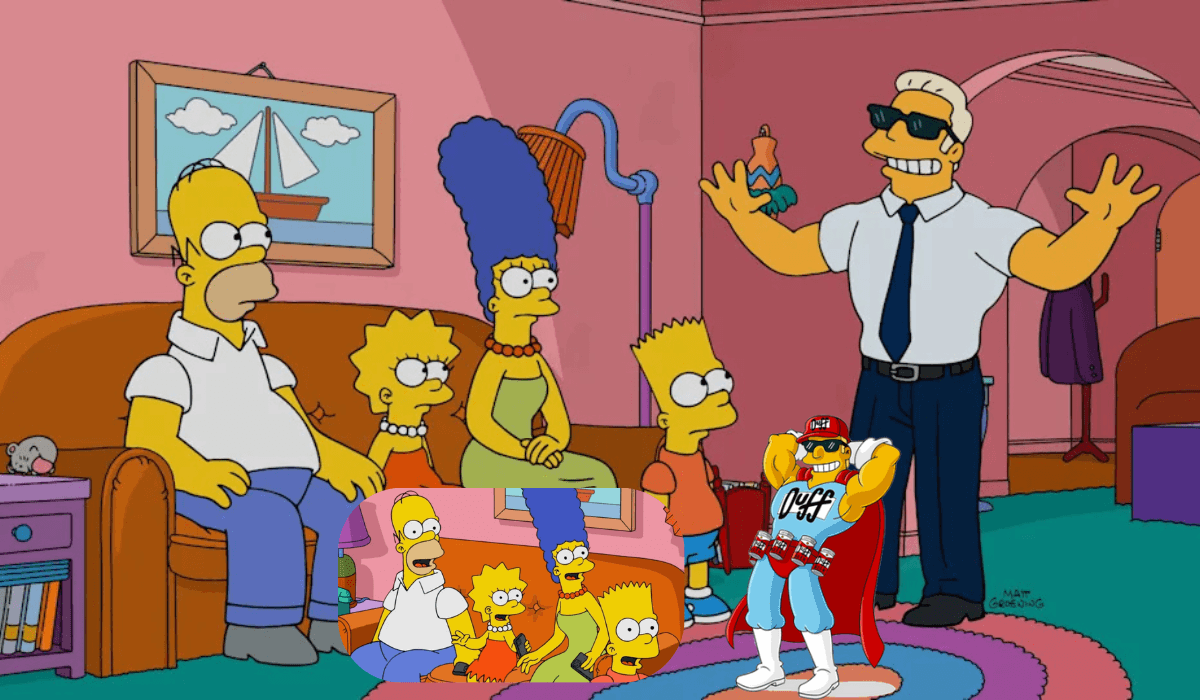
when Duffman, the beer-swilling mascot who embodied 1990s advertising excess, announced his permanent retirement. But buried beneath the headlines about outdated marketing and changing cultural tastes lies a darker truth that almost nobody is talking about: Hank Azaria has been physically suffering to bring this character to life for nearly three decades.
The 61-year-old voice actor has publicly called Duffman the character he dreads most, admitting in multiple interviews that the voice causes him actual pain and can completely destroy his ability to perform other characters.
The Voice That Literally Hurts
In a 2020 interview with Conan O'Brien, Azaria revealed something most fans never knew. "There are certain voices I save, like Duffman will blow me out in a second. I have to save Duffman for the end and I actually dread it. It actually does hurt, but I am not complaining," he explained.
The implications are staggering. While performing Duffman, Azaria cannot do any other voice afterward. He has to strategically schedule recording sessions around this single character, saving it for last because "I can't do any other voice after I've done 60 seconds of Duffman."
Think about that for a moment. Sixty seconds of that booming, hyper-masculine "Oh yeah!" voice is enough to render one of the most versatile voice actors in television history temporarily unable to work.
A Career Built on Sacrifice
Azaria has admitted his voice "blows out rather easily," which makes his 37-year tenure on The Simpsons even more remarkable and concerning. He voices dozens of characters on the show, from the gravelly Moe Szyslak to the high-pitched Professor Frink, from the surfer-dude Snake Jailbird to the gruff Chief Wiggum. Each requires different vocal techniques, different placements, different levels of strain.
But Duffman stands alone in the damage it causes.
The character demands an explosive, testosterone-fueled delivery that puts enormous pressure on the vocal cords. Every "Oh yeah!" requires the kind of forceful projection that voice coaches specifically warn against. It is the vocal equivalent of a sprinter running full speed without warming up, over and over again.
The Health Scare That Changed Everything
The severity of Azaria's vocal vulnerability became frighteningly clear years ago when he nearly lost everything. "I was having a rough time in my life, and I got into a screaming match. I totally blew out my voice and it didn't come back for almost two weeks," he told Conan O'Brien.
For a voice actor, two weeks without a voice is not just an inconvenience. It is a career-ending terror. Azaria was scared badly enough that he took an unprecedented step: he got his vocal cords insured.
Most people don't realize that voice actors can suffer injuries as debilitating as any athlete. Medical research has documented that vocal stress from demanding performances can cause nodules, cysts, polyps, and in severe cases, cord hemorrhaging. These are not minor issues. They can permanently alter or destroy a voice.
The Hidden Cost of Entertainment
We laugh at Duffman's ridiculous catchphrases and over-the-top masculinity, never considering that someone is literally hurting themselves to create that comedy. Azaria is 61 years old now, born in April 1964. He has been performing these voices since 1989, when he was just 25.
That is 37 years of vocal strain. Thirty-seven years of scheduling his workdays around which characters will cause the most damage. Thirty-seven years of dreading certain recording sessions because he knows they will hurt.
The voice acting industry has long struggled with occupational health issues that rarely receive public attention. In 2016, the Screen Actors Guild called for an investigation into unsafe working conditions for video game voice actors, citing increasing reports of vocal cord damage from intense performances. Performers were being asked to scream death cries, creature voices, and combat yelling for up to four hours at a time, causing internal damage to their vocal cords.
The letter to the Occupational Safety and Health Administration documented "vocal stress from video games is causing medical problems that include vocal nodules, cysts, polyps and, in some cases, cord hemorrhaging."
Azaria's situation with Duffman mirrors these concerns, except he has been doing it for three decades, not three hours.
Why Duffman Was So Demanding
The character's voice requires what vocal experts call "explosive vibration," producing sound with excessive force that slams the vocal cords together repeatedly. Normal speaking involves gentle contact between the vocal cords as air passes through. Characters like Duffman require violent contact.
Compare this to Azaria's other beloved characters. Moe, his favorite voice to perform, is based on Al Pacino and sits in a comfortable mid-range with a gravelly quality that actually requires less force than normal speech. Professor Frink, which Azaria has called "the vocal equivalent of a peanut," is silly and high-pitched but doesn't demand the same explosive power.
Duffman, however, is all power. Every line is delivered at maximum volume and intensity. The character never speaks quietly or gently. He is designed to grab attention, to dominate a scene, to project masculine energy at 11 out of 10.
That level of performance, sustained over nearly 30 years across dozens of episodes, extracts a physical toll.
The Retirement Nobody Saw Coming
When Duffman appeared in the January 4, 2026 episode titled "Seperance," a parody of Apple TV's hit show Severance, he delivered news that shocked longtime fans. The Duff Corporation had retired the character forever. All the old forms of advertising, Duffman explained, were now obsolete. Corporate spokesmen, print ads, TV spots. "Today's kids can't even sing the jingles," he said in his signature booming voice.
The show framed it as commentary on advertising's evolution and generational shifts in media consumption. And certainly, those themes resonate. The Simpsons itself has seen significant viewership decline, from over 20 million viewers per episode in its early seasons to an average of 1.64 million for Season 36.
But I would argue there is another story here, one the show is not telling explicitly but that becomes impossible to ignore once you know about Azaria's struggles: maybe Duffman retired because continuing to voice him was no longer sustainable or healthy for the 61-year-old actor who brings him to life.
A Pattern of Physical Sacrifice
Azaria is not alone in suffering for his craft. Jon Hamm underwent vocal surgery for polyps caused by the long hours required for Mad Men. Broadway performers regularly experience vocal hemorrhages from the demands of eight shows per week. Adele, John Mayer, Celine Dion, and Rod Stewart have all required treatment for vocal cord injuries.
But there is something particularly poignant about a voice actor suffering in silence (or rather, in pain) while we enjoy their work, completely unaware of the cost.
Voice actors do not receive the same recognition as on-screen performers. They work in anonymity, their physical presence invisible while their voices become iconic. When Hank Azaria walks down the street, most people do not recognize him. But millions instantly recognize the voices of Moe, Apu (before he retired that character in 2020 due to stereotype concerns), Chief Wiggum, and yes, Duffman.
The craft requires extraordinary skill. Azaria can remember and replicate virtually any voice after hearing it just once, a talent he has called "freakish." He based Moe on Al Pacino, Dr. Nick Rivera on Desi Arnaz, and Lou the cop on Sylvester Stallone. He developed these characters in real time, creating an entire universe of distinct personalities that feel completely separate from each other.
But that skill comes with a price, particularly when certain characters demand vocal techniques that cause physical harm.
This Retirement Is About Survival
Here is my opinion, and it is one I think needs to be said clearly: Duffman's retirement is about more than cultural commentary or satirizing outdated advertising. It is about a 61-year-old man finally escaping a voice that has been destroying his vocal cords for 30 years.
The show will never explicitly say this because it breaks the fourth wall in an uncomfortable way. The Simpsons operates in a timeless space where characters do not age and voice actors are meant to be invisible. Acknowledging that Hank Azaria physically cannot continue voicing Duffman without risking permanent damage would shatter that illusion.
But the evidence is overwhelming. He has publicly stated, multiple times, that this character causes him dread and pain. He has explained that it incapacitates his ability to work for the rest of a recording session. He has insurance on his vocal cords specifically because of how vulnerable they are to injury.
At 61, after 37 years of this work, it makes perfect sense that he would want to stop performing the character that hurts him most. The remarkable thing is not that Duffman is retiring. It is that Azaria kept doing the voice for as long as he did.
What This Means for Voice Acting
This situation should spark a larger conversation about occupational health in voice acting. The industry has made some progress since the 2016 SAG investigation into video game voice acting conditions, but clearly more needs to be done.
Voice actors need better protections. They need contractual limits on how long they can be required to perform vocally demanding characters in a single session. They need access to vocal coaches and speech therapists as standard practice, not as personal expenses. They need schedules that allow for vocal rest between intense recordings.
Most importantly, they need the ability to retire characters that are causing physical harm without stigma or career consequences.
If a live-action actor broke their leg performing a stunt, no one would expect them to keep doing that stunt for 30 years. But voice actors are expected to produce the same characters indefinitely, regardless of the cumulative damage it may cause.
The Characters That Remain
Azaria will continue voicing his other Simpsons characters. Moe, Professor Frink, Chief Wiggum, Comic Book Guy, and the rest of Springfield's residents will go on. These are voices he enjoys, voices that sit in comfortable ranges, voices that do not cause the same physical strain.
And that is how it should be. Azaria has created something extraordinary with The Simpsons, winning four Primetime Emmy Awards for his voice work. He deserves to continue that legacy on his terms, without sacrificing his health.
Duffman served his purpose. He satirized beer advertising, masculinity culture, and corporate mascots at a time when those targets were everywhere. He gave us "Oh yeah!" and ridiculous superhero poses and a cape made of beer cans.
But more than that, he gave us almost three decades of Hank Azaria doing something that actually hurt him, something he dreaded, something he saved for last because it would blow out his voice in seconds.
Maybe it is time we acknowledged that sacrifice instead of just moving on to the next episode.
The Simpsons is in its 37th season, making it the longest-running scripted American primetime show in television history. That longevity is unprecedented and speaks to the show's cultural impact.
But it also means the cast has been performing these voices longer than most people work at any single job. The physical and creative toll of that cannot be understated.
As the show continues with its renewal through Season 40 (already confirmed through a FOX renewal in April 2025), we need to think about sustainability not just in terms of ratings and relevance, but in terms of human health and wellbeing.
Duffman's retirement might be the first character departure explicitly motivated by the physical limitations of the voice actor. It probably will not be the last.
And that is okay. These performers have given us decades of laughter. They have created characters that became part of our cultural language. They have worked through pain and injury to maintain our entertainment.
The least we can do is acknowledge when they need to stop.
When you watch old Simpsons episodes featuring Duffman, you will now hear them differently. That booming "Oh yeah!" is not just a funny catchphrase. It is a 61-year-old man doing something that causes him genuine pain, something he dreads, something that temporarily destroys his ability to do his job.
He did it anyway, for 30 years, because that is what the show required and what we as an audience expected.
The next time you laugh at a Duffman scene, remember that someone was hurting themselves to make you laugh. And maybe, just maybe, question whether that kind of sacrifice should be required of anyone, no matter how much we enjoy the result.
Hank Azaria is finally free of the voice that has haunted his recording sessions since 1997. After three decades of dread and pain and vocal insurance policies, he can show up to work without that knot in his stomach, without knowing that at some point in the day he will have to do the thing that hurts.
That is not sad. That is relief. That is survival. That is a 61-year-old craftsman finally putting down the tool that has been cutting his hands for 30 years.
Good for him. And goodbye, Duffman. You will be remembered. But more importantly, Hank Azaria will finally be pain-free.