France Just Proved America Values Entertainment Over Children's Wellbeing
George Clooney didn't become French for the wine country or tax benefits. He did it so his eight-year-old twins could attend school without photographers jumping out of bushes. That decision, announced when French citizenship records were published in late December 2025, exposes an uncomfortable truth America refuses to face. When a wealthy, powerful celebrity needs to change countries to protect his children from harassment, the problem isn't privacy. It's priorities.
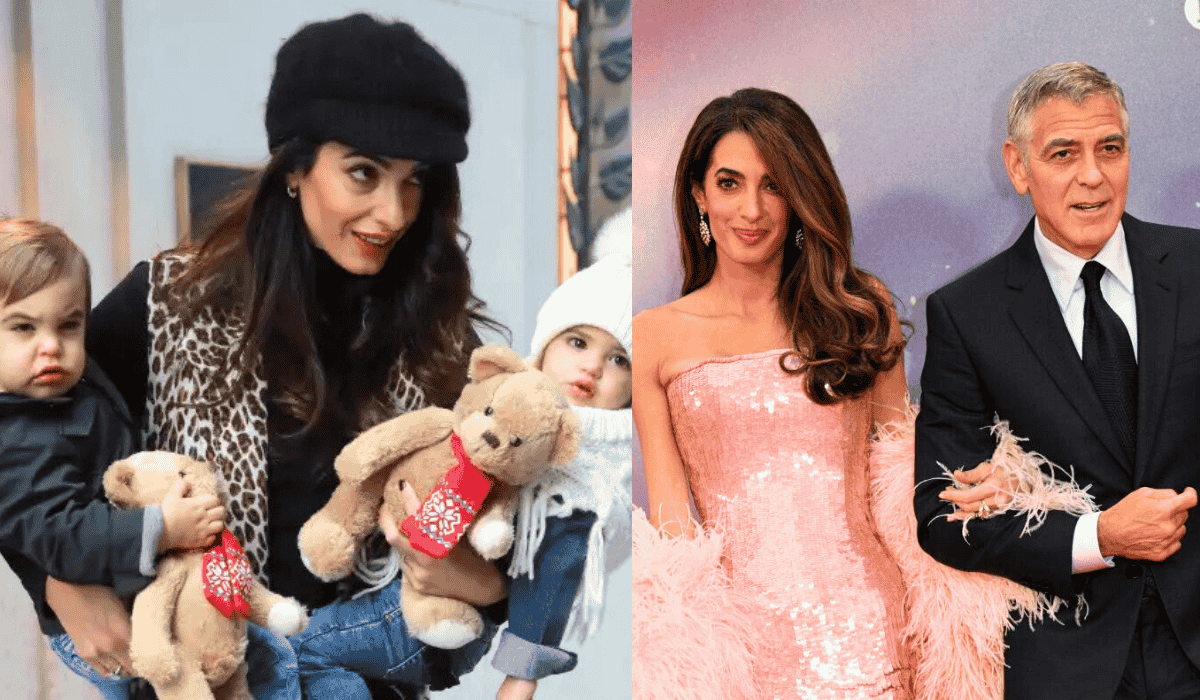
France has laws that actually work. America had Halle Berry and Jennifer Garner sobbing before state legislators, describing how their toddlers cry when paparazzi swarm them. California passed legislation. The paparazzi kept shooting. Nothing changed.
The difference reveals what each country truly values. France chose children. America chose content.
What France Gets Right That America Refuses to Understand
French privacy law doesn't mess around. Article 9 of the French Civil Code establishes that everyone has a right to respect for their private life. Courts interpret this aggressively when children are involved, celebrity or not.
Photographing someone in a private place is illegal, period. Publishing photos of celebrities in public spaces is also illegal unless those appearances directly relate to their roles as public figures. A celebrity attending a movie premiere? Fair game. That same celebrity buying groceries with their kids? Off limits.
The enforcement mechanism actually works, which is the part American lawmakers never replicate. When paparazzi attempt to photograph celebrities during personal time, security teams photograph the photographers. Those images go to attorneys who inform media outlets that civil damages will be pursued if unauthorized photos appear in print or online.
This practice, documented by litigation attorney Chassen Palmer in a 2020 California Western International Law Journal article, has largely deterred paparazzi from pursuing celebrities in France during private moments. It's not that French photographers are more ethical. They've simply learned that publishing those photos costs more than they're worth.
France went even further in 2020, passing legislation to protect child influencers on social media platforms. The law brought children under 16 who appear in online videos under the same labor code protections as child actors and models. Government authorization is now required before a child can engage in online video activities that constitute a labor relationship.
Then in February 2024, France passed another law explicitly adding children's image rights to the Civil Code as part of parental authority provisions. The legislation directly addresses sharenting, the practice of parents posting their children's images on social networks. It reminds parents that children have rights to privacy and to their own images, with those images classified as personal data under GDPR protections.
Courts can intervene if a parent's publication of a child's image compromises that child's dignity or moral integrity. If parents disagree about sharing content, judges can restrict one parent from publishing anything related to the child without the other parent's authorization.
This isn't theoretical protection. French law gives children real recourse, backed by a data protection authority that actively enforces violations. The CNIL, France's privacy watchdog, issues guidance, investigates complaints, and imposes penalties that actually matter.
California Tried to Protect Celebrity Kids. Here's Why It Failed
California Senate Bill 606 became law in September 2013 after emotional testimony from Halle Berry and Jennifer Garner before the Assembly Judiciary Committee. Berry described how her daughter didn't want to go to school because "the men" were watching. Garner testified that up to 15 cars of photographers waited outside their home daily. Her 17-month-old baby was terrified and crying. Her four-year-old asked why the men never smiled and never went away.
The legislation increased criminal penalties for intentionally harassing a child because of their parent's employment. First offense: up to one year in jail and a $10,000 fine. Second offense: $20,000 fine. Third offense: $30,000 fine and mandatory 30-day minimum jail time.
Sounds strong, right? It's been completely ineffective.
The law defines harassment as conduct that "seriously alarms, annoys, torments, or terrorizes the child or ward, and that serves no legitimate purpose." That final phrase destroys everything. Legal analysts immediately recognized the loophole. Taking photographs of celebrity children, even in ways that seriously alarm the children, serves the "legitimate purpose" of capturing newsworthy images and making money.
Jenny Brandt, writing in Above the Law in February 2014, called the legislation "effectively meaningless." She explained that juries might find paparazzi harassed a child, but photographers can argue their actions served legitimate journalistic or commercial purposes protected by the First Amendment.
The vague terminology doesn't help. What constitutes a "reasonable child"? When does photographing become harassment versus newsgathering? The law's drafters tried to navigate First Amendment concerns by building in these subjective standards. They ended up creating legislation that protects no one.
Enforcement presents another problem. No California organization exists specifically to police media violations of this law. The burden falls on victims, celebrity parents who must track photographers' license plates, collect evidence, and prosecute cases themselves while managing their careers and protecting traumatized children.
Paparazzi knew the law was toothless before the ink dried. In November 2013, shortly after Governor Jerry Brown signed SB 606, photographers still camped outside schools and pumpkin patches. One photographer told TIME magazine he didn't expect effective enforcement because celebrities would need someone with them constantly to track photographer information.
He was right. More than a decade later, the photographs keep flowing. Celebrity children still cry when swarmed. Parents still testify about the trauma. Nothing changes.
The First Amendment Problem Nobody Wants to Solve
Here's where America ties itself in knots. The First Amendment protects press freedom. That's fundamental. Courts have consistently ruled that paparazzi, however sleazy their tactics, engage in constitutionally protected newsgathering. Even aggressive photography in public spaces generally survives legal challenges because courts prioritize press rights over privacy concerns.
California's anti-paparazzi laws reflect this tension. Legislators tried to protect celebrity children without violating constitutional protections. The result? Laws with so many carve-outs and subjective standards that they protect nobody. France faces no such paralysis. French law explicitly prioritizes individual privacy, particularly for children, over press freedom in specific contexts. The constitutional framework permits this balance. American jurisprudence doesn't, at least not as courts currently interpret First Amendment protections.
Critics argue France's approach threatens press freedom and enables censorship. After Princess Diana's death in 1997, when seven paparazzi initially faced potential charges before French authorities determined a drunk driver caused the accident, some American commentators warned that strict privacy laws could prevent legitimate reporting.
Those concerns proved largely unfounded. French media still investigates politicians, exposes corruption, and holds powerful people accountable. They simply can't publish candid photos of celebrities' children walking to school. That's not investigative journalism. It's entertainment content masquerading as news.
The real question isn't whether American privacy protections threaten press freedom. It's whether we've decided that tabloid fodder matters more than children's psychological wellbeing.
What Happens to Kids Who Grow Up Hunted
Research on the psychological impact of constant paparazzi attention on celebrity children remains limited, partly because celebrities rarely cooperate with studies that would further expose their families. But available evidence and expert testimony paint a disturbing picture.
Phil Gosschalk, director of Childpsych Psychology in Australia, notes that beyond obvious stress from constantly being in the public eye, celebrity children might develop distorted self-perception. Children's self-esteem develops through how people treat them. If photographers constantly pursue them, they may develop an inflated sense of worth or, conversely, fear and paranoia about public spaces.
Garner's testimony before California legislators described concrete harms. Her toddler cried when photographers swarmed. Her four-year-old developed an understanding that the world contained aggressive men who shouted and never went away. She noted that violent stalkers could blend into photographer mobs, with one man who threatened to cut babies out of her belly arrested waiting behind her daughter's preschool among paparazzi.
These aren't abstract concerns. They're descriptions of children developing anxiety, fear responses, and skewed perceptions of normalcy during crucial developmental years.
Broader research on paparazzi culture's impact on celebrities themselves reveals serious mental health consequences. Studies link constant surveillance and privacy invasion to anxiety, depression, PTSD, hypervigilance, and substance abuse. Celebrities develop chronic stress from never escaping public scrutiny. Some describe feeling constantly watched, leading to paranoia and difficulty trusting others.
If adults with developed coping mechanisms struggle this severely, what happens to eight-year-olds whose brains are still forming? What neural pathways develop when a child learns that leaving the house means being chased, photographed, and shouted at by strangers?
George Clooney told Esquire in October 2025 he worried about raising kids in Los Angeles, in Hollywood's culture. He didn't want them walking around worried about paparazzi or being compared to other famous children. France, he said, largely doesn't care about fame. That cultural difference matters enormously for childhood development.
Child development experts emphasize the importance of secure attachment, predictable environments, and freedom to explore. Celebrity children in America get the opposite. Unpredictable photographer ambushes, parents who seem unable to protect them, and constant awareness that strangers document their existence.
The long-term consequences likely include anxiety disorders, difficulty forming trusting relationships, distorted self-image, and potentially trauma responses to crowds or public spaces. Some celebrity children may develop normally despite these pressures. Others won't. American law currently treats that risk as acceptable collateral damage in service of press freedom and public entertainment.
Why This Isn't Really About Celebrities
The Clooney story makes headlines because George Clooney is famous. But framing this as a celebrity problem misses the deeper issue. Celebrity children represent the most visible example of how America prioritizes content creation and consumption over child welfare.
Consider the parallel with family vlogging. Parents who film their children for YouTube channels often expose kids to similar harms. A 2019 Pew Research study found that YouTube videos featuring children under 13 receive more than three times the views of other content. That popularity creates enormous financial incentives to exploit children's privacy.
Ruby Franke, who ran the family vlogging channel "8 Passengers," was arrested in August 2023 and charged with six counts of aggravated child abuse. She pleaded guilty to four counts in December 2023. The ACE Family parents created Instagram accounts for each of their children, with their eight-year-old daughter gaining millions of followers despite the parents admitting to being targeted by stalkers.
California recently passed legislation protecting child vloggers' earnings and privacy, but enforcement remains challenging. The underlying problem persists. American culture treats children as content, whether their parents are celebrities or YouTube personalities. We've normalized documenting childhood for public consumption, then act surprised when children suffer psychological harm.
The paparazzi industry simply represents the most aggressive version of something woven throughout American society. We believe we have a right to access children's images, lives, and experiences if their parents are famous or if the content entertains us. We've decided press freedom and public curiosity outweigh children's right to privacy.
France made a different choice. So did Germany, which has similar strong privacy protections. Brazil's Child and Adolescent Statute directly addresses children's relationship with media, granting them fundamental civil and human rights including rights to image, ideas, and identity.
Multiple countries figured out how to balance press freedom with child protection. America refuses to, hiding behind First Amendment absolutism while ignoring the documented harms.
This Is About Our Values, Not Legal Nuance
I'm going to be blunt. The fact that George Clooney needs French citizenship to give his children normal childhoods is shameful. Not for him. For America.
We love to talk about prioritizing children. Politicians campaign on family values. Parents claim children are their number one priority. Then we tolerate a system where eight-year-olds can't walk to school without being photographed by adults whose sole purpose is creating content for our entertainment.
The legal arguments about First Amendment protections are convenient excuses. Yes, press freedom matters enormously. No, photographing celebrity children buying ice cream isn't journalism worth protecting at the cost of those children's mental health.
France figured this out. They created laws that distinguish between legitimate public interest journalism and entertainment content that exploits children. American courts could make similar distinctions. They choose not to, prioritizing an absolutist interpretation of press freedom that treats paparazzi stalking children as constitutionally equivalent to investigative reporting on government corruption.
That's a choice, not a legal requirement. Constitutional law evolves based on how courts interpret protections. The Supreme Court could rule that children's wellbeing constitutes a compelling state interest that justifies narrow restrictions on photographing minors without parental consent in certain contexts. They haven't. They likely won't. Because American culture doesn't really prioritize children. We prioritize content.
Look at our actions, not our words. We consume celebrity gossip magazines featuring paparazzi photos of famous children. Those publications exist because we buy them, click on them, and share them. Photographers get paid because editors know readers want those images. The entire system exists because American consumers demand access to famous people's children.
France's cultural attitude differs fundamentally. George Clooney said French people don't care about fame. That's oversimplified, but it contains truth. French culture doesn't worship celebrity the way American culture does. French people recognize that famous actors are just people doing jobs, not gods deserving constant surveillance.
This cultural difference enables France's legal framework. American privacy laws fail partly because American culture would revolt against them. Try to pass legislation actually preventing paparazzi from photographing celebrity children, and you'd face massive opposition from media organizations, free speech advocates, and regular people who feel entitled to those images.
We want to watch celebrity children grow up. We want to see what they wear, how they behave, whether they look like their parents. We want that access more than we want those children to have normal, healthy childhoods. That's what this really exposes.
The Clooney case won't change anything in America. More celebrities will quietly secure second citizenships, establishing backup plans in countries with saner laws. Their children will grow up in France, England, Italy, or other places that actually protect kids rather than treating them as content.
Meanwhile, American celebrity children will continue being photographed, their images sold to publications and websites that American consumers click on without thinking about the eight-year-old crying because strange men with cameras appeared at her school again.
California might pass more legislation with stronger language and bigger fines. It won't matter. As long as American courts interpret First Amendment protections to include paparazzi harassment of children, and as long as American culture demands access to celebrity offspring, the system continues.
The solution exists. We know it works because France implemented it. Distinguish between legitimate journalism and entertainment content that exploits children. Create privacy protections specifically for minors, with real enforcement mechanisms and meaningful penalties. Establish a cultural norm that photographing other people's children without permission is creepy and wrong, regardless of who their parents are.
None of that will happen. Because it would require Americans to give up something we enjoy, access to celebrity content, in service of protecting children we don't know. That trade-off doesn't appeal to a society that has spent decades normalizing the surveillance and documentation of famous people's families.
George Clooney had resources to escape. His twins will grow up in Provence, attending French schools, speaking French fluently, largely unbothered by photographers. They're lucky. Most celebrity children in America aren't. They'll grow up hunted, documented, and psychologically impacted by a system that values our entertainment over their wellbeing.
And we'll keep clicking on their photos, buying magazines that feature them, and pretending we don't understand why their parents seem so unhappy about it. France proved that protecting celebrity children is possible without destroying press freedom. America proved that we'd rather not try, because the cost is giving up content we've come to expect.
That's the real story here. Not that George Clooney became French, but what his decision reveals about American priorities. We say we care about children. France actually does. The difference matters more than we want to admit.
Related Reads: Why Hollywood Stars Are Quietly Becoming European Citizens (And Why It Matters)