From Extra To Icon: How Guillaume Marbeck Landed His First Major Film Role Playing Jean-Luc Godard

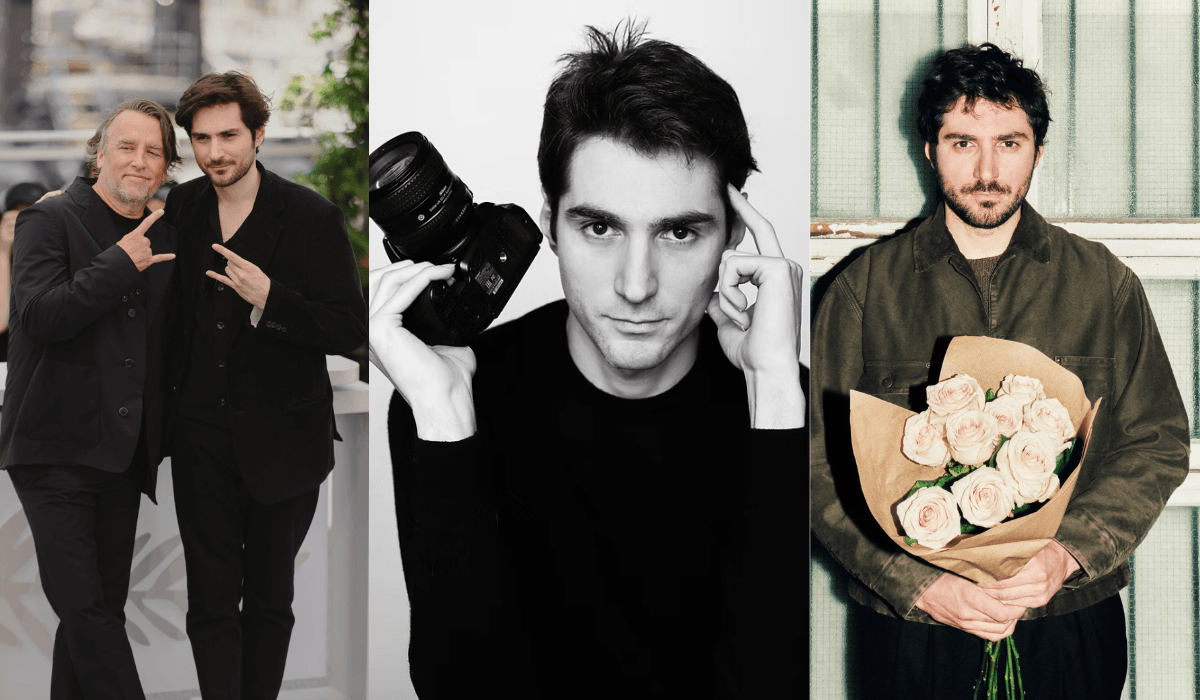
Most actors dream of landing a breakthrough role. Guillaume Marbeck wasn't even trying. The French filmmaker spent a decade working every possible job on film sets, learning his craft from the bottom up, with no intention of becoming a movie star. Then Richard Linklater cast him as Jean-Luc Godard in Nouvelle Vague, and everything changed.
The film premiered at Cannes in May 2025, earned an 11-minute standing ovation, and sparked a bidding war that ended with Netflix paying $4 million for U.S. distribution rights. It received a Golden Globe nomination for Best Motion Picture in the Musical or Comedy category. Now streaming on Netflix after a limited theatrical release, Nouvelle Vague has introduced audiences worldwide to an actor who had mostly worked on short films before taking on one of cinema's most iconic figures.
This is the story of how an unknown French actor, armed with nothing but borrowed sunglasses and the audacity to show up late to his audition, landed the role of a lifetime.
The Accidental Actor Who Never Wanted Stardom
Guillaume Marbeck graduated from film school with a singular goal: become a director. But instead of rushing to make his own films, he took what many would consider a counterintuitive approach. He decided to learn filmmaking by doing every single job on a film set first.
Over ten years, he worked as a prop assistant, camera department helper, editor, on-set photographer, and scout for distributors. He wanted to understand how each person contributed to the final product. His reasoning was simple but strategic. If someone tried to deceive him about what was possible or necessary in production, he would know better.
"I wanted to know what everybody was doing," Marbeck explained in interviews. "So, if they were bullshitting me, I would know."
The only job he hadn't tried was acting. That changed when financial necessity intervened. In France, artists can receive government support, but they must complete a certain number of jobs each month to qualify. Marbeck found himself working as an extra on the show Couture, where a chance encounter would redirect his entire career.
The head hairdresser on that production recognized him from his work on other projects. When Marbeck mentioned he needed work to maintain his artist status, the hairdresser offered an unexpected opportunity. They were looking for someone to play Jean-Luc Godard in a new Richard Linklater film. Would he be interested?
The Audition That Almost Didn't Happen
The morning of his audition, everything went wrong. Marbeck knew he needed sunglasses. Godard's signature eyewear was essential to capturing the director's look. A friend who worked as an optometrist agreed to lend him a pair that could pass for Godard's frames.
Then disaster struck. A pipe burst in the optometrist's apartment, flooding the place and setting Marbeck's entire schedule back by hours. By the time he finally grabbed the glasses and raced to his 10 a.m. audition, the morning had slipped away.
He arrived at the building, soaking wet from the rain, several hours late. The elevator doors opened to reveal 15 people staring at him. Producer Michèle Pétin immediately confronted him about his tardiness.
In that moment, Marbeck made a choice that would define his approach to the role. Instead of apologizing profusely, he channeled Godard himself. What would the notoriously difficult director say in this situation?
"He wouldn't apologize," Marbeck recalls thinking. "He would just explain that he needed his glasses."
So that's exactly what Marbeck did. Rather than making excuses, he stated plainly that getting the right glasses had been necessary, even if it made him late. The producer was shocked at first, then intrigued. She wanted to hear more. Soon the entire room was laughing, and what could have been a disaster turned into a joyful day of auditions.
That instinct to inhabit Godard's mindset rather than simply imitate his appearance proved crucial. Linklater was looking for someone who understood the director from the inside out, not just an actor who could wear sunglasses convincingly.
Understanding a Complex Genius
Once cast, Marbeck faced an enormous challenge. Jean-Luc Godard revolutionized cinema with films that challenged every convention. He was brilliant, innovative, and famously difficult. How do you portray someone like that without falling into caricature?
Marbeck's approach was methodical and deeply researched. He studied everything Godard produced before Breathless, the 1960 film that Nouvelle Vague dramatizes. He watched short films and read Godard's film criticism for Cahiers du Cinéma, the influential French magazine where the director got his start.
He consumed every available interview from the years leading up to and immediately following Breathless. Then he deliberately stopped. He didn't want his performance influenced by Godard's later work, which became increasingly abstract and politically dogmatic.
"I really wanted not to be polluted by his later work," Marbeck said.
Even with Breathless itself, he exercised restraint. He watched the film only a couple of times before filming began. Too much familiarity might kill the spontaneity that defined both the original film and its chaotic production.
"It's great to have it really focused in the mind, but not too perfect," he explained.
One crucial discovery emerged from his research. Shortly before making Breathless, Godard had been dumped by his girlfriend. That heartbreak colored everything about the film's production. When Godard watched couples flirting or having fun together, it hurt.
This insight transformed Marbeck's understanding of the role. Breathless wasn't just an experimental film. It was Godard working through romantic loss, creating what Marbeck came to see as "a thesis on love."
Learning from a Living Master
The parallels between Marbeck's experience and the story he was telling proved uncanny. In Nouvelle Vague, Godard appears as a young director uncertain whether he can complete a full feature. He's constantly seeking advice from mentors like Roberto Rossellini, Jean-Pierre Melville, and Robert Bresson.
Marbeck found himself in an almost identical position. Here he was, an aspiring filmmaker with barely any acting experience, sitting next to one of his cinematic heroes. Richard Linklater had made Boyhood, filming a story over 12 years. He'd created the Before trilogy, revisiting characters at decade-long intervals. For film students like Marbeck, these achievements represented the pinnacle of independent cinema.
Every lunch break and pause in filming became an opportunity. Marbeck peppered Linklater with questions about his process, his choices, how he approached different projects. The older director was generous with his time and knowledge.
"I was sitting next to one of my masters, alive today," Marbeck reflected on the experience.
The education extended beyond technical craft. Watching Linklater work taught Marbeck about patience, vision, and trusting your instincts even when conventional wisdom suggests otherwise. These were the same qualities Godard embodied when he made Breathless with no real script, no permits, and methods that seemed insane to established filmmakers.
The Physical Transformation
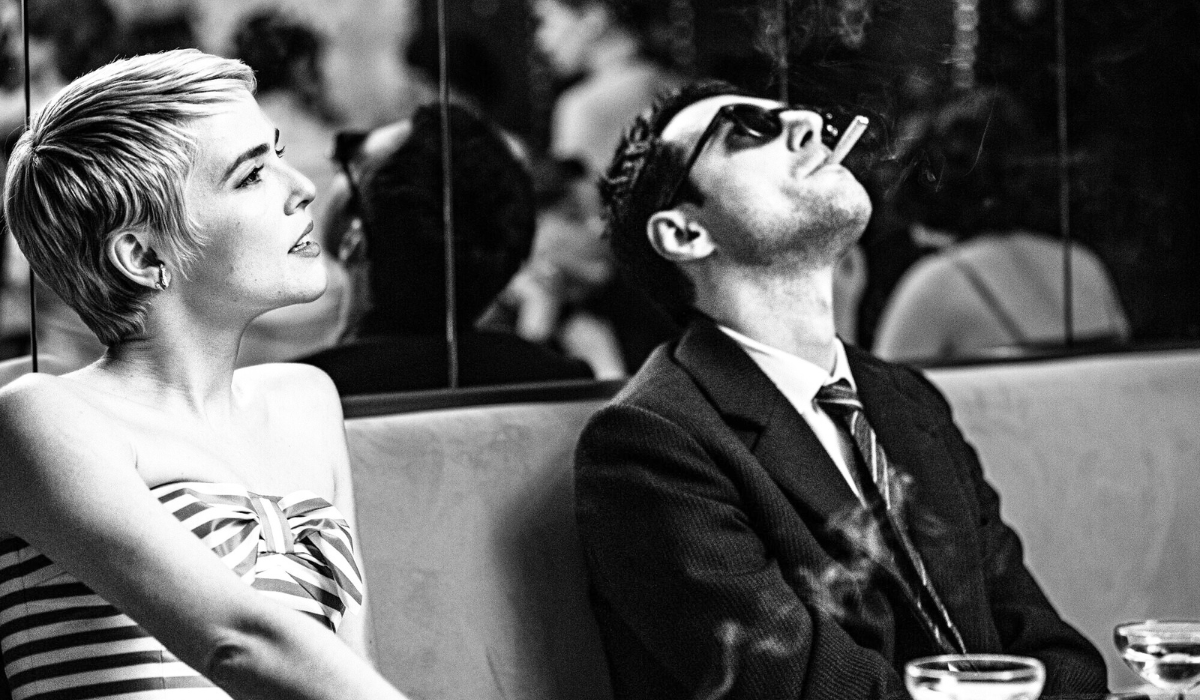
Playing Godard required more than understanding his psychology. Marbeck had to physically embody the director's distinctive presence. The sunglasses were just the beginning.
There was Godard's posture, a characteristic shoulder-slumped stance that conveyed both intellectual intensity and casual cool. The way he moved through space, always observing, always thinking. His voice and speech patterns, which revealed how his mind worked in that distinctive rapid-fire way.
Most challenging of all was the hair. Or rather, the lack of it. Godard was already losing his hair in 1959, developing the receding hairline and widow's peak that would become part of his signature look. For a month before filming, the head hairdresser from his earlier extra work deliberately thinned Marbeck's hair to match.
"He was doing me the meanest thing that you can do to a man during one month," Marbeck joked about the process.
The physical resemblance that emerged proved startling. Combined with the glasses, the posture, and Marbeck's deep understanding of Godard's psychology, the transformation felt complete. He didn't look like someone playing Godard. He looked like Godard.
Embracing Fear and the Unknown
One of Godard's most famous sayings appears in Nouvelle Vague: the most important thing is to have fear and go into unknown lands, to experience fear and hesitation while pushing forward anyway.
Marbeck took this philosophy to heart in his performance. He wanted to be fearless, which paradoxically meant being willing to feel fear. If something unexpected happened on set, he wanted to respond as Godard would have, staying present and reactive rather than retreating into planned safety.
This approach aligned perfectly with Linklater's directorial style. The American filmmaker has built his career on trusting spontaneity within carefully constructed frameworks. Films like the Before trilogy or Dazed and Confused feel improvised and natural, but that naturalness emerges from meticulous preparation that creates space for authentic moments.
For Marbeck, playing someone who revolutionized cinema by breaking rules meant he had to take similar risks as an actor. He couldn't rely on conventional techniques or safe choices. The role demanded the same boldness Godard showed when he grabbed a handheld newsreel camera and started shooting on Paris streets without permits.
The Cultural Moment That Nouvelle Vague Captures
Understanding why Nouvelle Vague resonates requires context about the French New Wave and what made Breathless revolutionary. In 1959, most films followed strict conventions. Studios controlled production with iron fists. Scripts were finalized before shooting began. Filming happened on constructed sets with professional lighting. Everything was choreographed and carefully planned.
The young critics writing for Cahiers du Cinéma believed this approach had grown stale and dishonest. François Truffaut, Claude Chabrol, Eric Rohmer, Jacques Rivette, and Godard all argued that cinema needed to capture life as it actually felt, not as Hollywood fantasies pretended it worked.
Their solution was embracing limitations as creative fuel. Small budgets meant shooting on real locations. No money for elaborate lighting meant using whatever light was available. Unwieldy equipment led to handheld camerawork that felt immediate and documentary-like.
Godard pushed these ideas further than anyone. Breathless featured jump cuts that violated every rule of continuity editing. Characters addressed the camera directly. Scenes ended abruptly. The film announced its artificiality while somehow feeling more real than conventional dramas.
This wasn't rebellion for its own sake. It was an attempt to create cinema that matched how people actually experienced life: fragmented, spontaneous, messy, and emotionally true even when logically incoherent.
What Makes Marbeck's Performance Work
Critics and audiences have praised Marbeck's debut performance for capturing something essential about Godard without resorting to impersonation. The key lies in how he balances multiple contradictions that defined the director's personality.
He shows us Godard's intellectual brilliance alongside his social awkwardness. The director's absolute confidence in his vision combined with genuine uncertainty about whether he could pull it off. His charm and charisma existing alongside behavior that could be thoughtless or cruel.
Most importantly, Marbeck presents Godard as fundamentally human rather than as a monument to cinema history. This young man chain-smoking his way through Paris in 1959 doesn't yet know he's creating a masterpiece. He's just trying to make something honest that captures what he believes film can be.
The physical performance adds crucial layers. Marbeck's Godard moves through the world with a distinctive energy, part nervous intensity and part studied nonchalance. He's always watching, always thinking, processing everything around him as potential material.
The way he interacts with Jean Seberg and Jean-Paul Belmondo reveals someone who understands instinctively what he wants on screen even if he can't always articulate it clearly. When he pushes cinematographer Raoul Coutard in a wheelchair to get an impossible shot, we see both the innovator willing to try anything and the taskmaster who demands everyone share his commitment.
The Reception and What It Means
When Nouvelle Vague premiered at Cannes, it received enthusiastic acclaim. The 11-minute standing ovation wasn't just for nostalgia about French cinema's golden age. Audiences responded to the vitality and relevance of what Linklater and his cast had created.
The film currently holds a 90% fresh rating on Rotten Tomatoes based on 144 reviews. Metacritic reports a score of 76 out of 100, indicating generally favorable reviews. Critics particularly praised the casting, with many singling out Marbeck's performance as a revelation.
For Marbeck personally, the experience has been transformative. He went from working as an extra to walking red carpets at major film festivals. He's traveled the world promoting a film that represents his screen debut. The trajectory seems impossibly rapid.
Yet in some ways, his decade of preparation made this moment possible. All those years learning every aspect of filmmaking gave him tools and understanding that a typical young actor wouldn't possess. When he stepped in front of Linklater's camera, he wasn't just acting. He was bringing everything he'd learned about cinema to the task of embodying one of its greatest innovators.
The Netflix Release and Finding Its Audience
After its festival run and limited theatrical release, Nouvelle Vague arrived on Netflix in mid-November 2025. The streaming platform reportedly paid $4 million for U.S. distribution rights, the second-highest sum ever paid for a domestic deal on a foreign language film.
This represents something significant about where cinema stands today. A black and white French language film about the making of a 65-year-old movie found a major distributor willing to bet millions that audiences would respond to it. That bet appears to have paid off.
The film's success suggests hunger for cinema that challenges and engages rather than simply entertaining passively. People remain curious about creative processes, especially when those processes involve genuine risk and innovation. Nouvelle Vague offers a window into a moment when filmmakers decided convention mattered less than truth.
For viewers discovering the film on Netflix, Marbeck's performance provides the emotional center. You don't need extensive knowledge of French cinema to connect with this portrayal of a young artist trying to realize his vision while dealing with doubts, practical obstacles, and the pressures of collaboration.
Lessons for Aspiring Filmmakers
Marbeck's journey from film school graduate to acclaimed actor contains insights for anyone pursuing creative work. His willingness to spend a decade learning his craft before attempting to direct demonstrates patience increasingly rare in an industry obsessed with overnight success.
His approach to preparation, deeply researching Godard's life and work while maintaining boundaries to preserve spontaneity, offers a model for tackling complex roles. Know your subject thoroughly, but don't let knowledge calcify into rigid choices that prevent discovery.
Most importantly, his readiness to seize unexpected opportunities when they arrived proved crucial. He wasn't trying to be a movie star, but when the chance came to play one of cinema's giants, he was prepared. All those years working different jobs on sets had equipped him with knowledge and instincts he could draw on.
The way he handled his audition reveals character that goes beyond talent. When everything went wrong and he showed up hours late, he made a choice to stay in character rather than grovel. That decision required understanding who Godard was at his core, confident enough to believe the rules didn't quite apply to him.
What Comes Next
Success this significant changes everything. Marbeck is no longer an unknown working whatever jobs he can find. He's an actor whose debut performance earned international recognition. The question now is what he does with this platform.
His stated goal remains directing his own films. The time spent with Linklater has only reinforced that ambition. But the acting opportunities that will surely come his way might be hard to resist, especially if they offer chances to work with other filmmakers he admires.
What kind of films does he want to make? In interviews, Marbeck has said he's drawn to Godard's commitment to creating something new, something audiences haven't seen before. That suggests he won't pursue conventional paths or safe commercial choices.
The experience of making Nouvelle Vague has given him a master class in how to approach ambitious projects. He's watched Linklater recreate an entire era with meticulous attention to detail while maintaining the spontaneous energy that defined the original. He's learned how preparation creates space for magic rather than restricting it.
Why This Story Matters
Guillaume Marbeck's unexpected journey to playing Jean-Luc Godard carries lessons beyond the film industry. It demonstrates how deep preparation can position you for opportunities you weren't even seeking. It shows the value of learning fundamentals thoroughly before attempting mastery.
Most importantly, it illustrates how taking risks, both in career choices and specific moments like that audition, can lead to extraordinary outcomes. Marbeck could have shown up on time with the wrong sunglasses and given a conventional, apologetic audition. Instead, he chose to be late with the right glasses and embody the spirit of the person he was trying to play.
That choice reveals something essential about succeeding in creative fields. Technical skill matters, but so does understanding what makes your subject unique and having the courage to commit fully to that vision. Half measures rarely produce memorable results.
For cinema lovers, Nouvelle Vague offers a gift: the chance to witness one of film history's most important moments reimagined with intelligence and heart. For anyone pursuing creative work, Marbeck's story provides a different kind of gift, a reminder that patience, preparation, and bold choices at crucial moments can transform your entire trajectory.
The French New Wave revolutionized cinema by breaking rules and trusting instinct over convention. Sixty-five years later, an actor who wasn't even trying to be a movie star honored that legacy by doing exactly the same thing. Sometimes the best way to pay tribute to rebels is to embrace their spirit of rebellion yourself.