How Isiah Whitlock Jr. Turned One Word Into A Cultural Phenomenon And Left An Unforgettable Mark On Television

The entertainment industry lost a remarkable talent on December 30, 2025, when Isiah Whitlock Jr. passed away at 71 in New York City. His manager Brian Liebman confirmed that the actor died peacefully after battling a brief illness. While his career spanned more than three decades across television, film, and theater, Whitlock's impact on popular culture extends far beyond the impressive breadth of his résumé.
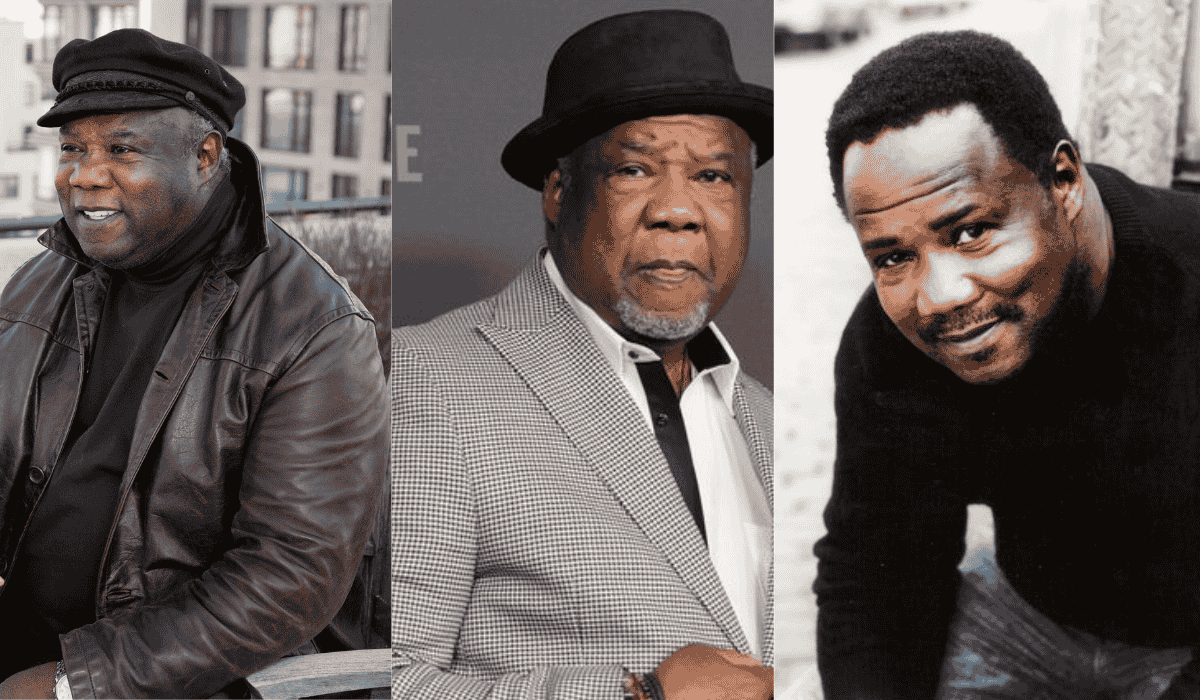
The Making of an Iconoclast
Born September 13, 1954, in South Bend, Indiana, Whitlock was the fifth of ten children in his family. His path to acting took an unexpected turn during his college years at Southwest Minnesota State University, where he initially attended on a football scholarship. When injuries forced him to leave the sport behind, he pivoted to theater, a decision that would shape the rest of his life.
After graduation, Whitlock trained at the American Conservatory Theater in San Francisco, a prestigious program that has produced numerous successful actors. This rigorous foundation prepared him for the steady, workmanlike approach he would take throughout his career. His first notable screen appearance came in 1987 with a guest role on CBS's police procedural "Cagney & Lacey," marking the beginning of a television journey that would last over 35 years.
Building a Career One Character at a Time
What made Whitlock exceptional was his commitment to the craft of character acting. In an industry that often prioritizes leading roles and star power, he built his reputation through consistency, professionalism, and an uncanny ability to make even minor characters memorable. His filmography reads like a masterclass in versatility, from Martin Scorsese's "Goodfellas" in 1990 to Woody Allen's work, from family films like Disney's "Enchanted" to Pixar's "Cars 3" and "Lightyear."
The Law & Order franchise became a regular home for Whitlock, with multiple appearances across the original series, Special Victims Unit, and Criminal Intent. These weren't flashy roles, but they demonstrated his range and reliability. Directors knew that when they cast Whitlock, they were getting someone who would elevate the material, no matter how small the part.
The Spike Lee Brotherhood
Perhaps no professional relationship better exemplified Whitlock's collaborative spirit than his work with director Spike Lee. Over two decades, Whitlock appeared in six of Lee's films, creating a creative partnership built on mutual respect and shared artistic vision. The collaboration began with "25th Hour" in 2002 and continued through "She Hate Me" (2004), "Red Hook Summer" (2012), "Chi-Raq" (2015), "BlacKkKlansman" (2018), and "Da 5 Bloods" (2020).
Following Whitlock's death, Lee paid tribute to "my dear beloved brother" on social media, words that speak to the depth of their connection beyond the professional realm. In an industry often criticized for its transactional relationships, the Whitlock-Lee partnership stood as something different: a genuine friendship that produced consistently compelling work.
It was in "25th Hour" that Whitlock first unveiled what would become his signature delivery. The elongated "Sheeeeeit" wasn't scripted or manufactured by writers. It was something authentic, drawn from Whitlock's own life.
The Uncle Leon Effect
In a 2008 interview, Whitlock revealed the origin of his famous catchphrase. It came from his uncle Leon, whose distinctive way of expressing frustration or disbelief would always make people laugh. Whitlock had internalized this familial quirk, carrying it with him as he built his career. When the moment felt right in "25th Hour," he let it out.
The delivery wasn't just amusing; it was perfectly calibrated. The elongation of the vowel, the specific rhythm, the facial expression that accompanied it, all combined to create something that transcended simple profanity. It became a commentary, a philosophy, a moment of pure human reaction distilled into a single word.
This authentic approach to character work is what separated Whitlock from many of his contemporaries. He didn't rely on affectation or technique divorced from truth. Everything he brought to the screen came from real observation, real people, real life.
Clay Davis and the Phenomenon
When Whitlock joined HBO's "The Wire" in 2002, he couldn't have predicted that playing corrupt Maryland State Senator R. Clayton "Clay" Davis would define his legacy. The series, created by David Simon, is widely regarded as one of the greatest television dramas ever produced, a sprawling examination of institutional dysfunction in Baltimore told through the lives of drug dealers, police officers, politicians, and everyday citizens.
Whitlock appeared in all five seasons, recurring in the first four before joining the main cast for the final season. Clay Davis was perfectly corrupt, the kind of politician who could smile while robbing the public blind, who understood that the system itself was the real con. In lesser hands, the character could have been a one-note villain. Whitlock gave him dimension, humor, and a peculiar kind of charm that made his villainy all the more effective.
When Whitlock brought his "Sheeeeeit" to "The Wire," the writers recognized its power. They began writing it directly into scripts, understanding that this wasn't just a quirk but a character-defining trait. The word became Davis's armor, his commentary on every scheme gone wrong, every accusation leveled against him, every moment of legal jeopardy. It was defiance, resignation, and amusement all rolled into one extended syllable.
The cultural impact was immediate and lasting. Fans would recognize Whitlock on the street and smile. Someone in Grand Central Station would call out the phrase from across the terminal. In 2014, Whitlock even created a YouTube series teaching people the proper technique for delivering the line. He never tired of it, understanding that it brought people joy.
The Democratization of Excellence
What makes Whitlock's legacy particularly powerful is what it says about the nature of artistic impact. He was never nominated for an Emmy. He never won major awards. His name didn't appear above the title. Yet his cultural footprint rivals that of many actors with more conventional markers of success.
This speaks to a fundamental truth about entertainment: sometimes the most memorable moments come from the margins, from character actors who show up, do the work, and trust that quality will speak for itself. Whitlock's career is a testament to the power of preparation meeting opportunity, of bringing your full self to every role, no matter how small.
In 2011's "Cedar Rapids," Whitlock got to play a meta joke, portraying a character who was himself a fan of "The Wire." It was a delightful acknowledgment of the impact the show had made, but it also demonstrated Whitlock's willingness to lean into his fame without taking himself too seriously. He understood the joke and was more than happy to be in on it.
The Later Years and Lasting Contributions
Whitlock's career didn't slow as he aged. He recurred on HBO's brilliant political satire "Veep" as Secretary of Defense General George Maddox, bringing his particular brand of bemused authority to Julia Louis-Dreyfus's chaotic political world. He was a series regular on Showtime's legal thriller "Your Honor," playing a politician with organized crime connections.
His final television role came in 2025 with Netflix's "The Residence," a White House murder mystery where he played the Chief of Police opposite Uzo Aduba. The series premiered in March, just months before his death. Even in his final year, Whitlock remained committed to the work, bringing depth and professionalism to every project.
On the film side, his recent work included Elizabeth Banks's "Cocaine Bear" and voice work for Disney-Pixar's upcoming animated film "Hoppers," set for release in 2026. These projects, spanning from anarchic comedy to family-friendly animation, demonstrate the range that defined his entire career.
The Personal Touch That Mattered
Beyond the roles and the catchphrases, those who knew Whitlock consistently describe him the same way: kind, professional, present. His manager called him "a brilliant actor and even better person." Spike Lee referred to him as "my dear beloved brother." A friend who trained with him at ACT in 1979 described him as "compassionate and caring."
In the comments section of one obituary, an anonymous person shared a touching story. They had encountered Whitlock at Mount Sinai hospital, where both he and their father were receiving radiology treatment. Whitlock seemed like "a cool guy," they wrote, exchanging pleasantries during a difficult time. The commenter's father died two weeks ago, and now Whitlock has followed. It's a reminder that behind every public figure are private struggles, quiet moments of human connection that matter just as much as any on-screen performance.
These personal testimonials paint a picture of someone who understood that how you treat people matters as much as the work you produce. In an industry that can be brutal and transactional, Whitlock apparently maintained his humanity, his kindness, his fundamental decency. That's a legacy that extends beyond filmography.
What His Legacy Teaches Us
Whitlock's career offers important lessons for anyone pursuing creative work. First, consistency matters. He worked steadily for more than 30 years, never becoming a household name but always working, always showing up, always prepared. There's value in being the person directors want to call because they know you'll deliver.
Second, authenticity resonates. The catchphrase that defined his career wasn't manufactured in a writers' room or focus-grouped for maximum impact. It came from his uncle Leon, from real life, from genuine observation of how people actually behave. When you bring truth to your work, audiences respond.
Third, there are many paths to impact. You don't need to be the lead, win the awards, or have your name above the title to matter. Sometimes a single line delivery, a recurring character, or a consistent body of quality work creates a legacy that outlasts flashier achievements.
Fourth, relationships matter. Whitlock's partnership with Spike Lee, his friendships with fellow actors, and his reputation for kindness and professionalism created a support system that sustained his career and enriched his life. In a business built on connections, he understood the value of genuine human bonds.
Having watched "The Wire" multiple times over the years, I've come to appreciate how much Whitlock's performance as Clay Davis adds to the show's overall texture. The series works because every character, from the leads to the day players, feels lived-in and real. Whitlock's Clay Davis is memorable not because he's over-the-top or scenery-chewing, but because he feels like a politician you might actually encounter: corrupt but charming, cynical but somehow still human.
The "Sheeeeeit" works because Whitlock commits to it completely. There's no winking at the camera, no acknowledgment that he's doing something funny. He plays it straight, lets the absurdity speak for itself, and trusts the audience to get it. That takes confidence and skill.
More broadly, I admire the kind of career Whitlock built. In an era obsessed with celebrity and rapid fame, he represented something different: the journeyman actor who shows up, does the work, and builds a body of work through accumulation rather than explosion. There's nobility in that approach, and it's increasingly rare.
Whitlock's passing comes at a moment when the entertainment industry is grappling with significant changes. Streaming has disrupted traditional models, the COVID-19 pandemic changed how productions operate, and there's ongoing tension about the value and compensation of working actors versus stars.
In this context, Whitlock's career model feels both timeless and potentially endangered. The steady working actor, moving from guest spot to recurring role to series regular, booking film after film without ever breaking through to A-list status but making a comfortable living and building a reputation, is that still possible in the same way?
The industry needs character actors, always has and always will. But the economics of streaming, with its compressed seasons and limited episode orders, means fewer opportunities overall. The loss of network television's 22-episode seasons means fewer chances for actors to pop in for a memorable guest turn that leads to more work.
What remains constant is the need for people who can do what Whitlock did: show up prepared, make strong choices, elevate the material, and be someone directors and producers want to work with again. Those skills are transferable across any industry model.
Joining The Wire's Alumni in Memory
Tragically, Whitlock's death adds to a growing list of "The Wire" cast members who have passed away in recent years. Lance Reddick, who played Lieutenant Cedric Daniels, died in 2023 at age 60. James Ransone, who portrayed Ziggy Sobotka, passed away earlier this month at just 46. Al Brown, who played Major Stanislaus Valchek, died in 2024. Charley Scalies, who played Thomas "Horseface" Pakusa, also passed away recently.
Each loss reminds us that "The Wire," despite its timeless themes, was created by mortal people during a specific period. The show has taken on mythic status in the television canon, but the actors who brought it to life were human beings with families, friends, and lives beyond the screen.
The clustering of these deaths within a few years feels particularly poignant. It's as if an entire era is slipping away, taking with it the people who created one of television's defining achievements. Their work remains, frozen in time, but the living artists behind it are disappearing.
What Endures
When we remember Isiah Whitlock Jr., we'll remember the catchphrase first. That's inevitable and not necessarily bad. "Sheeeeeit" became a piece of cultural vocabulary, a perfect encapsulation of exasperated resignation that people still use in everyday conversation. It's a kind of immortality, having created something that outlives you and continues to bring people joy.
But we should also remember the totality of his contribution. Over 110 credits across film and television. Collaborations with some of cinema's greatest directors. A reputation for professionalism and kindness that left everyone who worked with him feeling grateful for the experience. A life lived with apparent dignity, grace, and humor.
We should remember that he came from South Bend, Indiana, the fifth of ten children, and through talent, hard work, and persistence built a career that touched millions of people. We should remember that he took something his uncle Leon did and transformed it into art. We should remember that he showed up for "The Residence" in 2025, in his final months, and gave another solid performance because that's what professionals do.
Most of all, we should remember that there are many ways to matter, many paths to impact, and many definitions of success. Isiah Whitlock Jr. may never have been a movie star, but he became something potentially more valuable: an indelible part of television history, a reliable presence in dozens of projects, and by all accounts, a genuinely good person.
In an industry that often rewards flash over substance and prioritizes fame over craft, Whitlock represented a different set of values. He did the work. He brought truth to every role. He treated people well. He made Clay Davis unforgettable. And in doing so, he created a legacy that will endure as long as people continue discovering "The Wire" and marveling at how one actor could make a single word legendary.
Sheeeeeit, indeed. We'll miss him.