Jim Carrey Stopped Filming When Child Star Nearly Fell During Dangerous Grinch Stunt


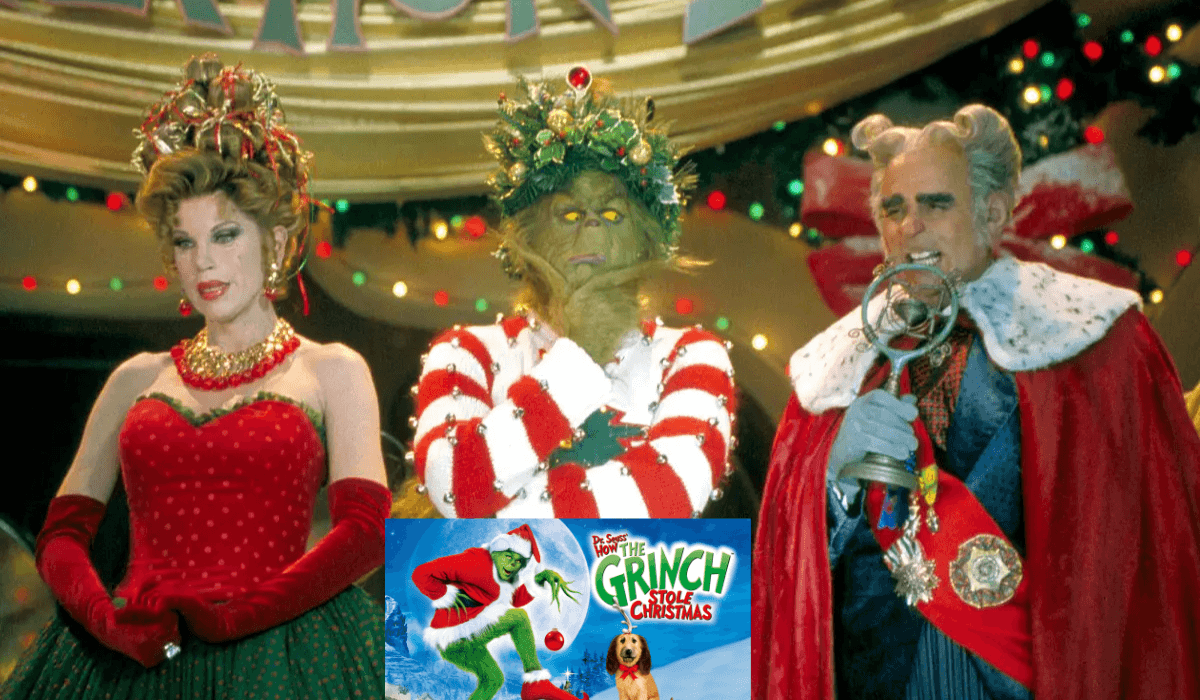
A quarter century after "How the Grinch Stole Christmas" became a box office sensation, Taylor Momsen is sharing heartfelt memories about her experience working alongside Jim Carrey. The rock musician, who was only seven years old when she played Cindy Lou Who, recently revealed a moment that showcases Carrey's protective nature on set, particularly during a harrowing stunt sequence that could have resulted in serious injury.
In a detailed oral history published by Vulture commemorating the film's 25th anniversary, Momsen recounted a specific incident that perfectly captures Carrey's dedication not just to his craft, but to the safety of his young costar. The story offers a rare glimpse into how major Hollywood productions balance spectacle with safety, especially when child actors are involved.
The Sled Scene That Went Wrong
The moment in question took place during the filming of the iconic mountain sled sequence. According to Momsen, the production team had constructed a real sled mounted on a giant spring mechanism. This mechanical setup was designed to simulate the wild, careening descent down the mountain, controlled by operators who moved it aggressively from side to side to create a sense of danger and excitement.
Momsen explained the setup was genuinely intense. The sled jerked violently as Carrey, in full Grinch costume and makeup, performed his characteristically exaggerated movements beside her. For several takes, everything proceeded according to plan. Then something went wrong.
During one particular moment, as Carrey leaned over being his typically animated self, Momsen nearly tumbled out of the moving sled. The child actress was positioned quite high off the ground, and a fall could have resulted in serious consequences. What happened next reveals volumes about Carrey's character and priorities.
Carrey's Immediate Response
The seasoned actor immediately recognized the danger. Without waiting for the director or anyone else to intervene, Carrey himself called cut. He stopped production on the spot and immediately turned his attention to checking on Momsen's wellbeing.
This split second decision demonstrates exceptional awareness and responsibility. In the high pressure environment of a major studio production, where time equals money and schedules are tight, Carrey prioritized a child's safety over continuity, the shot, or keeping the production moving. His instinct was protective rather than professional.
Interestingly, Momsen's perspective on the incident reveals the innocence of childhood. She recalled being completely unaware of the severity of what had just occurred. Instead of fear or shock, she was laughing and having what she described as a great time. The seven year old wasn't processing the fact that she'd nearly taken a dangerous fall from a significant height. To her, it was all part of the excitement of making a movie.
This contrast between Carrey's alarm and Momsen's obliviousness actually underscores why his protective instinct was so crucial. Young children often lack the capacity to recognize genuine danger, which is precisely why responsible adults on set need to remain vigilant.
A Pattern of Protection Throughout Production
This wasn't an isolated incident, according to Momsen. Looking back on the entire production with adult perspective, she emphasized that Carrey was consistently and notably protective of her throughout filming. From their very first day working together, he established a pattern of checking in on her, ensuring she felt safe and comfortable, and remaining conscious of his own physical presence and energy around her.
Momsen described Carrey as being very animated and over the top in his performance, which was essential to bringing the Grinch character to life. However, she noted he was always aware of how his exaggerated movements and energy might affect her. He made a conscious effort to balance his bombastic performance style with mindfulness about the child actor sharing his scenes.
The young actress recalled that Carrey repeatedly asked if she was okay, constantly monitored her comfort level, and generally looked out for her wellbeing as both a person and a child on a demanding professional set. This level of attentiveness from a lead actor, especially one delivering such a physically demanding performance, speaks to remarkable professionalism and genuine care.
The Physical Demands Momsen Faced
Beyond the sled incident, Momsen has shared other details about the surprisingly physical nature of her role. Despite being so young, she performed most of her own stunts throughout the production. The demands placed on the child actress were substantial and would challenge performers of any age.
She learned to work with wire rigs, mastering the technique of appearing to fly while suspended in harnesses. She trained on how to fall safely onto padded surfaces, a skill that requires understanding body mechanics and overcoming natural protective instincts. One scene required her to drop through a trap door, demanding precise timing and trust in the crew.
Another memorable challenge involved a massive slide with no stairs leading to the top. Momsen had to climb up using only a rope, then slide down repeatedly for different takes. The only stunt she didn't perform herself was being shot out of the trash can during the film's climactic sequence, which presumably required a dummy or specialized stunt performer due to the mechanics involved.
This extensive stunt work for such a young performer raises questions about child safety protocols in Hollywood, particularly in the year 2000 when standards may have been less stringent than today. It makes Carrey's protective vigilance even more significant in context.
Carrey's Perspective on His Young Costar
Carrey has spoken warmly about working with Momsen, recognizing her exceptional abilities even at that tender age. He described her as an incredibly precocious child who was smart well beyond her years. Her professional capabilities impressed him from their very first meeting before production began.
He specifically praised her comedy timing, calling it impeccable. For a seven year old to earn such recognition from a comedic master like Carrey is extraordinary. He characterized her as a total professional, noting she never missed a line, never forgot a cue, and maintained remarkable consistency throughout the demanding production schedule.
This mutual respect between the veteran comedian and the child actress clearly contributed to their positive working relationship. Carrey wasn't just tolerating a young costar or going through the motions. He genuinely appreciated her talent and treated her as a real colleague while simultaneously remaining aware of her youth and vulnerability.
The Unique Dynamic of Their Relationship
One fascinating aspect of their working relationship was that Momsen never saw Carrey's actual face during production. Throughout the entire filming process, whenever they worked together, Carrey was always in the full Grinch makeup and costume. The elaborate prosthetics, famously grueling for Carrey to wear, meant that to young Momsen, Jim Carrey simply looked like the Grinch.
She had no frame of reference for Carrey's extensive filmography. At age seven, she was too young to have seen his earlier films. She didn't recognize him as a famous actor or comedy icon. To her, Jim Carrey was just Jim, a kind person who happened to be green and furry and had an unusual face.
The first time Momsen actually saw Carrey's real appearance was at the film's premiere. Someone had to physically point him out to her and explain that this was Jim. Her response was simply a surprised acknowledgment. This innocence adds a touching layer to their working relationship and explains why she felt so safe with him throughout filming.
Their Emotional Reunion After 25 Years
In what can only be described as perfect timing or perhaps Hollywood kismet, Momsen and Carrey reunited in November 2025 at the Rock and Roll Hall of Fame Induction Ceremony. The circumstances bringing them together were remarkable in their synchronicity.
Carrey was present to officially induct Soundgarden into the Hall of Fame, having hosted the 1996 Saturday Night Live episode where the band served as musical guest. Meanwhile, Momsen, who had long since left acting to pursue her music career as lead singer of The Pretty Reckless, performed onstage with surviving Soundgarden members. Her band had toured with Soundgarden in 2017, just before frontman Chris Cornell's tragic death.
The reunion was the first time the two had seen each other since the film's premiere in 2000. A full 25 years had passed. Momsen, now 32, approached the encounter with adult awareness and perspective she couldn't have possessed as a child.
When they spotted each other in the hallway at the Peacock Theater in Los Angeles, both were visibly moved. They embraced warmly, posed for photographs together, and were seen whispering to each other during the ceremony. The genuine affection between them was evident.
What This Story Reveals About Hollywood
This incident and Momsen's broader reflections offer valuable insights into the realities of child stardom and the importance of adult protection on film sets. The story highlights several crucial points worth examining.
First, even on major studio productions with significant budgets and safety protocols, dangerous situations can occur in an instant. The mechanical sled that nearly caused Momsen's fall was presumably tested and deemed safe, yet accidents still almost happen. This underscores why constant vigilance is essential, not just from dedicated safety personnel but from everyone present.
Second, the power dynamics on film sets mean that actors, especially child actors, may not advocate for themselves effectively. Momsen wasn't frightened during the sled incident because she didn't fully grasp the danger. She needed an adult to recognize the hazard and take action on her behalf. This is precisely why industry regulations around child performers exist and why responsible adults in positions of authority must take that role seriously.
Third, lead actors have tremendous influence on set culture and safety. When someone of Carrey's stature stops production to check on a costar's wellbeing, it sends a clear message about priorities. It establishes that safety matters more than schedule, that people matter more than perfect takes. This leadership by example can shape how entire productions approach risk and responsibility.
The Broader Context of the Grinch Production
It's worth noting that "How the Grinch Stole Christmas" was an infamously difficult production for Carrey himself. The elaborate makeup and prosthetics required him to sit for hours daily in the makeup chair. The costume was restrictive and uncomfortable. The experience was so grueling that Carrey famously worked with a CIA expert who trains operatives to endure torture, learning techniques to psychologically cope with the physical discomfort.
Given what Carrey himself endured throughout production, his consistent attentiveness to Momsen's comfort and safety is even more remarkable. Despite his own considerable suffering, he never lost sight of his responsibility toward his young costar. This demonstrates character that extends beyond professional obligation into genuine human decency.
The film itself, directed by Ron Howard and adapted from Dr. Seuss's beloved 1957 children's book, became a massive commercial success despite mixed critical reception. It earned over 346 million dollars worldwide and claimed the title of highest grossing domestic film of 2000. It also won the Academy Award for Best Makeup, a well deserved recognition given the elaborate prosthetics work.
Over the years, "How the Grinch Stole Christmas" has transformed from a box office hit into a genuine holiday tradition for countless families. Each December, new audiences discover the film while longtime fans return for annual rewatches. This enduring popularity means Momsen's performance as Cindy Lou Who continues reaching children today, long after she left acting behind.
Momsen's Journey Since Cindy Lou Who
After "How the Grinch Stole Christmas," Momsen continued acting, most notably playing Jenny Humphrey on the hit television series "Gossip Girl." However, she ultimately chose to step away from acting in 2010 to focus entirely on her music career with The Pretty Reckless.
That decision reflects a broader truth about child stardom: not everyone wants to remain in the industry that defined their childhood. Momsen has been remarkably honest about the challenges she faced, including being relentlessly teased at school where classmates called her "Grinch girl" rather than her actual name. She has described feeling alienated by the attention.
Yet with adult perspective, she has also reclaimed positive feelings about her Grinch experience specifically. She acknowledges that while the aftermath at school was difficult, the actual filming experience was wonderful. She has no bad memories from the production itself, crediting much of that positive experience to how she was treated on set, particularly by Carrey.
To commemorate the film's 25th anniversary, Momsen and The Pretty Reckless released a Christmas album titled "Taylor Momsen's Pretty Reckless Christmas." The album includes a cover of "Where Are You Christmas?" from the film's soundtrack, featuring a duet between adult Momsen and her seven year old self through the magic of audio editing. The accompanying music video incorporates nostalgic footage from the original production period.
My Take: Why This Matters
Honestly, stories like this restore a bit of faith in an industry that often prioritizes profit over people. Hollywood has a troubling history of exploiting child actors, of pushing them beyond reasonable limits, of exposing them to adult situations without adequate protection. The entertainment business can be remarkably callous.
That's precisely why Carrey's behavior deserves recognition and praise. He didn't have to be protective. He didn't have to prioritize Momsen's safety over getting the shot. Many actors wouldn't have noticed the near fall, or would have assumed it was someone else's job to address. Carrey's immediate, instinctive response shows the kind of person he is when cameras aren't rolling and professional reputations aren't at stake.
The incident also highlights how quickly things can go wrong on sets, even with safety protocols in place. Modern film production involves controlled danger, mechanical effects, stunts, and countless opportunities for injury. Everyone present needs to remain alert because accidents don't announce themselves. They happen in seconds, as this sled incident demonstrates.
Moreover, this story provides a blueprint for how established actors should treat young costars. Check in regularly. Remain aware of how your energy and physical presence affect them. Don't assume they'll speak up if uncomfortable. Create an environment where they feel safe and valued. Recognize that they're simultaneously professional colleagues and vulnerable children who need protection.
The fact that Momsen still speaks so warmly about Carrey decades later, crediting his protective care as a lasting positive influence, suggests he got it right. She felt safe. She had fun. She learned by watching a master comedian take his craft seriously. Those are exactly the memories we want child actors to carry forward.
A Legacy Beyond Entertainment
"How the Grinch Stole Christmas" endures as holiday entertainment, but perhaps its most valuable legacy isn't on screen. The example Carrey set, the way he protected his young costar, the safety culture he helped establish, these matter more than box office receipts or critical reviews.
The film industry continues grappling with how to responsibly employ young performers. Regulations exist, but rules on paper mean nothing without people willing to enforce them and adults willing to prioritize children's wellbeing in the moment. Carrey's split second decision to call cut, his consistent checking in throughout production, his awareness of potential dangers, this is what genuine protection looks like in practice.
As Momsen and Carrey's recent reunion demonstrates, these bonds forged during production can last a lifetime. The mutual respect between them hasn't diminished despite 25 years and radically different career paths. That warmth and lasting connection speaks volumes about the foundation of care and professionalism they established during those months filming in 2000.
For anyone working with young performers, whether in film, television, theater, or any creative field, this story offers a masterclass. Technical safety measures matter. Regulations matter. But ultimately, nothing substitutes for attentive, caring adults who treat children's wellbeing as the absolute first priority. Jim Carrey understood that instinctively, and Taylor Momsen benefited from that understanding in ways that shaped her entire experience and memory of the production.
That's the real story behind the Grinch's heart growing three sizes. Sometimes it's not about fictional characters learning to love Christmas. Sometimes it's about real people showing genuine care when it matters most.