Mila Kunis Made This Observation About Plastic Surgery That Changed How Ashton Kutcher Sees Hollywood

Ashton Kutcher just exposed one of Hollywood's strangest contradictions, and it all started with a simple observation from his wife.
Mila Kunis pointed out something most of us have never consciously noticed. The 42-year-old actress told her husband that society celebrates people who straighten their teeth with braces or Invisalign, but the moment someone gets a nose job, the judgment flows freely. Both are cosmetic enhancements. Both permanently change your appearance. Yet one is wholesome and the other is vain.
That conversation stuck with Kutcher. In a recent interview with Vanity Fair, the 47-year-old actor shared his wife's insight while promoting his new FX horror series, The Beauty. The show, which premieres January 21, explores the deadly lengths people go to for physical perfection, and Kutcher's real-life observations about beauty culture hit uncomfortably close to the fictional nightmare he's portraying.
"There's this global obsession with beauty that is intellectually ripe for conversation," Kutcher told Vanity Fair. It's a frequent topic of discussion between him and Kunis, whom he married in July 2015 after reconnecting on the set of That '70s Show, where they first met as teenagers
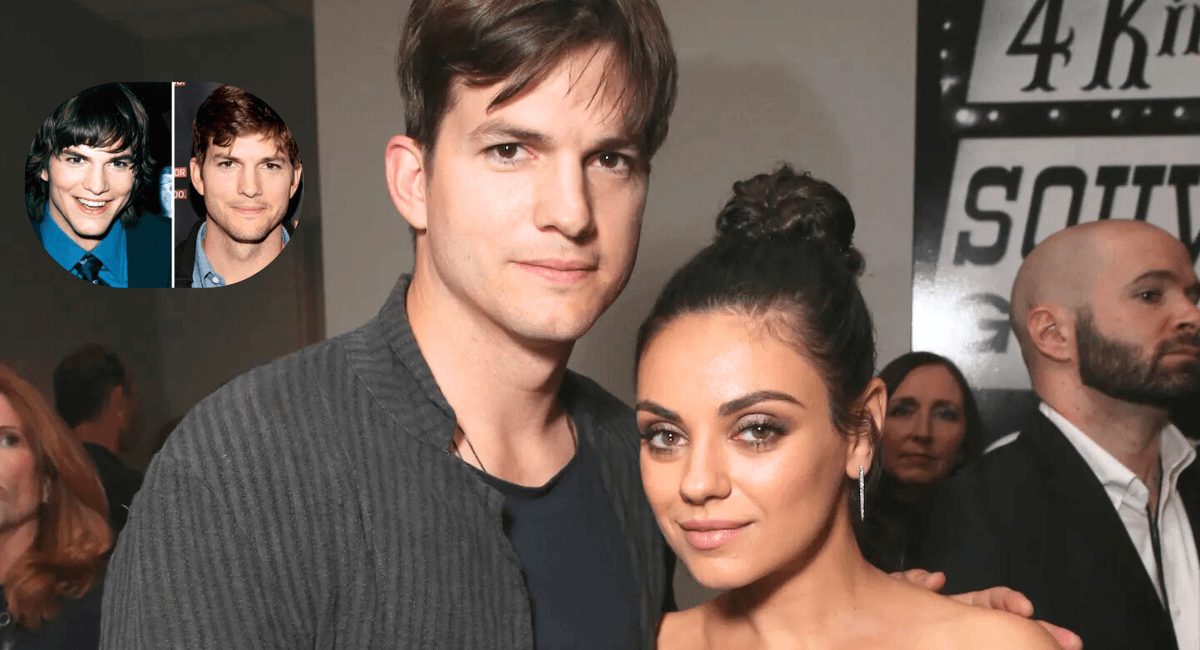
The Arbitrary Line We Draw Between Acceptable and Shameful
Kutcher expanded on his wife's braces versus rhinoplasty comparison with sharp clarity. "They're both cosmetic enhancements, one's to your teeth and one's to your nose," he explained. "And nobody's ever going to be judgey about getting braces, or about how your teeth turn out from the braces. But they will for rhinoplasty or liposuction or a hair transplant."
Then he landed on the real problem: "It depends on what body part it is. That's a really weird thing."
He's absolutely right. The distinction is completely arbitrary. We've collectively decided that fixing crooked teeth is self-improvement, but fixing a crooked nose is vanity. Hair transplants get side-eye, but veneers get compliments. LASIK surgery is practical, but eyelid surgery is frivolous.
There's no logical consistency to where we draw these lines. Both braces and nose jobs cost thousands of dollars. Both involve medical professionals. Both permanently alter your appearance. Both can boost confidence and improve quality of life. Yet one marks you as responsible while the other marks you as insecure.
The cosmetic enhancement industry has exploded in recent years, yet the stigma around certain procedures remains ironclad. Teeth whitening strips are sold at every pharmacy, but admitting to Botox still requires courage in most social circles. We filter our faces on Instagram daily, but god forbid someone gets those changes made permanent.
Why This Conversation Matters Right Now
Kutcher's comments arrive at a fascinating cultural moment. The beauty industry wields more power than ever before, yet we're still pretending some enhancements are natural while others are shameful.
In The Beauty, Kutcher plays Byron Forst, a tech billionaire who engineers and profits from a sexually transmitted treatment that makes people physically perfect before eventually killing them. The series follows FBI agents Cooper Madsen (Evan Peters) and Jordan Bennett (Rebecca Hall) as they investigate mysterious deaths linked to the beauty-enhancing virus.
The show's premise is body horror meets social commentary. A treatment spreads through sexual contact, transforming ordinary people into visions of perfection. People take it willingly despite knowing the risks. It sounds like science fiction, but it's barely exaggerated from reality.
Ryan Murphy, the prolific creator behind American Horror Story and Glee, personally convinced Kutcher to take the role. "I wrote this role for you," Murphy told him. "You've never really played a villain, and I think that this is the villain for you."
It's Kutcher's first true antagonist role, and the timing couldn't be more perfect. He's positioned perfectly to critique an industry he's been part of for over two decades while exploring themes that feel urgently relevant.
The Ozempic Elephant in Every Room
Kutcher didn't shy away from discussing one of 2025's most controversial cultural phenomena. "We're seeing the proliferation of GLP-1s," he said, referring to drugs like Ozempic and Wegovy that were developed for diabetes but are now widely used for weight loss.
Then he added a pointed observation: "We're even seeing our current administration make them cheaper and more available."
In November 2025, the Trump administration announced deals with pharmaceutical companies Novo Nordisk and Eli Lilly that would lower the cost of GLP-1 drugs for Americans. Medicare will pay $245 per month for these medications, with beneficiaries paying just a $50 copay. Cash-paying customers using TrumpRx will start at $350 per month, trending down to $245 over two years.
For the first time, Medicare will cover these drugs for obesity treatment in patients with related comorbidities, expanding access to millions of Americans who previously couldn't afford these medications. The new pricing and coverage expansion is expected to take effect in mid-2026.
Here's where Kutcher's fictional role collides with reality. His character in The Beauty profits from people's desperate hunger for physical perfection, engineering a treatment that promises beauty but delivers death. Meanwhile, real-world pharmaceutical companies are making billions from weight-loss drugs that carry their own risks and side effects.
The parallel is uncomfortable. Are government-subsidized weight-loss drugs a public health breakthrough or a dangerous precedent? If taxpayers are funding these treatments, are we tacitly endorsing the idea that thinness matters more than other health conditions that don't receive the same level of intervention?
Murphy has described The Beauty as his commentary on "Ozempic culture." The question the show poses is simple but devastating: how far would you go to be beautiful? And who profits when you make that choice?
The Scale of Murphy's Vision
Ryan Murphy compared The Beauty to Game of Thrones in terms of scale and budget, with filming taking place across Paris, Venice, Rome, and New York. The production represents Murphy's biggest international undertaking, requiring months of shooting across multiple continents.
The cast reads like a Murphy all-star team. Evan Peters plays FBI agent Cooper Madsen, Rebecca Hall portrays agent Jordan Bennett, Anthony Ramos is The Assassin working for The Corporation, and Jeremy Pope plays an outsider caught in the chaos. Guest stars include Bella Hadid, Isabella Rossellini, Ben Platt, Billy Eichner, Vincent D'Onofrio, and Nicola Peltz Beckham.
The casting of Bella Hadid, one of the world's most recognizable supermodels, as a character whose beauty treatment goes catastrophically wrong isn't accidental. It's Murphy holding up a cracked, bloody mirror to an industry that has profited off impossible beauty standards for decades.
The first three episodes premiere simultaneously on January 21, 2026 at 9 p.m. ET/PT on FX and Hulu, with the remaining eight episodes releasing weekly on Wednesdays.
The Awkward Ex-Wife Connection Nobody's Discussing
There's an elephant in the room that makes Kutcher's beauty industry critique even more layered. Demi Moore, his ex-wife, received her first Oscar nomination this year for The Substance, a film that tackles nearly identical themes to The Beauty.
Both projects are body horror stories about the extreme lengths people go to for beauty. Both premiered during the same awards season. Both feature aging stars confronting Hollywood's obsession with youth and perfection.
The comparison was inevitable. When Vanity Fair asked Kutcher about the similarities between the two projects, he gave a surprisingly candid answer: "I haven't seen that film."
That admission speaks volumes. Kutcher and Moore were married from 2005 to 2013, with their divorce finalized amid tabloid scrutiny and personal pain. Kutcher later told Esquire that divorce feels like a wholesale failure. He's since built a new life with Kunis, with whom he shares two children.
Moore's performance in The Substance earned widespread critical acclaim. She won the Golden Globe Award for Best Actress in a Motion Picture and the Screen Actors Guild Award for Outstanding Performance by a Female Actor in a Leading Role. Though nominated for the Oscar, she ultimately lost to Mikey Madison for her performance in Anora.
The film follows an aging actress who takes a mysterious substance to create a younger version of herself, with devastating results. It's a brutal examination of Hollywood's treatment of women as they age, and Moore's willingness to be vulnerable on screen has resonated powerfully with audiences.
Meanwhile, Kutcher is playing the villain who creates and profits from the beauty-enhancing virus. The thematic overlap is striking. One film centers a woman destroyed by beauty standards; the other features a man exploiting them for profit.
The fact that Kutcher hasn't watched his ex-wife's Oscar-nominated performance isn't petty. It's a boundary. Sometimes you need clean separations from your past, especially when that past involved public heartbreak. He's moved on, built a family, and doesn't owe Moore's career any particular attention.
What's remarkable is that they're both exploring the same cultural moment from different angles. That says more about where we are as a society than it does about their relationship.
The Father Who Almost Said No
Kutcher initially hesitated to take on a television series. "That's a lot of work over an extended period of time. I like to be home with my kids in Los Angeles," he told Vanity Fair.
His children with Kunis, daughter Wyatt Isabelle (10 years old) and son Dimitri Portwood (8 years old), are clearly his priority. The couple is famously protective of their kids, rarely sharing photos or bringing them to public events.
This adds crucial context to Kutcher's comments about beauty standards. He's raising a daughter in a world that will judge her appearance relentlessly from childhood. He's married to a woman who has navigated Hollywood's impossible beauty expectations since she was a teenager on That '70s Show.
These aren't abstract conversations for the Kutcher-Kunis household. When Mila points out the hypocrisy around plastic surgery, she's speaking from decades of experience in an industry that commodifies women's bodies. When Ashton worries about beauty culture, he's thinking about what messages his 10-year-old daughter is absorbing.
The fact that Ryan Murphy's pitch ultimately convinced him to take the role despite family concerns suggests how strongly the material resonated. This isn't just another acting job. It's a project that speaks to conversations he and his wife are already having at home.
The Class Divide Nobody Mentions
Here's what often gets left out of discussions about cosmetic procedures: access. Wealthy people get better, safer treatments. They can afford the best surgeons, the newest medications, the most natural-looking results that nobody can detect.
Everyone else? They're stuck with risky alternatives or nothing at all. The black-market beauty industry Kutcher's character exploits in The Beauty isn't science fiction. People already buy counterfeit Botox, unregulated fillers, and dangerous weight-loss drugs because the legitimate versions are prohibitively expensive.
When the government subsidizes GLP-1 drugs, it democratizes access. But it also raises uncomfortable questions. Why do obesity treatments get subsidized when other chronic conditions don't? Is it really about health, or is it about appearance?
The answer probably makes a lot of people uncomfortable. We're willing to invest public resources in making people thinner because thinness is culturally valued in ways that other health outcomes aren't. That's not medical policy. That's beauty culture wearing a lab coat.
Kutcher's villain character in The Beauty understands this dynamic perfectly. In a world obsessed with appearance, the people selling perfection always win. The rest of us are just paying the price, whether through insurance premiums, tax dollars, or literal lives.
The Hypocrisy Is the Point
After examining this from every angle, here's what I think: Mila Kunis nailed it with her braces observation, and we need to reckon with the arbitrary rules we apply to cosmetic enhancement.
We have two choices. Either we accept all cosmetic procedures without judgment, recognizing that everyone has the right to modify their appearance as they see fit. Or we question why we're so obsessed with physical perfection that we're willing to take extreme risks and spend enormous resources to achieve it.
What we can't do is keep pretending that braces are wholesome while nose jobs are shameful. That's intellectually dishonest and emotionally damaging to millions of people who internalize the message that wanting to look different is somehow morally suspect, but only for certain body parts.
The government subsidizing weight-loss drugs feels like a slippery slope. Yes, obesity correlates with serious health problems. But so do dozens of other conditions that don't receive the same level of intervention. The cynic in me wonders if we're only willing to subsidize treatments that make people conform to beauty standards.
As for Kutcher not watching The Substance, I actually respect that boundary. He doesn't owe his ex-wife's career any particular attention. The fact that they're both tackling similar themes in the same year says more about this cultural moment than it does about their past relationship.
What strikes me most is the timing. Beauty standards have never been more visible, more profitable, or more dangerous. We're injecting ourselves with drugs developed for diabetics. We're altering our faces with filters in real time. We're going into debt for cosmetic procedures while pretending it's all perfectly normal and healthy.
Kutcher and Kunis are right. It's weird. The double standards are weird. The arbitrary judgments are weird. The whole system is weird, and it's time we acknowledged that instead of perpetuating it.
The Beauty might be horror, but the real nightmare is the culture it's satirizing. We're already living in a world where people sacrifice their health, their money, and sometimes their lives in pursuit of physical perfection. The only difference between reality and Ryan Murphy's show is that the consequences happen slower and we've all agreed to pretend it's fine.
What Happens When the Mirror Cracks
The Beauty follows FBI agents investigating a sexually transmitted virus that transforms people into visions of physical perfection with terrifying consequences, as they pursue a tech billionaire who engineered the treatment and will do anything to protect his trillion-dollar empire.
The premise asks a question we're all avoiding: how far would you go? Would you risk death for guaranteed beauty? Would you inject something into your body without knowing the long-term effects? Would you go into debt? Would you ignore warning signs?
If your immediate reaction is "of course not," consider how many people are already doing versions of all these things. Cosmetic procedures kill people every year. Weight-loss drugs carry serious risks. Even legal, FDA-approved treatments can have devastating consequences.
The difference between The Beauty's fictional virus and real-world beauty culture is mostly a matter of degree, not kind. We're already sacrificing for appearance. We're already ignoring risks. We're already letting other people profit from our insecurities.
Kutcher's villain character has a real-world counterpart in every pharmaceutical executive, every cosmetic surgeon, every wellness influencer pushing products that promise transformation. The Beauty just makes the horror visible instead of hiding it behind before-and-after photos and testimonials.
Mila Kunis made an observation that should change how we think about cosmetic enhancement. Her husband turned it into a broader critique of beauty culture. Ryan Murphy turned it into a horror series. And we're all living in the world they're describing.
The double standards around plastic surgery reveal something uncomfortable about our values. We claim to care about authenticity while demanding perfection. We say inner beauty matters while judging people relentlessly on appearance. We celebrate natural looks while consuming filtered content constantly.
The Beauty premieres January 21, 2026, on FX and Hulu, just as this conversation reaches a fever pitch. Whether the show succeeds or fails, it's asking questions we should have been asking all along.
Why do braces get a pass while nose jobs get judgment? Why are we willing to subsidize weight-loss drugs but not other treatments? Who profits when we hate how we look? And how much are we willing to sacrifice in pursuit of an impossible standard?
These aren't comfortable questions. But Kutcher, Kunis, and Murphy are forcing us to confront them anyway. The only question left is whether we're willing to look in the mirror and acknowledge what we see.