One Battle After Another Wins Best Picture And Paul Thomas Anderson Just Revealed The Real Secret To Making Award Winning Films

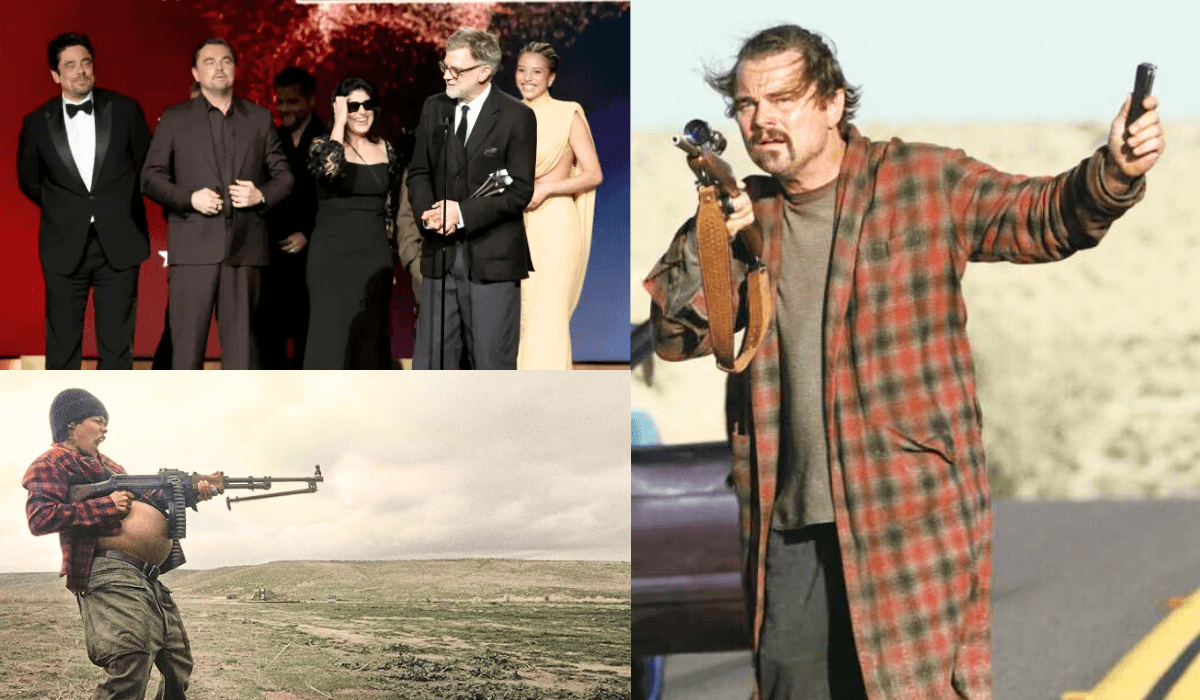
Paul Thomas Anderson stood on stage at the 2026 Critics Choice Awards on January 4 with three trophies in hand, including the biggest prize of the night for Best Picture. But it was not the gold statues that caught everyone's attention. It was something he said during his acceptance speech that struck a chord far beyond the room of industry insiders at the Barker Hangar in Santa Monica.
"I'd say this is the best time I ever had making a movie, and I feel like it shows," Anderson told the audience after One Battle After Another defeated nine other films to win the top honor. "It's just a testament to being with people that you love. Because as somebody said earlier, this is fine and this is fun, but it really is about the people that you work with. That's all that there is at the end of the day."
This was not empty awards show sentiment. This was a master filmmaker telling Hollywood something it desperately needs to hear. The best work happens when people enjoy making it.
The Revolutionary Idea That Actually Works
Anderson's statement cuts against decades of Hollywood mythology that glorifies difficult, torturous film productions. We have been conditioned to believe great art requires suffering. That directors need to be tyrants. That actors must endure abuse to deliver authentic performances. That grueling 18 hour days and toxic dynamics somehow produce better results.
Research tells a very different story. Oxford University's business school found that happy workers are 13% more productive than their unhappy counterparts in a comprehensive study tracking employees over six months. The University of Warwick conducted laboratory experiments with over 700 participants and discovered that happiness made people around 12% more productive.
The data is clear. Joy is not a distraction from excellence. It fuels it.
And One Battle After Another appears to be living proof. The film swept virtually every major critics award heading into the ceremony, including wins at the Gotham Awards, New York Film Critics Circle, and Los Angeles Film Critics Association. With this latest victory, it joined an elite group alongside Schindler's List, L.A. Confidential, and The Social Network as the only films to sweep the "Big Four" critics awards.
Critics have called it Anderson's most entertaining film yet. The film began streaming on HBO Max on December 19, 2025, following its theatrical release in September. The film holds a 95% approval rating on Rotten Tomatoes from 427 critics, with reviewers describing it as groundbreaking cinema with strong performances and complex themes.
What Hollywood Gets Wrong About Making Great Movies
The entertainment industry has a long, documented history of nightmarish productions. Francis Ford Coppola's Apocalypse Now became legendary not just for its filmmaking brilliance but for the chaos that accompanied it. The production in the Philippines lasted 238 days instead of the planned 14 weeks. Martin Sheen suffered a heart attack. Actors battled with directors. The budget ballooned. Crew members described it as hell.
The Abyss under James Cameron was similarly brutal. Cast and crew worked 70 hour weeks for six months filming underwater scenes in darkness. Lead actors Ed Harris and Mary Elizabeth Mastrantonio were pushed to near mental collapse. One crew member recalled that frustrations ran so high that people threw couches out of their dressing room windows and smashed walls just to release tension.
These stories get passed around as badges of honor. They become part of the film's mythology. But they also normalize workplace conditions that would be unacceptable in any other industry.
The truth hiding in plain sight is that most of these difficult productions did not need to be difficult. Many of the problems stemmed from poor planning, ego clashes, or directors who confused cruelty with artistic vision. The suffering was not the ingredient that made the films great. The talent was. The artistry was. And those elements would have shined even brighter in healthier environments.
The Paul Thomas Anderson Method
Anderson has built his career on a very different philosophy. He works with small, consistent crews. He brings back the same collaborators across multiple films. Operator Colin Anderson has shot six movies with him, producer Adam Somner worked on six films before his death in 2024, cinematographer Michael Bauman has done five, and script supervisor Jillian Giacomini has worked with him for years.
This is not standard practice in an industry where crews often change with every project. But Anderson understands something fundamental about creative work. Trust takes time to build. Shorthand develops through repeated collaboration. People do their best work when they feel safe, valued, and understood.
Anderson himself has said, "The camaraderie you feel with the people you're collaborating with, the trust you put in them, the way you admire and hold each other up when you're tired or need support, it's a team sport for sure, and I'm surrounded by people I just love; that is a family."
This approach extends to how he directs actors. Multiple interviews with his collaborators reveal that Anderson gives performers freedom to interpret their roles. He creates space for improvisation. He trusts people to bring their own insights to the material rather than demanding rigid adherence to his singular vision.
The workflow on One Battle After Another was described as "a very collaborative environment" by cinematographer Michael Bauman. Anderson and his crew work together to formulate shots, discuss lighting plans, and execute the vision as a team. This stands in stark contrast to directors who rule their sets with iron fists and treat crew members as interchangeable tools.
Why This Matters Beyond Film Sets
The principles Anderson demonstrated with One Battle After Another extend far beyond Hollywood. Research in positive psychology has been building a body of evidence that workplace happiness is not a luxury. It is a competitive advantage.
Studies examining happiness and productivity have found consistent patterns across industries. Happy employees do not just feel better. They perform measurably better. They solve problems more creatively. They collaborate more effectively. They show up more consistently. They stay with organizations longer.
The research also reveals that happiness at work predicts these positive outcomes more reliably than job satisfaction alone. People can feel satisfied with a job for reasons that have nothing to do with daily enjoyment. Good pay, job security, and benefits can create satisfaction. But happiness comes from different sources: meaningful work, positive relationships with colleagues, autonomy, and a sense that their contributions matter.
Positive psychology research confirms that applications of these strategies improve well being and reduce depression, anxiety, and stress while aiding employee performance and productivity, increasing resilience, and promoting self growth and quality of life.
Anderson's comment about loving the people he works with touches on one of the most powerful drivers of workplace happiness. Research from the University of Kent found that strong bonds with co workers boost physical and mental health and overall well being. When colleagues share strong relationships, it reduces stress, improves collaboration, and boosts productivity.
This is not soft skill territory. This is fundamental to how humans perform at their best.
The Film That Proved It Works
One Battle After Another is a sprawling 161 minute action thriller loosely based on Thomas Pynchon's 1990 novel Vineland. Leonardo DiCaprio stars as Bob, a washed up revolutionary living off the grid with his daughter Willa, played by Chase Infiniti. When his nemesis, played by Sean Penn, resurfaces after 16 years and Willa goes missing, Bob is forced back into his former combative life.
The film was shot across 10 California counties over six months between January and June 2024. It employed one of the first uses of VistaVision format for principal photography since the 1960s. The production involved complex action sequences, a large ensemble cast including Benicio del Toro, Regina Hall, and Teyana Taylor, and the logistical challenges of a true road movie.
This was not a small, intimate drama shot in controlled environments. This was a massive undertaking that could have easily descended into the kind of chaos that plagued other ambitious productions.
But Anderson's approach created something different. He incorporated flexibility into every setup, lighting in 360 degrees so actors could move freely, embedding fixtures into sets, and using practicals wherever possible. His longtime collaborators, gaffer Justin Dickson and key grip Tana Dubbe, found solutions while being nimble and respectful, particularly when shooting in unique locations like California missions.
The result speaks for itself. Critics describe the film as a thundering, dizzying epic. Multiple publications named performances by Penn and Taylor among the best of 2025. The film holds a 95% approval rating on Rotten Tomatoes from 427 critics, with reviewers describing it as groundbreaking cinema.
Anderson also won Best Director and Best Adapted Screenplay at the Critics Choice Awards, completing a clean sweep in the major categories for which the film was eligible. DiCaprio received a nomination for Best Actor, and Infiniti was nominated for Best Actress. Del Toro and Penn both earned Best Supporting Actor nominations, while Taylor was recognized in the Best Supporting Actress category.
This Should Be the Industry Standard
Here is my honest opinion. What Paul Thomas Anderson demonstrated with One Battle After Another should become the baseline expectation for how films get made, not the exception that gets noted in acceptance speeches.
Too many talented people in this industry have been conditioned to accept abuse as part of the process. Too many productions operate on the assumption that creative excellence requires sacrifice of basic human dignity. Too many directors hide behind the label of auteur to justify behavior that would get them fired from any other workplace.
This needs to change. Not because it is the morally right thing to do, though it absolutely is. But because the evidence shows it produces better results.
When Anderson says this was the best time he ever had making a movie and that you can see it in the final product, he is revealing a truth the industry has been slow to accept. Joy and excellence are not at odds. They reinforce each other.
I have watched talented people burn out of this industry because the cost to their mental health was too high. I have seen productions implode because directors created environments of fear rather than trust. I have witnessed firsthand how toxic dynamics destroy creativity rather than enhance it.
The alternative exists. Anderson proved it. Others have proven it. The research backs it up. The results speak for themselves.
What Comes Next for One Battle After Another
The film now enters the final stretch of awards season as the clear frontrunner. Oscar nominations will be announced January 22, with the ceremony scheduled for March 15. Anderson has been nominated for 11 Academy Awards across his career in writing, directing, and best picture categories but has never won a competitive Oscar.
This year could finally be different. Industry predictions from Variety, Gold Derby, and Rotten Tomatoes project the film will receive nominations across major categories including cinematography, editing, original score, costume design, and production design.
Of the films that swept the Big Four critics awards, only Schindler's List went on to win Best Picture at the Academy Awards. But the momentum behind One Battle After Another appears stronger than the typical critics darling. The film resonates with both critics and general audiences, a combination that often proves decisive at the Oscars.
The question is not whether the film will be nominated. The question is how many categories it will dominate.
The Competition That Made History
One Battle After Another defeated nine other films Sunday night: Bugonia, Frankenstein, Hamnet, Jay Kelly, Marty Supreme, Sentimental Value, Sinners, Train Dreams, and Wicked: For Good.
Sinners led all films with 17 nominations heading into the ceremony and walked away with four wins: original screenplay, score, casting, and best young actor for Miles Caton. The Ryan Coogler directed vampire period piece starring Michael B. Jordan in dual roles generated significant buzz but fell short in the major categories.
Timothée Chalamet won Best Actor for his portrayal of table tennis player Marty Mauser in Marty Supreme, while Jessie Buckley took Best Actress for her performance as Agnes Shakespeare in Hamnet. Jacob Elordi won Best Supporting Actor for his role as the Creature in Guillermo del Toro's Frankenstein, and Amy Madigan claimed Best Supporting Actress for her work in Weapons.
The diversity of the nominated films reflects the strength of 2025's cinematic offerings. From horror to musicals, from historical dramas to intimate family stories, the slate represented both blockbuster spectacle and deeply personal storytelling.
But in the end, the night belonged to Anderson and his collaborators. Three wins. A clean sweep in the categories that mattered most. And a message that might just change how Hollywood thinks about making great films.
The Simple Truth Nobody Wants to Admit
The film industry loves complexity. It romanticizes struggle. It celebrates directors who push boundaries and break rules and demand everything from everyone around them.
But sometimes the answer is simpler than anyone wants to admit. Treat people well. Build trust. Create environments where talent can flourish. Let joy be part of the process.
Anderson's success with One Battle After Another is not a fluke. It is a blueprint. The question is whether the rest of Hollywood is willing to follow it.
The evidence suggests they should. The results prove they can. All that remains is the willingness to try something revolutionary: making great art while also being a decent human being.
Turns out, you do not have to choose between excellence and kindness. You can have both. And when you do, everyone wins.