Richard Linklater's Nouvelle Vague: How A Golden Globe Nominee Breathed Fresh Life Into Cinema's Most Iconic Rebellion

When Richard Linklater decided to recreate the frantic production of Jean-Luc Godard's revolutionary 1960 film Breathless, he faced an unusual challenge. How do you capture the spirit of rebellion without simply copying it? The answer arrived in the form of Nouvelle Vague, a film that doesn't just look back at cinematic history but reimagines what it means to break the rules in the first place.
Released on Netflix and earning a Golden Globe nomination for Zoey Deutch's performance, Nouvelle Vague offers something rare in today's cinema: a meditation on creativity that feels alive rather than archival. This isn't a dusty tribute to a bygone era. It's a conversation across decades about what happens when artists decide that convention matters less than truth.
Why This Story Matters Now
In an age of franchise filmmaking and algorithms determining what gets made, Nouvelle Vague arrives as a reminder that cinema's most transformative moments came from people who refused to follow instructions. Godard shot Breathless in just 23 days with no permits, no conventional screenplay, and a handheld camera designed for newsreels. The result changed filmmaking forever.
Linklater's film explores not just what happened during those chaotic weeks in 1959 Paris, but why it still resonates. When Guillaume Marbeck's Godard declares that "the best way to criticize a film is to make one," it lands as both historical record and contemporary manifesto. The film suggests that breaking creative boundaries isn't a relic of the past but an ongoing necessity.
This matters because Linklater himself embodies that spirit. Nearly a decade passed since he first sent the Nouvelle Vague script to producers, and another ten years before that had elapsed since he worked with Zoey Deutch on Everybody Wants Some!! The film's long gestation period mirrors the patience required for meaningful artistic work, something easily forgotten in our rush for instant results.
Capturing Lightning in Black and White
Linklater made bold technical choices that transport viewers straight into 1959. He shot on grainy monochrome film stock using the 1.37:1 academy aspect ratio, the standard format before widescreen took over. Nearly all dialogue unfolds in French with English subtitles, even though Linklater doesn't speak the language himself. He assembled a predominantly French crew and had his English screenplay translated, then trusted his actors to inhabit these roles with authenticity.
The result feels genuinely of that era rather than a modern approximation. Watching Nouvelle Vague resembles sitting in an American arthouse theater during the Kennedy administration, experiencing the shock of the new as European cinema challenged Hollywood conventions. The film's visual texture, its rhythm, even the way cigarette smoke curls through nearly every frame, all serve to collapse the distance between past and present.
But these aren't merely aesthetic choices. By committing so fully to period authenticity, Linklater creates space for something deeper. The film becomes a portal, allowing contemporary audiences to understand not just what these filmmakers did, but how it must have felt to do it. The handheld camerawork, the improvised dialogue, the raw energy of shooting on Paris streets without permission, all of this comes alive in ways that traditional period pieces rarely achieve.
The Weight of Playing an Icon
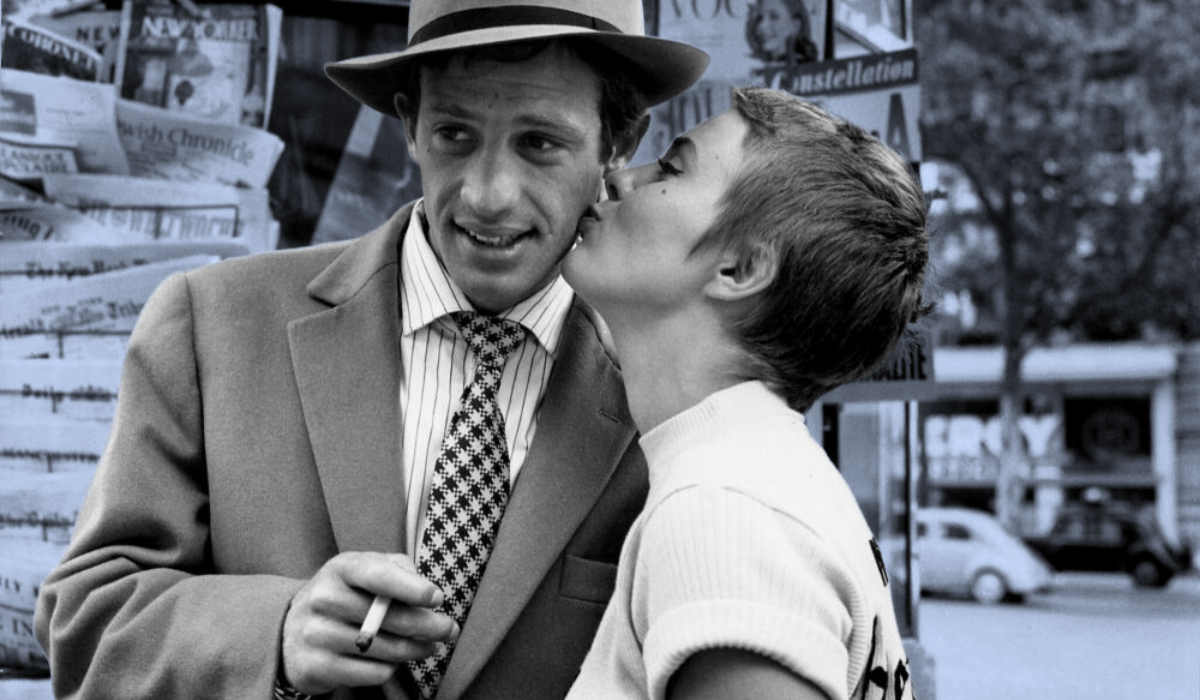
For Zoey Deutch, portraying Jean Seberg meant confronting a unique challenge. She was playing not just a real person, but one of cinema's most enduring images. Seberg's pixie cut, striped shirts, and gamine charm in Breathless became instantly iconic. Even people who have never seen the film recognize those images. How do you step into that role without simply mimicking it?
Deutch describes feeling less free in this performance than any other in her career. She couldn't improvise or add personal touches. Every gesture had to align with how Seberg moved, how she held a cigarette, how she spoke French with an American accent.
Yet paradoxically, this constraint became liberating. By surrendering to the demands of historical accuracy, Deutch found something truthful. She wasn't playing at being Jean Seberg. She was inhabiting the experience of a young American actress caught up in something unprecedented.
The stakes felt personal. Deutch visited Seberg's grave in Paris during production, a pilgrimage that drove home the responsibility she carried. She wanted Seberg to feel seen, not exploited. This tension runs through the entire film. Linklater and his cast are acutely aware that they're handling people's real lives, real struggles, real triumphs. None of the figures depicted in Nouvelle Vague remain alive today. That absence creates both freedom and obligation.
Reuniting with Linklater after nearly a decade added another layer. At 19, Deutch had worked with him on Everybody Wants Some!! Now at 29, she brought greater presence and awareness to the collaboration. She could appreciate nuances in Linklater's methodology that had escaped her as a teenager. The experience offered a rare gift: a second chance to learn from the same teacher, this time with the maturity to fully absorb the lessons.
What Godard Got Right and Wrong
Jean-Luc Godard remains one of cinema's most complicated figures. His influence on filmmaking is undeniable. The jump cuts, the direct address to camera, the rejection of conventional narrative structure that characterize modern cinema all flow in part from his innovations. Yet Godard the person presents a far messier picture.
Linklater's film doesn't shy from this complexity. It shows Godard as brilliant but difficult, visionary but often thoughtless about others' feelings. The director admits that Godard operated somewhere on the neurodivergent spectrum, a critic by nature who struggled to attune himself to emotional dynamics. His long friendship with François Truffaut eventually ruptured over these tensions. He hurt people, often without meaning to or even noticing.
But Nouvelle Vague also makes the case for Godard's essential humanity. He wasn't a dark-hearted manipulator. He was someone whose intellectual intensity and critical instincts made him socially awkward, sometimes cruel without intending cruelty. The film presents him as a man whose greatest strengths and deepest flaws sprang from the same source: an inability to accept anything less than total honesty in art, even when that honesty wounded those around him.
This balanced portrait matters because it resists the urge to either deify or demonize. Great artists can be difficult people. Recognizing their contributions doesn't require excusing their failings. Nouvelle Vague suggests that we can hold both truths simultaneously without diminishing either. We can acknowledge Godard's revolutionary impact on cinema while also seeing him clearly as a flawed human being who sometimes behaved badly.
The Art of Controlled Chaos
One of the film's most delightful aspects is watching the sheer energy of Godard's production methods. He scribbled dialogue in a notebook at cafes minutes before shooting. He had no permits for street filming. When actors forgot their lines or couldn't memorize them in time, it didn't matter because the camera was so noisy that all dialogue needed to be re-recorded anyway. This could have resulted in disaster. Instead, it produced one of cinema's landmark achievements.
Linklater captures this controlled chaos beautifully. His recreation of the Breathless production feels genuinely improvisational, with the sense that anything might happen at any moment. Yet beneath the apparent disorder lies careful structure. Linklater spent years developing this project, studying Godard's methods, understanding what made that moment in film history so special. The looseness audiences see on screen required meticulous preparation behind it.
This paradox defines much of the film. It looks spontaneous because enormous effort went into creating conditions for spontaneity. The actors could inhabit these roles convincingly because Linklater had done the historical homework to make their world feel real. The technical choices that give Nouvelle Vague its period authenticity work precisely because they're so carefully considered. True freedom in art often requires the most rigorous discipline.
Where Two Directors Meet
Perhaps the most fascinating aspect of Nouvelle Vague is watching one distinctive filmmaker interpret another's work. Linklater and Godard operate in vastly different registers. Godard's films became increasingly abstract, theoretical, and politically didactic as his career progressed. Many of his later works verge on unwatchable for audiences seeking conventional narrative or emotional engagement.
Linklater, by contrast, has built his career on humanism and accessibility. His films explore big ideas through intimate human moments. Before Sunrise, Boyhood, Dazed and Confused, all share a commitment to capturing how people actually talk, think, and feel. Even his more experimental work, like Waking Life or the rotoscoped A Scanner Darkly, grounds philosophical speculation in recognizable human experience.
Yet Nouvelle Vague reveals unexpected affinities between these directors. Both share a fascination with time and how we experience it. Godard's innovations with editing and narrative structure attempted to represent consciousness more directly. Linklater's career-long projects like the Before trilogy or filming Boyhood over twelve years pursue similar goals through different means. Both directors question what film can do beyond simply telling stories.
The film also highlights a crucial difference. Where Godard often seemed contemptuous of his audience, demanding they work to decode his increasingly opaque messages, Linklater invites viewers in. Nouvelle Vague asks us to care about these characters, to understand their struggles, to feel moved by their creativity. It presents Godard's rejection of convention not as an intellectual exercise but as a human impulse born from genuine artistic necessity.
The French New Wave's Lasting Influence
Understanding Nouvelle Vague requires context about what the French New Wave accomplished and why it mattered. Before 1959, most films followed a fairly rigid template. Studios controlled production. Scripts were finalized before shooting began. Filming happened on sets with professional lighting and carefully choreographed camera movements. Stars delivered lines exactly as written. The camera rarely called attention to itself.
The New Wave directors, many of whom started as critics writing for Cahiers du Cinéma, believed this approach had grown stale and dishonest. Real life doesn't follow three-act structure. People speak in fragments, interrupt each other, leave thoughts unfinished. Emotions rarely resolve neatly. Why should cinema pretend otherwise?
Their solution was to embrace limitations as creative opportunities. Small budgets meant shooting on location. No money for elaborate lighting setups meant using natural light. Unwieldy equipment meant handheld shots that captured a sense of documentary immediacy. These constraints, initially accepted out of necessity, became aesthetic choices that transformed how films could look and feel.
Godard pushed this further than anyone. Breathless features jump cuts that violate every rule of continuity editing. Characters address the camera directly, shattering the fourth wall. Scenes end abruptly without resolution.
The film announces its artificiality while somehow feeling more real than conventional dramas. This combination of self-awareness and emotional authenticity influenced generations of filmmakers, from Martin Scorsese to Quentin Tarantino to contemporary independent cinema.
Nouvelle Vague helps contemporary audiences understand why this movement proved so revolutionary. By showing the circumstances under which Breathless was made, Linklater illuminates what made it necessary. These weren't filmmakers rejecting tradition for its own sake. They were trying to create a cinema that felt true to lived experience rather than Hollywood fantasy.
Jean Seberg's Tragic Arc
Jean Seberg's story extends far beyond her role in Breathless, and Nouvelle Vague touches on the complexity of her life with appropriate delicacy. At 20, she was already a veteran of Hollywood disappointment. Otto Preminger had cast her in two expensive period films, Saint Joan and Bonjour Tristesse, both of which flopped critically and commercially. By the time she arrived in Paris to work with Godard, her career seemed finished.
Breathless changed everything. Suddenly she was the face of a new kind of cinema. Her performance captured something ineffable: innocence and knowingness combined, American optimism meeting European sophistication. The role made her a star in France even as Hollywood remained largely indifferent.
But Seberg's life took dark turns. Her political activism, particularly support for the Black Panthers, drew FBI surveillance and harassment. Personal struggles with mental health intensified. In 1979, at age 40, she died under circumstances that remain disputed but were officially ruled suicide. The woman who helped define cinematic cool in 1960 ended her life in tragedy less than two decades later.
Linklater and Deutch approach this knowledge carefully. They're making a film about a specific moment in August and September 1959 when Seberg's future still held promise. They show her as she was then: young, talented, caught up in creative excitement that would define her most famous role.
Yet the awareness of what came after hovers over every scene. When Linklater notes that this was Seberg being Jean Seberg, young in France with everything ahead of her, the statement carries weight precisely because we know how the story ends.
This balance between celebration and elegy runs throughout Nouvelle Vague. The film honors its subjects by showing them at their best while never pretending that life remained this joyful. It's a delicate emotional register that few period films manage to sustain.
Technical Mastery Behind the Scenes
Creating authentic 1959 Paris required more than period costumes and vintage cars. Linklater's production team had to recreate an entire visual language that modern audiences have largely forgotten. The 1.37:1 aspect ratio feels almost square compared to contemporary widescreen formats. It focuses attention on faces and vertical space in ways that alter how scenes read emotionally.
The grainy black and white film stock required careful lighting to achieve the look Linklater wanted. Too much contrast and images become harsh, losing subtle gradations of gray that give faces depth. Too little and everything flattens into muddy uniformity. The cinematography had to honor both Godard's documentary-influenced aesthetic and create images that would hold up on modern viewing platforms.
Working with a French crew while not speaking French added complexity. Linklater had to trust his collaborators to translate not just words but intentions, finding French equivalents that captured the spirit of his English screenplay. This collaboration across language barriers mirrors what Godard and Seberg experienced making Breathless. She struggled with French pronunciation. Godard barely spoke English. Yet they created something that transcended these limitations.
The film's jazz score deserves particular mention. Music in Nouvelle Vague evokes the era without feeling like a period pastiche. It captures the improvisational spirit that defined both Godard's filmmaking and the cultural moment he inhabited. The cool jazz aesthetic that pervaded late 1950s Paris becomes sonic atmosphere, placing viewers emotionally as well as visually in that specific time and place.
Why This Film Succeeds Where Others Fail
Many films attempt to capture the magic of past creative movements. Most feel embalmed rather than alive, offering reverence without understanding. They show us the surface: the clothes, the cars, the slang. But they fail to convey what it actually felt like to live through those moments, to be present when something genuinely new was happening.
Nouvelle Vague succeeds because Linklater understands that recreating the past means more than accurate production design. It requires emotional honesty about what drives creative people and what costs that drive exacts. The film never suggests that making Breathless was easy or purely joyful. It shows the confusion, the mistakes, the interpersonal tensions that accompanied the breakthroughs.
This honesty extends to how the film presents its subjects. Guillaume Marbeck's Godard isn't a plaster saint of cinema. He's prickly, difficult, sometimes cruel in his single-minded focus on getting the shot he wants. Deutch's Seberg isn't a passive muse. She's a working actress trying to salvage her career and prove she deserves to be taken seriously. The other figures who populate the film, from Truffaut to Jean-Paul Belmondo, register as real people with their own agendas and insecurities rather than historical types.
The film also benefits from Linklater's own maturity as a director. He's made enough films, experienced enough of how the industry works, to understand what Godard was fighting against. He knows the pressure to compromise, the temptation to play it safe, the thousand small decisions that either preserve a vision or dilute it. This hard-won knowledge infuses every frame of Nouvelle Vague with authenticity that a younger or less experienced director might not achieve.
The Golden Globe Recognition and What It Means
Zoey Deutch's Golden Globe nomination for her performance represents more than individual achievement. It signals recognition that Nouvelle Vague accomplished something rare: bringing historical cinema to life in ways that feel relevant to contemporary audiences. Award bodies don't typically embrace films this deliberately experimental in form or retrospective in focus.
The nomination also acknowledges the difficulty of what Deutch pulled off. Playing Jean Seberg required her to suppress many of the instincts that make actors distinctive. She couldn't lean on personal quirks or improvisational flourishes. Every gesture had to serve historical accuracy while somehow remaining emotionally alive. That she managed both simultaneously testifies to real craft.
For Linklater, recognition of any kind for Nouvelle Vague validates years of patient development. He didn't rush this film into production when initial interest proved lukewarm. He waited until circumstances aligned, until he could make it properly. That discipline increasingly feels countercultural in an industry obsessed with rapid content generation and immediate returns.
The film's success on Netflix, where it found its audience despite minimal theatrical release, also suggests something hopeful. Thoughtful films about cinema history can still find viewers if they're good enough. People remain curious about how great art gets made, particularly when the telling avoids hagiography and presents creative struggle honestly.
Looking Forward by Looking Back
What makes Nouvelle Vague ultimately valuable isn't its historical accuracy, impressive as that is. It's what the film suggests about creativity more broadly. Godard and his New Wave colleagues succeeded because they cared more about making something true than making something commercially viable. They were willing to fail spectacularly rather than succeed modestly by following established formulas.
That lesson applies beyond cinema. In any creative field, the most significant breakthroughs come from people willing to break rules intelligently. Not randomly, not merely to provoke, but in service of expressing something that existing conventions can't capture. Godard didn't use jump cuts because they looked cool. He used them because they better represented how human consciousness actually works, how memory and perception skip and jump rather than flowing smoothly.
Linklater himself has embodied this principle throughout his career. Filming Boyhood over twelve years made no commercial sense. The Before trilogy's ten-year gaps between installments violated every rule about franchise filmmaking. Waking Life's rotoscoped animation confused audiences expecting conventional narrative. Yet these risks defined his most memorable work.
Nouvelle Vague arrives at a moment when creative industries face pressure to optimize everything, to remove uncertainty through data and algorithmic prediction. The film offers a counterargument: the most valuable art emerges from accepting risk, from trusting instinct over market research, from believing that audiences will respond to genuine vision even when it challenges their expectations.
The Human Cost of Innovation
For all its celebration of creative breakthroughs, Nouvelle Vague doesn't romanticize the artist's life. Making Breathless extracted costs from everyone involved. Godard's driven intensity made him difficult to work with. Seberg's struggles with the French language and the pressure of salvaging her career took their toll. The crew worked long hours in uncertain conditions. Success, when it came, didn't erase these struggles or make them retroactively worthwhile.
This honesty about creativity's demands feels crucial. Too often we hear about artistic triumph without acknowledging the personal price. We celebrate the finished work while ignoring the relationships strained, the health compromised, the doubts endured. Nouvelle Vague shows us both: the exhilaration of making something revolutionary and the very real human costs involved.
The film also acknowledges what came after. Godard's later career grew increasingly difficult and alienating. His political radicalism hardened into dogmatism. His films became hermetic puzzles that even admirers struggled to decode. By the time of his death in 2022 at 91, his reputation had long since calcified into historical monument rather than living influence.
Seberg's trajectory proved even darker. The FBI's COINTELPRO operations targeted her because of her civil rights activism, spreading false rumors and conducting surveillance that contributed to her mental health decline. Her death at 40 remains controversial, with some arguing the circumstances suggest murder rather than suicide. The young woman so full of life and possibility in Nouvelle Vague's Paris scenes met an end that still haunts anyone who studies her life.
These trajectories lend Nouvelle Vague unexpected depth. By focusing on a moment of creative triumph while remaining aware of what followed, the film achieves something profound. It shows us that art matters, that the creative breakthroughs we celebrate genuinely changed how people see and understand the world, while also refusing to pretend that making art guarantees happiness or that genius excuses cruelty.
Why You Should Watch This Film
If you care about cinema, Nouvelle Vague offers an opportunity to witness one of film history's most important moments reimagined with intelligence and heart. If you don't know Breathless, you'll discover why it mattered. If you do know it, you'll see it with fresh eyes. Linklater has created something rare: a film about filmmaking that never feels insular or self-congratulatory.
Beyond cinephiles, the film speaks to anyone interested in how creative work actually happens. The myth of the lone genius struck by inspiration falsifies the messy, collaborative reality. Nouvelle Vague shows us that even the most singular artistic visions emerge from many people working together, often in tension, sometimes in conflict, but ultimately united by commitment to the work itself.
The performances alone justify watching. Marbeck captures Godard's wolfish intensity without caricature. Deutch makes Seberg feel fully present rather than a historical recreation. The supporting cast populates 1959 Paris with figures who feel genuinely of that moment rather than actors playing dress-up. The technical achievements, the period recreation, the careful balance between historical accuracy and emotional truth, all these elements combine into something special.
Most importantly, Nouvelle Vague reminds us why art matters. Not because it's pretty or pleasant or commercially successful, but because it changes how we see and think. Godard's innovations in Breathless didn't just alter filmmaking technique. They shifted what audiences understood film could do, what stories it could tell, what truths it could explore. That kind of transformation doesn't happen often. When it does, it's worth remembering and celebrating.
Linklater has given us a gift: a window into a moment when creativity broke free from convention and showed us something new about what art could be. In doing so, he's also given us hope. If cinema could reinvent itself once, defying skeptics and conventional wisdom, perhaps it can do so again. Perhaps every generation gets its chance to break the rules and create something revolutionary. Nouvelle Vague suggests that possibility remains alive, waiting for artists brave and foolish enough to seize it.