Rose Byrne Wins Silver Bear After 7 Years Making This Brutal Motherhood Thriller

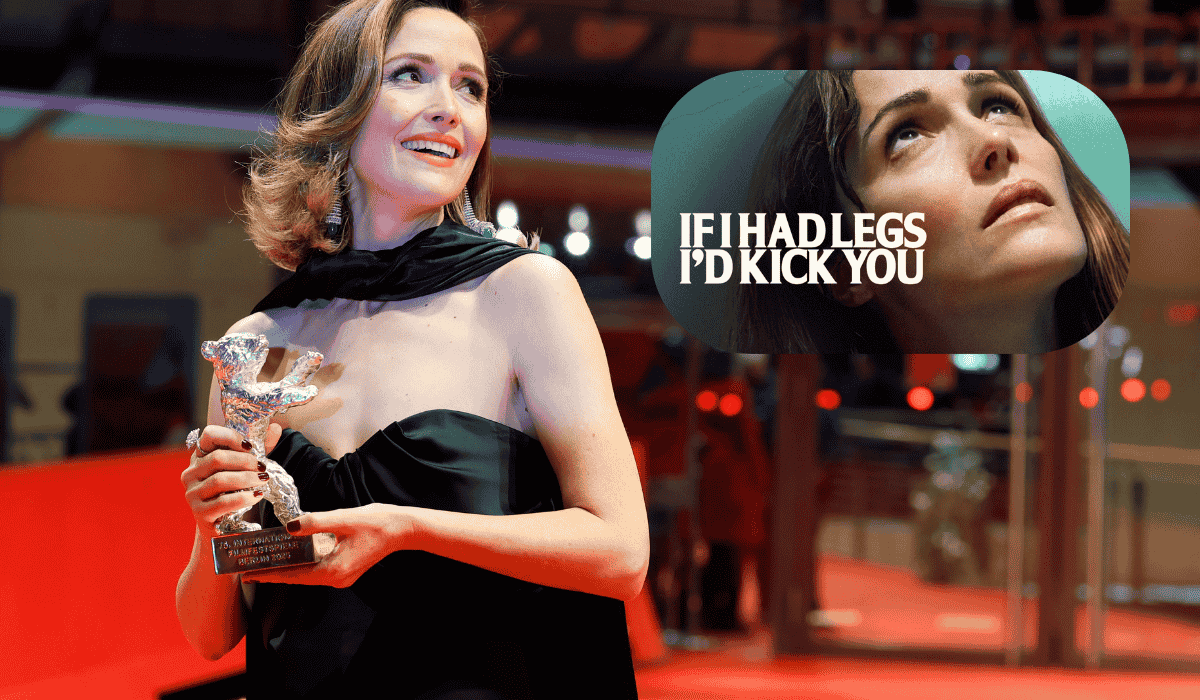
Rose Byrne has captivated audiences and critics alike with her raw, unflinching portrayal of a mother in crisis in Mary Bronstein's psychological drama If I Had Legs I'd Kick You. The performance earned Byrne the Silver Bear for Best Leading Performance at the 75th Berlin International Film Festival in February 2025, marking a significant milestone in her already impressive career.
A Script That Demanded Attention
When Bronstein's screenplay first reached Byrne, the actress couldn't put it down. Speaking to Australia's Marie Claire magazine, Byrne described how the material immediately grabbed her attention. The script's vivid imagery and emotional depth made it impossible to ignore.
Bronstein crafted something visually striking and emotionally complex, blending dark humor with psychological intensity. The screenplay took seven years to develop, rooted in Bronstein's own experiences as a mother dealing with a family health crisis. While not autobiographically factual, the story captures what Bronstein calls the "emotionally accurate" reality of maternal anxiety and helplessness.
For Byrne, the challenge lay in portraying a character without any handholding for the audience. Rather than reverse engineering Linda's backstory, she worked with Bronstein to peel back layers and discover who this woman was before everything fell apart. The role required someone who could balance raw dramatic emotion with humor, and Byrne was at the top of Bronstein's list.
The Unconventional Chemistry With A$AP Rocky
One of the film's most intriguing dynamics involves the relationship between Byrne's Linda and A$AP Rocky's motel superintendent character, James. Byrne praised the rapper's natural presence on screen, describing what she called his "supernatural charm."
In the film, when Linda is forced to relocate to a shabby motel after her apartment ceiling collapses, she forms an unlikely friendship with James. The chemistry between them is palpable, and audiences might naturally expect a romantic subplot to develop. However, the film deliberately avoids falling into that predictable pattern.
Bronstein knew exactly what she was doing when she cast Rocky. The director explained that his natural charisma cannot be taught or directed. In the script, there's a moment where it simply says "wink at Linda," and Rocky brings an authenticity to that gesture that feels genuine rather than forced. He was interested in doing something different from his previous work, and this role gave him that opportunity.
The casting choice proved wise. Rocky's well-meaning attempts to connect with Linda actually intensify her psychological unraveling, adding another layer of complexity to her already overwhelming situation. Despite missing the film's festival circuit appearances due to legal matters, Rocky's performance stands as a memorable element of the production.
A Film That Defies Easy Categorization
If I Had Legs I'd Kick You refuses to fit neatly into any single genre box. Byrne noted how the film incorporates horror tropes while maintaining gallows humor throughout. It's a tightrope walk between psychological thriller, dark comedy, and visceral drama.
The sound design plays a crucial role in creating the film's unsettling atmosphere. Rather than using a traditional musical score, Bronstein filled each scene with anxiety-inducing ambient sounds. The incessant beep of a feeding machine, urgent phone notifications, and the high-pitched whine of Linda's daughter all blend into a soundscape that mirrors the protagonist's fractured mental state.
Byrne described the audio work as extraordinary, noting how it functions almost like a piece of music. The audience experiences everything from Linda's perspective, creating an immersive psychological journey where the line between reality and perception becomes increasingly blurred.
The visual approach is equally unconventional. Much of the film consists of extreme close-ups, with Byrne's face constantly filling the frame. This technique forces viewers to confront Linda's pain directly rather than allowing them to look away. Bronstein explained this choice as a deliberate statement, demanding that audiences acknowledge a woman in distress.
Why This Story Matters Now
The film arrives at a moment when conversations about motherhood are finally breaking through cultural taboo. Byrne expressed excitement about being part of a growing wave of films that honestly address the challenges of parenting from a female perspective.
She referenced other recent works like Nightbitch and the novel All Fours as examples of this cultural shift. These stories, created by female directors and writers, explore the less discussed aspects of motherhood including disappointment, boredom, exhaustion, and feelings of failure.
One of Byrne's close friends saw the film and expressed feeling seen in a way she rarely experiences. The invisibility many mothers feel in daily life finds stark representation in Linda's story. Society simultaneously reveres and ignores mothers, creating what Byrne described as a "weird duality."
This isn't just about mothers, though. Bronstein believes the film speaks to anyone who has felt like the universe is conspiring against them, like they're walking against the wind just trying to survive. That universal experience of isolation during crisis resonates beyond parental struggles.
The Journey From Page to Screen
Bronstein's path to making this film was anything but easy. After her 2008 debut Yeast received a hostile reception, she stepped away from filmmaking entirely. The experience at that premiere, watching male filmmakers sit with crossed arms, taught her hard lessons about the industry.
She spent years earning graduate degrees, working as a therapist, and eventually found herself in a cramped motel room in San Diego, caring for her sick daughter. What was supposed to be a six to eight week treatment stretched into eight months. Sitting on bathroom tiles, drinking cheap wine and binge eating fast food while her daughter slept, Bronstein began forming the ideas that would become this film.
The screenplay itself took seven years to develop. Bronstein began writing during her daughter's health crisis and continued refining the script while facing countless rejections and requests to compromise the vision. Bronstein even made herself a ring engraved with the word "tenacity" when the film finally picture-locked.
She refused to soften the story or remove elements that made people uncomfortable. That level of conviction was necessary, she explained, because otherwise she would have spent years looking back and knowing she had told the story wrong. Eventually, A24 came on board and embraced the script exactly as written.
Festival Success and Critical Recognition
The film premiered at the Sundance Film Festival on January 24, 2025, generating immediate buzz. Its international premiere came at the Berlin International Film Festival in February, where it competed for the Golden Bear.
Rose Byrne's win of the Silver Bear for Best Leading Performance at Berlin validated the risk-taking that went into the project. The festival jury, led by filmmaker Todd Haynes, recognized the gutsy, raw nature of her work. Critics have described her performance as career-defining, with some already suggesting it deserves Oscar consideration.
The film currently holds strong reviews on Rotten Tomatoes, with the majority of critics praising both Byrne's performance and Bronstein's uncompromising directorial vision. However, reactions are decidedly mixed among general audiences, with some finding it too intense or emotionally draining.
A24 released the film in the United States on October 10, 2025, following a festival run that included stops at Telluride, Toronto, the New York Film Festival, and the BFI London Film Festival. The theatrical release sparked divided responses, with some calling it one of the year's most important films and others describing it as nearly unwatchable.
A Supporting Cast That Elevates the Material
Beyond Byrne and Rocky, the ensemble includes several noteworthy performances. Conan O'Brien makes his dramatic film debut as Linda's therapist, bringing an unexpected detachment that borders on cruelty. His casting adds another layer of discomfort, as audiences associate him with comedy rather than dramatic work.
Danielle Macdonald plays Caroline, one of Linda's therapy patients who is spiraling into her own crisis around new motherhood. Christian Slater appears as Linda's largely absent husband, reduced mostly to a hectoring voice on phone calls that offer no real support.
Bronstein herself plays Linda's daughter's physician, Dr. Spring, delivering the role with acidic wit. The character threatens to withhold medical care if Linda won't attend a support group, exemplifying the institutional inadequacy that surrounds Linda.
Delaney Quinn portrays Linda's daughter, though the character remains mostly off-screen or out of focus. This choice keeps the audience firmly within Linda's subjective experience rather than providing a fuller picture of the family dynamics.
What Makes This Film So Polarizing
If I Had Legs I'd Kick You is not an easy watch. It's designed to be uncomfortable, stress-inducing, and emotionally exhausting. Some viewers have described it as one of the most anxiety-producing films they've experienced.
The film employs a relentless pace similar to Uncut Gems, dropping the protagonist into crisis mode from the opening scene and never letting up. Linda faces a cascade of problems: her daughter's mysterious feeding disorder, a collapsed ceiling flooding her apartment, an absent husband, overwhelming therapy clients, sleep deprivation, and an increasingly hostile relationship with her own therapist.
Small inconveniences escalate into major problems in Linda's fractured state. A demanding hamster becomes a terror. A parking attendant becomes an adversary. Linda loses the ability to distinguish genuine high stakes from minor annoyances, and that confusion creates both tragedy and dark comedy.
The film also blurs the line between reality and Linda's deteriorating mental state. Viewers are never quite sure what's actually happening versus what Linda perceives. This ambiguity frustrates some audiences while others find it essential to the experience.
My Take on the Film's Significance
This film represents something genuinely important in cinema's ongoing conversation about women's experiences. For too long, motherhood has been sanitized on screen, reduced to either blissful perfection or post-apocalyptic horror with little in between.
Bronstein's willingness to show the messy, uncomfortable middle ground where most real parents exist feels revolutionary. The fact that Linda is not just struggling but actively failing in multiple areas of her life, that she makes questionable decisions and lashes out at people trying to help, makes her more human than the typical movie mother.
What strikes me most is how the film refuses to provide catharsis or easy answers. Life doesn't wrap up neatly when you're in crisis, and Bronstein respects her audience enough to leave them in that uncomfortable space. Whether that makes for "enjoyable" viewing is beside the point.
However, I do think the film's unrelenting intensity may limit its reach. This is not a movie for everyone, and that's okay. But potential viewers should understand they're signing up for an endurance test rather than entertainment in the traditional sense. If you're dealing with anxiety, parental stress, or mental health challenges, approach with genuine caution.
That said, Byrne's performance alone justifies the film's existence. She commits so completely to Linda's breakdown that watching feels almost voyeuristic. It's the kind of work that reminds you why cinema can be such a powerful medium for exploring human psychology.
As awards season continues, If I Had Legs I'd Kick You remains a film that divides audiences while uniting critics in praise of Byrne's work. Whether it translates to Oscar nominations remains to be seen, but the Berlin win suggests the performance won't be ignored.
For Bronstein, the film represents a triumphant return to filmmaking after 17 years away. She made exactly the movie she wanted to make, refusing to compromise her vision despite years of industry pressure. That kind of artistic integrity is rare and deserves recognition regardless of how audiences respond to the final product.
For viewers willing to embrace discomfort in service of truth, this film offers something genuinely unique. It's a portrait of maternal crisis that doesn't flinch, doesn't apologize, and doesn't offer false comfort. In a landscape of increasingly safe, focus-grouped entertainment, that boldness feels like a breath of fresh air, even if it's the kind of air that makes you gasp.