Stranger Things Conformity Gate Explained: How Joe Keery's Song Fueled Wild Fan Theory About Secret Episode 9

The Stranger Things finale dropped on December 31, 2025 (New Year's Eve), but for thousands of fans, the story feels unfinished. A viral theory called Conformity Gate suggests that what viewers saw wasn't the real ending at all. Instead, fans believe the Duffer Brothers orchestrated an elaborate fake-out, with the true conclusion potentially arriving on January 7, 2026.
What makes this theory particularly fascinating is the role music has played in fueling speculation. Joe Keery's song "End of Beginning" just dethroned Taylor Swift to hit number one on Spotify, and fans are analyzing its lyrics as hidden clues about the finale's authenticity.
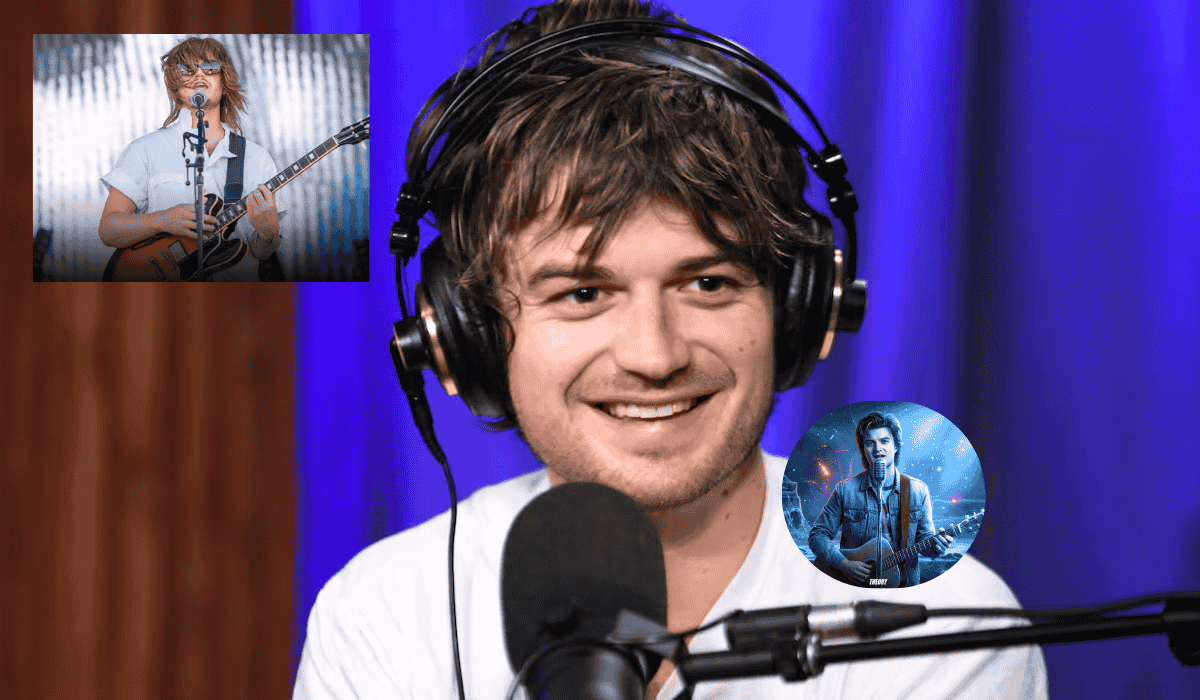
Why Joe Keery's Number One Hit Is Central to the Theory
Joe Keery, who plays Steve Harrington on Stranger Things, has achieved something remarkable. His 2022 song "End of Beginning," released under his musical alias Djo, reached number one on both the Global Spotify chart and US charts in early January 2026. The track accumulated over 6.5 million global streams in a single day, ending Taylor Swift's 78-day reign at the top with "The Fate of Ophelia."
The timing is no coincidence. The song surged immediately after the Stranger Things finale aired, as millions of emotional fans revisited content related to the cast. But what's captured attention isn't just the chart success. It's the lyrics themselves.
The chorus contains a line that fans have seized upon: "And when I'm back in Chicago, I feel it / Another version of me, I was in it." To Conformity Gate believers, this isn't just about Keery's nostalgia for his hometown. They interpret it as a deliberate hint that the characters are living inside a fabricated version of reality.
And you know what? I don't blame them for reading into it. When you're emotionally invested in a story for nearly a decade and the ending leaves you hollow, you look for meaning anywhere you can find it. Music becomes a lifeline, a way to process feelings the show itself didn't adequately address.
Multiple cast members promoted the final season using this exact song on social media. One fan posted on Twitter, "Guys. Don't laugh but why were they hyping End of beginning? Another version of me I was in it? Another coincidence about some OTHER VERSION/REALITY?"
This is where it gets interesting for me. Did the cast know fans would interpret the song this way? Were they deliberately adding fuel to a theory they knew would emerge? Or is this genuinely coincidental, and fans are projecting meaning onto an innocent promotional choice?
I think it's probably the latter, but the fact that we're even asking these questions speaks to how the finale created a vacuum of meaning that fans are desperately trying to fill. Good endings don't require this much external justification. They stand on their own.
Originally written about Keery's experience leaving Chicago for Los Angeles after landing his Stranger Things role, the song explores transitions and saying goodbye to earlier versions of yourself. In a 2024 interview with Variety, Keery explained it's "about what it means to grow up and look back at a section of your life and kind of yearn for that, but then also to have a deep appreciation for what happened."
But fans wonder if there's more to it. Did Keery and the cast know about the theory when they chose this song to soundtrack their farewell posts? My instinct says no, but I appreciate the poetry of it either way. Sometimes the best art is accidental.
What Exactly Is Conformity Gate?
The Conformity Gate theory argues that the epilogue showing a happy ending 18 months after Eleven's sacrifice is actually an illusion created by Vecna, who may still be alive. Fans have compiled extensive evidence suggesting the seemingly perfect resolution is manufactured rather than real.
And honestly? After watching the finale three times, I'm not convinced they're wrong to be suspicious. Something about that epilogue feels off in a way I can't quite articulate. It's too neat, too sanitized, too divorced from the emotional devastation that preceded it.
The theory gets its name from how the outsider protagonists suddenly conform to traditional adult lives mirroring their parents. Mike and Steve dress exactly like their fathers. This is particularly jarring for Steve, who spent five seasons defining himself against his parents' expectations. Suddenly he's coaching Little League and teaching sex ed, living out some wholesome suburban dream that feels completely disconnected from the trauma survivor we've watched evolve.
Several students at the graduation scene position their hands in the same distinctive way Henry Creel often does. Members of the Wheeler family, including Nancy, Mike, and Karen, debut shorter hairstyles closely resembling Henry's. Now, are these intentional clues or just styling choices? I lean toward the latter, but I understand why fans are grasping at straws. When an ending feels this hollow, you look for reasons to believe it's not real.
Other details have deepened the mystery. A blank yellow poster hangs in the background of the graduation scene. Radio tower dials shift colors between segments. Multiple boxes of the "WHATZIT?" board game appear scattered throughout the epilogue, seemingly out of place. These could be continuity errors. They could be budget constraints. Or they could be breadcrumbs. The problem is we have no way to know which.
Some fans analyzed the final shot of neatly arranged Dungeons and Dragons books, claiming the spines spell out "X A LIE." They interpret this as a message that everything shown in Dimension X was exactly that, a lie. I'll be honest, I tried to see this myself and couldn't make it work without serious mental gymnastics. But props to whoever first spotted it, real or imagined, because it's the kind of detail that makes theories spread like wildfire.
Two characters, Suzie and Vickie, are completely absent from the epilogue. Theorists believe Vecna left them out because he didn't know who they were and therefore couldn't include them in the ending he allegedly constructed. This is actually one of the more compelling pieces of evidence. Where are they? Why weren't they at graduation? The show has a history of forgetting minor characters, sure, but these absences feel notable given how much screen time both received earlier in the season.
The January 7 Date Connection
According to Conformity Gate supporters, a secret final episode could arrive on January 7, 2026. Netflix shared a cryptic post reading "Your future is on the way," accompanied by a January 7 tag. While Netflix provided no details about what this refers to, fans immediately connected it to their theory.
January 7 holds particular significance because it marks Orthodox Christmas. This aligns perfectly with Season 5's pattern of dropping episodes on major holidays: Thanksgiving Eve, Christmas Day, and New Year's Eve. Orthodox Christmas would complete the holiday release strategy while reaching 260 million Orthodox Christians globally, a demographic Netflix may be targeting as part of its international expansion.
Now, does this date significance actually mean anything? Probably not. Netflix posts cryptic messages constantly. It's part of their social media playbook. Creating buzz, generating speculation, keeping properties in the cultural conversation even after they've concluded. This could be about literally anything.
But I'll admit, the pattern is compelling. The holiday release strategy throughout Season 5 was deliberate and effective. Why wouldn't they cap it off with one final holiday drop? Orthodox Christmas is celebrated across Eastern Europe, Russia, parts of the Middle East, and growing diaspora communities worldwide. From a business perspective, it would be smart.
The number seven appears repeatedly throughout Season 5, adding another layer to the speculation. For fans who've spent years decoding every detail the Duffer Brothers plant, these patterns feel intentional rather than coincidental. And maybe they are. Maybe the creators knew exactly what they were doing by threading these numerical references throughout the season, knowing fans would construct elaborate theories even if those theories led nowhere.
That's the genius and the cruelty of modern franchise storytelling. Plant enough seeds and your audience does your marketing for you. They create content, generate engagement, keep your property trending for weeks after the finale airs. Whether there's a real payoff becomes almost secondary to the conversation itself.
The Psychology Behind Fan Denial Theories
From a psychological perspective, Conformity Gate represents something deeper than simple speculation. It's a collective coping mechanism for fans struggling to accept an ambiguous ending to a show that defined their lives for nearly a decade.
Denial is one of the most common defense mechanisms humans employ. According to psychological research, denial helps people avoid uncomfortable emotional realities by refusing to accept facts that cause distress. It's unconscious, meaning people genuinely believe the alternative reality they've constructed.
Mental health experts recognize that denial serves as the first stage of coping with loss, as conceptualized by Elisabeth Kubler-Ross in her stages of grief. When fans insist the ending isn't real, they're not being intentionally delusional. They're processing the end of something meaningful.
Dr. Dan Wann, a psychology professor at Murray State University who studies fandom, explains that being a fan enhances identity and creates social connections. When a beloved show ends, especially with an unsatisfying conclusion, fans can experience genuine grief. Creating elaborate theories becomes a way to delay that grief, to keep the story alive a little longer.
The Stranger Things fandom isn't alone in this response. Similar theories emerged after Lost, Game of Thrones, and Mass Effect 3 left fans dissatisfied. The "Indoctrination Theory" from Mass Effect 3, which argued the ending was a dream, bears striking similarities to Conformity Gate. In both cases, dedicated fans preferred to believe in an elaborate conspiracy rather than accept disappointing conclusions.
What makes Conformity Gate different is how it's amplified by modern social media. TikTok algorithms push engaging content to millions within hours. Reddit communities analyze frame-by-frame footage. Twitter debates rage 24/7. The internet has transformed fan theories from niche speculation into viral movements that can't be ignored.
Research on celebrity worship and fandom suggests this intense investment is normal for most people but can become problematic when taken to extremes. The vast majority of Conformity Gate believers are simply engaged fans having fun. But for some, the emotional investment in this theory being true reflects deeper attachments to the parasocial relationships they've built with these characters over nine years.
What the Finale Actually Showed
In Episode 8, the Hawkins crew enters the Upside Down to rescue kidnapped children and defeat Vecna. Despite major obstacles, including military interference and Kali's death, they locate Vecna's lair inside the Pain Tree, revealed to be the Mind Flayer itself.
Eleven enters the Mind Flayer's body to confront Vecna from within while the group attacks from outside. Will taps into the hive mind one final time to save Eleven, helping her push Vecna's body into a massive spike. Joyce delivers the killing blow, chopping off his head with an axe.
After planting a bomb near exotic matter, the group returns to Hawkins but gets intercepted by Dr. Kay and her soldiers. In a final sacrifice, Eleven chooses to return to the Upside Down so her friends can live in peace. Whether she's truly dead remains unclear, especially after Mike suggests during a Dungeons and Dragons game that she might still be alive.
Eighteen months later, the finale presents an ostensibly happy ending. The teens graduate from Hawkins High with Dustin as valedictorian. The Wheelers survive their Demogorgon attack. Lucas and Max are together. Hopper proposes to Joyce at Enzo's.
The young adults have seemingly found their footing too. Robin attends Smith College in Massachusetts. Steve coaches Little League and teaches sex education. Nancy takes a job at The Boston Herald. Jonathan studies at NYU working on an anti-capitalist cannibal film. They plan to meet monthly at Robin's uncle's home in Philadelphia.
It's this too-perfect resolution that triggered Conformity Gate. After years of trauma, loss, and horror, everyone suddenly has conventional happy endings. For many fans, it feels manufactured rather than earned.
The Taylor Swift Connection Adds Another Layer
The music story gets even more interesting when you consider Joe Keery's past interaction with Taylor Swift. In 2024, Keery shared on "The Spout Podcast" that Swift complimented "End of Beginning" at Electric Lady Studios in New York City, long before it became a streaming hit.
"She's like a music lover," Keery explained, noting that Swift actively seeks out new music. He admitted being stunned that she'd even heard the song. Now, in an almost poetic turn, Keery has dethroned Swift's track that held number one for 78 consecutive days.
The irony hasn't been lost on fans. Swift, known for her own elaborate Easter eggs and hidden meanings in albums, was beaten by a song that fans believe contains hidden messages about a TV show finale. It's meta on multiple levels.
Keery has consistently praised Swift and hasn't ruled out future collaboration, suggesting their studio encounter "generated something in the universe." Whether that something includes mutual respect for cryptic artistic choices remains to be seen.
The Reality Check: What We Actually Know
Netflix and the Duffer Brothers have made no official statements confirming or denying a secret episode. The cryptic January 7 post could refer to anything from a documentary (One Last Adventure: The Making of Stranger Things 5 arrives January 12) to unrelated Netflix content.
When searching "fake ending" on Netflix's platform, Stranger Things is the only result. Whether this is intentional marketing, a technical glitch, or confirmation bias from fans is unclear. It's certainly strange, but strange doesn't equal confirmation.
Here's my take on this particular detail: if Netflix were truly planning a surprise episode, would they really leave such an obvious breadcrumb? That seems sloppy for a company that employs entire teams of social media strategists and marketers. Then again, maybe that's exactly what they'd want us to think. See how easy it is to spiral into conspiracy thinking?
The clues fans have identified, from hand positions to hairstyles to hidden messages in book spines, could be intentional Easter eggs planted by the Duffer Brothers. Or they could be the result of confirmation bias, where people see patterns because they're looking for them. Film production involves thousands of decisions about props, costumes, and framing. Not every detail carries hidden meaning.
I've worked in content analysis long enough to know that sometimes a yellow poster is just a yellow poster. Sometimes continuity errors are just errors. Sometimes the simplest explanation is the correct one: the finale was rushed, imperfect, and left threads dangling not because of artistic intent but because of production constraints and creative limitations.
But I also can't shake the feeling that some of these details are too specific to be accidental. The hand positioning thing, for instance. Multiple students doing the exact same gesture Henry Creel does throughout the season? That's either incredibly sloppy background direction or it's deliberate. And the Duffer Brothers, whatever their faults, aren't usually sloppy with visual storytelling.
Hope Versus Reality
Having followed Stranger Things since 2016 and analyzed countless fan theories, I understand the appeal of Conformity Gate. The finale does leave significant questions unanswered, particularly about Eleven's fate. The ambiguity feels deliberate, almost calculated to spark debate.
But here's the uncomfortable truth: sometimes endings are just unsatisfying. Sometimes creators make choices fans disagree with. And honestly? I think the Duffer Brothers fumbled this one. The finale felt rushed, emotionally hollow, and weirdly conventional for a show that built its reputation on subverting expectations.
The Duffer Brothers have built their careers on nostalgia, horror, and 1980s references, not on elaborate post-finale puzzles. They're not Christopher Nolan. They're not known for planting cryptic clues that pay off months later. This is the same creative team that often prioritizes spectacle over substance, cool moments over character consistency. Expecting them to have orchestrated a months-long ARG feels generous at best, naive at worst.
Here's what I actually think happened: they wrote an ending that tried to please everyone and ended up satisfying no one. The "is Eleven dead or not?" ambiguity isn't clever storytelling. It's hedging. It's leaving the door open for a potential spinoff or reunion special down the line while pretending it's artistic complexity.
The emotional core of Conformity Gate isn't really about whether another episode exists. It's about fans not wanting to say goodbye. It's about the difficulty of accepting that a story we've lived with for nearly a decade has concluded, especially when that conclusion feels incomplete. And I'm sympathetic to that because the ending we got doesn't earn the emotional weight of what came before.
Eleven deserved better. After nine years of watching her struggle, sacrifice, and evolve, we deserved clarity about her fate. The Duffer Brothers choosing ambiguity over closure feels like cowardice disguised as profundity. It's the narrative equivalent of a shrug.
Joe Keery's "End of Beginning" captures this perfectly, even if unintentionally. The song's entire premise is about looking back at earlier versions of yourself with bittersweet nostalgia while acknowledging that chapter has closed. Fans projecting deeper meaning onto those lyrics are, in a way, doing exactly what the song describes: struggling to wave goodbye to their own end of beginning.
But you know what? Maybe fans are onto something. Maybe the ambiguity, the visual clues, the odd character choices in that epilogue weren't accidents. Maybe the Duffer Brothers did plant seeds of doubt intentionally. Not because there's a secret episode coming, but because they knew the ending was weak and wanted to generate exactly this kind of engagement to distract from that weakness.
Whether you believe Conformity Gate or think it's collective denial, the theory represents something beautiful about modern fandom. In an era of algorithmic content and corporate franchises, people still care enough about stories to analyze every frame, debate every choice, and refuse to let go quietly.
What Happens If January 7 Brings Nothing?
If January 7 arrives without a secret episode, Conformity Gate believers will face a choice. Some will accept they were wrong and move on. Others will shift the goalposts, finding new dates and new evidence. That's how belief systems work, especially ones built on emotional investment rather than concrete facts.
The psychology suggests that for many fans, no amount of evidence will definitively disprove the theory. Confirmation bias is powerful. When you want to believe something badly enough, you find ways to dismiss contradictory information.
But perhaps that's okay. Fan theories, even wrong ones, keep stories alive in our cultural consciousness. They create communities where people connect over shared passion. They demonstrate that despite everything trying to fragment our attention, some narratives still matter enough for people to fight over their meaning.
The Broader Pattern of Fan Denial
Stranger Things isn't the first franchise to inspire theories about fake endings. Lost's finale spawned years of debate about whether characters were dead all along. Game of Thrones fans created elaborate theories about how the final season would be reshot. The Mass Effect 3 Indoctrination Theory argued the controversial ending was a hallucination.
These patterns reveal something about how we consume stories in the streaming era. When we binge entire seasons in days, when we rewatch episodes looking for Easter eggs, when we live in spaces where every frame can be screenshotted and analyzed, our relationship with narratives becomes more intense but also more fragile.
We want control over stories that matter to us. We want them to end the way we imagined, not the way creators decided. Fan theories, especially ones arguing endings aren't real, represent an attempt to reclaim that control.
The internet amplifies this dynamic. Before social media, disappointing endings were discussed among friend groups and faded from consciousness. Now they become movements, complete with hashtags, video essays, and coordinated campaigns. Conformity Gate isn't just a theory. It's a phenomenon.
The Music Industry Angle
From a business perspective, Joe Keery's chart success demonstrates the Stranger Things effect more powerfully than any marketing campaign could. Kate Bush's "Running Up That Hill" experienced a resurrection during Season 4, climbing charts decades after its original release. Diana Ross's "Upside Down" surged after appearing in Season 5's first episode. Prince's "When Doves Cry" and "Purple Rain" also benefited from inclusion.
Netflix has essentially become a kingmaker for the music industry. A single placement in the right emotional moment can generate millions in streaming revenue and introduce artists to entirely new generations.
For Keery, whose musical career as Djo predates his Stranger Things fame, the number one spot is validation. He's not just Steve Harrington with a side hobby. He's a legitimate artist whose work resonates independent of his television success, even if the television success helped amplify it.
The fact that this song, with its themes of transitions and leaving behind earlier versions of yourself, became the anthem for Stranger Things' conclusion feels almost too perfect. Whether the Duffer Brothers or cast intentionally chose it for that reason or whether it's beautiful synchronicity, the result is the same: music has become inseparable from this cultural moment.
On January 7, we'll discover whether Conformity Gate has merit or whether it's been an elaborate exercise in collective wishful thinking. My prediction? There's no secret episode. The Duffer Brothers have moved on to their next projects. Netflix has other shows to promote. The documentary arriving January 12 will provide closure and behind-the-scenes context, but it won't rewrite the ending.
And honestly, part of me hopes I'm wrong. Not because I think the theory is likely to be true, but because I want Eleven and these characters to get the ending they deserve. The one we got felt like a rough draft, not a final product. It felt like the writers' room ran out of time and decided "good enough" was acceptable for a show that meant everything to millions of people.
If there is a secret episode, it would be one of the boldest marketing gambits in television history. It would demonstrate that the Duffer Brothers understood their audience well enough to know we'd reject the fake ending and search for the real one. It would be audacious, creative, and exactly the kind of subversive storytelling that made Stranger Things special in the first place.
But if there isn't, and January 7 comes and goes without revelation, I hope fans can find peace with what we got. Not acceptance, necessarily. The ending doesn't deserve uncritical acceptance. But peace in knowing we cared enough about these characters to fight for their story even when the creators seemed ready to let it go.
Here's what matters more than being right or wrong about a fan theory: Stranger Things created something rare in our fractured media landscape. It gave us a shared cultural experience. It inspired passionate debate. It made millions of people care deeply about fictional characters facing impossible odds.
Joe Keery's "End of Beginning" sitting at number one on Spotify, beating Taylor Swift in the process, symbolizes what this show accomplished. An actor from a sci-fi Netflix series wrote a song about personal growth and nostalgia that resonated so deeply it became a global phenomenon. That's the real magic, more than any hidden episode could provide.
Whether Vecna is alive or dead, whether Eleven sacrificed herself or will return, whether another episode exists or doesn't, Stranger Things has already secured its legacy. It reminded us why stories matter, why fandom thrives, and why saying goodbye to characters we love is always harder than we anticipate.
As Keery sings, "I wave goodbye to the end of beginning." Maybe it's time we all do the same, whatever version of reality we choose to believe.
But if the Duffer Brothers are reading this: you owe Eleven a better ending. You owe Millie Bobby Brown, who gave nine years to this character, more than ambiguity and convenient narrative escape hatches. You owe fans who believed in your vision something more substantial than Easter eggs and maybes. Whether through a secret episode, a spinoff, or just an honest admission that you fumbled the dismount, the debt remains unpaid.
January 7 will tell us if you're ready to settle it.