Stranger Things Season 5: Why Dustin And Steve's Explosive Fight Reveals The Real Cost Of Grief

When Dustin Henderson threw the first punch at Steve Harrington in Stranger Things Season 5, millions of fans felt their hearts break. The iconic duo, whose unlikely brotherhood became one of the show's most beloved relationships, now found themselves at war.
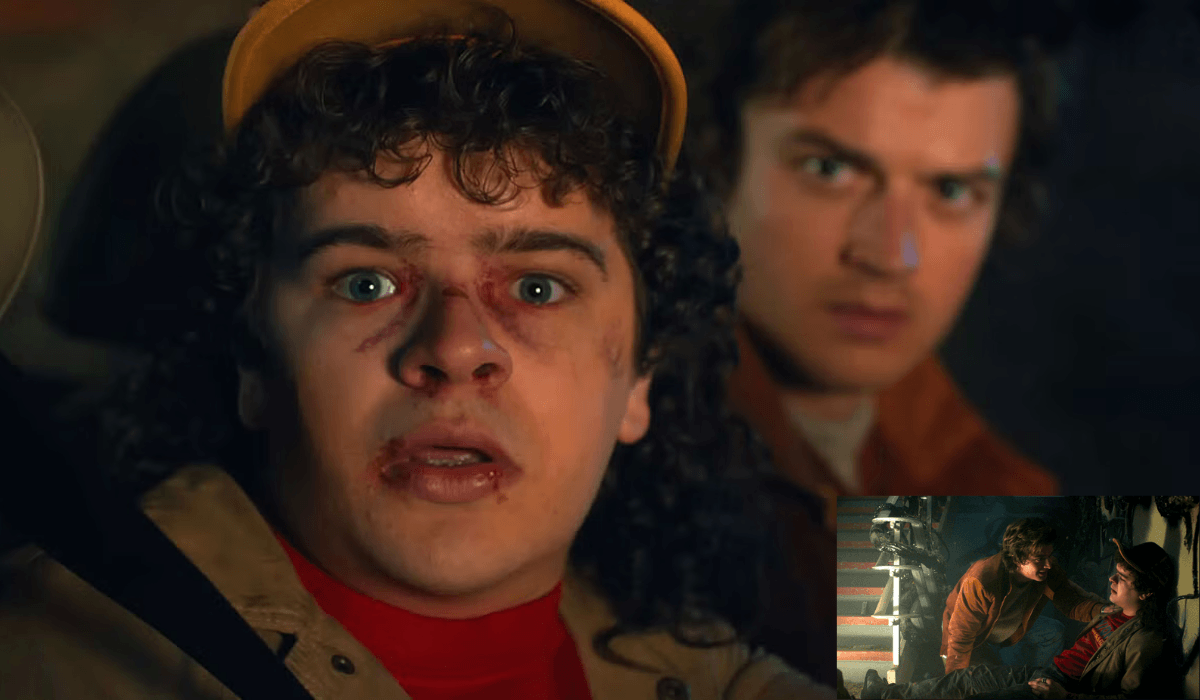
But this wasn't just teenage drama or misplaced anger. The violent confrontation that unfolded in Episode 5 exposed something far more painful: the devastating ways grief can transform even the gentlest souls into strangers.
How Eddie Munson's Death Changed Everything
The trauma began in Season 4 when Eddie Munson, the metalhead leader of Hellfire Club, made his final stand in the Upside Down. Wielding nothing but his guitar and the power of Metallica's "Master of Puppets," Eddie distracted a massive swarm of Demobats so his friends could attack Vecna's physical form. The plan worked, but at a terrible price. Eddie cut the escape rope to prevent Dustin from following him back into danger, then rode his bike deeper into the nightmare dimension to keep the creatures away from everyone he loved.
The Demobats overwhelmed him. Dustin, who had managed to return to the Upside Down, could only watch helplessly as his friend bled out in his arms. Eddie's last words, his final breath, the weight of his body going still, all of it seared into Dustin's memory. For a kid who always relied on science, logic, and optimism to solve problems, this was a wound that no equation could heal.
What makes Eddie's sacrifice particularly tragic is the unnecessary nature of it. Many have pointed out that the original plan called for Eddie and Dustin to escape back through the portal before the bats reached them. The swarm would have eventually turned back toward the Creel House anyway. Eddie's decision to cut the rope and play hero, while undeniably brave, wasn't tactically required. He died because he couldn't live with the reputation of being a coward, not because his death was the only option.
Steve understood this. And when he finally said it out loud to Dustin in Season 5, everything exploded.
The Breaking Point in Episode 5
Volume 1 of Season 5 made it clear that something had fundamentally shifted in Dustin's personality. The boy who once lit up every scene with his gap-toothed smile and endless theories now wore his grief like armor. His hair grew longer and darker, deliberately styled to echo Eddie's wild curls. He wore Hellfire Club shirts as both tribute and shield. Most devastatingly, he pushed away the people who loved him most.
Gaten Matarazzo, who plays Dustin, revealed in multiple interviews how challenging it was to portray this version of his character. "The biggest challenge was trying to make sure he didn't feel like a different character," he explained. "Season 5's Dustin feels like the antithesis to Dustin, especially with how he interacts with his friends."
The actor understood that this wasn't about Dustin becoming cruel or heartless. It was about protection through distance. "It's harder to leave on good terms than it is on bad terms," Matarazzo said. "Dustin lost somebody he loves so much in Eddie, and he's being presented with a true fear of it happening to the other people in his life, especially Steve."
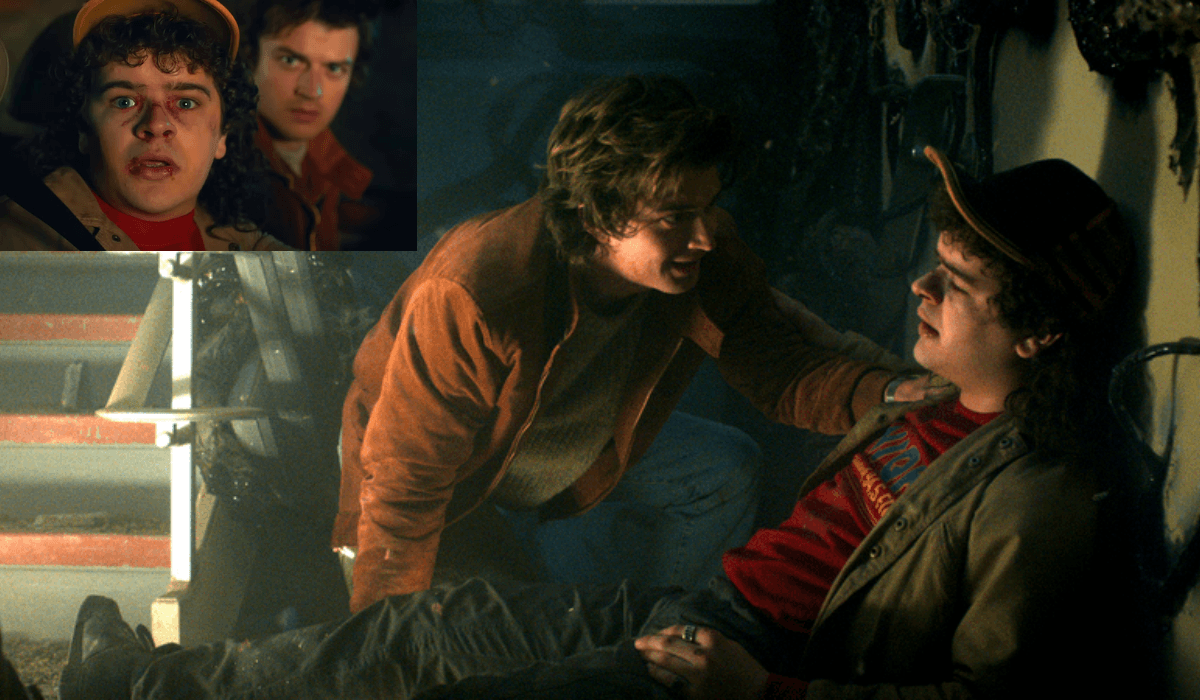
In Episode 5, that fear manifested as rage. Steve and Dustin were arguing about the Upside Down's shield, which Dustin compared to the Death Star from Star Wars: Return of the Jedi. Steve dismissed the theory, showing a lack of support that Dustin interpreted as disrespect. But the real trigger came when Steve said the quiet part out loud: "Eddie wanted to play hero, and he made a dumb call, and he got himself killed."
Dustin snapped. The boy who had never raised a hand in violence charged at Steve, fists swinging, trying desperately to hurt the person who dared speak the truth he couldn't accept.
Why Steve Never Fought Back
What makes the fight sequence so heartbreaking is Steve's restraint. Matarazzo noted that throughout their physical altercation, Steve "never hits me once." Every move Steve made was defensive, pushing Dustin away rather than retaliating. He shoved him against walls, blocked his punches, tried to create distance, but never once threw a punch of his own.
"Everything he does is to get me away from him," Matarazzo explained. "He does push me against a wall and push me away from him, because I'm actively trying to hurt him."
This restraint speaks volumes about Steve's growth throughout the series. The guy who once defined himself by his fighting skills, who earned his reputation beating up Jonathan Byers and taking down Demogorgons with a nail bat, refused to hurt the kid he'd come to love like a little brother. Even while Dustin screamed insults and landed blows, Steve saw through the anger to the grief underneath.
For Matarazzo, filming these scenes was emotionally draining. "Not only is it difficult to be detached and not have as much fun, but I had a really hard time being as mean to Steve as I was," he admitted. "That was a real bummer. I know it makes sense, but Dustin really does try to actively hurt him throughout this season."
The Uncomfortable Truth Steve Spoke
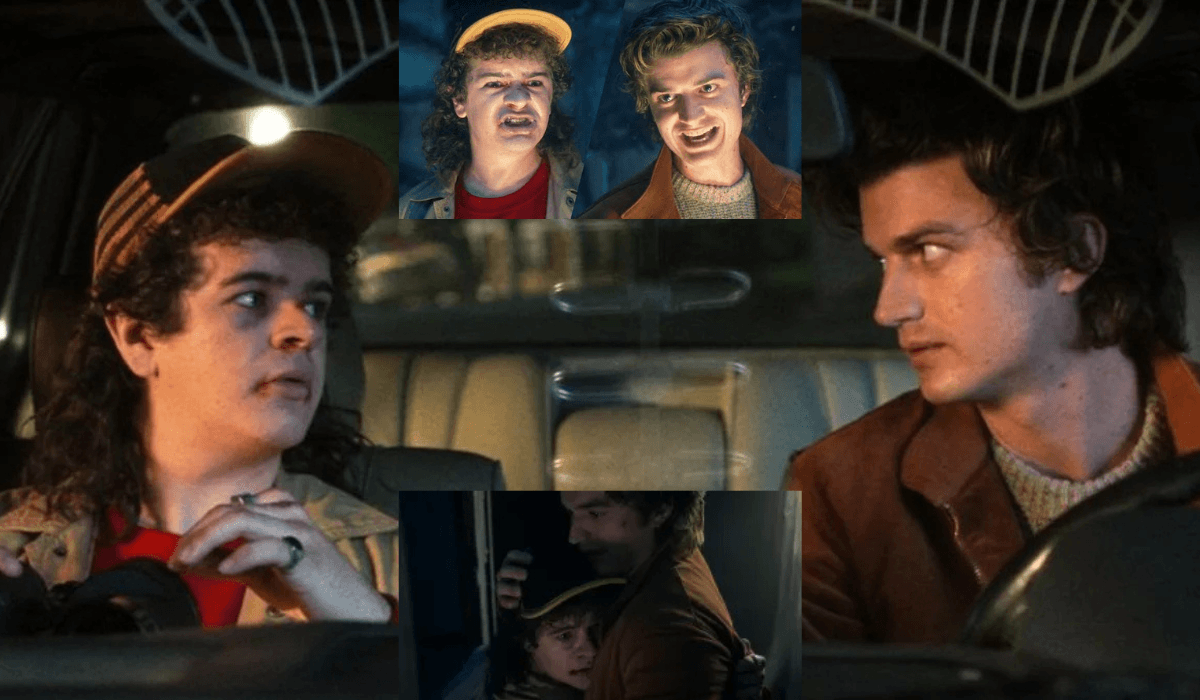
Here's the thing that makes this conflict so complex: Steve wasn't entirely wrong. Eddie's death, while heroic and emotionally powerful, resulted from a poorly conceived plan. The group sent Dustin and Eddie to lure the Demobats using an open portal as their escape route. Even with makeshift fortifications on the trailer, guiding the creatures directly to their only exit point was strategically questionable.
Eddie's choice to stay and fight rather than escape wasn't tactically necessary. The bats would have eventually returned to guard Vecna once the distraction ended. Eddie died because he was haunted by his perceived cowardice, not because his sacrifice was the only path forward. He was trying to prove something to himself and to a town that had already vilified him as a murderer.
Steve, having watched countless friends risk their lives over the years, recognized this pattern. He saw Eddie's death not as a necessary sacrifice but as a talented musician and loyal friend dying to escape his own shame. That perspective, delivered without gentleness during Dustin's most vulnerable moment, was both accurate and devastatingly cruel in its timing.
The problem wasn't that Steve was wrong. The problem was that Dustin wasn't ready to hear it. And perhaps more importantly, that truth coming from Steve, the person Dustin most feared losing next, felt like a betrayal.
When the Walls Finally Came Down
Episode 6 brought everything to a head. While trying to rescue Nancy and Jonathan from a trapped room in the Upside Down version of Hawkins Lab, Steve had a near-death experience. Watching Steve almost die shattered whatever emotional barriers Dustin had built.
In a scene that had viewers reaching for tissues, Dustin broke down completely. Tears streaming down his face, he finally admitted what had been driving his behavior all season: "You always try to get yourself killed, and I can't let it happen again. Stop being so selfish, please. If you go in there, you're gonna die, and I can't deal with it again. You can't die 'cause I can't deal with it again. Don't let it happen again. Please. Please don't let it happen again."
The repetition of "again" reveals everything. Dustin wasn't angry at Steve. He was terrified of reliving the trauma of watching Eddie die. Every time Steve threw himself into danger with his characteristic heroic recklessness, Dustin saw Eddie climbing onto that trailer roof. Every time Steve picked up a weapon to face impossible odds, Dustin remembered holding his friend as the light left his eyes.
Steve finally understood. He apologized for not being there in the way Dustin needed after Eddie's death. He acknowledged that he'd failed to support Dustin through his grief, letting guilt and discomfort prevent him from showing up when it mattered most.
They hugged. Not the casual bro-hug of earlier seasons, but a desperate, clinging embrace between two people who'd almost lost each other to misunderstanding and pain. In that moment, their brotherhood, fractured but not broken, began to heal.
What This Means for the Final Battle
The reconciliation came just in time. With only the series finale remaining after Episode 7, Dustin and Steve will face their biggest challenge yet: confronting Vecna in a battle that will determine Hawkins' fate. The emotional resolution between them suggests they'll fight side by side, their bond stronger for having survived this crucible of grief and anger.
In one particularly meaningful scene, Dustin gave Steve the sphere and shield that Eddie used in his final battle. It's a symbolic passing of the torch, an acknowledgment that Eddie's memory will fuel their fight rather than divide them. It also signals that Dustin may finally be moving through his grief rather than being consumed by it.
The question remains whether both will survive the finale. Stranger Things has built a reputation for killing likable characters, and the Duffer Brothers have warned that Volume 3 will bring major losses. Steve's tendency to throw himself into danger, combined with Dustin's newfound understanding of why that terrifies him, creates a setup where either could make the ultimate sacrifice.
My hope is that both survive. Not because I want a Hollywood happy ending, but because these characters have earned the right to grow beyond their trauma. Dustin deserves to learn that loving someone doesn't mean you can protect them from every danger. Steve deserves to live long enough to see the impact of his mentorship, to watch Dustin become the brilliant, compassionate man he's capable of being.
The Deeper Message About Grief
What makes this storyline so powerful is its honest portrayal of how grief transforms us. Dustin's behavior throughout Season 5 reflects a psychological reality: when we lose someone suddenly and traumatically, especially at a young age, we often develop what therapists call "anticipatory grief." We become hypervigilant about losing others, sometimes pushing them away first to avoid the pain of being left behind.
Dustin's anger toward Steve wasn't really about Eddie's sacrifice being called "dumb." It was about his terror of losing another person he loves, channeled into pre-emptive rejection. If he could make Steve hate him, maybe Steve's eventual death (which Dustin saw as inevitable) would hurt less. It's a defense mechanism that makes perfect psychological sense even as it causes tremendous damage.
The Duffer Brothers deserve credit for not simplifying this. They didn't give us a grief arc where Dustin cries for an episode and then moves on. They showed us a kid fundamentally changed by trauma, making choices that hurt himself and others, unable to articulate what he really needed until the moment of crisis forced it out of him.
Matarazzo's performance captured this nuance beautifully. He hoped fans would be conflicted about Dustin's behavior, would extend empathy while also recognizing that grief doesn't excuse cruelty. "I don't think that somebody can suffer a loss like that, that intensely and that violently at that age and not be severely affected by it," he said.
Looking Forward
When Stranger Things concludes on New Year's Eve, Dustin and Steve's relationship will stand as one of the show's greatest emotional achievements. Their friendship began as an unlikely pairing in Season 2 and evolved into one of television's most touching portrayals of chosen family. Watching them nearly destroy that bond through grief and fear, then fight their way back to each other, adds layers of hard-won maturity to their dynamic.
The reconciliation in Episode 6 doesn't erase the pain of what came before. Dustin can't unsay the cruel words. Steve can't take back his poor timing. But forgiveness, real forgiveness, means accepting that people we love will sometimes hurt us, especially when they're hurting themselves. It means choosing connection over self-protection, vulnerability over armor, even when the risk of loss feels unbearable.
As we prepare for the final episode, I find myself thinking about Eddie's sacrifice in a new light. He died proving he wasn't a coward, leaving behind a friend who loved him so much that the thought of losing anyone else nearly broke him. In a way, Eddie's legacy isn't just the Hellfire Club shirt Dustin wears or the guitar solo that drew the Demobats away. It's the lesson that sometimes the bravest thing you can do is let people love you, fully aware that love makes you vulnerable to devastating loss.
Dustin learned that lesson the hardest way possible. Now, as he and Steve prepare for their final battle, he carries both the weight of Eddie's death and the gift of Steve's forgiveness. Whatever happens in the finale, these two have already survived something more difficult than any supernatural threat: the near-destruction of their brotherhood by grief, fear, and unspoken pain.
That's the real victory. Everything else is just fighting monsters.