The Cave Briefcase That Changed Everything In Stranger Things Season 5

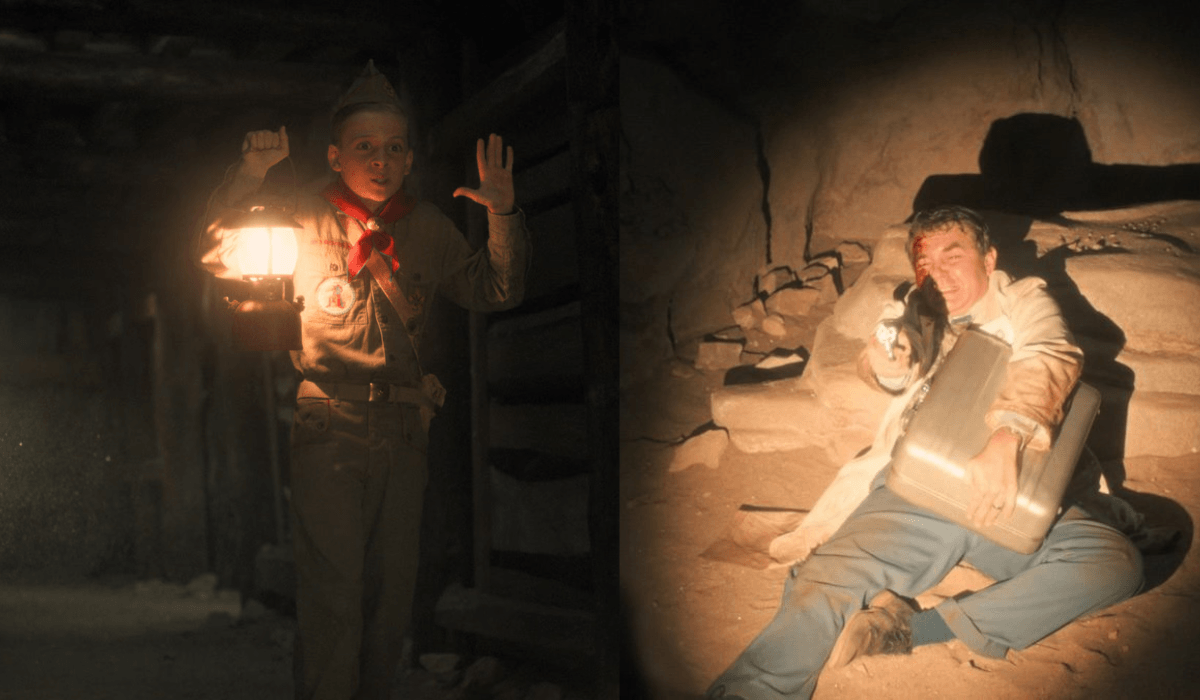
If you've just finished watching Volume 2 of Stranger Things Season 5, there's one moment that probably left you with more questions than answers. When Holly Wheeler and Max venture through Henry Creel's terrifying memories, they stumble upon something that feels both crucial and deliberately cryptic: a young Henry discovering an injured man clutching a mysterious briefcase in a mineshaft. The scene is brutal.
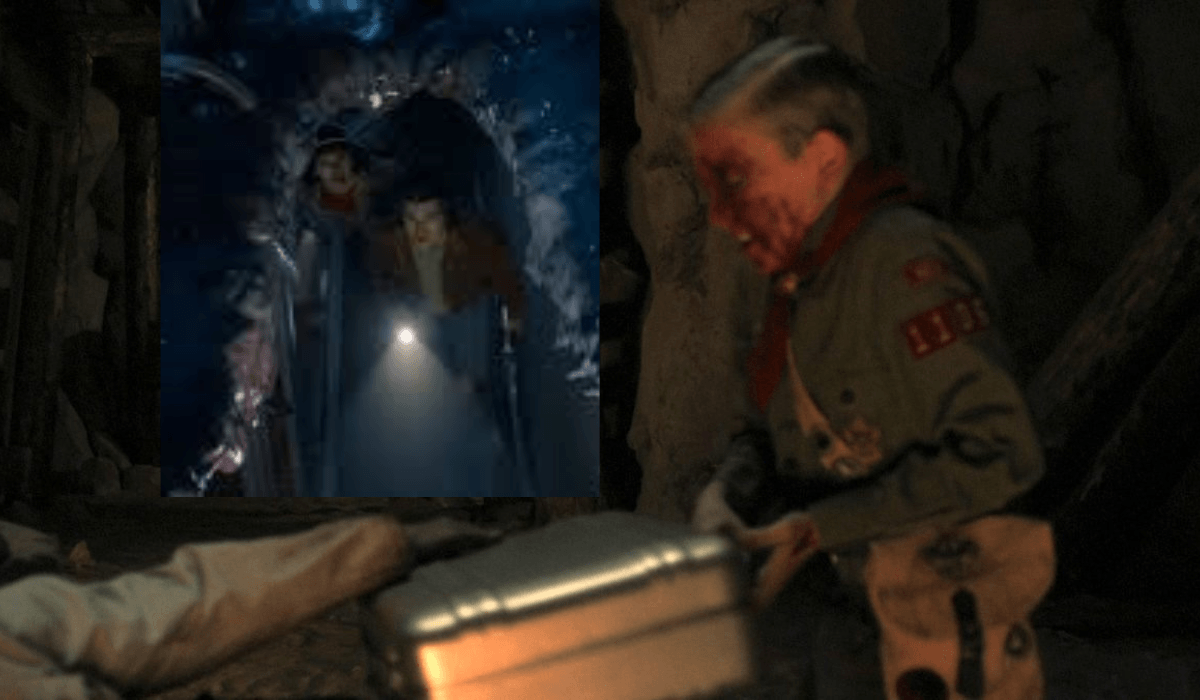
The man shoots Henry in the hand, Henry responds by killing him with a rock, and then smoke billows out when the briefcase opens. Cut to black.
That briefcase isn't just a random plot device. It's the cornerstone of the entire Stranger Things mythology, and understanding what's inside requires looking beyond the Netflix series itself.
Why This Cave Memory Haunts Vecna
Throughout Volume 2, we learn that Max has been hiding in Henry's memories, using the Nevada cave as her sanctuary. Henry refuses to enter it. He's not just scared; he's absolutely terrified. This fear is significant because we're talking about a character who becomes Vecna, one of the most powerful and ruthless villains in the series. What could possibly frighten someone with that kind of power?
The answer lies in trauma. The cave represents the exact moment when Henry Creel's life took an irreversible turn. Before that moment, he was just an eight-year-old boy in a Boy Scout uniform exploring caves near Rachel, Nevada. After it, he became something else entirely.
Holly's discovery that the spyglass aperture matches the cave entrance shape is more than clever writing. It's a visual metaphor for how this single location became the lens through which Henry's entire existence would be viewed and defined.
The Broadway Play Fills in the Blanks
Here's where things get interesting, and frankly, a bit frustrating for most viewers. The full story behind that briefcase isn't explained in the Netflix series at all. Instead, the crucial details come from Stranger Things: The First Shadow, the Broadway stage play that debuted in London in late 2023 and opened on Broadway in April 2025.
According to the play's storyline, the briefcase contained stolen technology from a government experiment called Project Rainbow, also known as the Philadelphia Experiment. In 1943, the U.S. Navy attempted to make the USS Eldridge invisible using electromagnetic force fields. The experiment backfired spectacularly. Instead of becoming invisible, the ship was transported to Dimension X, a primordial wasteland that would later become connected to the Upside Down we know from the series.
Most of the crew died during this interdimensional trip, attacked by Demogorgons in that alien realm. Only one person survived: the ship's captain, who happened to be Dr. Martin Brenner's father. When he returned, he had a fundamentally altered blood type and carried something inside him, particles from the Mind Flayer that had infected him at a cellular level.
From Navy Disaster to Nevada Caves
Dr. Brenner's father revealed the truth about Project Rainbow on his deathbed, and this confession became the driving force behind his son's entire career. Dr. Brenner dedicated himself to recreating what happened to his father, establishing the Nevada Experiment near Rachel, Nevada, in the 1950s.
But not everyone involved in these experiments shared Brenner's vision. A Russian scientist working at the Nevada facility defected, stealing critical technology derived from the original Project Rainbow experiment. This scientist fled to the cave system where young Henry Creel would eventually find him.
The man was paranoid, terrified that American military forces would track him down. When an eight-year-old Henry stumbled upon him in those caves, the scientist saw a threat, not a lost child. He shot Henry in the hand. In self-defense and panic, Henry killed him with a rock, becoming a murderer before he even understood what murder meant.
What the Technology Actually Did
When Henry opened that briefcase, the stolen technology activated. It transported him to Dimension X for approximately 12 hours. During this time, Henry encountered the Mind Flayer, a sentient shadow entity that exists as a primordial force in that dimension. This encounter fundamentally changed Henry at a biological level.
He returned with an altered blood type that matched Dr. Brenner's father's. His personality shifted. Most significantly, he developed psychokinetic abilities, powers that would eventually make him one of the most dangerous individuals on Earth. The play makes it clear that Henry wasn't born with these abilities. They were a byproduct of interdimensional infection, particles from the Mind Flayer that rewired his biology.
Dr. Brenner was able to track Henry down because the boy had dropped his spyglass in the cave, the same spyglass that Holly uses in Season 5 to navigate through Henry's memories. Brenner recognized immediately what had happened. Henry had achieved what Brenner's father experienced and what the Nevada Experiment had been trying to replicate. Henry became Subject 001, the first child in what would become the MKUltra program at Hawkins Lab.
The Blood Connection and Eleven's Powers
This is where the mythology gets genuinely disturbing. Brenner didn't just study Henry's abilities. He used Henry's altered blood to create more children with powers, transfusing it into pregnant women at Hawkins Lab. This is how Eleven and the other numbered children gained their abilities. They're not naturally gifted. They're the product of forced experimentation using blood contaminated with interdimensional particles.
Volume 2 reveals through Kali that Dr. Kay has been continuing this practice, attempting to restart the program using both Kali's and Eleven's blood. The cycle of exploitation and experimentation that began with Henry's encounter in that Nevada cave continues into the present day of the series.
Why Connecting These Dots Matters for the Finale
The Duffer Brothers confirmed in interviews that the series finale will show what happened after Henry opened the briefcase. This isn't just fan service or tying up loose ends. Understanding this origin story is essential to comprehending what Vecna truly is and what defeating him actually requires.
Vecna isn't simply a villain who needs to be overpowered. He's a victim of interdimensional contamination who has been exploited, manipulated, and ultimately consumed by the Mind Flayer's influence. The briefcase represents the moment when human curiosity and military ambition created a monster they couldn't control.
The revelation that the Upside Down is actually a wormhole stabilized by exotic matter, connecting Hawkins to the Abyss where the Mind Flayer originates, adds another layer. Destroying this wormhole might eliminate the threat, but it also means severing the connection that gives Eleven and the other children their abilities. The dilemma Eleven faces at the end of Volume 2, considering disappearing into the Abyss with Kali to end the experimentation forever, stems directly from that moment in the Nevada cave decades earlier.
The Problem With Essential Lore Behind a Paywall
Here's my honest take: making critical backstory available only through a Broadway play that most global viewers cannot access is a questionable creative decision. Stranger Things built its massive following by being an accessible Netflix series that anyone could watch. Requiring knowledge from a stage production that's only been performed in London and New York creates an artificial barrier to full comprehension.
The series finale absolutely must explain these elements clearly for the television audience. Otherwise, the Duffer Brothers risk alienating viewers who have invested years in this story but haven't had the opportunity or resources to see The First Shadow. Cross-media storytelling can enhance a narrative, but essential plot elements should remain within the primary medium.
That said, the choice to explore Henry's origin through theater first does something interesting. It separates the visceral present-tense action of the Netflix series from the mythological backstory, allowing each medium to play to its strengths. Theater excels at exploring internal conflict and presenting abstract concepts like Dimension X in ways that might look ridiculous on screen with a television budget.
What This Means Moving Forward
The briefcase scene in Volume 2 works as a teaser precisely because it shows us just enough to understand the stakes while withholding the full horror of what happened next. We see young Henry, barely older than a child, commit his first murder out of fear and self-defense. We see him open something he shouldn't have opened. Then the memory cuts away, leaving us to imagine the worst.
This restraint is effective storytelling. When the finale shows us the complete sequence, including Henry's 12 hours in Dimension X and his first encounter with the Mind Flayer, it will land with more impact because we've been anticipating it. The question is whether casual viewers will understand the significance without having seen the play or sought out detailed recaps.
The Bigger Picture About Experiments Gone Wrong
At its core, the briefcase story is about the unintended consequences of scientific experimentation without ethical constraints. Project Rainbow in 1943 wasn't meant to open portals to other dimensions. The Nevada Experiment wasn't supposed to create superpowered children. Dr. Kay's current attempts to restart the program certainly won't end well.
Each generation of scientists believes they can control what previous generations couldn't. Each generation creates new victims. Henry's transformation from innocent child to Vecna represents the ultimate failure of this hubris. The Mind Flayer didn't invade our dimension; we opened the door and invited it in, then wondered why it started consuming everything.
The series has always been about the dangers of Cold War paranoia and unchecked government power, but this backstory makes the critique more specific. It's not just about secrecy or lack of oversight. It's about the fundamental arrogance of believing you can weaponize forces you don't understand without consequences that echo across decades.
Looking Ahead to the Series Finale
Volume 2 ends with the stakes impossibly high. Holly remains trapped in Vecna's mindscape. The plan to destroy the wormhole is in motion. Eleven and Kali are considering a sacrifice that would end the cycle of experimentation forever. And somewhere in the Abyss, Vecna is preparing his final move to merge the dimensions permanently.
The briefcase and its contents set all of this in motion 70 years ago. What began as an attempt to gain military advantage in World War II cascaded into the nightmare consuming Hawkins in the present. The finale, arriving December 31st, 2025, will need to address not just how to stop Vecna, but how to break the cycle that created him.
Whether the series can satisfactorily explain decades of backstory, resolve character arcs for a massive ensemble cast, and deliver an emotionally resonant conclusion all in one extended episode remains to be seen. The Duffer Brothers have promised it won't be a shocking bloodbath for shock value, but they've also warned viewers to prepare tissues.
One thing seems certain: that briefcase in the Nevada cave, and the technology it contained, unlocked something that humanity has been trying to close ever since. The finale will determine whether that's even possible, or if some doors, once opened, can never truly be shut again.