The Duffer Brothers Had Lucas And Max Watch Ghost For A Reason And It Explains Everything About Soulmates
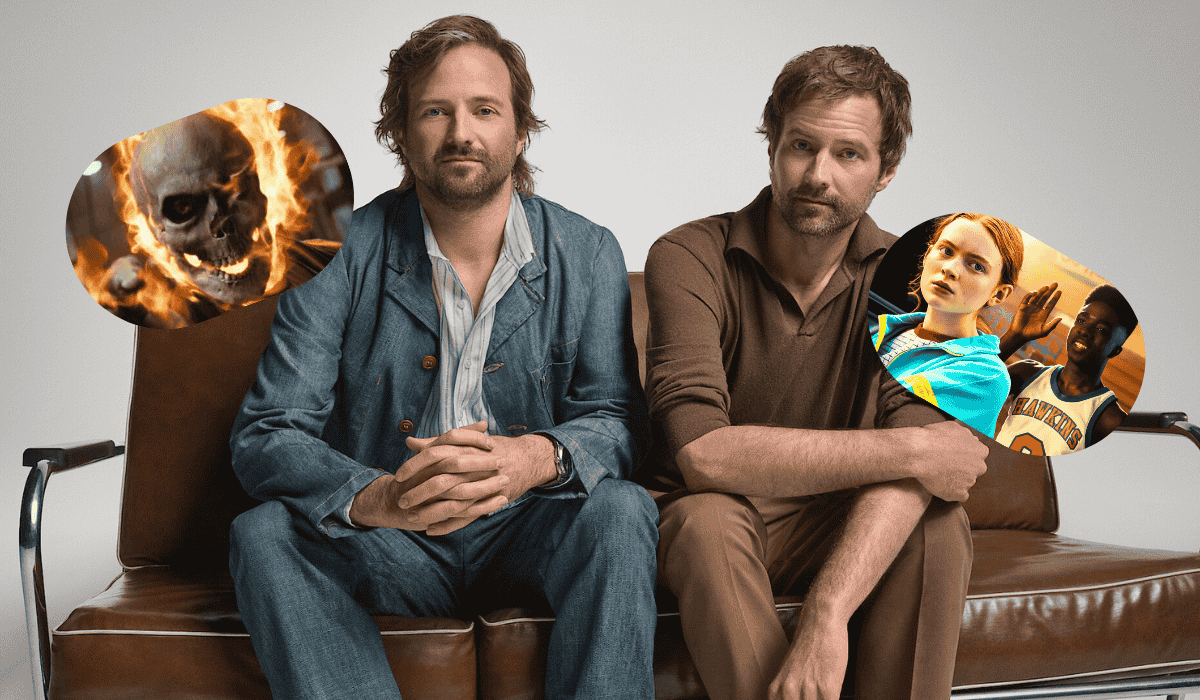
When Lucas Sinclair and Max Mayfield finally got their movie date in the Stranger Things series finale, the Duffer Brothers didn't choose just any film for them to watch. They chose Ghost, the 1990 supernatural romance where Patrick Swayze plays a murdered banker whose spirit refuses to move on because his love for Demi Moore's character transcends death itself.
The choice wasn't accidental. Matt Duffer confirmed to Netflix's Tudum that they actually filmed scenes showing Lucas and Max watching Ghost, though they ultimately cut that footage because it "took away from their own moment." But the decision to have them see that specific movie, at that specific point in their relationship, reveals something profound about what the Duffer Brothers believe soulmates actually are.
Max spent nearly two years in a coma, trapped between life and death, while Lucas sat by her hospital bed refusing to move on. That's not teenage infatuation. That's the exact plot of Ghost, where love proves stronger than the barrier between the living and the dead. The parallel is so deliberate it borders on thesis statement.
What Ghost Actually Says About Love
Ghost hit theaters in July 1990 and became a cultural phenomenon, grossing over $505 million worldwide and becoming the highest-grossing film of that year. But its financial success wasn't why it resonated with audiences. The film tapped into something universal about human beliefs regarding love and death.
The plot is straightforward but emotionally devastating. Sam Wheat, a banker played by Patrick Swayze, is murdered during what appears to be a random mugging. His girlfriend Molly, played by Demi Moore, is left grieving and confused. Sam discovers he's stuck between worlds as a ghost, invisible to the living but unable to move on to the afterlife.
As Sam investigates his own murder, he realizes it wasn't random at all. His best friend Carl orchestrated his death to cover up a money laundering scheme. Now Molly is in danger, and Sam is the only one who knows. The problem is that he can't touch her, can't warn her, can't communicate in any conventional way.
The film's emotional core comes from Sam's desperate attempts to protect Molly from beyond the grave. He eventually connects with Oda Mae Brown, a fake psychic played by Whoopi Goldberg who discovers she can actually hear dead people when Sam starts talking to her. Through Oda Mae, Sam saves Molly's life and exposes Carl's betrayal.
But the real power of Ghost isn't the thriller plot or the special effects. It's the film's central thesis: real love transcends physical separation, even death itself. When Sam finally gets to hold Molly one last time through Oda Mae's body, and tells her "I love you" instead of his usual "ditto," the film argues that connection between souls is more fundamental than physical presence.
The Exact Parallel to Lucas and Max
Now consider what Lucas and Max lived through across Stranger Things seasons 3 through 5. They fell in love as teenagers. They broke up repeatedly because neither knew how to handle the intensity of their connection while processing supernatural trauma and personal grief. Max's stepbrother Billy died saving her life, sending her into a depression so severe that Vecna could target her through her guilt and pain.
When Vecna trapped Max in his mind in season four, Lucas was there holding her broken body. When her heart stopped, Lucas screamed for her to come back. When she ended up comatose with no brain activity and broken bones, doctors gave her family little hope for recovery. Max was, for all practical purposes, dead. Her body remained, but she was gone.
Lucas could have moved on. They weren't even together when Max went into the coma. She'd broken up with him months earlier, pushing him away while processing her grief over Billy. He had every reason to accept that whatever they had was over, to date someone else, to focus on finishing high school and planning his future.
But he stayed. For nearly two years, Lucas sat by Max's hospital bed. Not because he thought she'd wake up and they'd get back together. Not because he was waiting for a reward. He stayed because that's what you do when you love someone. You don't leave just because leaving would be easier. You show up. You sit with them in their darkest moments. You refuse to let them be alone, even when they can't know you're there.
That's Sam in Ghost. He's dead, powerless, unable to touch or communicate with Molly. But he doesn't move on to the afterlife. He stays because his love for her is stronger than the natural order pulling him toward heaven. He refuses to leave her unprotected, even when protection means existing as a frustrated ghost unable to interact with the physical world.
Lucas is Sam. Max is Molly. The coma is death. And Lucas's vigil is proof that their connection transcends the normal rules of how relationships work.
What the Movie Choice Reveals About the Duffers' Philosophy
The Duffer Brothers have said repeatedly that they knew the series' ending from the beginning. They knew Lucas and Max would get their movie date. They knew it would be Ghost. That level of intentionality means the film choice carries thematic weight.
Ghost makes a specific argument about soulmates that differs from typical romantic comedies. It doesn't suggest soulmates are two people who fit together perfectly from the start. It doesn't show love as easy or natural or free from conflict. Instead, it argues that soulmates are people whose connection survives circumstances that should destroy it.
Sam and Molly's relationship in Ghost faced the ultimate test. Death itself stood between them. The entire natural order of the universe said Sam should move on. But their bond was strong enough that Sam stayed anyway, becoming what the film presents as a protective guardian spirit whose love manifests as action rather than words.
Lucas and Max's relationship faced similar tests, just in non-supernatural form until Max's coma. They broke up repeatedly. Max pushed Lucas away. Personal trauma and family dysfunction threatened to separate them permanently. When Max ended up comatose, medical reality said she wasn't coming back. The natural progression would have been Lucas eventually accepting her loss and moving forward with his life.
But love that strong doesn't follow natural progression. It defies what's reasonable or logical or even psychologically healthy according to standard advice. Lucas's decision to maintain his vigil for two years wasn't rational. It was the emotional equivalent of Sam refusing to go into the light, choosing instead to stay in a limbo where he can't touch or be heard but at least remains near the person he loves.
The Duffer Brothers chose Ghost because it's the only film from that era that captures this specific understanding of what it means when two people are truly meant for each other. Not destiny or fate in the passive sense. But connection so fundamental that it warps around obstacles that should be insurmountable.
The Famous Pottery Scene and What It Means
Ghost contains one of the most iconic romantic scenes in film history. Sam and Molly work together at a pottery wheel, with the Righteous Brothers' "Unchained Melody" playing in the background. The scene is sensual without being explicit, intimate without being voyeuristic. It's become so culturally embedded that it's been parodied endlessly, from "The Simpsons" to "30 Rock" to countless commercials.
But the pottery scene's real significance isn't the sexuality. It's what the scene represents about physical intimacy as an expression of emotional connection. Sam and Molly create something together, their hands moving in sync, their bodies close but not sexually explicit. The pottery wheel becomes a metaphor for their relationship: two people shaping something beautiful through cooperation and trust.
Later in the film, when Sam is dead and desperate to touch Molly again, he possesses Oda Mae's body so he can dance with his girlfriend one last time. The scene mirrors the pottery wheel moment, showing that physical intimacy only matters because of the emotional bond underneath. Sam doesn't care that he's technically using someone else's body. What matters is that Molly can feel him holding her, can experience his presence, can know he's still there even though he's dead.
Lucas and Max's relationship contains its own version of this dynamic. In season four, when Max is trapped in Vecna's mind and floating in the air with broken bones, Lucas holds her and refuses to let go even as his friends tell him she's already gone. He keeps talking to her, telling her to fight, maintaining physical contact because some instinct tells him that connection matters even when she can't respond.
When Max wakes from her coma in season five episode seven, the first thing she sees is Lucas's face. He's been there the whole time, maintaining that connection across nearly two years when she couldn't know he was present. The moment mirrors Sam and Molly's reunion at the end of Ghost, when Sam appears to Molly one final time before moving on to the afterlife. Except Lucas and Max get the version where both people survive.
The pottery wheel scene argues that physical presence matters because it expresses emotional bond. Lucas's vigil argues the same thing in reverse: emotional bond matters so much that it demands physical presence even when that presence can't be reciprocated.
Why Ghost Works as Their Movie
Ghost released in 1990, which means it would have been in theaters during the summer of 1990 when the Stranger Things finale's 18-month time jump places Lucas and Max's date. The timing works perfectly within the show's careful attention to period accuracy. But more importantly, Ghost was exactly the kind of movie teenage couples went to see in 1990.
It wasn't an action film or a comedy or a horror movie, though it contains elements of all three. Ghost was a romance that took its central relationship seriously while acknowledging that love exists in a messy world of violence, betrayal, and death. That mixture of tones made it accessible to young couples who wanted something romantic but not sappy, emotional but not clichéd.
For Lucas and Max specifically, Ghost offered something unique: a love story where the main couple spends most of the film separated by circumstances beyond their control. They don't break up because of misunderstandings or different life goals or growing apart. They're separated because Sam is literally dead and Molly is still alive. The movie asks whether love can survive when normal relationship maintenance, the conversations and physical affection and shared experiences that sustain couples, becomes impossible.
Lucas and Max just lived that question. Max was unreachable in her coma, unable to communicate or respond or even know Lucas was there. Their relationship existed in a state of suspension where Lucas maintained his side of the connection while Max's side simply stopped. That's an extreme version of what Sam and Molly experience, where Sam can see Molly but can't touch her or speak to her or make his presence known.
Watching Ghost together after that experience transforms the film from entertainment into reflection. They're watching a story that mirrors their own, one that validates Lucas's choice to stay and Max's eventual choice to fight back to consciousness. The film tells them their experience wasn't meaningless suffering. It was proof of something rare and valuable.
The Unchained Melody of It All
"Unchained Melody," the song playing during Ghost's pottery scene, contains lyrics that could have been written about Lucas and Max's relationship across seasons three through five. "I need your love, I need your love, God speed your love to me." That desperate longing for connection across separation, the prayer for love to reach across whatever distance divides two people, captures exactly what Lucas experienced during Max's coma.
The song continues: "Time goes by so slowly, and time can do so much. Are you still mine?" Lucas sat by Max's hospital bed for nearly two years. Time went by slowly. Two years of high school, graduation, his friends moving forward with their lives while he maintained his vigil. Time could have done so much, could have eroded his feelings, could have convinced him to move on.
But the core question remains: Are you still mine? Was Max still his even though she couldn't respond, couldn't participate in their relationship, existed in a state where conventional romantic connection was impossible? Lucas's answer, demonstrated through action rather than words, was yes. She was still his because their bond didn't require active maintenance from both sides. It existed independent of reciprocation.
That's what soulmates means in the context of Ghost and in the context Lucas and Max's story. Not two people who make each other happy all the time. Not partners who never fight or break up or hurt each other. Soulmates are people whose connection survives conditions that would end normal relationships. When one person is unreachable, the other stays anyway. When death or coma or supernatural possession or depression creates barriers, the bond persists.
The Duffer Brothers chose Ghost specifically to communicate this understanding to their audience. Lucas and Max watching that film together isn't just a cute date night activity. It's the show's thesis statement about what made their relationship worth following across five seasons.
What Makes Someone Worth Waiting For
One of Ghost's most powerful themes is the question of worth. What makes someone worth haunting the earth for instead of moving on to heaven? What makes someone worth existing in torturous limbo, able to see them but not touch them, present but powerless?
Sam could have walked into the light at any point. The movie shows that option available to him multiple times. He chooses not to take it because leaving means abandoning Molly to danger he alone understands. His love manifests as protection, as the willingness to endure personal suffering if it keeps her safe.
Lucas faced the same choice, just without supernatural elements. He could have moved on from Max at any point during her coma. Nobody would have judged him. The relationship was already strained before Vecna attacked her. She'd pushed him away. They'd broken up. He had no obligation to maintain a vigil by the bedside of someone who might never wake up.
But Lucas understood something Sam understood: some people are worth waiting for regardless of whether that wait makes logical sense. Max was worth two years of his life spent sitting in a hospital room. She was worth putting his own emotional healing on hold. She was worth the risk that she might never wake up, that all his waiting might end in loss anyway.
The tragedy of Ghost is that Sam protects Molly but can't stay with her. After exposing Carl's betrayal and saving Molly's life, Sam sees the light return and realizes it's time for him to move on. He gets one final moment with Molly, appearing to her so she can see him and touch him and hear him say "I love you" before he disappears forever into the afterlife.
Lucas and Max get the version where that's not necessary. Max does wake up. The wait ends not in loss but in reunion. They get their movie date not as closure but as beginning. Ghost becomes not just a mirror of their experience but a reminder of how lucky they are that their story ended differently.
The Difference Between Soulmates and Destiny
Ghost and Stranger Things both reject the idea of destiny in favor of something more powerful: choice. Sam chooses to stay as a ghost. He could leave at any time. The universe literally presents him with the option repeatedly. But he chooses Molly, chooses to stay powerless and frustrated and unable to touch her because the alternative is abandoning her.
Lucas makes the same choice. Nothing external forces him to sit by Max's bedside. No supernatural compulsion, no social obligation, no promise he made before she went into the coma. He chooses to stay because staying is what love means to him. Every day for nearly two years, he makes that choice again. That's not destiny. That's will.
The concept of soulmates has been corrupted by romantic comedies into meaning something passive. Two people who are "meant to be" find each other, and their connection is easy because destiny made them perfect matches. Ghost and Lucas/Max's story offer a different definition: soulmates are people who choose each other over and over again despite circumstances making that choice difficult or painful or seemingly impossible.
Max chooses Lucas too, just in a different way. When she's trapped in Vecna's mind and has every reason to give up, she thinks of Lucas and her friends and decides to fight. Her escape from Vecna isn't just about personal survival. It's about getting back to people she loves, Lucas specifically among them. She chooses to endure trauma and pain because life with Lucas is worth fighting for.
That reciprocal choosing, that mutual decision to stay connected despite everything trying to separate them, is what makes them soulmates. Not fate or destiny or cosmic forces aligning. Just two people who keep deciding the other is worth whatever cost staying together requires.
Why This Movie Choice Matters
I've watched Stranger Things since the beginning, and the Lucas and Max relationship has always felt more real to me than the show's other romantic subplots. Mike and Eleven are epic and important, but their dynamic leans toward fairy tale. Steve and his various relationships provide comedy. But Lucas and Max felt like actual teenagers trying to figure out love while dealing with trauma and grief and supernatural horror they don't understand.
The Ghost connection makes their relationship mean something larger than just two characters the audience liked. It positions their story as the show's clearest statement about love, specifically love's ability to survive conditions that should destroy it.
What moves me most about the movie choice is its inherent sadness. Ghost is a tragic love story. Sam saves Molly but loses her anyway because death is permanent and he can't stay in limbo forever. The bittersweet ending, where Sam and Molly get one final moment before he disappears, is devastating precisely because their love was real and deep and still not enough to overcome the finality of death.
Lucas and Max watching Ghost together after Max woke from what was essentially death carries that awareness. They got the version of the story where she came back. Where the separation ended in reunion instead of permanent goodbye. But by choosing Ghost, the Duffer Brothers acknowledge that it very easily could have gone the other way. Max might never have woken up. Lucas might have spent two years waiting for nothing.
The fact that he would have stayed anyway, that his vigil wasn't contingent on her eventually recovering, is what makes their story profound. Sam doesn't save Molly because he expects to get to keep her. He saves her because that's what love requires of him, even though he knows he's going to lose her regardless. Lucas maintains his vigil not because he's confident Max will wake up, but because leaving would mean abandoning the person he loves even if she can't know he's there.
That's the definition of soulmate the Duffer Brothers offer through their Ghost connection. Not someone you're destined to be with. Not someone who makes your life easy. Someone whose wellbeing matters so much that you'll sit with them in impossible circumstances, maintain connection when reciprocation is impossible, and choose them again and again knowing that choice might lead nowhere.
What Ghost Teaches About Love After Loss
One of Ghost's most overlooked themes is how Molly processes Sam's death. She doesn't immediately believe Oda Mae when the psychic shows up claiming to channel Sam. She's skeptical, defensive, and protective of her grief. She doesn't want to be given false hope by someone potentially scamming her.
When she finally accepts that Oda Mae really is communicating with Sam, her response is complicated. She's happy he's still present in some form, but also frustrated that this half-presence is all she gets. She wants him back, really back, not as a ghost talking through a psychic but as her partner who can hold her and laugh with her and build a life with her.
Max goes through a similar process when she wakes from her coma. Lucas has been sitting by her bedside for two years, but she wasn't conscious to experience that devotion. When she wakes up, she has to process both her trauma from Vecna and Lucas's demonstrated commitment during her absence. The relationship has to be rebuilt because Max wasn't present for most of the work Lucas did maintaining their connection.
Ghost shows this dynamic through Molly's arc. She has to accept that Sam's presence as a ghost means something even though it's not the relationship she wanted. She has to find value in his protection and his love even when it can't be expressed through normal romantic channels. Eventually she understands that his choice to stay, to exist in frustrated limbo rather than moving on to peace, proves the depth of his feeling more than any conventional romantic gesture could.
The 18-month time jump the Duffer Brothers built into their finale serves the same function. Lucas and Max don't immediately get back together when she wakes up. They have their reunion, they process what happened, and then they take time to rebuild slowly. By the time they have their Ghost date, they've done the work of reestablishing their relationship on stable ground. The movie becomes not just a date night activity but a shared cultural reference that helps them understand what they survived.
The Question of What Comes After
Ghost ends with Sam walking into the light. After saving Molly and saying goodbye, he accepts that his time on earth is finished. The movie's final image is Sam disappearing into heaven while Molly watches, tears streaming down her face but also smiling because she knows he's at peace.
That ending raises an uncomfortable question: what happens to Molly now? The man she loved is gone permanently. She has closure, which many people never get after losing someone. But closure doesn't eliminate grief. She has to build a life without Sam, knowing he existed as a ghost for weeks after his death solely to protect her.
Lucas and Max get a different ending because Max survives, but the question of "what comes after" remains relevant. They survived circumstances that tested their relationship in ways most couples never face. Max was unreachable for two years. Lucas maintained faith without reciprocation. They reunited, rebuilt, and eventually got engaged according to Mike's narration in the finale.
But extraordinary circumstances that bring couples together don't automatically translate to successful long-term partnerships. The question Lucas and Max face is whether their bond, forged through supernatural trauma and tested by a two-year separation, can sustain a normal relationship. Can they be happy together when they're not fighting interdimensional monsters or waiting by hospital beds? Does their connection work in boring everyday life?
Ghost sidesteps this question by ending Sam's story at the moment of his greatest heroism. We never have to see whether Sam and Molly would have made it long-term. The movie preserves their love in amber, perfect and unbreakable because it was never tested by the mundane difficulties of shared life.
Lucas and Max choosing to watch Ghost together suggests they're aware of this question. They're watching a love story that ended before it could become complicated by normal life. By implication, they're committing to being the version of that story that continues past the big romantic gesture into the challenging work of actual partnership.
Why We Need Stories Like This
Ghost became a cultural phenomenon in 1990 not just because of its special effects or Patrick Swayze's charisma or Whoopi Goldberg's Oscar-winning performance. It resonated because it offered something rare: a love story where the central couple faces a genuinely insurmountable obstacle and finds a way to maintain connection anyway.
Most romantic dramas create obstacles through misunderstandings, class differences, family disapproval, or timing issues. These problems feel real to the characters but artificial to audiences. We watch knowing the couple will eventually overcome whatever separates them because the obstacles are constructed specifically to be overcome.
Ghost presents death as an obstacle. There's no overcoming death. The movie doesn't cheat by having Sam return to life. Instead, it argues that love can survive even permanent physical separation, that connection between two people can transcend the normal rules of how relationships work.
Lucas and Max's story operates the same way within Stranger Things' narrative structure. Max's coma wasn't a misunderstanding or a temporary conflict. She was gone, potentially permanently, and Lucas had to maintain his side of their relationship with no guarantee she'd ever be able to reciprocate. That's a genuinely dramatic obstacle that couldn't be solved through a heartfelt conversation or a grand romantic gesture.
The Duffer Brothers choosing Ghost as the movie Lucas and Max watch together signals their awareness that the story they've told is unusual. Most television shows don't test romantic relationships this severely. They create will-they-won't-they tension through character flaws or external circumstances that keep couples apart temporarily. The challenge Lucas and Max faced was categorically different because Max wasn't choosing to be away from Lucas. She was unreachable through circumstances entirely beyond either of their control.
The Promise of Ghost's Ending
Despite its tragic elements, Ghost ends on a hopeful note. Sam tells Molly "I love you" instead of his characteristic "ditto," giving her the words she's waited their entire relationship to hear. Then he walks into the light, at peace, while Molly understands that he'll always be with her in some essential way even though his physical presence is gone.
That ending promises that real love creates permanent bonds. Sam's death can't erase what he and Molly shared. His time as a ghost protecting her adds to their story rather than diminishing it. Their love gets crystallized in his choice to stay when he could have moved on, and in her acceptance that his protection from beyond death proved the depth of his feeling.
Lucas and Max's story makes a similar promise. The two years Lucas spent by Max's hospital bed aren't wasted time or sad detour. Those years prove something about who they are to each other. Max's coma tested their relationship in ways that would break most couples, and they survived. That survival means their connection has been tested and proven durable.
When they sit in that movie theater watching Ghost, they're watching a version of their own story that ended sadly. Sam saves Molly but loses her forever. They get to be the version where both people survive, where the separation ends in reunion, where the love that survived impossible circumstances gets to continue into normal life.
That's why the Duffer Brothers chose Ghost. It's a movie about love strong enough to transcend death. Lucas and Max are a couple whose love transcended a two-year coma. The parallel is exact. And by having them watch that film together, the show argues that what makes someone a soulmate isn't destiny or fate. It's choosing to stay, even when staying is painful. It's maintaining connection, even when connection seems impossible. It's loving someone so much that reasonable limits don't apply.
Ghost taught a generation that real love survives death. Lucas and Max teach the same lesson: soulmates are people who refuse to let go even when every reason says they should. That's not destiny. That's devotion. And devotion, the Duffer Brothers argue, is what actually matters.