Vince Gilligan's Pluribus Proves That Sometimes Network Notes Actually Make Stories Better


In the folklore of television creation, studio executives are the villains. They water down visions, demand happy endings, and ruin brilliant art with their cowardly commercial instincts. Showrunners tell war stories about fighting network notes, preserving their creative integrity against corporate philistines who don't understand storytelling.
Then Vince Gilligan, the man who gave us Breaking Bad and Better Call Saul, admits that Apple and Sony suggested a better ending for Pluribus, he listened, and the finale improved dramatically. This confession should force us to reconsider everything we think we know about creative collaboration and the myth of the auteur genius working in isolation.
The Ending That Almost Was
Gilligan and his team originally crafted a subtle Season 1 finale where Carol would secretly forge a pact with Manousos to become a double agent against the Others. She'd slip him a note, maintain her cover, continue her relationship with Zosia while covertly working to restore humanity. It was clever, layered, morally complex. The kind of ending prestige television celebrates: ambiguous, sophisticated, leaving viewers uncertain about whose side Carol was really on.
Then executives at Apple and Sony asked a simple question: Is there an even better ending to be had? Not "this ending is bad" or "audiences won't understand it" or "we need more action." Just a gentle suggestion that maybe they hadn't quite found the perfect conclusion yet. The creative team listened, reconsidered, and realized the atom bomb they'd planted in Episode 3 could deliver something more emotionally satisfying than covert double-agent games.
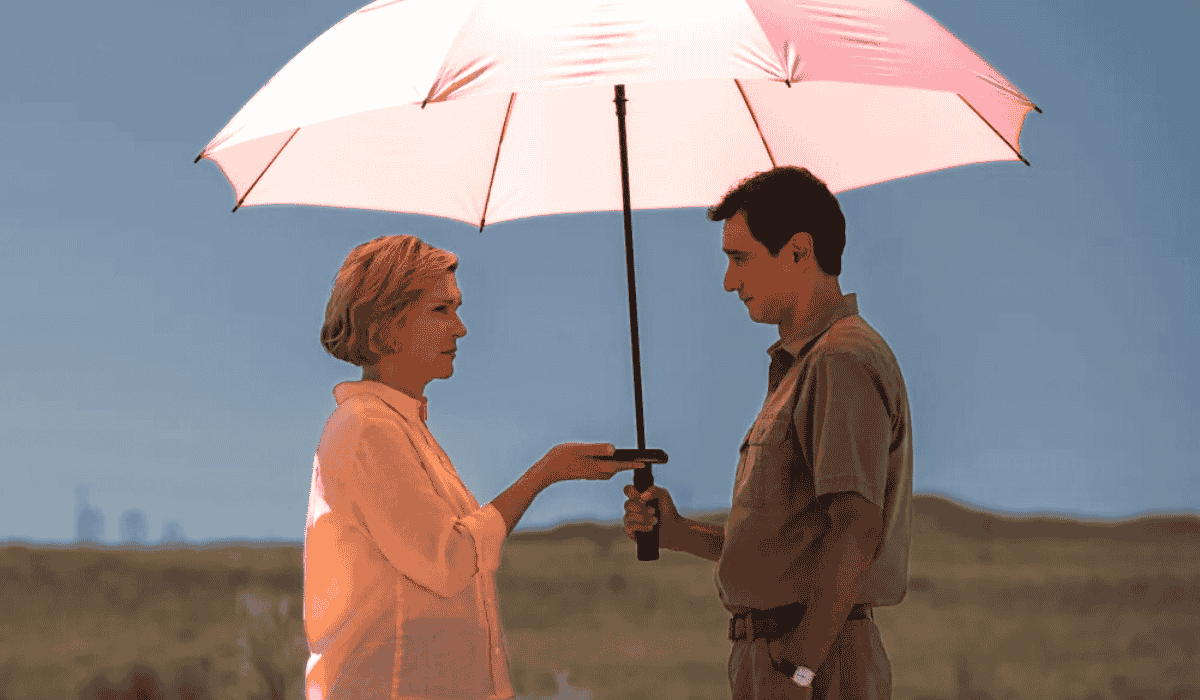
The final version has Carol openly rejecting the Others after discovering they've stolen her frozen eggs, the last remnant of the family she could have had with her late wife Helen. She and Manousos forge their pact not in secret but in open warfare, Carol demanding the nuclear weapon the Others promised her in Episode 3. The finale ends not with subtle subversion but with a clear statement: This relationship cannot continue. No more playing house with the enemy. No more trying to make peace with the force that destroyed her world.
Why Creators Hate Admitting They're Wrong
What makes Gilligan's admission remarkable is how rare it is. Showrunners typically describe network notes as obstacles to overcome rather than opportunities to improve. The narrative of creative struggle against corporate interference has become so embedded in television mythology that acknowledging helpful executive input feels like betraying your artistic principles.
This myth serves multiple purposes. It positions creators as heroic defenders of vision against commercial corruption. It simplifies complex collaborative processes into David versus Goliath narratives. It allows creators to take full credit for successes while blaming failures on interference. Most importantly, it protects the ego-driven belief that the first idea is always best, that revision means weakness, that true artists know exactly what they want from the beginning.
But television isn't made in isolation. It's fundamentally collaborative, involving writers, directors, actors, editors, composers, and yes, executives who understand audience psychology and commercial viability. Treating all input except your own as contamination ignores how the medium actually works. Great shows emerge from productive tension between competing perspectives, not from unchallenged auteur vision.
Gilligan's Breaking Bad benefited enormously from network notes during its early seasons. AMC pushed back on certain ideas, forcing the writers to find better solutions. Better Call Saul evolved through similar collaborative friction. These shows succeeded not despite executive involvement but partly because of it. Yet the mythology persists that Gilligan succeeded by fighting the network rather than working with them.
What Changed Between Versions
The difference between the two endings reveals something fundamental about storytelling. The original double-agent conclusion privileged cleverness over emotional clarity. It asked audiences to track Carol's deceptions, question her loyalties, wonder whether she'd ultimately choose humanity or the Others. Sophisticated, sure. But also emotionally distant, requiring intellectual engagement rather than visceral response.
The nuclear option strips away ambiguity in favor of emotional truth. Carol has been violated in the most intimate way possible. The Others took her eggs, the biological material she'd preserved with Helen for the family they planned to create. They're using that stolen potential to convert her against her will, erasing the last trace of her former life. Her rage isn't subtle. It's thermonuclear. Literally.
This ending trusts the audience to understand why Carol makes this choice without hedging bets with layers of deception. It commits fully to her emotional state rather than playing games with loyalty and betrayal. The atom bomb isn't just a plot device; it's a physical manifestation of Carol's rage and refusal to compromise further. She's not playing double agent because she's done playing. The time for subtlety has passed.
Rhea Seehorn's performance sells this shift brilliantly. Throughout the season, she's been suppressing rage, making compromises, trying to find accommodation with an impossible situation. The egg revelation breaks that dam completely. When she tells Manousos they're going nuclear, both literally and figuratively, we believe her because we've watched her emotional restraint fracture across nine episodes. The explosive ending feels earned rather than imposed.
The Paradise or Hell Question
What makes Pluribus genuinely sophisticated isn't ambiguous endings but ambiguous premises. The show constantly asks whether the Others represent utopia or dystopia, whether collective consciousness is evolution or extinction, whether Carol's resistance is heroism or selfishness. These questions don't have clear answers, and the show doesn't pretend otherwise.
In the finale's opening, we watch Kusimayu surrounded by loved ones before inhaling the gas that converts her into one of the Others. She's blissful. Her family stands nearby, witnessing her transformation with neutral expressions. Afterward, they all leave the village immediately, walking away from a lifetime of relationships without looking back. Is this liberation or annihilation? Paradise or horror?
Gilligan and his team explicitly designed the show so viewers can legitimately disagree. You can watch the Others walking away from that Peruvian village and see either compassionless drones or cells in a larger organism that no longer need individual connection. Both readings work. The show respects both interpretations without forcing resolution.
This philosophical ambiguity makes the emotional clarity of Carol's choice more powerful, not less. We may never agree on whether the Others are good or evil. But we can all understand why a woman whose wife was killed, whose world was destroyed, and whose last biological connection to her former life was stolen might choose rage over reconciliation. The premise allows debate. The character's response demands empathy.
Why Subtlety Isn't Always Better
Prestige television has developed an aesthetic that prioritizes subtlety, ambiguity, and emotional restraint. Characters who don't express feelings directly. Plots that refuse clear resolution. Endings that leave everything open to interpretation. This approach can produce brilliant work. It can also become a crutch, a way of avoiding committing to anything lest someone accuse you of being too obvious.
The original Pluribus ending fell into this trap. Making Carol a secret double agent sounds sophisticated on paper. In execution, it would likely feel evasive, refusing to commit to Carol's actual emotional state. Audiences would spend Season 2 wondering whether she's really committed to defeating the Others or if she's being swayed back toward them. That uncertainty might generate suspense, but it would also undermine the season's emotional arc.
The nuclear ending commits. It says clearly: Carol has been pushed too far, violated too deeply, to continue pretending accommodation is possible. She's declaring war, literally and metaphorically. This isn't subtle, but subtlety would be wrong here. Some moments demand explosive response. Some violations can't be resolved through clever deception.
This represents a kind of courage that prestige television often lacks: the willingness to have characters feel things intensely and express those feelings directly. Carol isn't playing games anymore. She's not hedging emotional bets. She's furious, betrayed, and ready to burn the world rather than submit. That's not subtle, but it's honest, and honesty beats cleverness every time.
The Collaborative Genius We Refuse to Acknowledge
What Gilligan's admission reveals is that great television emerges from productive collaboration, not isolated genius. The Pluribus writers' room broke the original ending. They thought it worked. But something nagged at them even before Apple and Sony weighed in. When executives asked if they could do better, the question gave permission to admit uncertainty and reconsider.
This dynamic happens constantly in television but rarely gets discussed honestly. A script goes through dozens of drafts, incorporating feedback from multiple sources. Actors discover things about characters through performance that weren't on the page. Editors find rhythms in footage that alter narrative meaning. Composers create emotional tones that reshape how scenes play. And yes, executives sometimes ask questions that lead to better storytelling.
The auteur theory of television, where a singular visionary controls every element, is mostly myth. Even Breaking Bad, often cited as Gilligan's pure vision, involved extensive collaboration. The writers' room generated many of the show's best twists. Actors contributed character insights. Directors brought visual ideas. Gilligan deserves enormous credit for steering the ship, but he didn't row alone.
Acknowledging this collaborative reality doesn't diminish Gilligan's achievement. It actually enhances it. The mark of a great showrunner isn't having all the answers immediately but creating an environment where better answers emerge through productive friction. Gilligan's willingness to accept the network note and reconsider his ending demonstrates confidence and wisdom that rigid defensiveness never could.
What This Means for Creative Mythology
The story we tell about television creation needs updating. The myth of the lone creator battling philistine executives to preserve artistic vision is simplistic and often wrong. Real creative collaboration is messier, involving ego but also humility, involving vision but also revision, involving fights but also compromises that improve the final product.
Gilligan could have kept quiet about the network note. He could have let audiences and critics praise the nuclear ending without mentioning it wasn't his team's first idea. Maintaining the myth of uncompromised authorship would have been easy and expected. Instead, he gave credit where credit was due, acknowledging that sometimes outside perspective improves things.
This admission matters because it might encourage other creators to be more honest about their processes. To admit when first ideas aren't best ideas. To recognize that revision isn't weakness but strength. To appreciate that collaboration, even with suits who supposedly don't understand art, can lead to better storytelling than isolation ever could.
It also should make audiences more sophisticated consumers. When we watch Pluribus's finale and feel that nuclear moment land with perfect emotional weight, we're experiencing the product of multiple minds refining an idea. The satisfaction we feel comes from collaborative excellence, not individual genius. That doesn't make it less impressive; it makes it more remarkable because it required overcoming ego to serve the story.
The Bigger Question About Creative Pride
Perhaps the most important lesson is about creative pride and when to set it aside. Gilligan and his team had crafted an ending they considered good. Perfectly serviceable. It would have worked. But when asked if they could do better, they admitted they could. That admission required humility that many creators lack.
Creative fields are full of people who equate first instincts with artistic integrity. They believe revising based on others' input means selling out. But the best artists throughout history revised constantly, incorporated feedback, and recognized that refinement improves rather than corrupts. The difference between good and great often lies not in initial brilliance but in willingness to reconsider.
The atom bomb ending works because it's emotionally true to Carol's arc while delivering the visceral impact the season earned. The double-agent version would have been fine. Just fine. And fine is the enemy of great. Gilligan recognized this truth, set aside pride, and chose great. That choice required more artistic courage than defending his original ending ever would have.
What We Owe Honest Storytelling
Audiences deserve honesty about how stories are made. Not the sanitized mythology of lone geniuses fighting networks, but the messy reality of collaborative creation. Pluribus's finale is great not because Vince Gilligan had a perfect vision from the start, but because he was willing to improve that vision when someone suggested he could.
This honesty serves multiple purposes. It demystifies creative processes without diminishing them. It acknowledges that uncertainty and revision are normal, not failures. It gives credit to all contributors rather than centering auteur worship. Most importantly, it recognizes that great storytelling requires both vision and humility, both confidence and willingness to admit you're wrong.
When Season 2 of Pluribus inevitably arrives and we watch Carol's nuclear rebellion play out, we'll experience the results of this productive collaboration. We'll feel the emotional weight of an ending refined through multiple perspectives, improved by executive input that the mythology says should only corrupt. And maybe, if we're honest, we'll admit that the story of how we make stories needs updating. Because sometimes, just sometimes, the suits get it right. And artists strong enough to admit that create the best work of all.