When Your Darkest Thoughts Take Physical Form: The Woman In The Yard's Bold Approach To Mental Health

Horror as Metaphor for Depression
Jaume Collet-Serra's "The Woman in the Yard" arrives at a fascinating crossroads in modern horror cinema. Released in March 2025, this Blumhouse production dares to personify suicidal ideation as a literal monster, creating one of the year's most psychologically disturbing films. While it earned a modest $23 million against a $12 million budget and received mixed critical reception with a 41% rating on Rotten Tomatoes, the film's thematic ambition deserves serious attention.
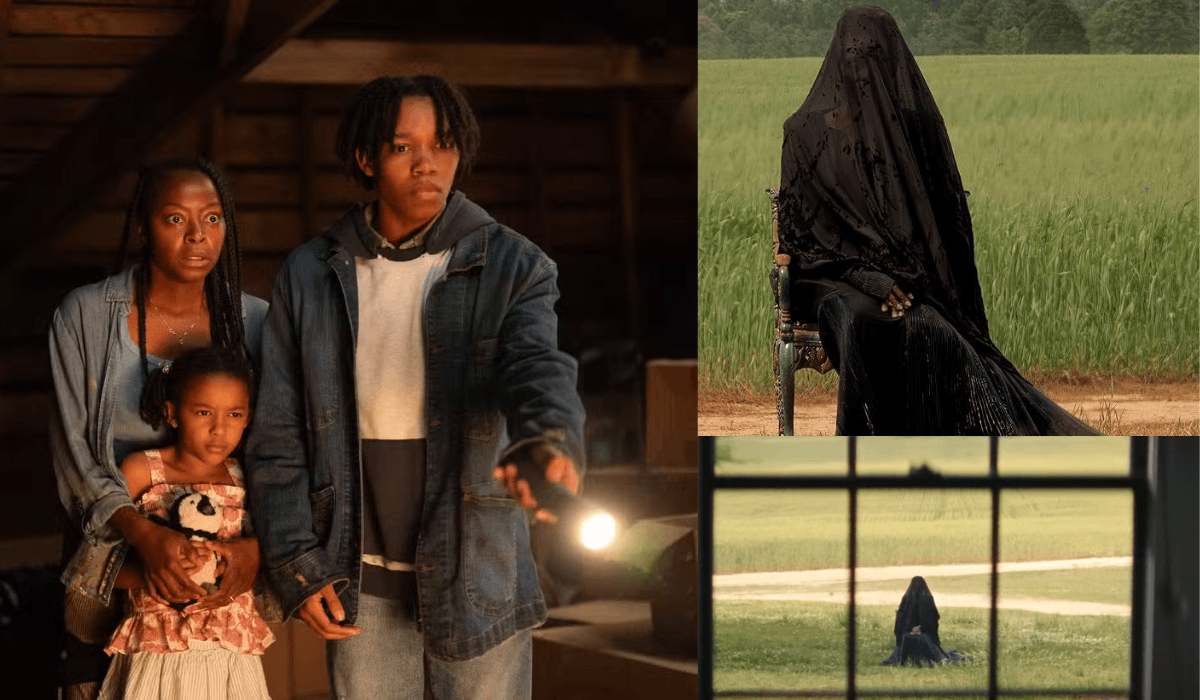
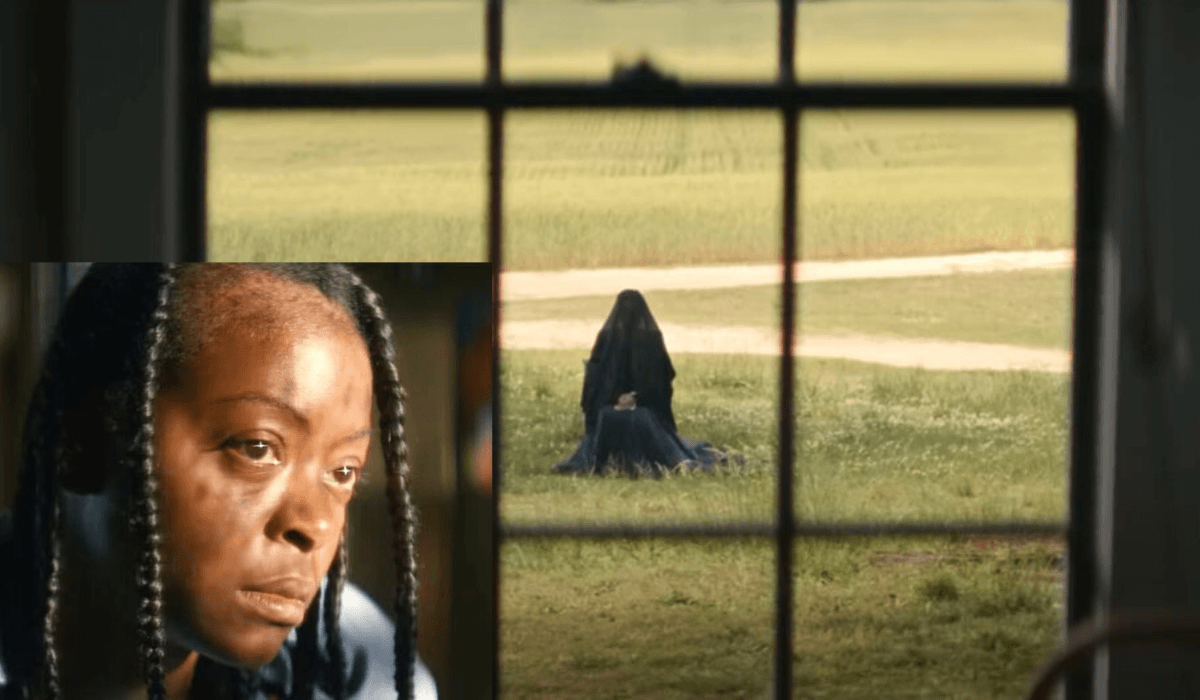
The premise is deceptively simple. A mysterious woman dressed entirely in black appears in the yard of grieving widow Ramona, played with devastating vulnerability by Danielle Deadwyler. She sits motionless in a chair, repeatedly stating "Today's the day." As the entity creeps closer to the isolated farmhouse, it becomes clear this is no ordinary intruder.
What unfolds is a raw, unflinching examination of how grief can transform into something monstrous when left unaddressed. This is not supernatural horror for entertainment's sake. It is psychological terror grounded in the very real experience of depression and survivor's guilt.
The Setup: A Family Already Broken
Ramona lives with her two children, 14-year-old Taylor and six-year-old Annie, in a rural farmhouse following a car accident that killed her husband David and left her with a leg injury. The damaged vehicle still sits in the driveway, a constant visual reminder of trauma. The power has been shut off due to unpaid bills. The house remains half-renovated, frozen in time like Ramona's emotional state.
Director Collet-Serra, known for stylish thrillers like "Orphan" and the recent Netflix hit "Carry-On," employs his visual prowess to show rather than tell. We see Ramona snapping at her children, throwing objects in anger, emotionally withdrawn despite their obvious need for comfort. Taylor has become sullen and rebellious. Little Annie carries around a toy penguin, caught in the crossfire of her mother's unraveling mental state.
This is grief portrayed without sentimentality. Ramona is not a sympathetic figure in the traditional sense. She is strict, emotionally distant, and at times verbally harsh with her children. The film refuses to romanticize her suffering or present her as a noble survivor bravely carrying on. Instead, it shows the ugly reality of untreated trauma and depression.
The Woman: Depression Given Form
When the Woman appears, seated calmly in the yard and shrouded in gauzy black fabric, the film shifts into genuinely unsettling territory. The entity doesn't rush or chase. She simply exists, drawing incrementally closer to the house whenever no one is watching. Her presence alone creates suffocating dread.
The Woman knows things she shouldn't. She comments on David's absence, on Ramona's injury, on the children being "ripe enough to eat." She appears with bloody hands after killing the family's chickens. She demonstrates shadow magic that attacks their dog Charlie, who disappears and is presumed dead.
What makes the Woman truly frightening is not her supernatural abilities but what she represents. As the film progresses toward its devastating revelation, we learn that Ramona was the driver in the accident that killed David. More significantly, she had told her husband that very night that she wanted out of their life together. She was unhappy in their fixer-upper farmhouse, overwhelmed by the demands of motherhood, desperate to escape.
The accident wasn't suicide, but Ramona survived while the person she had just told she wanted to leave died instantly. The guilt is crushing. The Woman is the physical manifestation of Ramona's intrusive thoughts, her death wish, her belief that she doesn't deserve to live.
Why This Approach Works and Where It Stumbles
The Woman in the Yard tackles subject matter that many horror films avoid with good reason. Depicting suicidal ideation as entertainment carries enormous responsibility. The film walks a precarious line, and whether it succeeds likely depends on the viewer's personal experience with mental health struggles.
The strength lies in Deadwyler's performance, which multiple critics singled out even while panning other aspects of the film. She makes Ramona's internal torment palpable without over-explaining it. We see someone who loves her children but can barely function. Someone who desperately wants relief from pain but knows the permanent cost that relief would carry.
Director Collet-Serra creates genuinely unnerving sequences using minimal special effects. The Woman's chair teleporting closer when no one is looking. Shadow figures that move independently. A disturbing sequence where Ramona appears to switch places with the Woman, suggesting their identities are merging. These visual metaphors effectively communicate how depression distorts reality and erodes the boundary between self and destructive impulse.
However, the film stumbles in its structure. Critics widely noted that revealing the Woman's true nature too early deflates much of the suspense. The middle section drags as the premise stretches thin across its 85-minute runtime. Some viewers felt the material would have worked better as a tight 30-minute anthology episode rather than a feature film.
The Controversial Ending: Hope or Horror?
The climax forces Ramona to confront the Woman directly. Having sent her children away for their safety, Ramona finds herself in the barn with a rifle. The Woman merges with her shadow, coaxing her to pull the trigger. In a particularly disturbing scene, the entity helps Ramona point the gun at her own head.
At the last moment, Ramona sees Annie's toy penguin and appears to regain her will to live. The Woman's shadow separates from hers. The children return, and the family reunites. The power mysteriously comes back on. A sign reading "Iris Haven" appears outside the house, the name David and Ramona had planned to give their property. They go inside together, seemingly safe.
But then the camera pushes in on one of Ramona's paintings. It shows her face merged with the Woman's. More critically, Ramona's signature at the bottom is written backwards.
This detail has sparked intense debate. Earlier in the film, Annie struggles with writing her letters backwards, particularly the letter "R." The backwards signature suggests this "happy" ending occurs in a mirror world, an inverted reality. Several visual clues support this interpretation. The house appears fully renovated when it was falling apart moments before. The electricity returns despite Ramona having no money to pay the bill. The family dog comes back despite being killed by the Woman's shadow magic.
The most plausible reading is that Ramona did pull the trigger. The final scene depicts her dying fantasy, an imagined world where she conquered her depression and reunited with her children. It's her mind's desperate attempt to create meaning and peace in her final moments.
This interpretation makes The Woman in the Yard one of the bleakest mainstream horror films in recent memory. It suggests that sometimes the darkness wins. That mental illness, when left untreated and unsupported, can prove fatal. That good intentions and love for one's children may not be enough to overcome severe depression.
The Ethical Question: Is This Responsible Storytelling?
Here is where my opinion diverges from the filmmakers' apparent intent. I appreciate the film's refusal to sugarcoat mental illness or present easy solutions. Depression doesn't resolve itself through willpower or a single moment of clarity. That truth needs representation.
However, I'm troubled by the decision to make the ending so ambiguous that many viewers walk away thinking Ramona survived when the visual language strongly suggests otherwise. If the film's message is that Ramona chose death, that choice should be clear and its consequences should be shown. Obscuring it behind metaphor and backwards signatures feels like having it both ways, wanting to tell a story about suicide without fully committing to that narrative or showing its impact on the surviving children.
Mental health professionals have expressed concern about media depicting suicide as a solution or escape, particularly when presented with any ambiguity that might seem to validate the choice. The film includes a content warning for suicide-related content, but the ambiguous ending may undercut whatever cautionary message the filmmakers intended.
On the other hand, some interpretations suggest the backwards signature represents Ramona accepting her depression rather than being consumed by it. That she's living in a changed reality where she's integrated her shadow self, acknowledged her darkness, and chosen to coexist with it rather than be destroyed by it. This reading is more hopeful but requires significant interpretive generosity given the visual cues.
What The Film Gets Right About Grief and Mental Illness
Despite these concerns, The Woman in the Yard succeeds in several crucial areas. It shows how depression doesn't just affect the sufferer but radiates outward, damaging relationships and creating fear in those who depend on you. Taylor and Annie are terrified not just of the supernatural entity but of their mother's unpredictable behavior and emotional absence.
The film understands that intrusive thoughts feel invasive and unwanted, like an external entity rather than part of oneself. People experiencing suicidal ideation often describe it as a voice that isn't quite their own, a pressure from outside. Personifying this as a literal specter captures that psychological reality effectively.
The Woman's repeated phrase "Today's the day" resonates because it reflects how suicidal ideation can create false urgency, a sense that the only escape must happen immediately. The distorted self-talk that depression generates, convincing sufferers that death is the only option, that today is somehow different from yesterday or tomorrow.
The film also captures survivor's guilt with brutal honesty. Ramona's situation, surviving an accident that killed her husband moments after expressing dissatisfaction with their life, represents an extreme version of guilt many people experience after loss. The "what ifs" and "if onlys" that plague grief can become psychologically toxic without support and processing.
The Broader Context: Grief Horror as Genre
The Woman in the Yard joins a growing subgenre of horror films that use supernatural elements as metaphors for grief and trauma. "The Babadook" explored similar territory in 2014, with its titular monster representing a widow's unprocessed rage and depression. "Hereditary" examined grief through occult horror. "Midsommar" processed a breakup through folk horror imagery.
These films recognize what traditional drama sometimes cannot capture: that grief and trauma can feel supernatural in their intensity. That loss can make the world seem fundamentally altered and threatening. That the mind, when overwhelmed, can create its own monsters.
The Woman in the Yard is more literal and less artful than these predecessors, which may explain its mixed reception. Where "The Babadook" maintained ambiguity about whether its monster was real, this film commits to the Woman as a concrete manifestation of Ramona's psyche. That directness reduces mystery but increases emotional impact for viewers who connect with the metaphor.
Performance Carries the Weight
Danielle Deadwyler, coming off acclaimed performances in "Till" and "The Piano Lesson," carries the film almost single-handedly. She makes Ramona's spiral feel authentic rather than performative. We see someone exhausted by the effort of simply existing, snapping at her children not out of cruelty but because she has nothing left to give.
Okwui Okpokwasili, as the Woman, creates menace through stillness and tone rather than theatrics. Her performance reminded me why veiled figures are so effective in horror. We project our own fears onto that blank space. When her face is finally revealed, showing scars and damage, some of that power dissipates, which several critics noted as a misstep.
The child actors, Peyton Jackson and Estella Kahiha, bring necessary grounding. Their confusion and fear feel genuine, never crossing into horror movie kid territory where children inexplicably behave stupidly to advance the plot.
Why the Film Struggled at the Box Office
Opening to $9.4 million, significantly above its projected $5 million debut, The Woman in the Yard still underperformed relative to Blumhouse's usual horror offerings. The film's final gross of $23 million represents profitability given its modest budget but hardly constitutes a hit.
Several factors likely contributed. The marketing emphasized atmospheric horror but couldn't convey the film's psychological heaviness without spoiling its central conceit. Audiences expecting traditional scares found themselves watching a meditative character study about depression. Those seeking depth found the execution uneven.
The release timing in late March also placed it in a crowded marketplace. More significantly, Blumhouse has experienced a notable slump in 2025, with multiple releases underperforming. Audiences may be experiencing franchise fatigue after the disappointing "M3GAN 2.0" and other recent efforts.
The subject matter itself may have limited appeal. While the film has found new life on streaming platforms like Peacock and Prime Video, where viewers can engage with difficult content at home, theatrical audiences often seek escapism rather than confrontation with real-world psychological pain.
My Verdict: Ambitious but Flawed
I respect what The Woman in the Yard attempts more than what it achieves. The film tackles genuinely difficult subject matter with seriousness and refuses to offer false comfort. It presents mental illness as potentially catastrophic rather than easily overcome, which represents honesty many films avoid.
However, the execution doesn't quite match the ambition. The screenplay, by first-time feature writer Sam Stefanak, reveals promising ideas but struggles with pacing and structure. The decision to reveal the Woman's identity in the second act leaves the final act without sufficient narrative momentum. The ambiguous ending feels more like hedging than artistic choice.
That said, the film succeeds as a conversation starter about how we depict mental health in genre filmmaking. It pushes boundaries that need pushing, even if it doesn't land perfectly. Deadwyler's performance alone makes it worth watching for those interested in horror that attempts more than surface-level scares.
For viewers dealing with depression or suicidal ideation, this film may prove too raw, too close to lived experience. For others, it might provide insight into what that experience feels like from the inside. The fact that the same film can serve both purposes speaks to the complexity of the subject matter.
The Film's Legacy and What Comes Next
The Woman in the Yard will likely be remembered as an interesting failure rather than a success. It demonstrates that Blumhouse, despite recent struggles, still supports filmmakers tackling challenging material with modest budgets. That willingness to greenlight unconventional horror remains valuable even when individual projects miss their mark.
The film also reinforces Danielle Deadwyler's position as one of contemporary cinema's most compelling dramatic actors. Her ability to find truth in even flawed material suggests a significant career ahead.
As horror continues evolving beyond jump scares and gore into psychological territory, we'll see more films attempt what The Woman in the Yard does here. Future efforts will hopefully learn from both its successes and failures. The key will be balancing metaphor with responsibility, creating films that illuminate mental health struggles without inadvertently romanticizing their worst outcomes.
Horror That Haunts Differently
The Woman in the Yard is not a fun horror movie. It will not spawn franchise sequels or merchandising. It won't top any year-end lists. But it lingers in the mind long after viewing, which separates effective psychological horror from forgettable scares.
The film understands that the scariest monsters aren't external threats but internal ones. That grief, when combined with depression and left untreated, can become genuinely life-threatening. That the voice in our heads sometimes lies to us with perfect conviction.
Whether the film handles these themes responsibly remains debatable. Whether it succeeds as horror, as drama, or as cautionary tale depends entirely on the viewer's perspective and experiences. That ambiguity might be the film's greatest strength or its fatal flaw.
What's certain is that The Woman in the Yard represents horror cinema's ongoing evolution toward deeper psychological territory. It may not fully succeed, but its attempt matters. We need films willing to explore how mental illness actually feels, even when that exploration makes audiences uncomfortable.
Just perhaps, next time, the ending should be clearer about whether it offers hope or warning. Because when dealing with subject matter this serious, ambiguity can become irresponsibility. And that's a line horror filmmakers must navigate with greater care than this film ultimately manages.