Why Every Netflix Thriller Now Has A Dementia Plot Twist And It Needs To Stop

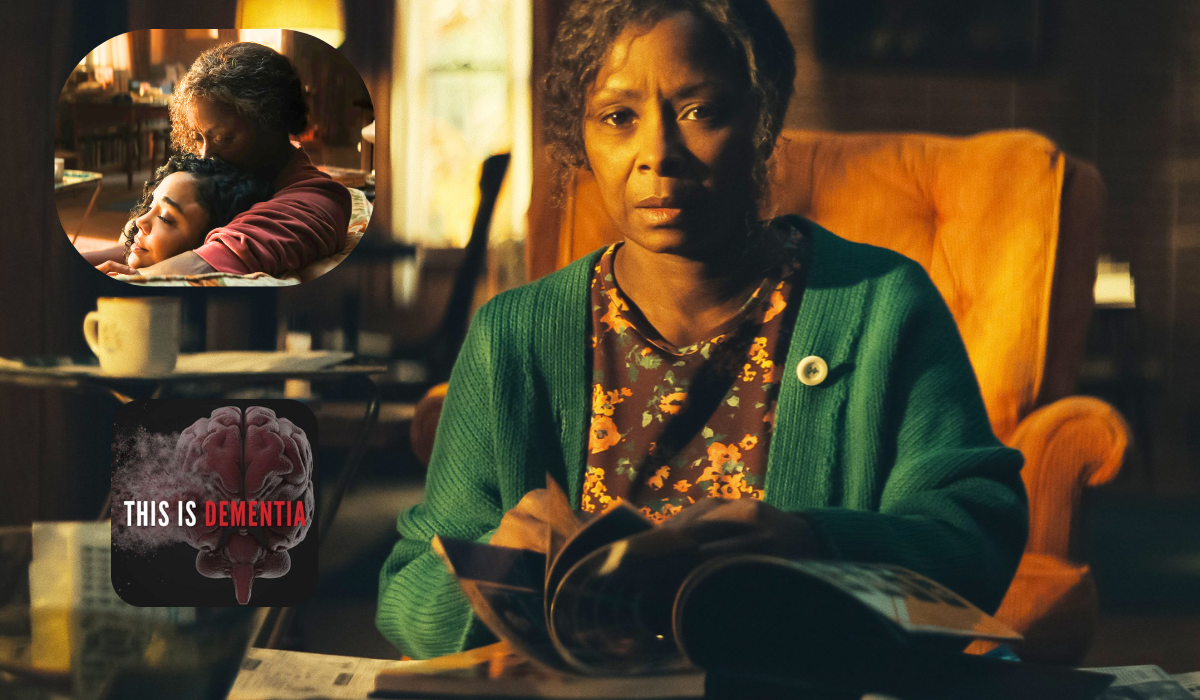
Netflix just released His & Hers, and within the first episode, viewers meet Alice, an elderly woman who wanders the streets naked at night and puts eggshells in her scrambled eggs. She has dementia, we're told. Her daughter Anna hasn't seen her in a year, and her son-in-law Jack checks on her daily as her condition worsens.
Except Alice doesn't have dementia at all. She's faking it. The finale reveals she committed serial murders and staged dementia symptoms to avoid suspicion. As she explains in her confession letter, serial killers are rarely women or senior citizens, so she weaponized ageism and misogyny to get away with murder.
This isn't just bad storytelling. It's offensive to the millions of families navigating real dementia, and it's become streaming television's laziest crutch.
The "Convenient Dementia" Epidemic
His & Hers joins a growing list of thrillers that treat dementia as a plot device rather than a medical reality. The Hollywood Reporter's review called Alice "one of those TV characters defined by convenient dementia," and that word, convenient, captures the problem perfectly.
Dementia appears in these shows not to explore the devastating impact of cognitive decline but to serve the narrative. Characters either fake it to escape consequences, have it to create sympathetic backstory, or miraculously overcome it when the plot demands.
The 2015 thriller Dementia, available on Netflix, centers on a Vietnam veteran diagnosed with the condition who hires a live-in nurse with a hidden agenda. The disease becomes the mechanism through which the plot unfolds, making the protagonist vulnerable to exploitation.
Unauthorized Living features a Galician drug lord hiding his Alzheimer's diagnosis as he plans to retire, with his condition driving palace intrigue within his criminal empire.
These shows share a troubling pattern: they use a complex, heartbreaking neurological condition as shorthand for vulnerability, unreliability, or, in the case of His & Hers, criminal cover.
Why This Hurts Real Families
Nearly seven million Americans currently live with Alzheimer's disease, according to NPR's 2025 reporting on dementia care. That number doesn't include the millions more diagnosed with other forms of dementia, from vascular dementia to Lewy body disease to frontotemporal dementia.
Each diagnosis represents not just one person suffering but entire families reshaped by the condition. Adult children become caregivers. Spouses watch their partners disappear cognitively while physically present. The person with dementia experiences confusion, fear, and the awareness that they're losing themselves.
When Netflix turns dementia into a twist, into something characters fake or overcome through sheer will, it trivializes this reality. It suggests dementia is performance rather than progressive neurological decline.
Caregiver Allyson Schrier, whose husband was diagnosed with frontal lobe dementia at 47, described living "in fear" of when he would become agitated or upset. That's the daily reality for dementia families. It's not plot machinery. It's exhausting, heartbreaking, and isolating.
The Fake Dementia Trope Is Particularly Cruel
His & Hers takes the exploitation further by having Alice fake dementia symptoms. She intentionally wanders naked through town. She deliberately acts confused. She stages the eggshell incident. All to establish a false narrative of cognitive decline that will protect her from murder suspicion.
This storyline implies dementia is something you can imitate convincingly, that the symptoms are surface-level behaviors anyone could perform. It reduces a complex neurological condition to a few quirky actions.
Real dementia doesn't work like that. The condition involves fundamental changes in brain structure and function. Memory loss, confusion, personality changes, and behavioral shifts stem from actual neurological damage, not performance.
For caregivers who've watched loved ones genuinely struggle with dementia, seeing it portrayed as something you can fake to commit crimes feels like a slap in the face. It suggests their daily challenges, their grief, their exhaustion are all just theater.
When Shows Get It Right
Not all dementia representation is harmful. Some films and shows approach the condition with the sensitivity and nuance it deserves.
The Father, starring Anthony Hopkins, earned widespread acclaim for its authentic portrayal of a man experiencing dementia. The film places viewers inside the protagonist's confused perception of reality, showing how the world becomes fragmented and unreliable when your brain betrays you.
Still Alice depicts a linguistics professor diagnosed with early-onset Alzheimer's. Julianne Moore's performance captures the terror of being aware you're losing your memories while unable to stop the decline. The film doesn't use dementia as a plot twist. It explores dementia as the central experience.
HBO's The Great Lillian Hall, featuring Jessica Lange as a legendary actress diagnosed with Lewy body dementia, offers what caregiving advocates called "a sensitive and nuanced portrayal" that shows the extended care team, the emotional complexity, and the reality of living with the condition.
A Man on the Inside, a Netflix series starring Ted Danson, explores grief and memory loss related to Alzheimer's with what the Alzheimer's Association described as thoughtful attention to the disease's impact.
The difference is clear. These shows treat dementia as a human experience worth exploring, not as narrative machinery to engineer twists.
The Economic Reality Behind Lazy Writing
Part of this problem stems from how streaming content gets produced. With cost-cutting measures across platforms, scripts don't get the development time they need. Writers rooms shrink. Research budgets disappear.
It's faster and cheaper to use dementia as shorthand for vulnerability or unreliability than to develop complex characters through authentic storytelling. The condition becomes a cheat code, instantly creating sympathy, suspicion, or misdirection without the harder work of character development.
His & Hers relocated from its British setting to Georgia for tax incentives. The Hollywood Reporter noted it feels like one of those "forgettable Netflix limited series filmed in Southern tax havens." When production priorities focus on budget over quality, nuanced representation suffers.
What Makes This Particularly Insidious
The "convenient dementia" trope appears almost exclusively in thrillers and mysteries, genres built on deception and unreliable narration. This creates a specific problem: it trains audiences to distrust dementia symptoms.
When multiple shows present dementia as something characters fake to avoid consequences or as a red herring that turns out to be irrelevant to the plot, viewers develop skepticism toward the condition itself.
This skepticism can bleed into real life. Family members might wonder if their loved one is exaggerating symptoms. Medical professionals might approach dementia diagnoses with unwarranted suspicion. The entertainment industry's careless portrayal shapes public perception in harmful ways.
Dementia already faces stigma. People with the condition report feeling dismissed, infantilized, or treated as burdens. Shows that present dementia as performance or plot device reinforce these damaging attitudes.
The Specific Failures in His & Hers
Alice's fake dementia in His & Hers reveals multiple levels of offensive storytelling choices. The show presents her staged wandering and confusion as convincing enough to fool her family and community for months.
Real caregivers know dementia symptoms aren't isolated incidents. They're patterns of cognitive decline that manifest in countless ways, from difficulties with executive function to changes in judgment to problems with spatial awareness. You can't fake the full constellation of symptoms convincingly.
The show also uses Alice's supposed dementia to explain why no one suspects her of murder. As she states, people "mistake determination for dementia" because of ageist assumptions. While ageism absolutely exists, weaponizing it this way suggests dementia patients could be secretly capable of complex criminal activity if only people weren't so quick to dismiss them.
This flips the real problem. People with dementia aren't secretly competent and being unfairly underestimated. They're experiencing genuine cognitive decline that deserves compassion and appropriate care, not suspicion.
Why Writers Keep Making This Mistake
The pattern persists because dementia offers writers several narrative advantages, all of which prioritize plot convenience over ethical representation.
First, it creates instant sympathy. Audiences feel for characters struggling with memory loss, making them seem more vulnerable and deserving of protection.
Second, it provides built-in unreliability. A character with dementia can't be trusted to remember events accurately, which works perfectly for mysteries built on competing narratives.
Third, it explains away plot holes. If a character didn't notice something crucial, dementia becomes the easy explanation rather than developing logical reasons rooted in character or circumstance.
Fourth, it manufactures emotion. Watching someone lose their memories or personality creates pathos without the harder work of building emotional investment through authentic relationships.
These advantages make dementia tempting for writers facing tight deadlines and limited budgets. But convenience doesn't justify offense.
The Broader Pattern of Medical Exploitation
Dementia isn't the only medical condition streaming shows exploit for plot purposes. Mental illness frequently appears as shorthand for "dangerous" or "unpredictable." Disabilities get used to create sympathy or demonstrate character growth in able-bodied protagonists. Cancer becomes a redemption arc catalyst.
But dementia holds a unique position because it specifically affects memory and perception, the very tools mystery and thriller genres manipulate. This makes it particularly vulnerable to exploitation.
The condition also primarily affects older adults, a demographic Hollywood already marginalizes. Older characters rarely get complex, fully realized storylines. Instead, they become types: the wise mentor, the burden, the comic relief, or in these thrillers, the convenient plot device.
Alice in His & Hers never exists as a full person. She's first the sympathetic dementia patient, then the shocking serial killer. Neither version treats her as a three-dimensional human being navigating genuine experiences.
What Caregivers Actually Face
To understand why these portrayals cause harm, it helps to know what dementia caregiving actually looks like.
Caregivers describe the heartbreak of their loved one not recognizing them. They talk about the physical exhaustion of managing behavioral symptoms, the financial strain of care costs, and the emotional toll of watching someone disappear piece by piece.
They discuss the isolation, because friends don't know how to interact with someone who has dementia, and social activities become impossible when your loved one can't follow conversations or becomes agitated in crowds.
They mention the guilt, wondering if they're doing enough, if they should have noticed symptoms earlier, if they're making the right care decisions.
They describe the grief of mourning someone who's still physically present, the ambiguous loss of having your relationship fundamentally changed while the person remains alive.
None of this appears in shows using "convenient dementia." Those shows skip the actual experience of the condition in favor of using it as narrative shorthand.
This Hits Close to Home
As someone who has watched family members navigate dementia, seeing His & Hers use it as a fake-out felt personally offensive. The show takes real symptoms that devastate families and turns them into a character's calculated performance.
Every time Alice wandered naked or seemed confused, the show asked viewers to see these as clues to her guilt rather than as manifestations of a devastating condition. It weaponized symptoms that real people experience involuntarily.
When the finale revealed the fake dementia twist, my immediate reaction wasn't surprise at the clever plot. It was anger that the show treated caregivers' daily reality as a costume a murderer could wear and discard at will.
We can do better. We should demand better. Dementia isn't a plot twist. It's a medical reality affecting millions of families who deserve more than seeing their experience reduced to narrative machinery in forgettable streaming thrillers.
What Should Change
If writers want to include dementia in their stories, they need to approach it with the same care and research they'd apply to any other significant element. That means:
Consulting with dementia specialists, caregivers, and people living with the condition during development.
Avoiding using dementia as a red herring, twist, or fake diagnosis unless absolutely essential to exploring the condition itself.
Depicting the full reality of living with dementia, not just isolated symptoms that serve the plot.
Showing the impact on family members and caregivers, not just using the person with dementia as a device.
Questioning whether the story truly needs dementia or if another narrative approach would work without exploiting a medical condition.
The existence of shows like The Father and Still Alice proves you can create compelling content that includes dementia respectfully. It requires more effort than using it as convenient shorthand, but the result respects both the craft and the audience.
The Call for Better Standards
Streaming platforms need to establish guidelines for depicting medical conditions, particularly neurological disorders that affect perception and memory. These guidelines should require consultation with medical and caregiving experts, sensitivity readers from affected communities, and evaluation of whether the portrayal serves the story or just the plot.
Netflix, with its massive global reach, bears particular responsibility. When millions of subscribers watch His & Hers, the show's portrayal of dementia shapes cultural understanding of the condition. That influence demands ethical consideration.
The platform has shown it can do better. A Man on the Inside demonstrates Netflix can greenlight dementia content that earns praise from Alzheimer's organizations. The capability exists. It's a matter of priorities.
The Larger Question
Beyond dementia specifically, the streaming industry needs to reckon with how it portrays any form of human suffering. When trauma, illness, disability, or mental health conditions appear only as plot devices rather than as genuine experiences worth exploring, it reveals a fundamental disrespect for the people living those realities.
Every condition, every diagnosis, every form of suffering that appears in entertainment represents millions of real people. Those people deserve to see their experiences treated with care rather than used as narrative shortcuts by writers facing tight deadlines.
This isn't about banning certain topics from fiction. It's about raising the standard for how we approach them.
His & Hers doesn't just fail as a thriller because of weak plotting and mismatched tone, though it absolutely suffers from both. It fails ethically by treating dementia as costume Alice wears to commit murder, then discards when convenient.
Netflix's pattern of "convenient dementia" across multiple thrillers reveals a systemic problem. When writers repeatedly reach for neurological conditions as plot machinery rather than developing authentic characters through genuine development, it exposes lazy storytelling dressed up as twisty mysteries.
The millions of families navigating dementia deserve better. The caregivers sacrificing their own wellbeing to support loved ones with cognitive decline deserve better. The people living with dementia themselves, fighting to maintain dignity and personhood as their brains betray them, deserve infinitely better than being portrayed as potential murderers faking symptoms.
Stop using dementia as a twist. Stop presenting it as something characters can fake convincingly. Stop reducing a devastating neurological condition to a red herring in your murder mystery.
The next time a streaming thriller introduces an elderly character with dementia, ask yourself whether the show earns the right to include it. If the answer is that it's just there to misdirect suspicion or create a shocking reveal, that's not good enough.
Dementia isn't a plot device. It's a medical reality. Treat it accordingly, or leave it out of your story entirely.