Why Marvel's Decision To Rewrite X-Men Again Proves They Finally Understand What Went Wrong

The X-Men script currently in development at Marvel Studios is being rewritten. Again. This marks at least the second major overhaul since Michael Lesslie, known for "The Hunger Games: The Ballad of Songbirds and Snakes," was hired to write the screenplay over a year ago.
The news, reported by insider sources this week, might sound like typical Hollywood development chaos. But it actually represents something more significant: Marvel finally understands what made Fox's X-Men franchise simultaneously successful and frustrating for two decades.
Director Jake Schreier, fresh off the critical and creative success of "Thunderbolts*," is confirmed to helm the X-Men reboot. Kevin Feige announced it officially at a recent roundtable, praising Schreier's character work and noting that he "has his pulse on, shall we say, a younger demographic."
That last comment, seemingly throwaway, actually reveals Marvel's entire strategic direction. They're not making another movie about Wolverine with some mutants in the background. They're making a film about young people who feel different, who feel other, who feel like they don't belong.
The script rewrite suggests Marvel is course correcting based on what Schreier learned from "Thunderbolts*" and what Feige has absorbed from 25 years of X-Men films that never quite captured what made the comics special. This isn't just another superhero reboot. It's an attempt to finally do justice to characters Hollywood has consistently misunderstood since 2000.
The Fox Problem Marvel Must Avoid
Between 2000 and 2020, Fox released 13 X-Men films that collectively grossed over 6 billion dollars worldwide. By any commercial measure, the franchise succeeded spectacularly. It legitimized superhero cinema, paved the way for the MCU, and created cultural moments that defined an era. Yet for all that success, the Fox X-Men films repeatedly made the same fundamental mistake: they treated the team as supporting characters in Wolverine's story.
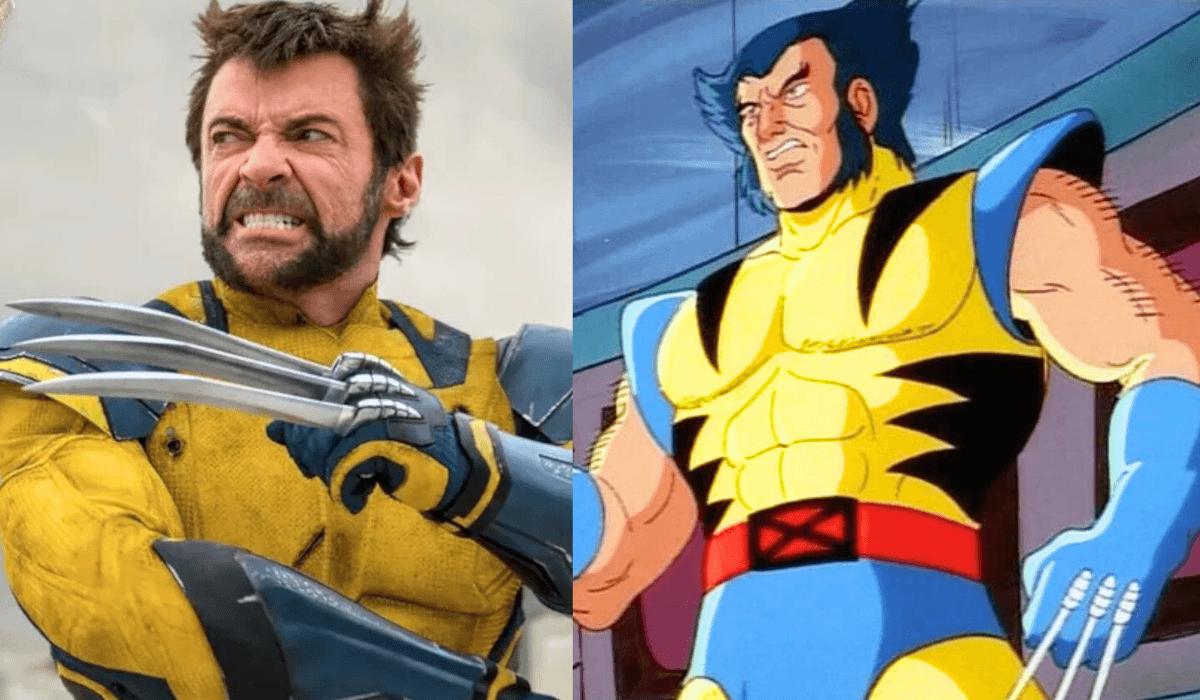
Hugh Jackman's Wolverine is iconic, one of the greatest superhero performances ever captured on film. But Wolverine isn't supposed to be the X-Men's protagonist. He's the wild card, the reluctant teammate, the outsider who gradually learns to be part of a family.
The X-Men comics have always centered Cyclops and Jean Grey as co-leaders, with the team functioning as an ensemble where everyone matters. Fox's films sidelined Cyclops completely, killed him off unceremoniously in "The Last Stand," and reduced Jean to a love interest fought over by Logan and Scott.
This wasn't just about fan service or comic accuracy. It revealed a fundamental misunderstanding of what makes X-Men stories resonate. The mutant metaphor works because it's about community, about finding family among people who understand your otherness. When you center one character's journey, particularly an adult male loner, you lose the ensemble dynamics that give X-Men their emotional power. You lose the chosen family aspect. You lose what makes them special.
Marvel Studios appears to have recognized this pattern. Feige's comments about young people who feel like they don't belong, who feel different and other, cuts to the core of X-Men's appeal. These are stories about teenagers discovering they're mutants, being rejected by biological families, and finding acceptance at Xavier's school. The original X-Men were teenagers. That's not incidental to their stories. It's essential.
Fox tried depicting young X-Men with "First Class," "Apocalypse," and "Dark Phoenix," but those films still centered adults or rushed through the formative years to get to epic conflicts. They never settled into the adolescent experience of discovering powers, learning control, navigating relationships, and figuring out your identity while being fundamentally different from everyone around you.
What Thunderbolts Taught Schreier About Marvel Ensembles
Jake Schreier's "Thunderbolts*" became Marvel Studios' best reviewed film since "Spider-Man: No Way Home" in 2021 despite underperforming at the box office. Critics and audiences praised its character focus, its willingness to prioritize emotional resolution over spectacle, and its surprising depth exploring trauma, guilt, and found family among damaged antiheroes.
The film eschewed traditional third act battles in favor of scenes where characters confront their pain and choose connection over isolation. It treated superheroes as real people processing real psychological damage rather than as action figures smashing through CGI environments. That approach felt revolutionary for the MCU, proving that Marvel movies could value character over spectacle without sacrificing entertainment.
Schreier has confirmed he's already begun work on X-Men, and he's explicitly discussing what he learned from "Thunderbolts*" that will inform his mutant movie. In interviews, he cited the learning curve around balancing action with emotional character moments, noting that even with more shooting days than he'd ever had, action sequences consume time quickly. By the end of "Thunderbolts*," he felt he understood how to structure that balance better.
More significantly, Schreier demonstrated an ability to make audiences care about secondary characters. The Thunderbolts aren't A-list heroes. Most viewers hadn't heard of Sentry before this film. Yet Schreier made their internal struggles compelling enough to carry an entire movie. That skill is precisely what X-Men needs.
The mutant team has dozens of characters with devoted fan followings. Storm, Rogue, Gambit, Nightcrawler, Jubilee, Kitty Pryde, Iceman, Beast, and countless others all deserve meaningful screen time. Fox's films treated most of them as background dressing. A director who can make ensemble casts work, who trusts character dynamics over spectacle, who understands found family narratives, that's exactly who should helm X-Men.
The Age Question and What It Reveals
Recent rumors suggest Marvel is eyeing young actors for the X-Men roster, with ages ranging from late teens to mid twenties. Names circulating include Mason Thames (17), Julia Butters (15), Trinity Jo-Li Bliss (14), Jack Champion (19), and Hunter Schafer (26) alongside slightly older possibilities like Millie Bobby Brown (21), Jesse Plemons (37), and Cynthia Erivo (38).
That age range tells us Marvel is serious about depicting the school years. Fox's original trilogy cast adult actors playing vaguely adult mutants. Even "First Class," supposedly about younger X-Men, featured actors in their twenties and thirties playing characters whose ages were never clarified. Marvel wants actual youth, actors young enough to convincingly portray teenagers discovering powers and learning to be heroes.
This matters enormously for the metaphor. When X-Men works best, it's about adolescence, about the trauma of discovering you're fundamentally different from your peers at the exact developmental stage when conformity feels essential. It's about being rejected by families who don't understand you, about finding community with people who do, about mentors helping you accept yourself.
Adult X-Men stories work too, but they're different. They're about maintaining community, fighting for a world that fears you, navigating complex moral situations. Those stories have power, but they're not the foundation. The foundation is students at Xavier's school, learning control, forming bonds, discovering their identities. That's what Marvel appears to be building toward.
Feige's emphasis on mutants who "feel like they don't belong" reinforces this direction. He's not talking about superheroes saving the world. He's talking about outsiders finding family. That's a story that resonates with teenagers but also with anyone who has ever felt different, marginalized, or unable to fit into mainstream society. It's why X-Men became the best-selling comics of the 1980s and 1990s. It's why the metaphor still works 60 years after Stan Lee and Jack Kirby created them.
Why This Requires Another Script Rewrite
Michael Lesslie wrote the initial screenplay based on his experience crafting "The Ballad of Songbirds and Snakes," a prequel exploring young Coriolanus Snow's transformation into the villain of "The Hunger Games." That suggests a script with psychological depth, exploring how circumstances shape people. But "Songbirds and Snakes" was ultimately about one character's moral descent. X-Men can't be about one character.
The script rewrite likely addresses that structural challenge. How do you serve an ensemble of six to eight main characters while making each one feel essential? How do you balance Cyclops and Jean as co-leaders without sidelining everyone else? How do you introduce powers, personalities, and character arcs for multiple mutants without the film feeling overstuffed?
Schreier's involvement changes the equation. He's worked with writer Joanna Calo to reshape Eric Pearson's "Thunderbolts*" script, demonstrating comfort with collaborative writing processes. He knows what works for ensemble films at this scale. He understands how to structure character moments so audiences connect with multiple protagonists simultaneously. That expertise needs to inform the X-Men script from the beginning, not be applied after the screenplay is already written.
The rewrite also likely incorporates lessons from "Thunderbolts*" about pacing, action-to-character ratio, and emotional payoffs. Marvel has publicly acknowledged they made too many films with insufficient quality control during the post-Endgame period. Disney CEO Bob Iger specifically praised "Thunderbolts*" as an example of the renewed focus on quality over quantity. That means giving Schreier and his writers time to get the script right rather than rushing into production.
What the Rumored Roster Reveals About Direction
Insider reports suggest Marvel is eyeing Cyclops and Jean Grey as co-leaders, with supporting team members including Angel, Beast, Gambit, Rogue, and Nightcrawler. That roster deliberately excludes Wolverine, at least initially, and focuses on characters who can be convincingly portrayed as young.
This is crucially important. Wolverine is over 100 years old in most versions. He's a hardened adult with decades of trauma. You can't make him a teenager discovering his powers. By excluding him from the first film, Marvel sidesteps the trap Fox fell into. They can build the team, establish the dynamics, create emotional investment in the core characters before introducing the wild card.
Cyclops and Jean as co-leaders honors the source material while providing clear protagonist structure. Their romance, central to X-Men lore, can develop naturally across multiple films rather than being rushed. Their leadership styles, Jean's empathy and Scott's tactical discipline, complement each other and create interesting conflict when they disagree.
The supporting roster provides visual spectacle and personality diversity. Angel's wings, Nightcrawler's teleportation, Gambit's kinetic energy, Beast's transformation, Rogue's power absorption, each offers distinct action possibilities while representing different aspects of the mutant experience. Angel comes from wealth but is rejected by his family. Nightcrawler faces discrimination based purely on appearance. Rogue can't touch anyone without hurting them. These powers aren't just cool. They're metaphors for different types of alienation and difference.
Notably absent from rumors are Storm, Kitty Pryde, and Jubilee, despite being fan favorites. This might indicate Marvel is holding certain characters for later films, building the universe gradually rather than introducing everyone immediately. It might also suggest they want to cast those roles carefully, taking time to find perfect actors rather than rushing.
The Challenges of Starting Over
Marvel faces unique challenges rebooting X-Men that didn't exist for Spider-Man or Fantastic Four. Both of those properties had been dormant for years before their MCU debuts. X-Men just ended. "Dark Phoenix" and "The New Mutants" released in 2019 and 2020. "Deadpool and Wolverine" dominated the 2024 box office with 1.3 billion dollars globally, featuring Hugh Jackman reprising his iconic role.
Fox's X-Men cast will appear in "Avengers: Doomsday," scheduled for May 2026. Patrick Stewart, Ian McKellen, and others return as multiversal variants. This means audiences will see the old X-Men in theaters just months before Marvel begins promoting the new version. That creates potential confusion about which version is the "real" MCU team.
Marvel's solution appears to be positioning the new X-Men film after "Secret Wars" in December 2027, giving them time to conclude the Multiverse Saga before starting fresh. This allows the Fox cast's final appearances while establishing that post-Secret Wars, the MCU will have its own mutants with no connection to previous versions.
But that timeline creates its own problems. The film won't release until 2028 or later, meaning Marvel is developing it four years in advance with no firm release date. Scripts written that far ahead often require multiple rewrites as Marvel's overall plans evolve. The current rewrite is probably not the last.
The extended development also means cast members will age. If Marvel wants teenagers playing teenagers, locking actors in now means they might be in their twenties by the time filming begins. This is why "Thunderbolts*" felt urgent to get right. It proved Marvel could make character focused ensemble films successfully, justifying the faith they're placing in Schreier for X-Men.
Personal Perspective: The Weight of Getting This Right
Honestly, X-Men is the Marvel property I care about most, which makes me simultaneously excited and terrified about this reboot. I grew up reading Chris Claremont's legendary run, watching the animated series every Saturday morning, and being consistently disappointed by Fox's films that never quite captured what I loved about the source material.
The comics were never primarily about spectacle. They were about relationships, about characters I cared deeply about navigating impossible situations while dealing with very human problems. Scott and Jean's complicated romance. Storm's leadership and weather control as manifestations of emotional state. Rogue's tragic inability to touch anyone without hurting them. Kitty Pryde's journey from shy teenager to confident hero. These stories mattered because the characters felt real despite their fantastic powers.
Fox gave us great action sequences and occasionally moving character moments, particularly in Logan. But they never sustained that character focus across an ensemble film the way the comics did for decades. They never made me care about Cyclops the way I cared about him in the comics. They never explored the full scope of what the mutant metaphor could represent.
Marvel's decision to rewrite the script, to take time getting it right, to hire a director who proved he can balance character and spectacle, all of this suggests they understand the assignment. They're not rushing. They're not treating this as just another superhero team movie. They recognize X-Men represents something different, something that requires a specific approach.
I appreciate Feige's emphasis on young people who feel like they don't belong. That's what drew me to X-Men as a kid. I didn't have powers, but I felt different. I felt like I didn't fit in. Seeing characters who experienced the same alienation but found family and purpose despite it, that mattered enormously. If Marvel can capture even a fraction of that emotional resonance, they'll have succeeded where Fox repeatedly fell short.
The casting challenges worry me. So much depends on finding the right actors, particularly for Cyclops and Jean. Fox never got Scott right, never made him feel like the natural leader he is in the comics. They need an actor who can convey tactical intelligence, strategic thinking, and emotional vulnerability simultaneously. That's a difficult combination.
Jean requires similar nuance. She's not just the love interest or the Phoenix host. She's a powerful telepath navigating everyone else's thoughts while trying to maintain her own identity. She's compassionate but also capable of coldness when making tactical decisions. She's Scott's equal, not his subordinate or prize. Finding an actress who can embody all that while being young enough to convincingly play a student, that's an enormous ask.
What Success Would Look Like
If Marvel gets X-Men right, it will look fundamentally different from anything Fox produced. The film will center multiple characters rather than one protagonist. It will take time with quieter character moments rather than rushing from action scene to action scene. It will explore what the mutant metaphor means in contemporary society rather than treating powers as pure spectacle.
Success means making audiences care about Cyclops as much as they care about Iron Man or Captain America. It means Jean Grey becoming an iconic character rather than just a plot device. It means Rogue, Storm, Beast, and everyone else feeling essential rather than decorative. It means the Xavier School functioning as a real place where students learn and grow rather than just a location where plot happens.
It also means patience. Fox rushed from origin story to world ending threats immediately. X-Men doesn't need Magneto threatening global destruction in the first film. It needs smaller stakes that matter emotionally. The first film should be about students learning to be a team, dealing with local threats, establishing who they are before the world ending crises arrive in sequels.
Marvel's willingness to rewrite the script suggests they understand this. They're not locked into a specific vision they need to defend. They're iterating, improving, adapting as they learn more about what the film needs. That flexibility, combined with Schreier's proven ability to make character ensembles work, gives me cautious optimism.
Finally Understanding the Assignment
The X-Men script being rewritten is good news, not bad. It means Marvel is taking this seriously, refusing to settle for a screenplay that doesn't serve the characters or the metaphor. It means they've learned from Fox's mistakes and from their own post-Endgame struggles with quality control. It means they're giving Jake Schreier and his writers the time and support needed to craft something special.
Whether they succeed remains to be seen. Scripts can be rewritten indefinitely without improving. Good intentions don't guarantee good films. But the pieces are aligning in promising ways. A director who understands character. A studio emphasizing quality over quantity. A clear vision centered on young mutants who feel like they don't belong. A roster that honors the source material rather than sidelining fan favorites.
Fox proved X-Men could be commercially successful despite creative compromises. Marvel has the opportunity to prove they can be both successful and creatively fulfilling, that you can serve the characters while still delivering spectacle, that the mutant metaphor still resonates if you trust it.
The script rewrite is just one step in a long development process. But it's a step in the right direction, evidence that Marvel finally understands what made X-Men special in the first place. After 25 years of Hollywood never quite getting it right, that understanding feels like the most important superpower of all.