Why The Clooneys Just Became French Citizens To Shield Their Twins From Hollywood

George Clooney and his family have officially become French citizens, according to government records released late December 2025. The decision marks a significant shift for one of Hollywood's most prominent families, driven by concerns about raising children in the entertainment industry spotlight.
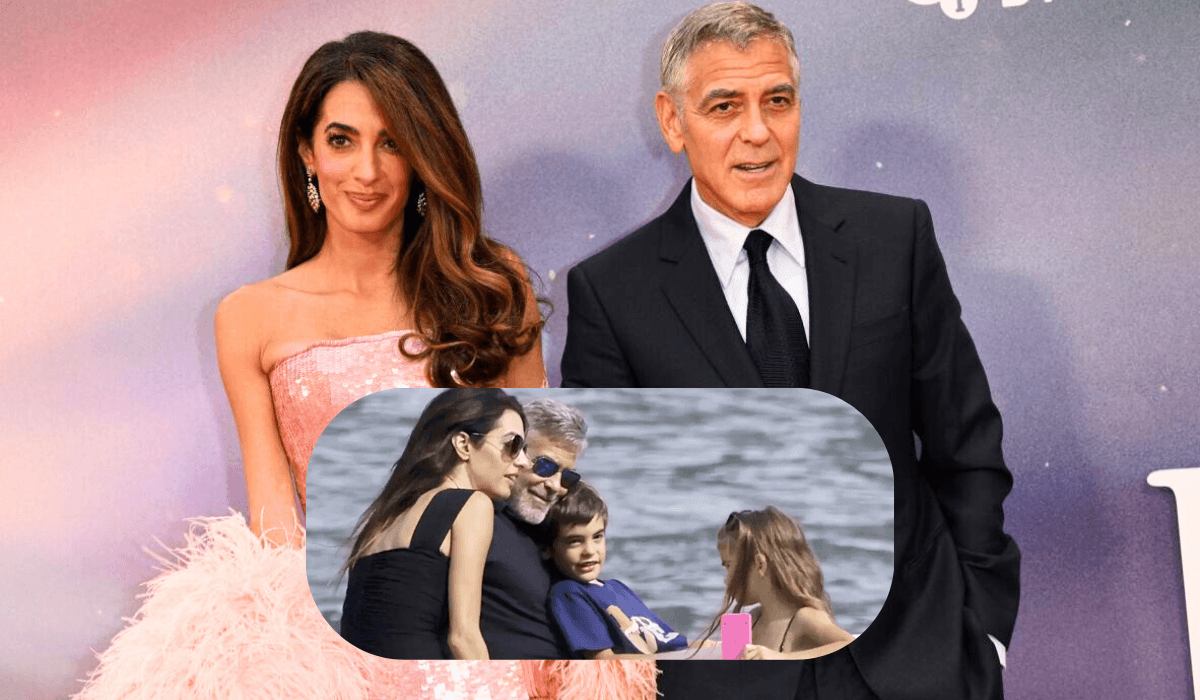
A Farm in France Becomes Home
The French government's official gazette confirmed that George Clooney, his wife Amal, and their eight-year-old twins Alexander and Ella received French citizenship. The naturalization documents, published in the Journal Officiel on December 28, 2025, list Amal under her maiden name, Amal Alamuddin, and note George's full name as George Timothy Clooney.
This legal recognition formalizes what the family has already embraced in practice. George told the New York Times in February 2025 that their French farm serves as their primary residence. The irony hasn't escaped him. Growing up in Kentucky, escaping farm life was his singular goal. Now at 64, he finds himself back on a tractor, cultivating what he calls the best chance at normalcy for his children.
The Clooneys purchased their 18th-century estate, Domaine Le Canadel, in 2021. Reports place the purchase price at approximately €7 million, roughly $8.3 million at the time. Located in Brignoles, Provence, the sprawling 425-acre property includes vineyards, olive groves, a lake, tennis courts, and a swimming pool. It's just a 25-minute drive from Brad Pitt's Château Miraval, placing the Clooneys among a small community of high-profile residents who've chosen the French countryside over flashier alternatives.
The Hollywood Problem
The actor's reasoning centers on his children's wellbeing. In an October 2025 interview with Esquire, George articulated concerns that many celebrity parents share but few express so directly. He worried about raising Alexander and Ella in Los Angeles, surrounded by what he describes as Hollywood's culture.
The fear wasn't abstract. George didn't want his children constantly looking over their shoulders for paparazzi. He didn't want them measured against other famous children, trapped in comparisons that would shadow their entire childhood. France, he explained, provides something fundamental that California couldn't offer. People there largely don't care about fame.
This assessment isn't naive optimism. It reflects a calculated understanding of cultural differences between American and French attitudes toward celebrity. While George and Amal maintain multiple properties, including homes in England, Italy, Kentucky, and New York, France became their anchor specifically because it allows their children to exist outside the entertainment industry's gravitational pull.
Why French Privacy Laws Matter
France's approach to protecting personal privacy stands apart from most Western nations. The country's legal framework makes it illegal to photograph individuals in private spaces or publish their personal information, including home addresses and phone numbers. More significantly for the Clooneys, French law prohibits publishing photographs of celebrities in public places unless those appearances directly relate to their public roles.
This creates a deterrent system that actually works. When paparazzi attempt to photograph celebrities during personal time outside official media appearances, security teams or assistants photograph the photographers. Those images then go to attorneys, who inform media outlets that civil damages will be pursued if unauthorized photos appear in print or online. This practice, documented by litigation attorney Chassen Palmer in a 2020 California Western International Law Journal article, has largely discouraged paparazzi from pursuing celebrities in France during private moments.
The contrast with American or British press culture is stark. In those countries, photographing public figures in public spaces remains largely permissible under free press protections. French law weighs individual privacy rights more heavily than press freedom in these scenarios, creating an environment where George and Amal's children can attend school, visit local shops, or play outdoors without generating tabloid content.
A Family Already Embraced by French Culture
The Clooneys weren't strangers to France before their naturalization. Their connection to the country predates their property purchase, with both George and Amal speaking fondly of French culture in various interviews over the years. In early December 2025, George told French radio network RTL that he loves French culture and language, despite still struggling with fluency after 400 days of language courses.
Amal speaks French fluently, along with English and Arabic, giving her a natural bridge into French society. The twins, meanwhile, have picked up multiple languages through their international upbringing. George revealed to Jimmy Kimmel in 2020 that Alexander and Ella speak fluent Italian, a skill they acquired while the family spent time at George's Lake Como villa. Neither George nor Amal speak Italian, creating amusing moments when the children use the language to sidestep parental instructions.
The family's integration into their Provence community appears genuine rather than performative. Local residents describe the Clooneys as down-to-earth and approachable. Brignoles mayor Didier Brémond welcomed them publicly in 2021 when they moved into Domaine Le Canadel, sharing a photo of himself with the couple and expressing excitement about their arrival.
What This Means for the Twins
Alexander and Ella, born in June 2017 at London's St. Mary's Hospital, now hold citizenship in three countries. They were already British through their birthplace and American through their father. French citizenship adds another layer to their international identities.
George has been remarkably open about how different his twins are from each other, despite being raised identically. He told The Guardian that the siblings are like night and day. Alexander inherited his father's love of laughter and pranks. Ella takes after her mother, serious and focused on ensuring everyone follows the rules.
The children remain largely invisible to the public. George and Amal have never released official photos showing the twins' faces, a deliberate choice to protect their privacy. In 2021, George wrote an open letter urging media outlets to keep his children's images out of publication, citing safety concerns.
This protective approach aligns with the family's French residency choice. In interviews, George mentions the twins aren't glued to iPads at their French home. They eat dinner with adults, clear their own dishes, and engage with the slower pace of rural life. He contrasts this sharply with what he imagines their existence would be in Los Angeles, where celebrity children often grow up acutely aware of their status and under constant public scrutiny.
The Broader Property Portfolio
French citizenship doesn't mean the Clooneys are abandoning their other homes. The family maintains an impressive international real estate portfolio that reflects their genuinely global lifestyle.
Villa Oleandra, George's 25-room Lake Como estate, remains one of their most famous properties. Reports from 2002 indicate he purchased it for between $7 million and $10 million from the Heinz family. The Italian villa, now valued around $100 million, includes a swimming pool, tennis court, gym, and what George calls a pizza room. The family sold their longtime Studio City, California residence in September 2024 for $14.5 million, but retains properties in Kentucky near George's parents, a Manhattan apartment, and a historic manor along England's River Thames.
Each property serves different purposes. The Kentucky home keeps George connected to his roots. The New York apartment provided a base during his recent Broadway run in Good Night, and Good Luck, which closed in June 2025. The English manor offers proximity to Amal's mother, Baria, who lives about an hour away in London.
But France has become what George describes as where the family feels happiest. The Provence estate includes a working vineyard. The Clooneys have been working with winemaker Laurence Berlemont to produce white and rosé wines from grapes grown on the property's vineyard, with releases planned for their Domaine de Canadel estate.
This move strikes me as both practical and somewhat melancholy. On one hand, the Clooneys are using their resources to give their children something genuinely valuable: the freedom to develop away from public scrutiny. That's admirable, and the fact that France's legal system actively supports this goal rather than treating it as an unreasonable celebrity request speaks well of both the family's choices and French cultural priorities.
Yet there's something sad about a family feeling they need to become citizens of another country to achieve basic privacy for their children. George Clooney built his career in American entertainment. Amal Clooney established herself as a leading human rights attorney working internationally but based in the UK. That they feel unable to raise their children in either of those countries without constant media intrusion reflects poorly on how those societies treat celebrity families.
The decision also highlights a broader tension in how we consume celebrity culture. We're fascinated by famous people's lives, particularly their children, yet that fascination creates real harm when it prevents kids from having normal childhoods. France has found a legal balance that other countries haven't, prioritizing children's welfare over public curiosity and press freedom in specific contexts.
Whether this works long-term for the Clooney family remains to be seen. Alexander and Ella are only eight. As they grow older and potentially develop their own public profiles, maintaining privacy will become more complex. For now, though, their parents have given them something rare: the ability to be children first and celebrity offspring second.
George has indicated he's pulling back from acting to spend more time with his family, though he continues producing. His recent Broadway appearance demonstrated he's still willing to take on demanding professional projects, but increasingly on terms that allow him to prioritize family time.
Amal continues her international human rights work, representing high-profile clients and teaching at Oxford University's Blavatnik School of Government. Her career requires significant travel, but France's location makes it a practical base for someone working across Europe and beyond.
The twins will likely continue their education in France, growing up trilingual at minimum. George jokes that his children are better at languages than he is, with his Kentucky roots making even English feel like a second language. But that linguistic flexibility will serve Alexander and Ella well as they navigate their unique position as the children of an international power couple.
For now, the Clooney family has found what they were seeking. Privacy. Normalcy, or at least as much normalcy as their circumstances permit. A place where George can drive a tractor without anyone caring, where Amal can work on cases that matter to her, and where two eight-year-olds can simply be kids.
That's worth more than any movie role or legal victory. And if French citizenship is what it takes to protect that space, it seems like a reasonable trade.
Related Reads: Why Hollywood Stars Are Quietly Becoming European Citizens (And Why It Matters)