Why The Russo Brothers Have Never Let Another Director Touch Steve Rogers In 12 Years

When Chris Evans steps back into the world of the Marvel Cinematic Universe for Avengers: Doomsday on December 18, 2026, he won't just be reuniting with his iconic character. He'll be continuing an unprecedented creative partnership that Hollywood has quietly watched unfold for over a decade. The Russo Brothers, Anthony and Joe, will once again be the only filmmakers shaping Steve Rogers' story since they took the reins in 2014.
This isn't a coincidence. It's a deliberate creative monopoly that has revolutionized how blockbuster franchises handle character development.
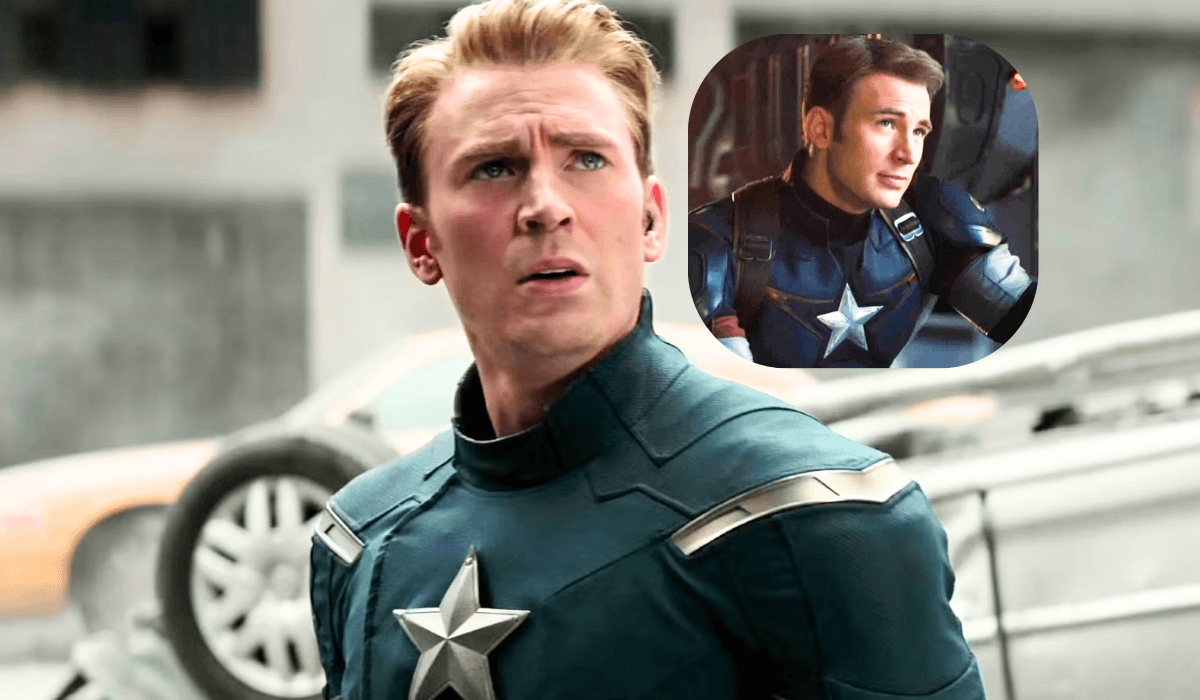
The 12 Year Streak Nobody Talks About
Here's a fact that gets overlooked in the excitement of Evans' return. Since Captain America: The Winter Soldier premiered in 2014, no other director has touched Steve Rogers' character arc. Joe Johnston launched the character in Captain America: The First Avenger back in 2011, establishing his origin story with competence and heart. But from 2014 forward, the Russos became the sole architects of everything that mattered in Rogers' journey.
Four films. Twelve years. One directorial vision.
Captain America: The Winter Soldier transformed Steve from a charming period piece hero into a morally complex modern protagonist. Captain America: Civil War challenged his unwavering principles. Avengers: Infinity War stripped away his certainty. Avengers: Endgame gave him the peaceful ending fans didn't know they needed. Now, with Doomsday set to premiere on December 18, 2026, the Russos are once again behind the camera to continue his story.
The brothers recently posted on Instagram about Evans' return, calling Steve Rogers "the character that changed our lives" and adding, "It was always going to come back to this." That statement carries weight. This level of creative continuity is virtually unheard of in modern franchise filmmaking.
How Marvel Broke Its Own Rules
Marvel Studios has built its empire on a rotating door of directorial talent. The strategy makes sense on paper. Different directors bring fresh perspectives, prevent creative burnout, and keep the universe feeling dynamic. Thor alone has been passed between three directors: Kenneth Branagh for the first film, Alan Taylor for The Dark World, and Taika Waititi for Ragnarok and Love and Thunder.
Spider-Man in the MCU? Jon Watts directed all three Tom Holland films, but that's because Sony and Marvel needed consistency for their unique co-production deal. Iron Man cycled from Jon Favreau to Shane Black. Doctor Strange went from Scott Derrickson to Sam Raimi when creative differences emerged.
Yet Steve Rogers became the exception to this rule. After Winter Soldier's massive critical and commercial success, Marvel made a choice. They didn't just bring the Russos back for Civil War. They handed them the keys to the entire Infinity Saga's climax, knowing Steve Rogers would be central to both Infinity War and Endgame.
Think about what that means. Marvel trusted these two filmmakers with not just one character's arc, but with maintaining narrative consistency across the franchise's most ambitious crossover events. The Russos directed Steve's story when he was leading his own films, and they continued directing his story when he shared the screen with 40 other heroes.
The Thor Comparison That Reveals Everything
Consider Thor's journey as a point of contrast. Branagh's first film in 2011 was solid but safe, a Shakespearean family drama wrapped in superhero spectacle. When Branagh declined to return due to time constraints, Marvel hired Alan Taylor for The Dark World. The result is widely considered the MCU's weakest entry, a film that even Taylor later expressed frustration with after studio interference in post-production.
Then came Waititi for Ragnarok, who completely reinvented Thor as a cosmic comedy. The character went from brooding Norse god to wise-cracking space warrior. Fans loved it. But Love and Thunder pushed Waititi's quirks too far, resulting in a tonally messy film that critics panned. As of January 2026, Love and Thunder sits at 65% on Rotten Tomatoes, making it the lowest rated Thor film and putting it just below The Dark World's 66%.
Thor has been creatively whiplashed across four films because three different directors had three different visions. Steve Rogers, by contrast, has enjoyed uninterrupted character development because the Russos understood him from day one and never let go.
The Russos didn't just maintain consistency. They deepened Rogers with each film. Winter Soldier questioned his faith in institutions. Civil War forced him to choose between law and loyalty. Infinity War showed him at his most defiant. Endgame gave him closure. Each film built on the last because the same creative minds were guiding the journey.
Why This Creative Monopoly Actually Worked
There's a compelling argument that the Russos' exclusive control over Steve Rogers is the reason he became the MCU's most complete character arc. They didn't have to spend time in each film re-establishing who Steve was or correcting course from a previous director's interpretation. They could skip straight to evolution.
Look at how they handled his moral compass. In Winter Soldier, Steve discovers that the organization he trusted, S.H.I.E.L.D., has been infiltrated by Hydra. His response is immediate and uncompromising: tear it all down. By Civil War, that same uncompromising nature puts him at odds with Tony Stark over the Sokovia Accords. The Russos didn't need to explain why Steve acts this way. They'd already shown us in the previous film.
This continuity extended to smaller details too. Steve's relationship with Bucky Barnes, his evolving dynamic with Natasha Romanoff, his quiet romance with Peggy Carter that finally paid off in Endgame. These threads wove through four films because the same directors were holding all the strings.
The Russos also understood something crucial about Steve Rogers that not every filmmaker might grasp. He's not interesting because he's morally perfect. He's interesting because his perfection creates conflict. He believes in absolute right and wrong in a world that deals in shades of grey. That core tension drove every major plot point in his arc, and it only worked because the Russos never wavered from it.
The Business Case For Director-Character Partnerships
From a studio perspective, Marvel's decision to keep the Russos on Steve Rogers makes brilliant sense. Winter Soldier earned critical acclaim and grossed $714.4 million worldwide against a $170 million budget. Why mess with that formula?
But it goes deeper than box office numbers. Audience investment in characters is what makes or breaks a franchise. People don't just want to see their favorite heroes. They want to see them grow, change, and earn their moments. That requires narrative consistency over time, which requires creative consistency behind the camera.
The Russos proved they could deliver both spectacle and character depth. Winter Soldier had groundbreaking action sequences, but it also had Steve's quiet scene with Peggy in the nursing home. Civil War staged an airport battle royale, but it ended with Tony realizing Steve was right all along. The filmmakers balanced blockbuster requirements with emotional storytelling.
Marvel recognized this and essentially gave them tenure. No other MCU director has helmed four films featuring the same lead character. Not Favreau with Iron Man. Not Waititi with Thor. The Russos' relationship with Steve Rogers represents a unique partnership built on trust, results, and a shared understanding of who the character is at his core.
The Risks Of Creative Exclusivity
Here's where my opinion diverges from pure celebration. While the Russos' stewardship of Steve Rogers produced the best possible version of the character, their monopoly also raises questions about creative diversity in franchise filmmaking.
Would a different director have found new layers to Steve Rogers that the Russos missed? Could fresh eyes have prevented some of the choices in Endgame that felt safe rather than bold? We'll never know, because Marvel never gave anyone else the chance.
There's also the question of precedent. If one director-character partnership works brilliantly, does that mean Marvel should pursue this model everywhere? That seems limiting. Part of what makes the MCU vibrant is its variety. James Gunn's Guardians of the Galaxy feels nothing like Ryan Coogler's Black Panther, and that's a strength, not a weakness.
The Russos themselves might have benefitted from a break too. Directing four massive films in six years, including back-to-back shoots for Infinity War and Endgame, is exhausting. Did the pressure to maintain consistency across all those projects prevent them from taking risks they might have otherwise taken?
What Steve's Return Tells Us About Marvel's Current Strategy
The teaser for Avengers: Doomsday, which premiered in theaters alongside Avatar: Fire and Ash before being released online on December 23, 2025, shows Steve Rogers as a father now. He arrives home on a motorcycle, holds a newborn baby, and contemplates his old Captain America suit, complete with wedding ring visible on his finger. He's living the quiet life he earned in Endgame's finale. But he's back, and the Russos are directing him.
This decision reveals Marvel's mindset as the Multiverse Saga stumbles toward its conclusion. The studio is in trouble. Phase Four and Five have been critically inconsistent. Audience enthusiasm has waned. Box office returns have disappointed. Marvel needs a sure thing, and the Russos directing Steve Rogers is as sure as it gets.
But there's a deeper implication here. By bringing back this proven creative partnership, Marvel is acknowledging that their scattershot approach to Phase Four didn't work. They tried giving more directors more freedom, and the results were mixed at best. The Eternals. Thor: Love and Thunder. Ant-Man and the Wasp: Quantumania. Each had passionate directors with distinct visions, and each divided audiences.
The Russos represent a return to the model that built the MCU into a juggernaut: trusted filmmakers with proven track records maintaining creative control over characters they understand deeply. It's playing it safe, yes. But after years of experimentation that didn't pay off, safe might be exactly what Marvel needs.
Why This Matters Beyond Steve Rogers
The 12-year Russo-Rogers partnership isn't just about one character or one franchise. It's a case study in how modern blockbuster filmmaking can balance creative vision with commercial demands.
Hollywood has spent the past decade trying to replicate Marvel's success, mostly by copying the surface-level formula: shared universes, interconnected storylines, end-credit scenes. But they've missed what actually made the Infinity Saga work. It wasn't just connectivity. It was the care taken with individual character arcs, the trust placed in filmmakers who proved they could deliver, and the willingness to let creative partnerships flourish when they worked.
The DC Extended Universe cycled through directors so rapidly that characters never had time to develop. Zack Snyder's vision for Superman was immediately contradicted by Joss Whedon's. Wonder Woman thrived under Patty Jenkins, then was mishandled in team-up films directed by others. There was no through-line because there was no consistency.
The Russos and Steve Rogers show what's possible when a studio commits to a creative team. Yes, it means less diversity of voice. Yes, it means missed opportunities for fresh perspectives. But it also means audiences get complete, satisfying character arcs that build logically from film to film.
The Unanswered Question
As Avengers: Doomsday approaches, one question looms large: should Marvel continue this model going forward?
My take is nuanced. The Russos' exclusive control over Steve Rogers worked because they were the right filmmakers for that specific character. They understood his moral complexity, his relationships, and his role in the larger MCU. But that doesn't mean every character needs a single directorial vision from start to finish.
Some characters benefit from reinvention. Thor needed Waititi to save him from mediocrity, even if the results were inconsistent. Doctor Strange gained new dimensions when Sam Raimi brought horror elements to Multiverse of Madness. Spider-Man worked under Jon Watts' singular vision, but he's also young enough that future films could explore him under different filmmakers.
The key is matching the character to the creative strategy. Steve Rogers' arc was always going to be about moral certainty in a changing world. That required consistency. Other characters have different needs.
What concerns me is Marvel might draw the wrong lesson from this. They might think the solution to their current struggles is simply bringing back past directors for their original characters, hoping nostalgia and familiarity will fix everything. That's not a creative strategy. That's desperation.
Looking Ahead To Doomsday
The teaser confirms that Steve has a wedding ring and a child, showing he lived out his life with Peggy Carter as Endgame revealed. Now something is pulling him back to the fight. Reports suggest he won't be taking up the Captain America mantle again, as that role now belongs to Anthony Mackie's Sam Wilson in Captain America: Brave New World. Instead, speculation suggests Steve might return in a different capacity, perhaps as a mentor or strategic leader rather than a frontline soldier.
Whatever role Steve plays in Doomsday, the Russos will shape it. And after 12 years, they've earned the trust that comes with that responsibility. They've proven they know this character better than anyone else in Hollywood.
But I hope Marvel Studios is paying attention to why this worked. It's not just about keeping the same directors. It's about finding filmmakers who genuinely understand and care about the characters they're directing, then giving them the freedom to tell complete stories without interference.
The Russo Brothers never let another director touch Steve Rogers in the 12 years since Winter Soldier because Marvel made a deliberate choice: prioritize creative consistency over variety for this one crucial character. The results speak for themselves. Steve Rogers became the MCU's most beloved hero, with arguably the most satisfying arc from beginning to end.
Now, on December 18, 2026, they're reuniting one more time. Whether that's a brilliant move or a dangerous reliance on past glories will depend on whether the Russos can find something new to say about a character they've already said so much about. But if anyone can do it, it's them. After 12 years, they've earned that chance.
And that's precisely why no one else has directed Steve Rogers since 2014. Not because Marvel forgot to rotate directors. But because they recognized something special was happening and chose not to ruin it.