The Friends You Keep During Rock Bottom Will Define Your Future

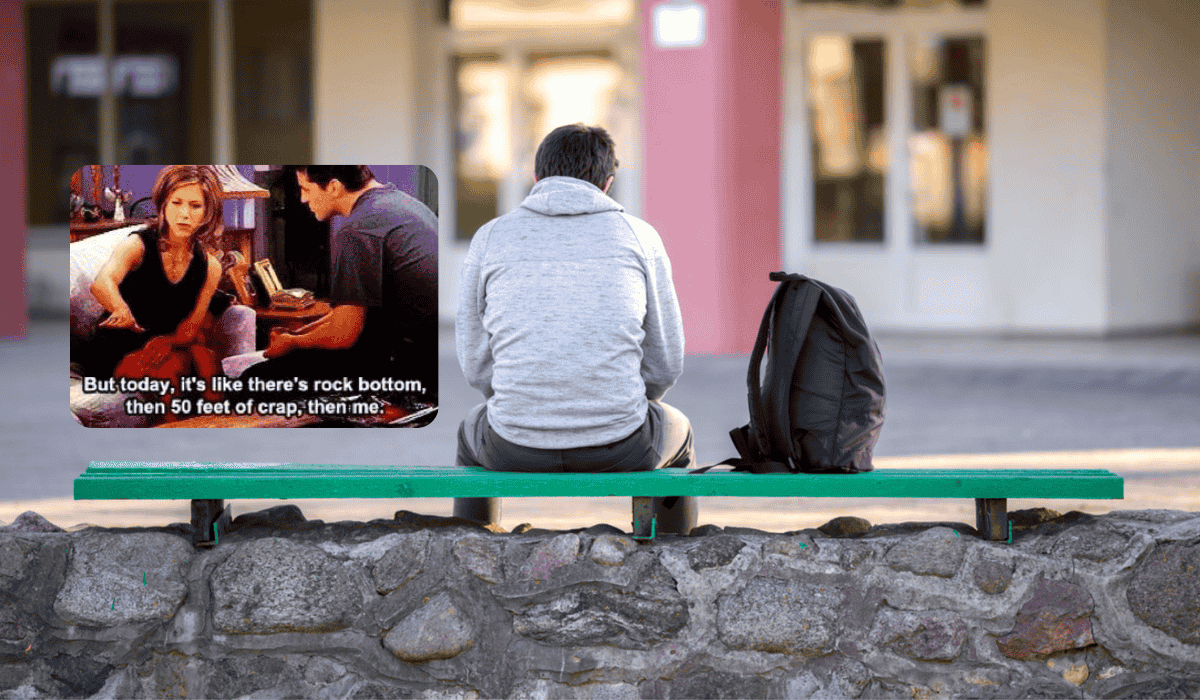
I lost everything in the span of six months. My job, my apartment, my relationship, and what felt like my entire sense of identity. At 32, I found myself sleeping on my sister's couch, unable to afford groceries, questioning every decision I'd ever made. Rock bottom wasn't a dramatic crash; it was a slow dissolution of everything I'd built, like watching a sandcastle get eroded by waves until nothing remained but wet sand.
That's when I discovered something that changed everything: the friends who stay when you have nothing left to offer are the ones who will shape the rest of your life.
I started that period with about 25 people I considered friends. I ended it with four. Those four people, the ones who showed up when I was at my absolute lowest, they didn't just help me survive rock bottom. They fundamentally altered the trajectory of my future in ways I'm still discovering years later.
This isn't a sentimental story about friendship being nice to have. This is about how the people who witness your worst moments and choose to stay anyway become the foundation for everything you build next. It's about how crisis doesn't just reveal character, it rewires relationships in ways that predict your entire future.
The Loneliness Epidemic Makes Rock Bottom Even More Isolating
Before we talk about the friends who stay, we need to acknowledge the brutal reality: we're living through what the U.S. Surgeon General has officially declared a loneliness epidemic. And when you hit rock bottom during an epidemic of disconnection, the isolation becomes exponentially worse.
The statistics are staggering and getting worse. According to 2024 data from the American Psychiatric Association, 30% of American adults experience feelings of loneliness at least once a week, while 10% report feeling lonely every single day. That's 52 million people experiencing daily loneliness in the United States alone.
Younger adults are suffering most acutely. Nearly 30% of Americans aged 18 to 34 report feeling lonely every day or several times a week. The loneliness people between ages 30 and 44, my age group during rock bottom, are the loneliest demographic, with 29% reporting feeling "frequently" or "always" lonely.
But here's what makes these numbers even more devastating: the percentage of adults reporting no close friends has quadrupled since 1990, jumping from 3% to 12%. Meanwhile, those reporting 10 or more close friends has plummeted from 33% to 13%. We're not just lonely; we're fundamentally disconnected in ways previous generations never experienced.
When I hit rock bottom in this cultural context, I was already operating from a baseline of relative isolation compared to what previous generations would have experienced. The 25 friends I thought I had? Most of them were really acquaintances maintained through occasional social media interactions and group events. When crisis forced me to need actual support rather than casual connection, the shallow foundation of most modern friendships became brutally apparent.
Research shows that single adults are nearly twice as likely to report weekly loneliness compared to married adults (39% versus 22%). As someone who lost my relationship as part of hitting rock bottom, I found myself in the loneliest possible demographic during the loneliest possible time in recent history. That convergence of personal crisis and cultural epidemic created an isolation so profound it felt like drowning in a room full of people.
Why Rock Bottom Is Actually a Gift (Though It Doesn't Feel Like One)
Rock bottom strips away everything superficial. All the performance, the image management, the careful curation of who you want people to think you are, all of that becomes impossible to maintain when you're struggling to function. You can't pretend to have your life together when you're crying at 3 PM on a Tuesday because you can't afford to replace your broken phone.
The version of yourself that emerges during rock bottom is the truest, most unfiltered version that exists. No pretense, no facade, just raw humanity in all its messy complexity. And the people who can handle that version, who can sit with you in that stripped-down state without flinching or pulling away, those people matter in ways that fair-weather friends never will.
Research from Harvard's Making Caring Common Project reveals that 21% of adults report serious feelings of loneliness, with many feeling disconnected not just from friends, but from family and the world itself. The study found that 81% of lonely adults also experience anxiety or depression, and 75% report little to no meaning or purpose in their lives. This interconnected web of suffering means that when you hit rock bottom, you're often dealing with multiple crises simultaneously, not just the external circumstances that brought you there.
During my rock bottom, I wasn't just dealing with job loss and financial crisis. I was simultaneously experiencing what researchers call "existential loneliness," a fundamental sense of disconnection from others and the world. About 65% of lonely people report feeling fundamentally separate from others, and 63% feel their place in the world doesn't feel important or relevant. That was exactly my experience, and it made everything exponentially harder.
But rock bottom accelerates a sorting process that needs to happen. You don't have time or energy for superficial relationships when you're barely surviving. Crisis forces efficiency. It separates the people who like you when things are easy from the people who love you regardless of circumstances.
During my rock bottom period, I couldn't maintain the friendships that required me to be fun, successful, or interesting. I had nothing to offer beyond my presence and my need. The friends who drifted away weren't bad people; they were people whose friendship was contingent on me bringing something to the table. When the table was empty, they left.
The four who stayed didn't need me to be anything other than alive. They didn't need me to be funny or successful or even pleasant to be around. They showed up because they'd decided I mattered, regardless of what I could contribute to their lives. That decision, that radical commitment to me as a person rather than me as a curated identity, that's what changed everything.
The Science of Crisis-Forged Friendships
There's actual neuroscience behind why friendships formed or strengthened during adversity are fundamentally different from friendships built during good times.
When you share vulnerability with someone, particularly during periods of significant stress, your brain releases oxytocin, the same bonding hormone released during childbirth and intimacy. This creates what researchers call "tend-and-befriend" bonding, a deep neurological connection that gets literally wired into your brain structure.
Studies on combat veterans have shown that friendships formed during shared trauma create bonds that often exceed even family relationships in terms of trust and loyalty. The Harvard Study of Adult Development, one of the longest-running studies on human happiness spanning over 85 years, found that the quality of our close relationships is the single biggest predictor of life satisfaction and longevity. Not wealth, not career success, not health, relationships.
But here's what's crucial: the study found that relationship quality matters exponentially more than quantity. Having one or two people you can truly count on during crisis predicts better outcomes than having dozens of casual connections.
Friendship has been described by researchers as a "psychological vaccine" against both physical and mental illness. The protective benefits come from emotional, tangible, and informational support provided during times of stress. Studies show that adults with strong social support networks have a 50% increased chance of living longer compared to those who are socially isolated. That's not a minor difference. That's the same magnitude of health benefit you'd get from quitting smoking.
My friend Sarah, one of the four who stayed, later told me something that crystallized this. She said: "I learned more about who you really are during those six months than in the previous ten years of friendship. Not because you changed, but because you finally stopped performing. And the person underneath all that performance? That's who I actually wanted to be friends with."
That stripping away of performance creates intimacy that's impossible to manufacture during good times. You can't fake or force the kind of bond that develops when someone sees you completely broken and chooses to sit in that brokenness with you.
The Specific Ways Rock Bottom Friends Show Up (And Why It Matters)
One thing nobody tells you about rock bottom is that different friends provide different types of essential support. The four who stayed for me each filled a unique role, and together they created a complete support system that allowed me to survive and eventually rebuild.
Sarah was my emotional processor. She was the friend who could sit with me while I cried for hours without trying to fix anything or make it stop. Research on active listening shows that feeling genuinely heard is often more therapeutic than receiving advice. Sarah understood this intuitively. She'd come over, sit on my sister's couch with me, and just listen while I spiraled through every fear and anxiety. She never said "everything happens for a reason" or "you'll be fine." She just witnessed my pain without trying to make it more comfortable for herself.
Studies show that this type of emotional support during crisis significantly reduces the impact of traumatic events by promoting faster recovery and preventing negative psychological effects. Sarah's willingness to sit in discomfort with me prevented my crisis from becoming a trauma that would affect me for decades.
Marcus was my truth-teller and reality checker. While Sarah held space for emotions, Marcus kept me connected to reality. When I'd spiral into catastrophic thinking, convinced I'd ruined my life forever, Marcus would gently challenge the distortions. Not in a toxic positivity way, but in a grounded, practical way. He'd say things like "You feel like you've ruined everything, and I understand why you feel that way. But objectively, you lost a job in an economy where people lose jobs. You're 32, not 72. You have time to rebuild."
Research indicates that having someone who provides honest feedback, even when uncomfortable, is one of the strongest predictors of personal growth and positive life changes. Marcus gave me perspective when I'd lost all ability to see beyond my immediate circumstances.
Dev was my practical support system. While others handled emotions and perspective, Dev handled logistics. He showed up with groceries without being asked. He helped me update my resume. He drove me to job interviews when I couldn't afford Uber. He lent me his old laptop when mine died. Studies show that tangible, practical support during crisis often matters more than emotional support because it removes immediate barriers to survival.
Dev taught me that love isn't just about feelings; it's about actions. He demonstrated that showing up means actually doing things, not just saying supportive words. That lesson changed how I understand friendship entirely.
Lisa was my hope holder. This role was perhaps the most crucial. When you're at rock bottom, you lose the ability to imagine a future. Lisa maintained that hope for me. She'd talk about plans we'd make once I got back on my feet, not as pressure but as gentle reminders that this state wasn't permanent. She'd say things like "When you're doing better, we should take that trip we always talked about." Not "if," but "when."
Research on hope theory demonstrates that hope isn't just optimism; it's the belief that you have both the willpower and pathways to reach your goals. When you're depressed, you lose both. Lisa maintained the belief in my capacity when I couldn't access it myself. She didn't just tell me I'd be okay; she acted as if my recovery was inevitable, treating my future self as already existing and just temporarily obscured.
Together, these four people created a comprehensive support system. I needed all four types of support, and remarkably, I had friends who could each provide what I needed most. That's not luck; that's the result of having invested in deep, differentiated relationships before crisis arrived.
How Rock Bottom Friends Change Your Future in Unexpected Ways
The friends who stay during rock bottom don't just provide emotional support. They fundamentally alter your life trajectory in ways that compound over years.
They become your truth-tellers. Once someone has seen you at your absolute worst, they can't unsee it. This creates a unique relationship dynamic where pretense becomes pointless. My friend Marcus, another rock bottom veteran, now functions as my bullshit detector. When I start spiraling into old patterns or making decisions based on fear rather than reality, he can call me out in ways that newer friends couldn't because he knows exactly where those patterns lead.
Research on social support shows that having someone who provides honest feedback, even when it's uncomfortable, is one of the strongest predictors of personal growth and positive life changes. But most people can't give or receive that level of honesty unless the relationship has been stress-tested through genuine crisis.
They expand your definition of success. Before rock bottom, I measured success the way society tells us to: career advancement, financial milestones, external validation. The friends who stayed during my lowest point didn't care about any of that. They celebrated when I showered three days in a row. They were proud when I applied for one job. They thought it was a major victory when I could laugh at something again.
That recalibration of what matters, that expansion of how to measure a life well-lived, it permanently changed my value system. Years later, I still measure success more by depth of connection and personal integrity than by external achievements. That shift came directly from people who valued me when I had nothing society considers valuable.
They become your model for how to show up. Watching how Sarah, Marcus, Dev, and Lisa showed up for me during rock bottom taught me how to show up for others during their crises. They modeled what sustainable support looks like, what boundaries preserve rather than destroy helping relationships, what true presence means versus performative care.
When other friends went through their own rock bottom moments later, I knew exactly how to show up because I'd experienced it from the receiving end. That wisdom, that embodied knowledge of what helps versus what hurts, I carry that into every relationship now. The friends who stayed during my rock bottom essentially trained me to be the kind of friend who stays during someone else's.
They prove that rock bottom isn't permanent. This might be the most important way rock bottom friends change your future: they hold hope when you can't. During my worst months, I genuinely believed I'd never recover, that I'd destroyed my life irreparably, that this broken version of myself was permanent.
My rock bottom friends didn't try to convince me otherwise. They didn't offer platitudes about how everything happens for a reason or how I'd be stronger on the other side. They just kept showing up, kept treating me like someone with a future, kept acting as if my current state was temporary even when I couldn't imagine any other reality.
Research on hope theory shows that hope isn't just optimism; it's the belief that you have both the willpower and the pathways to reach your goals. My friends maintained both when I had neither. They believed in my capacity to recover, and they practically demonstrated pathways forward through their consistent presence and support.
Years later, when I look at my life, most of the good things can be traced back to those four people holding hope for me when I couldn't hold it myself. The career I rebuilt, the healthier relationship patterns I developed, the confidence to take risks again, all of it grew from the foundation they maintained while I was incapable of maintaining anything.
The Uncomfortable Reality About Friendship Hierarchies
Here's something we don't talk about enough: American culture has created a hierarchy of relationships that places friendship somewhere near the bottom. Marriage, family, career, all of these rank higher than friendship in terms of where we're told to invest our time and energy.
The American Perspectives Survey found that 36% of Americans report having trouble maintaining their friendships, and researchers attribute this largely to how we prioritize relationships. We'll move across the country for a job without thinking twice about leaving friends behind. We'll skip friend gatherings for work events without hesitation. We treat friendship as disposable in ways we'd never treat romantic relationships or family bonds.
Rock bottom reveals how backward this hierarchy is.
When my life fell apart, my family meant well but couldn't actually help. They were too close, too scared, too invested in me being okay for their own emotional stability. My romantic relationship had been part of what fell apart. My career obviously couldn't save me because I didn't have one.
The only thing that kept me tethered to existence was friendship. Those four people who had no obligation to help, no genetic or legal bond forcing their involvement, they chose to show up purely because they'd decided I mattered. That choice, that daily recommitment to caring about someone who couldn't reciprocate, it was more powerful than any obligated relationship could be.
If I'd prioritized those friendships before rock bottom the way society told me to prioritize career and romance, I would have had stronger bonds to catch me when I fell. Instead, I learned this lesson the hard way: the friends you invest in during good times become the foundation that saves you during bad times.
Now, years removed from rock bottom, I structure my life around the opposite hierarchy. Friendship comes first. Career opportunities that would require me to move away from my core group? I turn them down. Romantic relationships that would require me to deprioritize my closest friends? Not interested. Work commitments that consistently prevent me from showing up for my people? I renegotiate them.
This isn't noble or selfless. It's pragmatic. I learned through direct experience that friendship is the most reliable predictor of surviving future crises, and I refuse to forget that lesson even though things are good now.
Why Most People Don't Recognize Rock Bottom Friends Until It's Too Late
The biggest mistake I see people make is not investing in deep friendships until they need them. They maintain large networks of casual connections, people they see occasionally, text sporadically, like on social media regularly. Then crisis hits, and they discover that none of those connections can hold real weight.
Research from Colorado State University found that while 75% of Americans report being satisfied with the number of friends they have, only 56% are happy with the time spent with friends, and 40% long for more closeness. We have enough friends numerically, but not enough deep relationships that can withstand stress.
Building the kind of friendships that survive rock bottom requires investment during times when you don't need them. It requires vulnerability when you're not in crisis, consistency when it would be easier to cancel plans, and depth of connection that feels unnecessary until it becomes essential.
I got lucky. The four friends who stayed during my rock bottom were people I'd invested in during good times, though not intentionally preparing for crisis. We'd had years of showing up for each other in small ways, building trust through consistent presence, practicing vulnerability in lower-stakes situations.
When rock bottom arrived, that foundation held because it had been stress-tested repeatedly at smaller scales. Sarah and I had already navigated conflicts and repairs. Marcus and I had already shared struggles and been honest about our limitations. Dev and Lisa had already seen me fail at things and hadn't judged or abandoned me.
Those micro-moments of trust-building during normal times created relationships that could handle the macro-crisis when it arrived. But I didn't do any of that strategically. I got lucky that the friendships I'd nurtured happened to be with people capable of showing up during genuine disaster.
Most people aren't that lucky. They invest just enough to maintain casual connections but never build the depth required for rock bottom support. Then when they need people most, they discover their friendship network can't bear that weight.
If you're reading this during good times, this is your warning: invest in deep friendship now. Not because you're preparing for rock bottom, but because having people who really know you, who've seen you in various states and chosen to stay, that's what makes ordinary life extraordinary long before crisis ever arrives.
The Friends Who Leave and Why It Actually Makes Sense
I started my rock bottom period with about 25 friends. Losing 21 of them hurt, but looking back, most of those losses made sense for reasons that had nothing to do with anyone being a bad person.
Some friendships were always activity-based. We bonded over work, or shared hobbies, or geographic proximity. When I lost my job, couldn't afford activities, and became emotionally unavailable, those friendships had no foundation left. We'd never built connection beyond the activity that initially brought us together.
Some friendships were reciprocity-based. We traded social capital, professional connections, or mutual entertainment. When I had nothing to offer, the transaction stopped making sense for either party. These relationships weren't fake; they just weren't built to survive imbalance.
Some people left because they couldn't handle watching me struggle. It triggered their own fears about instability, their own anxieties about life falling apart. Their departure wasn't about not caring; it was about self-preservation. Not everyone has the emotional capacity to witness someone else's suffering, especially when they can't fix it.
Some friendships were based on a specific version of me. The successful, fun, interesting version. When that version dissolved, so did the friendship because that's the only me they'd ever known or wanted to know. We'd never progressed past curated connection to authentic relationship.
Understanding why most people left helped me not take it personally. It also helped me appreciate why the four who stayed were different. They didn't stay because they're better people; they stayed because we'd built a different kind of friendship, one with foundations that extended beyond circumstances.
Research on friendship attrition shows that we lose about half our friend group every seven years. Friendships naturally contract and expand based on life circumstances, shared contexts, and evolving needs. Rock bottom just accelerates this natural selection process, compressing years of slow drift into months of rapid sorting.
The friends who left during my rock bottom would have probably drifted away eventually anyway. Rock bottom just made it happen faster and more obviously.
How Rock Bottom Friendships Predict Everything That Comes Next
Five years after my rock bottom period, I can draw direct lines from those four friendships to almost everything good in my current life.
Sarah introduced me to the person who became my business partner. Not because she was networking on my behalf, but because she knew both of us well enough to recognize we'd work well together. That introduction led to a career I love, financial stability, and purpose I didn't know I was capable of finding.
Marcus called me out when I started dating someone who exhibited the same red flags as my previous failed relationship. His willingness to risk our friendship by being honest prevented me from repeating destructive patterns. The relationship I'm in now, the healthy one, happened because Marcus cared enough to tell me hard truths.
Dev taught me how to ask for help, something I'd never been good at. Watching him ask for specific support during his own struggles gave me permission to do the same. That skill, asking clearly for what I need instead of suffering silently, it's changed every relationship and workplace interaction I've had since.
Lisa demonstrated what sustainable boundaries look like. She supported me during rock bottom while also maintaining her own life, her own limits, her own needs. She showed me that love doesn't require self-destruction, that you can care deeply about someone while also caring for yourself. That model transformed how I show up in all my relationships now.
None of this was intentional life-coaching. These were just four people being themselves, navigating their own lives while also making space for mine. But their presence during my most formative period, when I was essentially rebuilding myself from scratch, meant their values, their patterns, their ways of being in the world got woven into who I became next.
Research shows that we're the average of the five people we spend the most time with. During rock bottom, when I was most malleable, most open to influence because my old patterns had clearly failed, these four people were my entire social world. They didn't just influence who I became; they fundamentally shaped it.
Five years later, I look at my life and see their fingerprints everywhere. The way I communicate in relationships, the boundaries I maintain, the risks I'm willing to take, the way I define success, the people I choose to surround myself with, all of it traces back to those four people and what they modeled during my most vulnerable period.
What Rock Bottom Teaches You About What Actually Matters
Before rock bottom, I thought I knew what mattered. Career success, financial security, external validation, maintaining an image of having everything together. I optimized my life around these things, making decisions based on how they'd look to others rather than how they'd feel to live.
Rock bottom obliterated all of that. When you can't pay rent, career prestige means nothing. When you're depressed, external validation doesn't register. When you're broken, your image becomes impossible to maintain. All the things I'd thought mattered revealed themselves as hollow proxies for what actually sustains a human life.
What sustained me during rock bottom? Four people who showed up. That's it. Not money, though money would have helped. Not success, though success would have been nice. Not image, though image would have made things easier. Just four people who decided I was worth their time and presence even when I had nothing to offer in return.
That lesson, that visceral experience of what actually keeps you alive when everything else falls away, it permanently reordered my priorities in ways I hope I never forget.
I now make decisions based on whether they'll strengthen or weaken my core relationships. Career opportunities that would require moving away from my people? Not interested, regardless of prestige or pay. Social obligations that would prevent me from showing up for the friends who matter? I decline without guilt. Activities that look impressive but feel empty? I skip them in favor of low-key time with people I love.
This isn't martyrdom or selflessness. It's rational resource allocation based on empirical evidence about what actually matters when life gets hard. And life always gets hard again. Maybe not rock bottom hard, but hard enough that I'll need people I can count on.
The friends you keep during rock bottom teach you what's real versus what's performance. They teach you what sustains versus what impresses. They teach you what matters when nothing else does. And if you're paying attention, they teach you how to structure your entire life around what actually works rather than what society says should work.
The Ripple Effects You Don't See Coming
The most surprising thing about rock bottom friendships is how they affect not just your life, but the lives of everyone you encounter afterward.
Because I experienced deep friendship during crisis, I know how to provide it for others. When friends go through their own rock bottom moments now, I don't panic or pull away. I know exactly what helps because I've been on the receiving end. That knowledge gets paid forward, creating ripples of support that extend far beyond my immediate circle.
Because Sarah, Marcus, Dev, and Lisa modeled what good friendship looks like, I can recognize it in new relationships and invest accordingly. I can identify people with that capacity early and build with them intentionally. This means my friendship circle now consists entirely of people capable of showing up during hard times, not because I've tested them all through crisis, but because I've gotten better at recognizing the signs.
Because rock bottom taught me that authentic connection matters more than impressive connections, I show up differently in every relationship. I ask deeper questions. I share more honestly. I prioritize substance over surface. This creates relationships that are more satisfying even during ordinary times, not just during crisis.
Research from the Harvard Study of Adult Development found that people who maintain close relationships throughout their lives are not only happier and healthier, but they also contribute more to their communities and inspire better relationships in the people around them. Good relationships create positive feedback loops that extend beyond any individual friendship.
My rock bottom friends didn't just save me. They set in motion patterns that have affected everyone I've interacted with since. The colleague I mentored through a career transition, the neighbor I supported through divorce, the friend-of-a-friend I connected to resources during their own struggle, all of those interactions happened because I learned how to show up from people who showed up for me.
That's the hidden gift of rock bottom friendships. They don't just change your trajectory. They change the trajectory of everyone you touch afterward, creating ripples that extend further than you'll ever see or measure.
What To Do When You're At Rock Bottom Right Now
If you're reading this while experiencing your own rock bottom, here's what I wish someone had told me:
The friends who leave don't define your worth. They're revealing the limitations of those specific relationships, not making a statement about your value as a human being. Let them go without bitterness. They're making space for the people who can actually handle this version of you.
The friends who stay are giving you the greatest gift anyone can give: unconditional presence during conditional times. Receive it without guilt, without feeling like you're a burden, without constantly apologizing. They've chosen this. Honor their choice by letting them support you.
Pay attention to who stays and how they stay. This information is precious. These people are showing you who they really are at their core, and you should believe them. When life stabilizes, remember this. Don't deprioritize these relationships once you don't need them anymore. That's how people end up alone during their next crisis.
It feels like rock bottom will last forever. It won't. But the relationships forged during this period will last far beyond it. Invest in them. Be honest with these people. Let them see you without pretense. The vulnerability you're forced into right now is actually creating the foundation for the strongest relationships of your life.
Your rock bottom friends aren't just helping you survive this moment. They're literally shaping who you'll become once you emerge from it. Let them influence you. Learn from how they show up. Study what they value, how they set boundaries, what they prioritize. You're being mentored in what actually matters, even if it doesn't feel like mentorship.
Take notes, either literally or mentally, about who shows up and how. You will forget specifics as time passes. You will be tempted to return to old patterns once things improve. Written or mental records of who was there and how they were there will serve as touchstones later, reminding you what real friendship looks like when memory gets fuzzy.
What To Do When Times Are Good
If you're reading this during a good period, this is your chance to build the foundation that will hold you during the next hard period. Because there will be another hard period. Life is cyclical, containing both peaks and valleys. The relationships you build during peaks determine whether you survive valleys.
Invest in depth over breadth. Research shows that having even one or two genuinely close friends predicts better outcomes than having dozens of casual connections. Stop collecting friends and start cultivating relationships. Quality overwhelms quantity in every metric that matters.
Practice vulnerability during low-stakes situations. Share struggles that feel small or embarrassing. Ask for help when you don't desperately need it. Let people see imperfect versions of you before crisis forces your hand. This stress-tests relationships and builds trust incrementally, preparing both parties for potential bigger challenges.
Show up for other people's hard times. This does two things: it teaches you how to be present during crisis, and it demonstrates to friends that you're capable of staying when things get difficult. Rock bottom friendships are reciprocal. The people who stay for you are often the people you've stayed for first.
Prioritize friendship even when it feels optional. Americans spend an average of only 30 minutes per day maintaining friendships by middle age, down from two hours per day at age 18. That's not enough to build or maintain relationships that can handle real weight. Treat friendship time as non-negotiable as work time or family time.
Challenge the cultural hierarchy that places friendship below career and romance. Your friends might be the only thing standing between you and complete dissolution during your next crisis. Treat them accordingly. Make career decisions that don't require abandoning your people. Choose romantic partners who understand that your friendships aren't negotiable.
The Truth About Rock Bottom and Future Success
Here's what five years post-rock bottom has taught me: the lowest point of your life isn't a tragedy to recover from. It's information about what's real, who's real, and what actually matters. The friends who stay during that period aren't just helping you survive. They're literally defining what's possible for your future.
Every good thing in my life now can be traced back to those four people and what they made possible through their presence. They didn't save me dramatically or fix my problems. They just consistently showed up, held space, and reminded me through their actions that I was someone worth showing up for.
That gift, that radical act of choosing someone when they have nothing to offer, it reverberates through everything that comes after. It changes how you see yourself, what you believe you deserve, what you're capable of building, and what you're willing to risk.
The friends you keep during rock bottom don't just define your future. They become your future, woven into every good thing that follows. Choose them wisely during good times. Honor them fiercely during bad times. And never forget that connection, genuine human connection with people who see you clearly and choose you anyway, that's the only thing that actually saves anyone.
Your rock bottom friends aren't just helping you survive. They're teaching you how to live in ways that will matter long after the crisis passes. Pay attention. That lesson might be the most valuable thing you ever learn.
Related Read: How To Recognize When Someone Is Quietly Suffering (And What To Actually Do)