Why The Friends Who Stay During Your Darkest Days Are Your Real Family

I used to think family was defined by blood. Then I spent six months on my bathroom floor crying at 3 AM while my best friend sat outside the door, not saying anything, just being there. That's when I learned that family is actually defined by who shows up when you're at your absolute worst.
We live in a culture that celebrates fair-weather friendships. Instagram is full of brunch photos and girls' trip selfies, but nobody posts the unglamorous reality of holding someone's hand through a panic attack or listening to the same heartbreak story for the fourteenth time. Yet those invisible moments, the ones that never make it to social media, those are what separate acquaintances from real family.
The Mathematics of Friendship Nobody Teaches You
Here's what I've learned after three decades on this planet: you'll meet hundreds of people who want to be around for your highlight reel. Maybe a dozen will stick around for your behind-the-scenes footage. But only a handful, maybe two or three if you're incredibly lucky, will stay for the deleted scenes, the ones where you're unwashed, unhinged, and deeply unpleasant to be around.
Those are your people. Those are your family.
I had about twenty friends I considered close before my life imploded two years ago. A breakup, a job loss, and a parent's health crisis all happened within four months. I became a black hole of negativity, the friend who couldn't stop crying, who cancelled plans constantly, who had nothing positive to contribute to any conversation.
Seventeen of those twenty friends slowly disappeared. They didn't announce their departure or have dramatic falling outs with me. They just stopped texting back as quickly. Started having prior commitments when I reached out. Their empathy had an expiration date, and I had exceeded it.
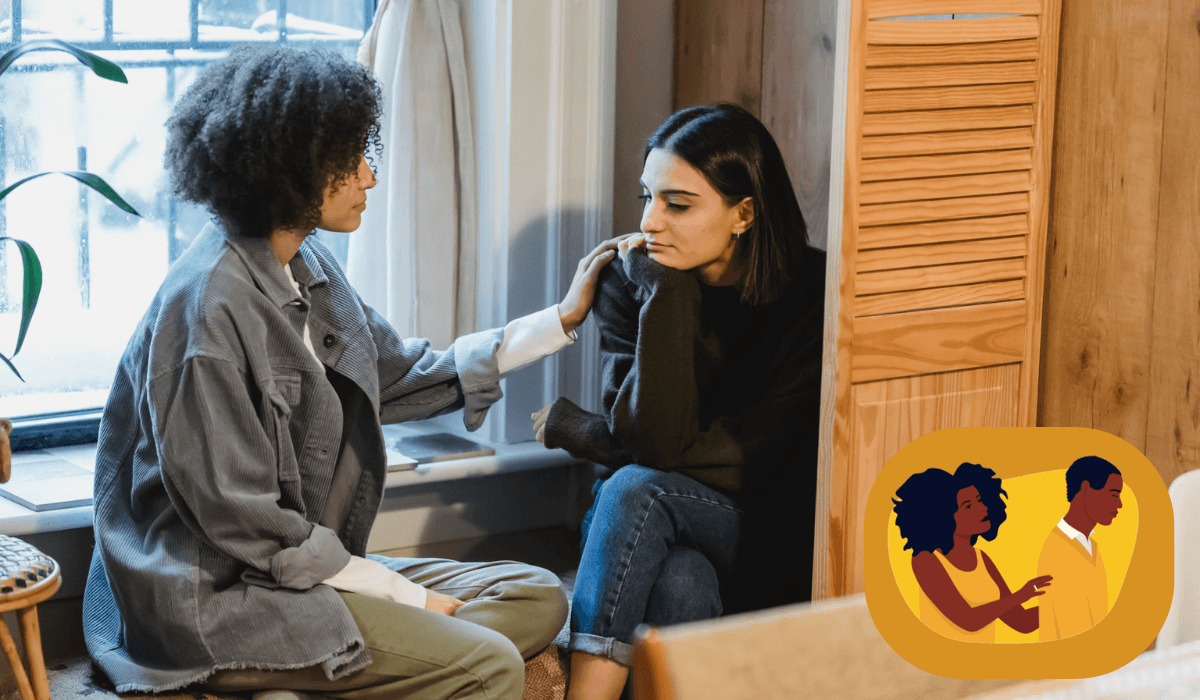
The three who stayed? They became more present than ever. One started showing up at my apartment unannounced with groceries because she knew I wasn't eating. Another sent me daily memes, not expecting responses, just reminding me that life could still be absurd and funny. The third called every Sunday morning without fail, even when I answered the phone crying or didn't answer at all.
Those three taught me what family actually means.
Why Most People Run When Things Get Hard
Let's be brutally honest about why most friendships don't survive hard times. Being around someone who's genuinely struggling is uncomfortable, inconvenient, and emotionally exhausting. It forces you to confront your own vulnerabilities and acknowledge that stability is temporary and life can fall apart for anyone, including you.
Most people aren't equipped to handle that existential discomfort. They've been raised on toxic positivity, taught that negative emotions are problems to fix rather than experiences to witness. When you can't be fixed quickly, when you don't bounce back on their timeline, when your darkness doesn't respond to their pep talks and solutions, they feel helpless. And rather than sit in that helplessness with you, they leave.
I don't entirely blame them anymore. Staying requires a specific kind of emotional maturity that most people simply haven't developed. It requires accepting that you can't fix someone, that your presence matters more than your advice, and that love sometimes looks like sitting in silence while someone falls apart.
Research from the Journal of Social and Personal Relationships confirms what many of us know intuitively: friendships face their greatest test during prolonged stress. Studies show that approximately 70% of friendships don't survive a major life crisis, particularly when that crisis extends beyond six months. The human brain is wired for problem-solving, and when someone's pain can't be solved quickly, most people's natural instinct is to withdraw rather than witness.
That's hard work. It offers no immediate gratification, no visible results, no social media validation. The friends who stay are doing invisible labor that our culture doesn't recognize or reward. They're giving their time, emotional energy, and mental space to someone who can't currently reciprocate. That takes a level of selflessness that's genuinely rare.
How Modern Culture Has Made Deep Friendship Nearly Impossible
We need to talk about why these ride-or-die friendships are becoming increasingly rare, especially among Millennials and Gen Z. We're the generations with the most "friends" on social media and the deepest loneliness crisis in recorded history. That's not a coincidence.
Social media has taught us to perform friendship rather than practice it. We've learned to celebrate each other's wins publicly while privately struggling to show up for each other's losses. We curate connection instead of cultivating it. We're so busy documenting our friendships that we forget to actually live them.
Add to this our collective obsession with productivity and hustle culture, and you get a generation that views friendship as something that should fit conveniently into our optimized schedules. We want friendships that enhance our lives without disrupting them. Supporting someone through months of depression? That disrupts everything. It's messy, time-consuming, and offers zero return on investment by capitalism's metrics.
The pandemic made this worse. We got used to isolation, learned to meet our social needs through screens, and lost practice in the vulnerability required for deep friendship. Many of us emerged from lockdown having forgotten how to show up for people in person, how to sit with discomfort, how to be present when presence is all we have to offer.
Geographic mobility hasn't helped either. Our parents' generation often lived near childhood friends for life. We move for jobs, relationships, opportunities, adventure. We're scattered across cities and countries, connected digitally but distant physically. When crisis hits, your support system might be in three different time zones. Try having a 3 AM breakdown when your closest friend lives 2,000 miles away.
I think this is why finding friends who truly stay feels increasingly miraculous. We're fighting against every cultural force designed to keep relationships superficial and transactional.
The Gift of Being Seen at Your Worst
There's something profoundly transformative about having someone witness you at your lowest and choose to stay anyway. It rewires your understanding of worthiness and belonging. You realize your value isn't conditional on being happy, successful, or easy to be around. You're worthy of love and connection even when you're broken, even when you have nothing to give back, even when you're frankly kind of terrible to be around.
My friend Sarah saw me at my absolute worst. I was mean, self-pitying, and drowning in self-destructive behavior. I pushed her away repeatedly, told her I was fine when I clearly wasn't, and tested her patience in ways I'm still embarrassed to remember. She never took the bait. She'd just say, "I know you're hurting, and I'm not going anywhere."
That consistency, that refusal to abandon me even when I was trying to push her away, it saved my life. I'm not being dramatic. I genuinely don't know if I would have made it through that period without someone anchoring me to the world, reminding me that I mattered even when I couldn't see it myself.
When someone loves you through your darkness, they give you permission to be human. They prove that you don't have to be perfect or pleasant or positive to deserve connection. They demolish the lie that you have to earn love through performance.
Psychologists call this "unconditional positive regard," and research shows it's one of the most powerful predictors of mental health recovery. When someone consistently shows up without judgment, without trying to fix you, without withdrawing their affection based on your emotional state, it creates what attachment theorists call a "secure base." You learn that you can fall apart without falling away from connection. That safety becomes the foundation for healing.
Different Types of Staying (And Why They All Matter)
Here's something I wish I'd understood earlier: not everyone shows up the same way, and that doesn't make their support less valuable. I used to think that if someone wasn't visiting me daily or having deep emotional conversations, they weren't really there for me. I was wrong.
My friend Marcus never said much during my crisis. He didn't ask how I was feeling or try to process my emotions with me. But every Saturday, without fail, he'd show up and say, "We're going for a walk." Sometimes I'd talk, sometimes we'd walk in silence for an hour. He never pushed, never required anything from me. His consistency and physical presence said everything words couldn't.
Meanwhile, my friend Jessica was the opposite. She'd call and specifically ask me to tell her the worst parts, the things I was afraid to say out loud. She'd sit on the phone with me for hours while I spiraled, never trying to talk me out of my feelings, just witnessing them with me. She made my darkness less lonely by sharing the space.
Then there was Alex, who handled my crisis by trying to make me laugh. He'd send ridiculous videos, show up with takeout and stupid movies, and refuse to let me take myself too seriously. At first, I thought he was minimizing my pain. Eventually, I realized he was reminding me that joy could still exist even when everything felt dark. He was the counterbalance I needed.
All three of these friends were staying, just in completely different ways. Marcus provided grounding presence. Jessica provided emotional processing. Alex provided lightness and perspective. I needed all three types of support, and if I'd dismissed any of them for not showing up the "right" way, I would have lost something essential.
The lesson? Stop judging how people show up and start appreciating that they show up at all. Some friends are built for deep emotional conversations. Others show love through action, humor, or quiet companionship. All of it matters. All of it counts as staying.
How to Be the Friend Who Stays (When You Have No Idea What You're Doing)
If you have a friend who's drowning right now and you want to be the person who stays but don't know how, here's what I learned from being on the receiving end.
Do this:
- Show up without being asked. Don't wait for them to reach out. Depressed people don't reach out.
- Be specific with offers. "Let me know if you need anything" requires too much energy. Say "I'm bringing dinner Tuesday at 6" instead.
- Accept that you can't fix this. Your job isn't to solve their problems or make them feel better. Your job is to be present.
- Check in regularly without expecting responses. Send a text saying "Thinking of you" and don't get offended if they don't reply for three days.
- Normalize the mess. Don't try to clean up their apartment or their life unless they specifically ask. Sometimes people need to sit in the mess for a while.
- Be consistent. Show up on the same day every week. Call at the same time. Consistency becomes the anchor when everything else feels chaotic.
- Remember the small details. They mentioned they have a doctor's appointment Tuesday? Check in after it. Those details prove you're paying attention.
Don't do this:
- Don't say "Everything happens for a reason" or any variation of toxic positivity. Sometimes things just suck and there's no deeper meaning.
- Don't compare their struggle to someone who has it worse. Pain isn't a competition.
- Don't take their isolation personally. When they cancel plans or don't respond, it's not about you. It's about survival.
- Don't expect gratitude or acknowledgment. They're barely surviving. They don't have energy for thank-you notes.
- Don't tell them what they should be doing differently. They already know. Judgment doesn't help.
- Don't disappear if they don't get better on your timeline. Real support means staying even when progress is invisible.
- Don't make it about you. Don't talk about how hard it is to watch them struggle or how worried you are. Save that for your own support system.
- The most important thing I learned? Your friend doesn't need you to say the right thing. They need you to show up consistently and not leave. That's it. That's the whole job.
If You're Reading This While Drowning
If you're the person in crisis right now, if you're reading this while barely holding on, I need you to hear something: you are not a burden. You are not too much. You are not draining your friends by needing support.
I know you feel like you are. I know you're apologizing constantly, canceling plans because you can't fake being okay, avoiding people because you can't stand being the friend who's always falling apart. I know you're terrified that everyone will eventually get tired of you and leave.
Some people will leave. That's true, and I won't lie to you about it. Some people you thought would stay will disappear, and it will hurt like hell. But that's information. They're showing you who they are, and while it's painful, it's also useful. You're not losing real friends; you're discovering which friendships were never built to last.
The people who stay? Let them. Stop trying to protect them from your pain or minimize what you're going through to make it easier for them to handle. They're adults who can make their own choices. If they choose to stay, trust that choice. Honor it by being honest about what you're experiencing.
You don't have to be a "good" patient or a "grateful" friend who's always appreciative and never difficult. You can be messy, complicated, and hard to deal with. Real friends can handle it. They're not staying because you're making it easy or pleasant for them. They're staying because they love you, and love isn't conditional on you being easy to love.
Here's what you can do right now:
- Text one person. Just one. Say "I'm not okay." That's enough.
- Accept help when it's offered. If someone brings you food, take it. If someone offers to sit with you, let them.
- Stop apologizing for needing support. You'd support them if roles were reversed. Let them do the same for you.
- Remember that this is temporary. You won't feel this way forever, even though right now it feels permanent.
- Your value isn't determined by your productivity, positivity, or ability to be "fine." You matter simply because you exist.
- The friends who love you don't need you to be okay. They need you to be honest. They need you to stay alive. Everything else is negotiable.
The Dark Side Nobody Talks About (When Staying Becomes Harmful)
Now for the complicated truth that makes people uncomfortable: sometimes staying is the wrong choice. Sometimes what looks like loyal friendship is actually codependency, enabling, or self-destruction. We need to talk about this because it's the nuance that gets lost in inspirational friendship posts.
I learned this the hard way with a friend I'll call Maya. She was struggling with addiction and mental health issues, and I was determined to be the friend who didn't give up on her. For two years, I answered every 2 AM crisis call, cleaned up every mess, covered for every broken promise. I told myself I was being a good friend, the one who stays.
I was actually enabling her self-destruction while destroying my own mental health in the process.
Here's what I should have known: being supportive doesn't mean having no boundaries. Staying doesn't mean sacrificing yourself. Love doesn't require self-destruction.
Compassion fatigue is real. Caregiver burnout is real. You can love someone deeply and still need to step back for your own survival. That's not abandonment; that's self-preservation. And sometimes, stepping back is actually the most loving thing you can do because it stops you from enabling harmful behavior.
Red flags that "staying" has become harmful:
- You're neglecting your own mental health, relationships, work, or responsibilities to support them
- They're actively engaging in destructive behavior and your support allows them to avoid consequences
- They only contact you during crises and disappear when things stabilize
You feel resentful but guilty for feeling resentful - Your relationship has become entirely one-directional with no reciprocity or appreciation
- They reject every suggestion or resource while continuing to demand your time and energy
- You're making excuses for behavior you'd never tolerate from anyone else
Other people in your life are expressing concern about how this friendship is affecting you
I want to be crystal clear about something: you can love someone and still need to let them go. You can care deeply about someone's wellbeing while recognizing you're not equipped to help them. You can hope someone gets better while acknowledging you can't be the one to save them.
The friends who truly stay understand this distinction. They support without enabling. They show up without sacrificing themselves. They maintain boundaries that protect both people in the friendship.
If you've had to step back from someone who was struggling, that doesn't necessarily make you a bad friend. Sometimes it makes you the person with enough self-awareness to recognize when staying had become destructive for both of you. That takes courage too.
When You're the One Who Left (And Why That Might Be Okay)
This is going to make some people uncomfortable, but it needs saying: not everyone who leaves a struggling friend is abandoning them. Sometimes leaving is an act of honesty and self-preservation, not betrayal.
Maybe you left because you were dealing with your own mental health crisis and couldn't hold space for someone else's darkness while drowning in your own. Maybe you left because the friendship had become toxic and one-sided. Maybe you left because you recognized you weren't equipped to provide the kind of support they needed, and staying would have been performative rather than helpful.
Maybe you left because you were 23 years old with no emotional regulation skills of your own, working two jobs, barely surviving, and you just didn't have the capacity. Maybe you left because the person struggling was also treating you terribly and you needed to protect yourself. Maybe you left because you tried everything you could think of and nothing worked and you were burning out completely.
If that's you, if you're reading this carrying guilt about walking away from someone who needed you, I want you to consider something: your presence might not have been what they needed. Sometimes people need professional help, not friend help. Sometimes people need space to hit bottom before they can start climbing back up. Sometimes people need to learn that their behavior has consequences, and those consequences include losing relationships.
I'm not saying every exit is justified. Some people absolutely do abandon friends when things get hard simply because discomfort is inconvenient. But not all leaving is abandonment. Sometimes it's survival. Sometimes it's boundaries. Sometimes it's recognizing that you're not the right person for this particular crisis.
The question to ask yourself isn't "Should I have stayed?" It's "Did I leave with honesty and kindness, or did I ghost someone who trusted me?" There's a difference between setting a boundary and disappearing without explanation.
If you need to step back from someone who's struggling, you owe them honesty. A conversation that says "I care about you, but I'm not in a place where I can provide the support you need right now" is infinitely better than slowly fading away while they wonder what they did wrong.
Your mental health matters too. Your capacity matters. Your limitations are real and valid. Being a good person doesn't require self-destruction, and friendship isn't a suicide pact where you both drown together.
How Friendships Change After the Storm Passes
Here's what nobody tells you about friends who stay through darkness: the relationship after recovery is complicated in ways you don't expect. The dynamic has fundamentally changed, and figuring out the new normal is often harder than surviving the crisis itself.
When I finally started feeling better, I struggled with intense guilt about how much I'd taken from my friends. I didn't know how to be around them without feeling like I owed them something. Every interaction felt weighted with this unspoken debt I could never repay.
My friend Sarah finally got frustrated and said, "You keep treating me like a caretaker you need to thank instead of a friend you can just be with. I don't want gratitude, I want you back."
That hit hard because she was right. I was so focused on acknowledging what she'd done for me that I'd forgotten how to just be her friend. I was performing gratitude instead of living friendship.
Renegotiating the relationship post-crisis requires both people to be intentional. The person who was struggling needs to remember that their friend wants a reciprocal relationship again, not endless thank-yous. The friend who provided support needs to give grace as both people figure out the new dynamic.
Some friendships actually grow stronger through shared crisis. When you've witnessed someone at their absolute worst and they've witnessed you carrying them through it, there's an intimacy and trust that's unshakeable. You've stress-tested the relationship and it held. That bond runs deeper than friendships that have never been tested.
But some friendships don't survive the transition back to normal. Sometimes the person who was struggling feels too vulnerable around the friends who saw them at their worst. Sometimes the friend who provided support gets stuck in caretaker mode and struggles to relate to the person as an equal again. Sometimes the crisis becomes the defining feature of the relationship and neither person knows how to move past it.
I've experienced both. The three friends who stayed during my breakdown are now closer to me than anyone else in my life. But I also had one friendship that couldn't survive the recovery period. We'd bonded so intensely over my crisis that when I got better, we didn't know how to connect anymore. Letting that friendship fade was painful but necessary.
If you're navigating this transition, here's what helped me:
- Have explicit conversations about how the dynamic is changing
- Find new shared experiences that aren't centered on crisis
- Let your friend see you strong, not just broken
- Accept that you might need to grieve the crisis-era friendship to build a new, healthier one
- Be patient. Figuring out the new normal takes time.
The goal isn't to go back to how things were before. You can't. You're both different now. The goal is to build something new that honors what you've been through while allowing both of you to grow beyond it.
Why These Friendships Transcend Blood Family
I love my biological family, but they weren't the ones who saved me during my darkest period. They tried, but they were too close, too scared, too invested in fixing me quickly because my pain caused them pain. They couldn't sit in the mess with me because my mess triggered their own fears and anxieties.
My chosen family, the friends who stayed, they had enough distance to witness my struggle without drowning in it themselves. They could hold space for my pain without making it about them. They could love me without needing me to be okay for their own emotional stability.
This is why chosen family often understands us better than blood family ever could. They choose us knowing exactly who we are, flaws and darkness included. There's no obligation, no guilt, no shared history forcing connection. They stay purely because they want to, because something about your soul resonates with theirs, because they've decided you're worth fighting for even when you've stopped fighting for yourself.
My biological family loves me because they're supposed to. My chosen family loves me because they've decided to, over and over again, through situations where leaving would have been easier and perfectly understandable. That choice, that daily recommitment to showing up, it means everything.
There's also less baggage with chosen family. Your friends didn't shape your childhood wounds, didn't contribute to your insecurities, aren't carrying decades of complicated history that colors every interaction. They see you as you are now, not as the child you were or the person they need you to be.
My parents wanted me to get better quickly because watching me suffer was unbearable for them. They needed me to be okay so they could stop worrying. That's love, but it's also pressure. My friends could sit with me being not okay indefinitely because my emotional state didn't directly impact their wellbeing in the same way.
This isn't about biology being bad and chosen family being good. It's about different types of love serving different purposes. Your family's intense, anxious love might not be what you need during crisis. Your friends' steadier, less personally invested love might be exactly the support that allows healing.
The Reciprocity That Eventually Comes
Here's what nobody tells you about the friends who stay through darkness: eventually, you get your chance to return the favor. Life comes for everyone eventually. The friend who held your hand through depression will face their own crisis. The one who dragged you out of isolation will need dragging themselves someday. The relationship balances out, just over years instead of weeks.
Two years after my breakdown, Sarah's life fell apart. Her marriage ended, she lost her job, and she spiraled into the same kind of darkness she'd helped me through. This time, I was the one showing up unannounced, sending daily check-ins, calling every Sunday. I was the one saying "I'm not going anywhere" when she tried to push me away.
Being on the other side taught me something crucial: helping someone you love isn't a sacrifice, it's a privilege. I wasn't paying back a debt. I was honored to be the person she trusted enough to fall apart in front of. Her vulnerability was a gift, her willingness to let me support her was proof of how deep our bond had become.
That's what real family understands. Supporting each other through hard times isn't keeping score or paying off emotional loans. It's the foundation of love itself, the proof that the relationship can withstand real life instead of just existing during the easy parts.
I also discovered that I'd learned how to show up in ways I wouldn't have known before my own crisis. I knew which platitudes were useless. I knew when to offer distraction versus when to sit in the darkness. I knew that bringing food matters more than sending encouraging texts. My own suffering had taught me how to witness someone else's without trying to fix it.
This is the cycle of real friendship. We take turns carrying each other. Sometimes you're strong enough to hold someone up, sometimes you're the one who needs holding. It balances over a lifetime, not week by week. And the longer you're friends, the more turns each person gets, until the whole concept of owing becomes irrelevant because you've both given and received so much.
How This Changes Your Definition of Success
Society measures success in promotions, possessions, achievements, and social media metrics. None of that matters when you're on your bathroom floor at 3 AM questioning whether life is worth living. What matters then, what measures real success, is whether you have people who will sit outside that bathroom door until you're ready to come out.
I used to think I was successful because I had a good job, a nice apartment, and an active social life. My breakdown stripped all that away and revealed what actually mattered: the three friends who stayed when everyone else left. Those three relationships represent more genuine success than anything I'd achieved professionally or accumulated materially.
This realization transformed how I evaluate my life. I stopped measuring success by external achievements and started measuring it by depth of connection. I stopped collecting acquaintances and started investing deeply in a few real relationships. I stopped performing happiness on social media and started being honest about struggles with people I trusted.
The result? My life looks smaller from the outside. I have fewer friends, less social activity, a quieter existence. But it's infinitely richer. The relationships I have now are unshakeable. I know exactly who my people are because they've proven it during the times that mattered most.
I think about my grandfather, who died surrounded by three friends he'd known for sixty years. Those men had witnessed every triumph and disaster of his life. They'd carried his casket at family funerals, celebrated his children's weddings, sat with him through his wife's cancer treatment. At his funeral, one of them said, "We buried a lot of years together." That's success. That's a life well-lived.
Meanwhile, I think about people I know who have hundreds of social media friends, packed calendars, and constant social activity, but couldn't name a single person they'd call during a genuine crisis. They're succeeding by every conventional metric while being profoundly alone. That's not success; that's performance.
The pandemic revealed this truth en masse. When lockdowns forced everyone into isolation, we discovered who actually checked in, who we actually wanted to talk to, and which relationships were only sustained by proximity and convenience. A lot of people realized their "friend groups" were really just activity partners, and when the activities stopped, so did the relationships.
I'm not saying professional achievement or material success don't matter. But they matter a lot less than we're taught to believe. You can replace jobs, possessions, and achievements. You can't replace people who love you through your worst days and celebrate your best ones. That's the currency that actually counts.
What This Means for How You Show Up
If you've been lucky enough to have friends who stayed during your darkest days, you have one job: become that person for someone else. Pay forward the gift of unwavering presence. Be the friend who refuses to give up when someone is spiraling. Sit in the discomfort of witnessing someone's pain without trying to fix it. Show up even when it's inconvenient, even when you get nothing in return, even when the person you're supporting pushes you away.
This is how real family is built, through crisis survived together, through darkness witnessed and survived. Not through shared interests or proximity or convenience, but through choosing each other repeatedly when choosing each other is hard.
But do it wisely. Remember the difference between support and enabling. Remember that your own mental health matters. Remember that you can't save everyone, and trying to will only destroy you. Pick your people carefully, invest deeply in a few rather than spreading yourself thin across many, and show up for those few with everything you have.
I'm not the same person I was before my breakdown. That period of darkness burned away every superficial relationship and revealed who my real family was. The three friends who stayed became my anchors, my chosen siblings, the people I'd trust with my life because they've already proven they're trustworthy when everything else falls apart.
If you have even one person like this in your life, you're richer than most people who have everything else. If you haven't found them yet, keep looking and be worthy of being found. Become the person who stays, and you'll attract people who stay. Build your family intentionally, through shared struggle and mutual commitment to showing up even when showing up is hard.
Because blood doesn't make family. Showing up does. Staying does. Choosing each other through the darkness does. That's what makes family real.
And if you're in a place where you need to be carried right now, let yourself be carried. The people who love you aren't keeping score. They're just hoping you'll stick around long enough to carry them when their turn comes. That's the deal. That's the whole beautiful, messy deal.
Related Read: The Uncomfortable Truth About Being The Friend Who Stays