Is Dario Amodei Trying To Ban Open Source AI Or Just Regulate It

The question of whether Dario Amodei is trying to ban open source AI has become one of the loudest fights in tech this year, and the honest answer is more complicated than either side admits. Anthropic's CEO has called for binding government regulation of the most powerful AI models, and his critics have translated that into a campaign to outlaw open-weight models like Meta's Llama and Mistral's releases. After reading his June 2026 policy essay in full and tracing where the "ban" accusation actually originated, I found the gap between what he wrote and what he's accused of wanting is wide enough to matter. This guide walks through both sides so you can judge it yourself.
Here is the short version before we go deep. Amodei never proposed banning open source AI in his essay. He proposed a testing-and-certification regime modeled on the Federal Aviation Administration that would apply to all frontier models above a certain size, including Anthropic's own closed models. The "ban open source" framing comes mainly from his critics, who argue that the practical effect of his proposal would crush open projects even if that is not its stated intent.
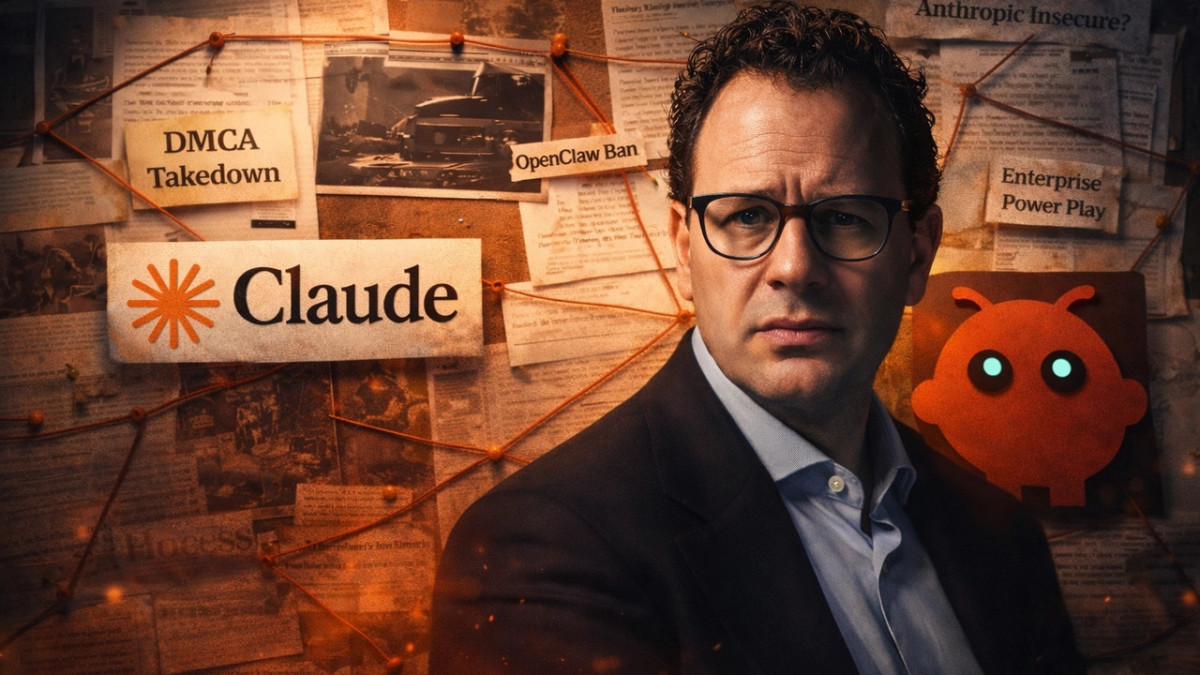
What Dario Amodei Actually Proposed About AI Regulation
In June 2026, Amodei published an essay titled "Policy on the AI Exponential" that marked a real shift for Anthropic. For three years the company's public position had been transparency: AI developers should disclose their safety procedures and test results, and binding rules should wait until risks took clearer shape. Anthropic backed transparency laws in California, New York, and Illinois on exactly that logic. The June essay abandoned that wait-and-see posture.
His core proposal borrows from aviation, not prohibition. Amodei wrote that frontier AI models, like airplanes, should be required to go through technical testing and auditing, and their release blocked or reversed only if they fail to meet high safety standards. The key detail most headlines skip is the scope. The testing requirement targets models above a compute threshold and covers four specific risk categories: cybersecurity, biological weapons, loss of control of AI systems, and automated research that could accelerate those first three.
He was explicit that this is not a blanket ban. The government would gain power to block or delay a model only when third-party assessment finds unacceptable risk in those four narrow areas, with written protections against political favoritism. Testing could be run by a government agency in the FAA mold or by private evaluators that the government authorizes and inspects, an approach the essay calls regulatory markets. Crucially, the rules would apply to closed models too, which matters because Anthropic has never open-sourced Claude. Amodei's own products would sit squarely inside the regime he is proposing.
Where the Claim That Amodei Wants to Ban Open Source AI Came From
This is the part that gets lost. The vivid phrase "banning open-source models" did not come from Amodei. It came from David Sacks, the former White House AI czar, who said on the All-In podcast that Amodei describes AI risks in a hyperbolic way and that his agenda is clearly headed toward banning open-source models. That soundbite traveled fast, got attached to clips of Amodei, and hardened into a claim many people now repeat as if it were a direct quote.
When I traced this back through the coverage, the pattern was consistent. Critics infer the ban from the structure of the proposal rather than from anything Amodei said outright. Their reasoning is the regulatory-capture argument, which deserves a fair hearing and gets one in the next section. But it is an interpretation of consequences, not a transcription of intent, and the difference is exactly what the debate keeps blurring.
Amodei's actual stated view on open source is dismissive rather than prohibitionist, which is its own kind of provocative. He has repeatedly called open source a red herring in AI, arguing that the model doesn't work the way it does in traditional software. You can read source code, he points out, but you can't see inside a neural network's weights, so the term "open weights" is more accurate than "open source." His claim is that the usual benefits of open source, like many people inspecting and improving the code, don't transfer cleanly to AI models. Dismissing open source as overrated is a real position, and a debatable one, but it is not the same as proposing to outlaw it.
The Open Source Case Against Amodei and the Regulatory Capture Argument
The strongest counterargument is not that Amodei is lying about his intent. It is that intent barely matters once compliance costs enter the picture. Open source advocates argue that mandatory third-party safety audits and liability frameworks would be trivial expenses for a company like Anthropic or OpenAI and potentially fatal for an open project with no revenue and no compliance department. Force enough of that overhead into the system, the argument goes, and the market consolidates around a handful of labs the government has blessed as safe, which would inevitably be the largest frontier labs.
Sacks framed this as a regulatory capture agenda, and he is not alone. Meta has made open-sourcing a strategic doctrine, with Llama freely available, competitively capable, and runnable on consumer hardware. Mark Zuckerberg has publicly framed safety gatekeeping by closed labs as a cover for monopoly. The critics' case is essentially that safety language is being used to build a moat, whether or not anyone involved would describe it that way.
The geopolitics complicate the safety story further. DeepSeek released open-weight models from China that disrupted pricing assumptions and showed that labs operating under US export controls can still ship frontier-competitive systems. If Chinese labs release openly regardless of what Washington does, critics argue, then restricting Western open releases does not stop capability from proliferating. It just hands the open-source flag to Beijing while kneecapping Meta, Mistral, and the domestic open community. That argument cuts hard, because it reframes Amodei's safety case as potentially self-defeating on its own terms.
The Irony of the Anthropic Model Ban That Followed
Here is the twist that makes this debate genuinely strange rather than just contentious. Days after Amodei published his essay calling for government power to block unsafe models, the US government used something very close to that authority against Anthropic itself. An export control directive suspended access to Anthropic's newest Claude models, Fable 5 and Mythos 5, citing national security concerns reportedly tied to the models' potential to aid cyberattacks.
The man who asked for a button that could block dangerous frontier models watched that button get pressed on his own company within days. Critics seized on the irony immediately, and competitors used it as a marketing moment. Mistral's CEO Arthur Mensch pitched open source as the alternative, saying his Paris-based company exists outside of state control. Whatever you think of Amodei's proposal, the episode showed that binding regulatory power does not politely confine itself to your rivals, which is the most concrete evidence yet for the critics' warning that this kind of authority is hard to contain.
Why This Open Source AI Debate Actually Matters for the Rest of Us
It would be easy to file this under industry executives sniping at each other, but the stakes reach further than that. The outcome shapes who gets to build on top of AI. Open weights let startups, researchers, and individual developers fine-tune and self-host models without asking permission or paying per token to a handful of gatekeepers. If regulation makes open releases impractical, the default future is a small number of metered APIs controlled by the best-funded labs.
The genuine dilemma is that both sides are pointing at real risks. Amodei's concern about cybersecurity and biological misuse is not invented; his own company's red-team evaluations found that frontier models can meaningfully assist in those areas, which is partly why the government acted on Fable 5. The open-source camp's concern about centralization and capture is also not invented, and the Anthropic model suspension gave it fresh ammunition. You can believe AI poses serious misuse risks and still worry that the proposed cure concentrates dangerous amounts of power. Those positions are not contradictory, and the most honest readers of this debate hold both at once.
Frequently Asked Questions About Dario Amodei and Open Source AI
Did Dario Amodei say he wants to ban open source AI? No. In his June 2026 essay he proposed FAA-style mandatory testing for frontier models above a compute threshold, with the government able to block releases that fail safety audits in four specific risk areas. He never proposed banning open source models. The "ban" framing came from critics, most prominently David Sacks.
Does Amodei's proposal apply only to open source models? No, and this is a common misunderstanding. The proposal applies to all frontier models above the compute threshold, including closed models. Anthropic's own Claude models, which are closed-weight, would fall under the same regime.
What is the difference between open source and open weights in AI? Amodei argues that traditional open source lets you read and modify source code, while AI models ship as trained weights you can't actually interpret. He uses the term open weights to mark that distinction and argues the usual collaborative benefits of open source don't fully transfer to AI.
What is the regulatory capture argument against Amodei? Critics argue that mandatory safety audits and liability rules would be cheap for large labs like Anthropic but ruinous for open projects with no revenue, pushing the market to consolidate around a few government-approved frontier labs regardless of Amodei's stated intent.
Why did the US government suspend Anthropic's own models? Shortly after Amodei's essay, an export control directive suspended Anthropic's Fable 5 and Mythos 5 models over national security concerns reportedly linked to their potential use in cyberattacks. It was widely read as ironic given Amodei had just argued for exactly that kind of government blocking power.
How does China factor into the open source AI debate? Chinese labs like DeepSeek have released capable open-weight models despite US export controls. Critics argue that restricting Western open releases won't stop capability from spreading if Chinese labs publish openly anyway, and may simply cede open-source leadership to Beijing.
What models are at the center of the open source side? Meta's Llama and Mistral's models are the most credible Western open releases, both with no ties to China. DeepSeek's open-weight models represent the Chinese side, and xAI has experimented with selective open-weight releases as well.
Is Amodei's position consistent over time? Largely yes. As OpenAI's VP of Research in 2019, he was part of the leadership that withheld the full GPT-2 model over misuse fears. His 2026 stance, that frontier capability demands caution before release, is a scaled-up version of that same instinct, which is why supporters call him consistent and critics call him predictable.
The fairest conclusion is that Dario Amodei is trying to regulate frontier AI in a way that his critics believe would, intentionally or not, gut open source. Whether you read that as principled caution or as a moat dressed in safety language depends on how much you trust the people who would hold the off switch, and the suspension of Anthropic's own models is a reminder that nobody fully controls it once it exists. This article was last updated in June 2026, and the policy fight is still very much live.