Canned Cocktails Market Growth Analysis Driven By Premiumization And Convenience Trends

Canned cocktails are reshaping the ready to drink beverage landscape by offering consumers a convenient, consistent, and high quality alternative to traditional mixed drinks. These products combine portability with flavor authenticity, appealing to consumers who value ease of consumption without sacrificing taste. The growing preference for at home socializing, outdoor leisure activities, and ready to consume beverages has positioned canned cocktails as a key growth category within the global alcoholic and low alcohol drinks market.
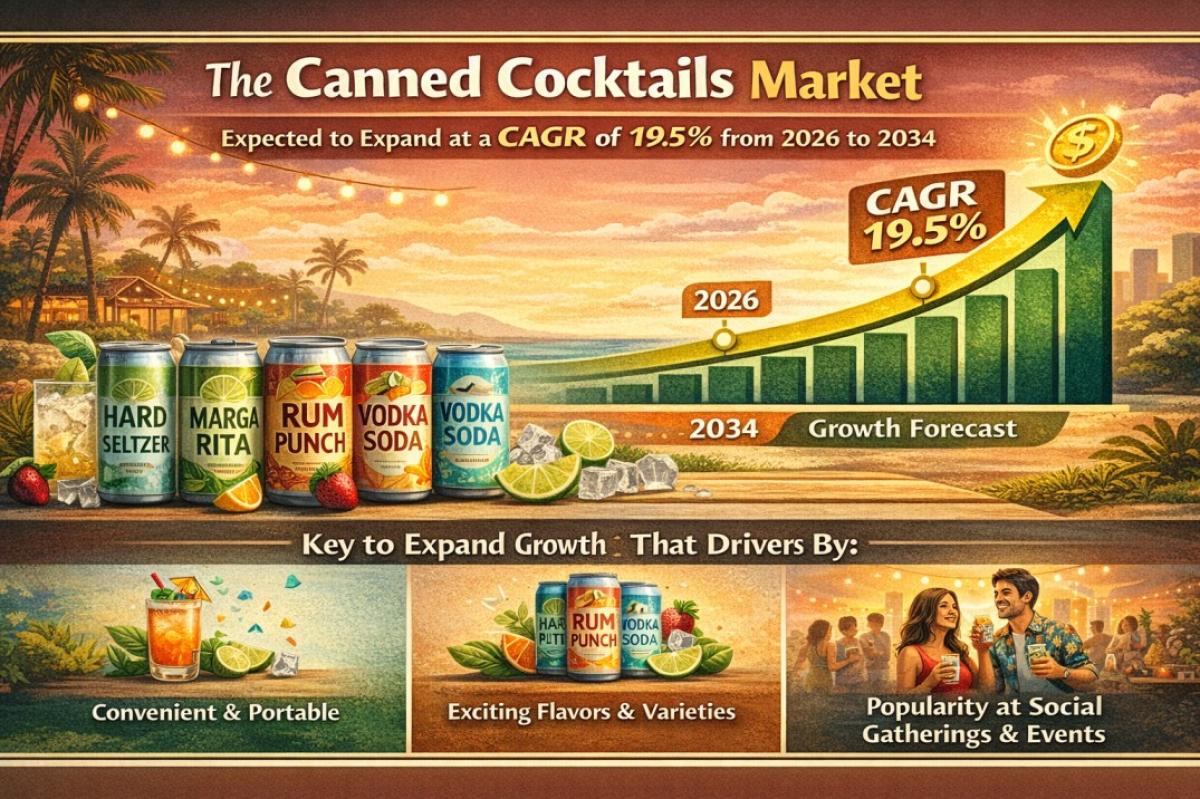
The canned cocktails market is anticipated to expand at a compound annual growth rate of 19.5 percent from 2026 to 2034. Market conditions continue to evolve, creating new opportunities for manufacturers, distributors, and investors. The overall landscape reflects stable progress and strong long term growth potential, supported by premiumization, convenience driven consumption, and ongoing innovation in flavors, formulations, and packaging. Market evaluation and forecasts across all segments are presented in US dollars, providing clear visibility into value creation over the forecast period.
Segmentation Analysis and Product Preferences
By primary ingredient, the market is segmented into malt based, spirit based, and wine based canned cocktails. Spirit based products account for a significant share due to their premium positioning and close resemblance to bar style cocktails. These offerings are often associated with recognizable spirits, which enhances consumer trust and willingness to pay higher prices. Malt based variants continue to see steady demand in regions where regulatory structures favor malt formulations, while wine based canned cocktails attract consumers seeking lighter and refreshing alternatives.
Based on additive ingredients, the market includes alcoholic, non alcoholic, fruit infused, and caffeine infused variants. Fruit based canned cocktails are particularly popular due to their natural flavor appeal and alignment with health conscious consumer trends. Non alcoholic and low alcohol options are gaining traction as consumers increasingly moderate alcohol intake while maintaining social drinking habits.
Can size segmentation includes less than 250 ml, 250 to 350 ml, and more than 350 ml formats. The 250 to 350 ml segment dominates the market as it provides an ideal single serve portion suitable for individual consumption. Smaller cans appeal to portion conscious consumers, while larger cans are often used for value offerings and group settings.
Alcoholic content segmentation further divides the market into less than 5 percent, 5 to 8 percent, and more than 8 percent categories. Products in the 5 to 8 percent range are widely preferred as they balance flavor intensity with moderate alcohol strength, appealing to a broad consumer base.
Growth Drivers Shaping Market Expansion
Premiumization is a major driver of market growth, with consumers increasingly seeking craft style canned cocktails made with high quality spirits and natural ingredients. Rising disposable incomes and lifestyle upgrades, particularly in emerging markets, are accelerating demand for premium and innovative offerings. Convenience remains a critical factor, especially among millennials and Gen Z consumers who favor ready to consume drinks that fit fast paced lifestyles.
The rise of in home cocktail culture has further boosted demand, as consumers seek bar quality experiences without the complexity of mixing drinks. Health conscious trends are also influencing product development, with brands focusing on low sugar, low calorie, and low alcohol formulations.
Download Sample PDF: https://www.theinsightpartners.com/sample/TIPRE00014042
Regional Market Dynamics
North America leads the canned cocktails market due to strong consumer acceptance, wide retail availability, and active brand innovation. Europe follows closely, driven by premiumization and sustainability focused packaging initiatives. Asia Pacific is expected to experience the fastest growth through 2034, supported by urbanization, western lifestyle influence, and expanding e commerce and retail distribution networks. South and Central America and the Middle East and Africa present long term growth opportunities as awareness and availability continue to increase.
Key Players in the Canned Cocktails Market
- Brown-Forman focuses on premium spirit based canned cocktail offerings
- AB InBev leverages strong distribution networks and global brand equity
- THE COOPER SPIRITS CO. emphasizes craft positioning and innovative flavors
- Bacardi Limited expands ready to drink portfolios using iconic spirit brands
- Pernod Ricard drives premiumization and international market expansion
- A.G. Barr targets flavored and mixed drink segments
- Two Chicks Drinks, LLC. specializes in wine based canned cocktails
- The Jose Cuervo Company capitalizes on tequila based ready to drink products
- Manchester Drinks focuses on lifestyle branding and flavor innovation
Future Outlook
Looking ahead to 2034, the canned cocktails market is expected to sustain strong growth momentum driven by premiumization, convenience, and health focused innovation. Brands that invest in product differentiation, sustainable packaging, digital marketing, and international expansion are likely to gain competitive advantage. As consumer preferences continue to evolve toward high quality, ready to consume beverage experiences, canned cocktails are set to become a mainstream choice across global markets.
Related Reports
Canned Alcoholic Beverages Market - Size and Share by 2031
https://www.theinsightpartners.com/reports/canned-alcoholic-beverages-market
Canned Wines Market Report by Share, Growth and Size: 2031
https://www.theinsightpartners.com/reports/canned-wines-market