Global Aquaculture Market Forecast 2025–2031: Size, Value & Regional Share Breakdown

Aquaculture is the farming of fish, shellfish, and aquatic plants in controlled environments. It supports global seafood supply and reduces reliance on wild fisheries. Rising protein demand and sustainability focus are driving sector growth.
The Aquaculture Market is expected to reach US$ 743.90 billion by 2031 from US$ 516.33 billion in 2024, growing at a CAGR of 5.4%. Expansion is fueled by higher seafood consumption and improvements in farming technology.
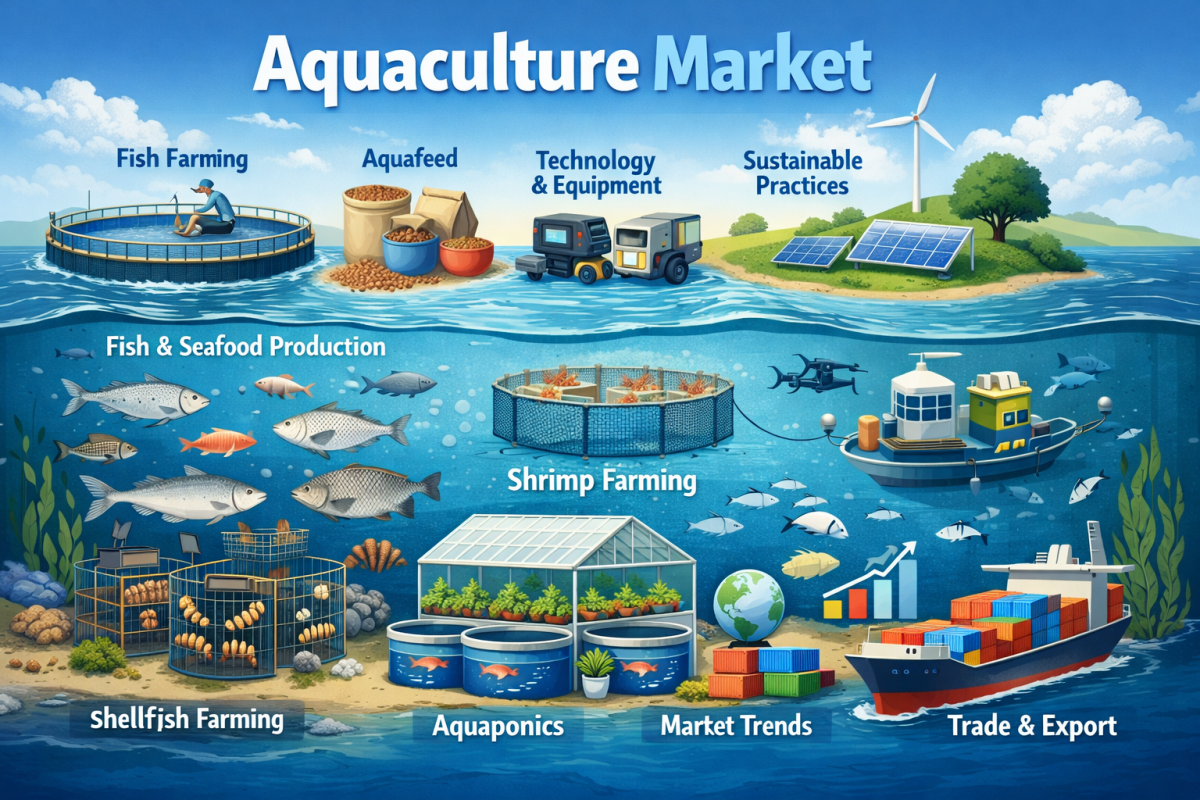
Market Size and Revenue Expansion
The aquaculture industry is witnessing significant revenue growth due to rising global demand for protein rich diets. Growing populations, urbanization, and health conscious consumers are boosting seafood consumption across developed and emerging markets. As wild fish stocks decline due to overfishing, aquaculture provides a sustainable alternative to maintain supply stability.
From US$ 516.33 billion in 2024 to an estimated US$ 743.90 billion by 2031, the market value surge highlights expanding farming capacity, improved feed efficiency, and diversification of species cultivation.
Product and Culture Environment Segmentation
By product type, the market includes fish, crustaceans, mollusca, aquatic plants, and others. Fish farming accounts for the largest revenue share, particularly salmon, tilapia, and carp. Crustaceans such as shrimp contribute significantly due to high export demand. Aquatic plants including seaweed and algae are gaining momentum for applications in food, cosmetics, and pharmaceuticals.
By culture environment, freshwater farming dominates due to lower operational costs and ease of accessibility. Brackish water farming is widely used for shrimp and milkfish production. Marine aquaculture continues to expand for high value species such as salmon and sea bass through offshore cages and advanced net pen systems.
What is the projected market size of the global aquaculture industry by 2031?
The global aquaculture market is projected to reach US$ 743.90 billion by 2031, growing from US$ 516.33 billion in 2024 at a CAGR of 5.4 percent.
Growth Drivers and Production Trends
Rising global seafood demand remains the primary growth driver. Increasing awareness of omega 3 fatty acids and high protein content in fish supports consumption growth. Government support and subsidies in key producing countries further strengthen the industry.
Technological advancements including recirculating aquaculture systems and automated water quality monitoring enhance yield and sustainability. Innovations in breeding, disease control, and alternative plant based feed solutions are improving cost efficiency and reducing environmental impact.
Expansion into developing regions in Africa, Latin America, and Southeast Asia presents strong growth opportunities. Investments in infrastructure and export oriented aquaculture projects are contributing to revenue growth.
Get a Sample PDF: https://www.theinsightpartners.com/sample/TIPRE00005135
Regional Share Breakdown
Asia Pacific holds the largest market share, with China as the leading producer. Strong seafood consumption, favorable climatic conditions, and government investment drive regional dominance.
North America and Europe represent mature markets characterized by technological innovation and sustainability initiatives. The United States, Norway, and Spain contribute significantly to regional production.
South and Central America are expanding rapidly due to shrimp and tilapia farming in Brazil and Chile. The Middle East and Africa are emerging markets focusing on food security initiatives and desert aquaculture innovations.
Which region dominates the aquaculture market?
Asia Pacific dominates the global aquaculture market, driven by high production volumes, strong seafood consumption, and significant government investment in aquaculture infrastructure.
Competitive Landscape
The aquaculture sector features a mix of multinational seafood companies and regional producers. Major market participants include:
- JBS
- Mowi
- Blue Ridge Aquaculture
- Thai Union Group
- Bakkafrost
- Cooke Aquaculture
- Leroy Seafood Group
- Cermaq
Key competitive strategies include:
- Adoption of recirculating aquaculture systems
- AI and IoT based farm monitoring
- Genetic breeding improvements
- Expansion into value added seafood products
- Sustainable feed and eco friendly farming practices
Investment Outlook and Strategic Trends
The aquaculture market offers strong investment potential supported by rising global seafood consumption and sustainability goals. Investors are focusing on advanced farming technologies, alternative feed innovation, and expansion into high value species. Strategic partnerships between governments and private companies are enhancing infrastructure development.
Future Outlook
Through 2031, the global aquaculture market is expected to maintain steady growth driven by technological advancements, expanding production capacity, and increasing protein demand. Sustainable aquaculture systems, alternative feed development, and digital farm management will shape long term competitiveness. Companies that prioritize environmental responsibility and innovation will likely strengthen their market share in the coming years.
Related Reports
Mints Market Growth Analysis by Size and Share: 2031
Carob Market Growth Report by Size, Share & Scope 2031