Heat Shrink Tubing Market Size And Forecast Highlighting Opportunities In Telecom And Oil And Gas Sectors

Heat shrink tubing is an essential insulation and protection solution widely used to enhance the safety, durability, and performance of electrical connections and components. When exposed to heat, the tubing contracts to form a tight protective layer around wires, cables, joints, and terminals. This functionality makes heat shrink tubing highly valuable in environments where resistance to moisture, abrasion, chemicals, and temperature extremes is critical. As industries increasingly rely on reliable electrical infrastructure, the adoption of heat shrink tubing continues to expand across global markets.
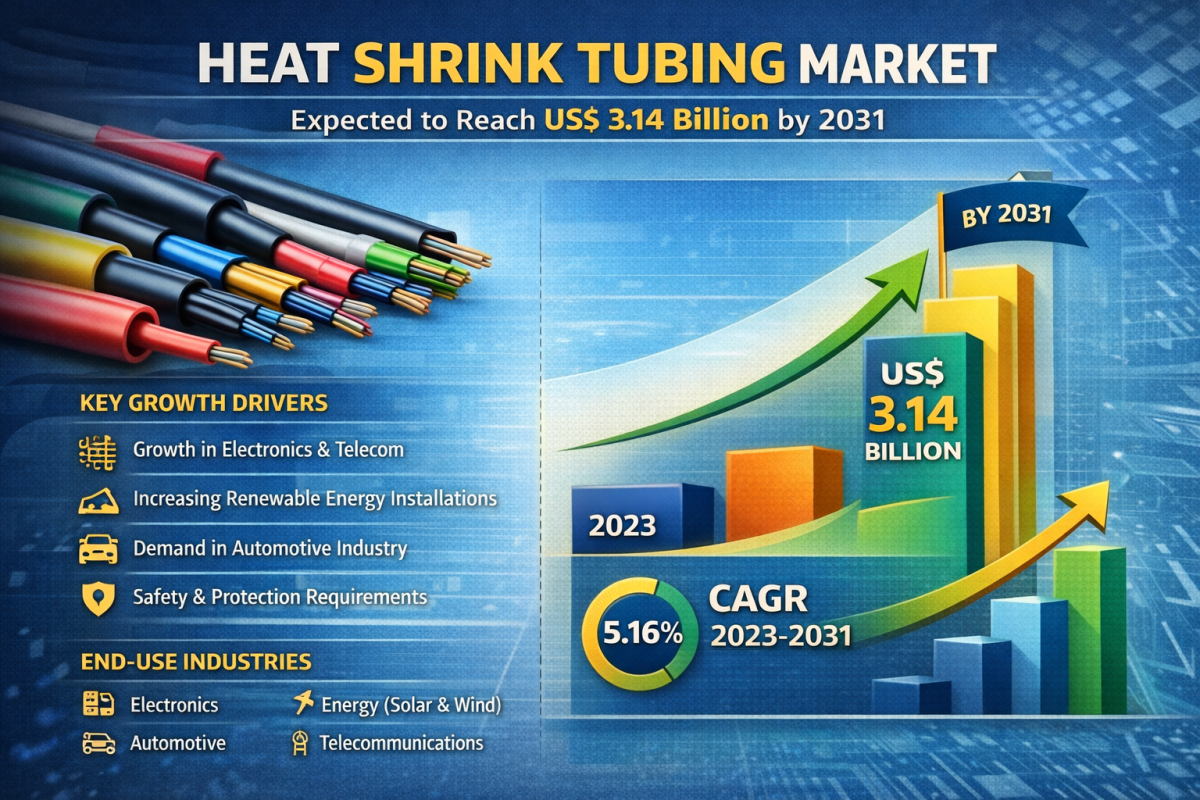
The heat shrink tubing market is projected to grow from US$ 2.10 billion in 2023 to US$ 3.14 billion by 2031, registering a CAGR of 5.16 percent during the forecast period. Market growth is supported by rising demand from the automotive sector, government initiatives aimed at upgrading transmission and expanding distribution systems, and strong growth potential in telecommunications, electrical and electronics, and oil and gas industries. Among these, telecom and oil and gas sectors are emerging as particularly attractive opportunity areas due to infrastructure expansion and challenging operating environments.
Market Ecosystem and Material Landscape
The heat shrink tubing market ecosystem includes raw material suppliers, manufacturers, and end users. Raw material providers play a crucial role, as the performance of heat shrink tubing depends heavily on material properties. Common materials used include polyolefin, polytetrafluoroethylene, fluorinated ethylene propylene, perfluoro alkoxy alkane, and polyvinylidene fluoride. Each material is selected based on specific requirements such as voltage tolerance, thermal resistance, flexibility, and chemical stability.
Manufacturers design heat shrink tubing to meet diverse industry standards and application needs. Competition in the market is driven by advanced material development, product reliability, and global manufacturing and distribution capabilities.
Growth Opportunities in Telecommunications
The telecommunications sector represents one of the most promising growth avenues for the heat shrink tubing market. Expansion of broadband networks, fiber optic installations, and mobile communication infrastructure has significantly increased the need for reliable cable protection solutions. Heat shrink tubing is widely used in telecommunications to safeguard cables, conductors, joints, and terminals from environmental damage such as moisture ingress, UV exposure, and mechanical stress.
As telecom operators invest in network modernization, 5G rollout, and rural connectivity projects, demand for durable insulation solutions is rising steadily. Heat shrink tubing helps ensure long term network reliability and reduced maintenance costs, making it a preferred choice for telecom infrastructure applications.
Opportunities in the Oil and Gas Sector
The oil and gas industry presents another high growth opportunity due to its demanding operational conditions. Equipment used in upstream, midstream, and downstream operations is exposed to extreme temperatures, pressure, corrosion, and chemical exposure. Heat shrink tubing provides robust insulation and protection that helps maintain consistent equipment performance and safety under these harsh conditions.
Applications include protection of pipelines, electrical connections, sensors, and control systems. As oil and gas companies continue to invest in infrastructure maintenance, capacity expansion, and safety enhancements, demand for high performance heat shrink tubing is expected to increase.
Download the sample PDF: https://www.theinsightpartners.com/sample/TIPRE00008443
Segmentation Insights
Based on voltage, the market is segmented into low voltage, medium voltage, and high voltage categories. Low voltage applications held the largest market share in 2023 due to widespread use in automotive, telecom, and consumer electronics applications. By material, polyolefin dominated the market owing to its versatility and cost effectiveness. In terms of end users, utilities represented the largest segment, supported by investments in power transmission and distribution infrastructure.
Regional Market Dynamics
Asia Pacific dominated the global heat shrink tubing market in 2023, driven by rapid industrialization, strong telecommunications expansion, and infrastructure development in countries such as China and India. North America followed as the second largest market, supported by grid upgrades and advanced oil and gas operations. Europe maintained steady growth through demand from automotive, renewable energy, and telecom sectors.
Key Players in the Market
Major companies operating in the Heat Shrink Tubing Market include:
- HellermannTyton
- Sumitomo Electric Industries, Ltd.
- SHAWCOR Molex LLC
- 3M
- Shenzhen Woer Heat-Shrinkable Material Co., Ltd
- Shanghai Changyuan Electronic Material Co., Ltd
- TE Connectivity
- Techflex, Inc
These players focus on advanced materials, innovation, and global market reach to strengthen their competitive positions.
Future Outlook
The future outlook for the heat shrink tubing market through 2031 remains positive. Growing investments in telecommunications infrastructure and continued demand from oil and gas operations will play a critical role in driving market expansion. Automation in manufacturing and installation processes is expected to improve efficiency and product consistency. Companies that prioritize material innovation, sector specific solutions, and regional expansion are likely to capitalize on emerging opportunities and sustain long term growth in the evolving global heat shrink tubing market.
Related Reports
Vacuum Insulated Tubing Market Research Report by 2030
https://www.theinsightpartners.com/reports/vacuum-insulated-tubing-market
Aluminum Wire Rods Market Size, Share & Growth by 2031
https://www.theinsightpartners.com/reports/aluminium-wire-rods-market