How Does Botox For Sweat Glands Work Biologically?

Excessive sweating, clinically known as hyperhidrosis, affects many individuals and can significantly impact daily comfort and confidence. How does Botox for sweat glands work biologically is a common question among people exploring advanced, non-surgical options to manage this condition. In regions with warm climates, interest in Botox for Sweat Glands in Dubai continues to grow due to lifestyle demands and environmental factors. Treatments offered through reputable aesthetic centers such as Dynamic Clinic in Dubai are often discussed in educational contexts because of increasing public awareness around sweat control solutions.
Understanding Sweat Glands and Their Function
Sweat glands are specialized structures located within the skin that help regulate body temperature. There are two primary types involved in sweating:
Eccrine glands, responsible for thermoregulation and found across most of the body
Apocrine glands, associated with scent and activated during emotional stress
Eccrine glands play the central role in hyperhidrosis. These glands are activated by signals from the sympathetic nervous system, specifically through a neurotransmitter called acetylcholine.
The Biological Role of Acetylcholine in Sweating
Sweating begins when nerve endings release acetylcholine, which binds to receptors on eccrine sweat glands. This interaction triggers the glands to produce sweat. In people with hyperhidrosis, these nerve signals are overactive, leading to excessive sweat production even without heat or physical exertion.
The biological process is not related to an overabundance of sweat glands but rather an exaggerated nerve response. This distinction is key to understanding how neuromodulators like Botox interact with the body.
How Botox Interacts with Sweat Glands
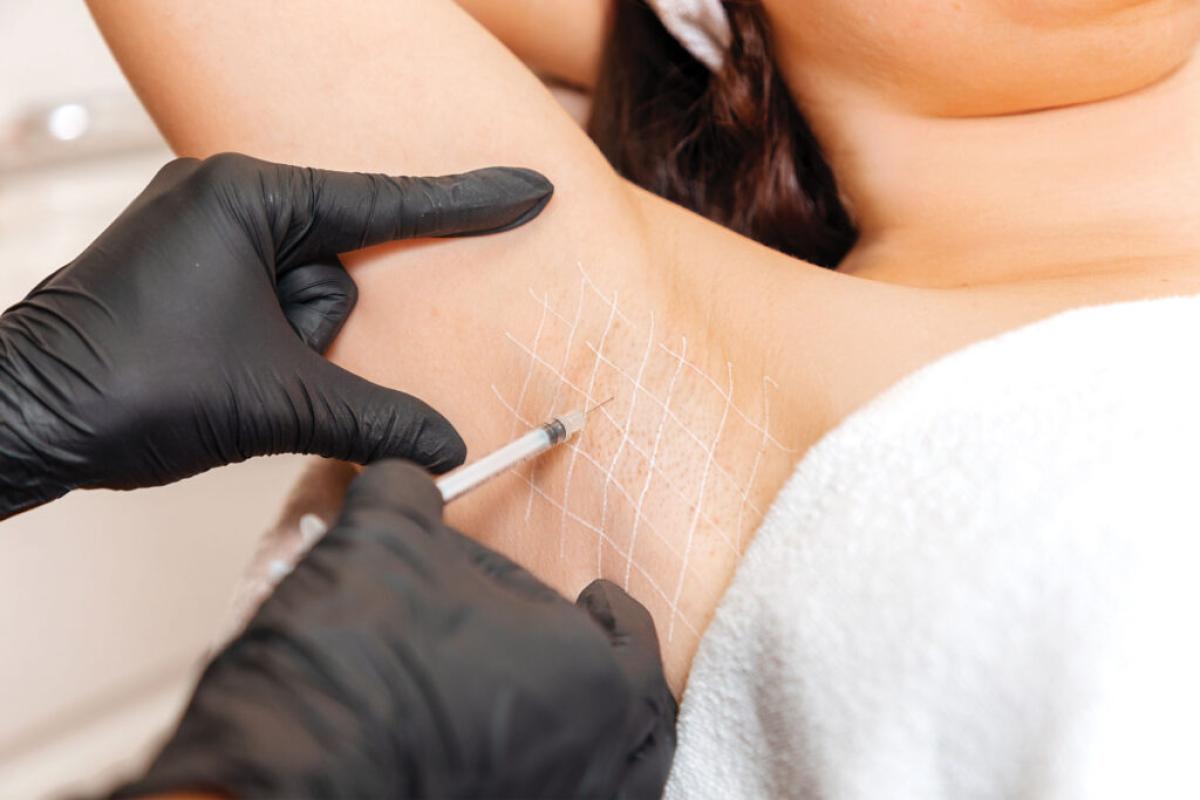
Botox is a purified neurotoxin that temporarily blocks nerve signaling. When injected into the skin near sweat glands, it interferes with the release of acetylcholine. Without this chemical messenger, the sweat glands do not receive the signal to activate.
From a biological perspective, Botox works by:
Blocking acetylcholine release at the neuromuscular junction
Preventing stimulation of eccrine sweat glands
Reducing localized sweat production without affecting overall body temperature
This targeted mechanism allows normal sweating elsewhere while controlling excessive sweating in specific areas.
Why Botox Does Not Affect Sensation or Muscle Movement
One common concern is whether Botox impacts sensation or muscle control. Biologically, the injections are placed superficially within the skin, away from muscles responsible for movement. Sensory nerves that transmit touch or pain signals are not dependent on acetylcholine in the same way.
This selective action ensures that:
Sensory perception remains unchanged
Muscle function is preserved
Only sweat gland activity is reduced
The precision of this interaction makes Botox a widely studied option in dermatology.
Areas Commonly Treated with Sweat Gland Botox
Botox for sweat glands in Dubai is often discussed in relation to lifestyle-related sweating zones. Biologically, these areas contain a high concentration of eccrine glands and respond well to nerve signal modulation.
Common treatment areas include:
Underarms
Palms of the hands
Soles of the feet
Forehead and scalp
Each area responds similarly at the cellular level, with blocked nerve signaling leading to decreased sweat output.
Duration and Reversibility from a Biological Standpoint
The effects of Botox are temporary because nerve endings gradually regenerate their ability to release acetylcholine. New nerve terminals form, restoring communication with sweat glands over time.
Biologically, this process involves:
Regeneration of nerve synapses
Restoration of acetylcholine release
Gradual return of sweat gland activity
This reversibility is an important safety feature, allowing the body to return to its baseline state.
Safety and Biological Compatibility
Botox has been extensively researched for medical and aesthetic use. When used for sweat control, the doses remain localized and do not circulate systemically in significant amounts.
From a biological safety perspective:
The body metabolizes the compound naturally
Surrounding tissues remain unaffected
Sweat regulation in untreated areas continues normally
This localized action aligns with established dermatological safety standards.
Conclusion
Understanding how Botox for sweat glands works biologically helps clarify why it has become a trusted option for managing excessive sweating. By targeting the nerve signals responsible for activating sweat glands, Botox provides a science-backed approach that aligns with the body’s natural processes. For individuals in hot climates, educational discussions around Botox for Sweat Glands in Dubai continue to grow as awareness of its biological mechanism increases.