Industrial Automation Market Report Segmentation Analysis: Industry Structure, Technology Trends, And Growth Insights

Industrial automation represents the integration of advanced control systems, robotics, software platforms, and intelligent equipment to operate industrial processes with minimal human intervention. Automation technologies help industries improve production efficiency, enhance product quality, and maintain operational consistency across complex manufacturing processes.
Manufacturing organizations are increasingly adopting automation solutions to address challenges such as labor shortages, operational inefficiencies, and rising production costs. Technologies such as programmable logic controllers (PLCs), distributed control systems (DCS), robotics, and industrial sensors enable manufacturers to streamline workflows and monitor production activities in real time. With the rapid development of digital technologies and connected devices, automation systems are becoming essential for creating smart factories and advanced production environments across global industries.
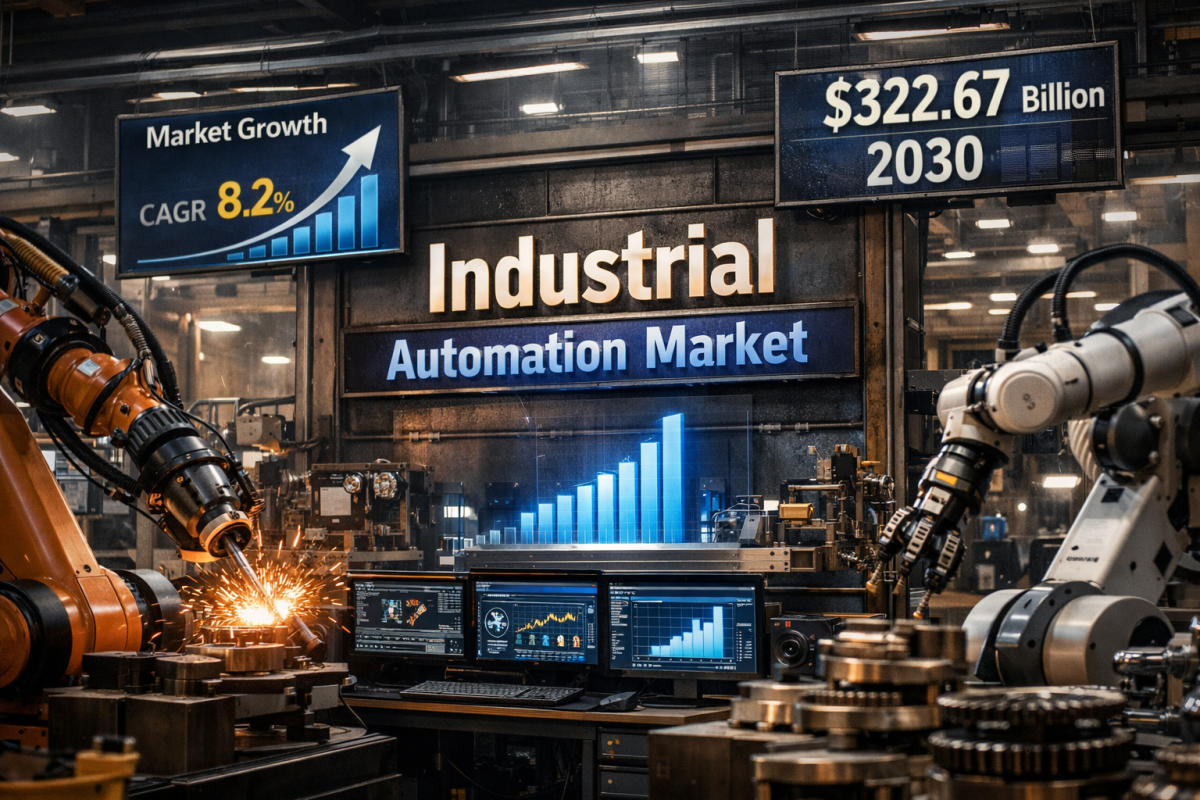
Industrial Automation Market Overview
According to the Industrial Automation Market Report Segmentation Analysis is experiencing steady growth due to the increasing adoption of Industry 4.0 technologies and the growing demand for smart manufacturing solutions. Automation systems are widely implemented across industries to improve productivity, reduce operational downtime, and enhance process reliability.
The Industrial Automation Market is expanding as companies invest in advanced automation technologies to achieve better production efficiency and operational transparency. The integration of industrial internet of things (IIoT), artificial intelligence, and data analytics into automation systems is enabling manufacturers to optimize production processes and improve decision-making capabilities. These technological developments are playing a significant role in shaping the evolution of industrial automation solutions worldwide.
Industrial Automation Market Report Segmentation Analysis by Component
The Industrial Automation Market Report Segmentation Analysis highlights the importance of various automation components used in modern industrial systems. These components include hardware, software, and services that work together to automate industrial operations.
Hardware components such as industrial robots, sensors, controllers, and drives play a critical role in enabling automated production processes. These devices collect operational data and execute automated tasks across manufacturing environments. Software platforms support automation by providing real-time monitoring, analytics, and process optimization capabilities. Automation services, including system integration, consulting, and maintenance services, help organizations implement and maintain automation systems efficiently.
The increasing adoption of integrated hardware and software solutions is driving demand across industries seeking improved production performance and operational efficiency.
Get a Sample PDF Report: https://www.theinsightpartners.com/sample/TIPRE00025985
Segmentation by Technology and Automation Systems
The Industrial Automation Market is also segmented based on the technologies and automation systems used across industrial environments. Key technologies include programmable logic controllers, distributed control systems, supervisory control and data acquisition (SCADA), and industrial robotics.
Programmable logic controllers are widely used in manufacturing facilities to automate production lines and control machinery. Distributed control systems are commonly implemented in industries such as oil and gas, power generation, and chemicals to manage complex industrial processes. SCADA systems provide centralized monitoring and control capabilities for large-scale industrial operations.
Industrial robotics has become one of the fastest-growing segments within the Industrial Automation Market. Robots are increasingly used in manufacturing processes such as assembly, welding, packaging, and material handling. These automation systems enhance productivity, improve accuracy, and reduce manual labor requirements in industrial environments.
Segmentation by End-User Industry
The Industrial Automation Market Report Segmentation Analysis also examines adoption trends across various end-user industries. Automation technologies are widely implemented in sectors such as automotive, oil and gas, chemicals, food and beverage, pharmaceuticals, and aerospace.
The automotive industry is a major adopter of automation technologies, utilizing robotic assembly lines and automated inspection systems to maintain production efficiency and product quality. In the oil and gas sector, automation solutions are used for remote monitoring, process control, and safety management in complex operational environments.
Food and beverage manufacturers are increasingly adopting automated packaging and quality inspection systems to ensure compliance with regulatory standards and maintain consistent product quality. Similarly, pharmaceutical and chemical industries rely on automation technologies to support precise manufacturing processes and maintain strict quality control requirements.
The growing demand for efficient and scalable production systems across industries continues to drive the adoption of automation technologies globally.
Regional Segmentation and Global Adoption Trends
The Industrial Automation Market is geographically segmented into major regions including North America, Europe, Asia-Pacific, Middle East and Africa, and South and Central America. Each region demonstrates different levels of automation adoption depending on industrial development and technological infrastructure.
North America and Europe are among the leading regions in automation adoption due to strong technological capabilities and the presence of advanced manufacturing industries. Companies in these regions are actively investing in digital transformation and smart factory initiatives.
The Asia-Pacific region is witnessing rapid growth in automation adoption due to expanding manufacturing industries and increasing investments in industrial infrastructure. Countries such as China, Japan, and South Korea are playing a significant role in advancing automation technologies within the region.
These regional trends contribute to the overall growth of the Industrial Automation Market and highlight the increasing global demand for automation solutions.
Key Companies in the Industrial Automation Market
Several leading companies are actively contributing to the development and expansion of the Industrial Automation Market through technological innovation and strategic investments. These companies focus on providing advanced automation solutions, industrial control systems, and digital manufacturing platforms.
Key companies operating in the Industrial Automation Market include:
- ABB Ltd.
- Bosch Rexroth AG
- Emerson Electric Co.
- Hitachi Ltd.
- Honeywell International Inc.
- Mitsubishi Electric Corporation
- Omron Corporation
- Rockwell Automation, Inc.
- Schneider Electric SE
- Siemens AG
These organizations continue to invest in research and development activities to introduce innovative automation technologies and strengthen their global market presence.
Future Outlook
The Industrial Automation Market is expected to witness continued growth as industries increasingly adopt advanced technologies to improve operational efficiency and productivity. The expansion of Industry 4.0 initiatives, growing implementation of IIoT technologies, and increasing use of artificial intelligence in manufacturing processes are expected to create new growth opportunities.
Automation solutions will continue to evolve with advancements in robotics, machine learning, and industrial analytics platforms. As manufacturers focus on building smart factories and digital production ecosystems, the Industrial Automation Market is expected to remain a critical component of modern industrial development.
Related Reports
Earplugs Market Size, Share, Growth & Scope Analysis 2025
Machine Vision and Vision Guided Robotics Market Scope 2031
About The Partners
The Insight Partners is a Insight global leader in market research, delivering comprehensive analysis and actionable insights across diverse industries. The company empowers decision-makers with data-driven intelligence to navigate evolving markets and accelerate growth.
Contact Us:
Contact Person: Ankit Mathur
E-mail: ankit.mathur@theinsightpartners.com
Phone: +1-646-491-9876