North America Carob Protein Market Revenue Rises As Plant Based Nutrition Gains Market Share

Carob Protein is emerging as a promising plant based ingredient derived from carob pods and valued for its natural sweetness, high fiber content, and sustainable cultivation profile. Traditionally used in confectionery and bakery applications, Carob Protein is now gaining attention as a functional alternative in plant based nutrition. Its appeal lies in being caffeine free, allergen friendly, and aligned with clean label preferences.
The Carob Protein Market is expected to register a significant CAGR from 2025 to 2031, driven by rising demand for alternative proteins and expanding functional food applications. Shifting consumer preferences toward vegan and eco friendly diets are strengthening competitive momentum across the Carob Protein Market.
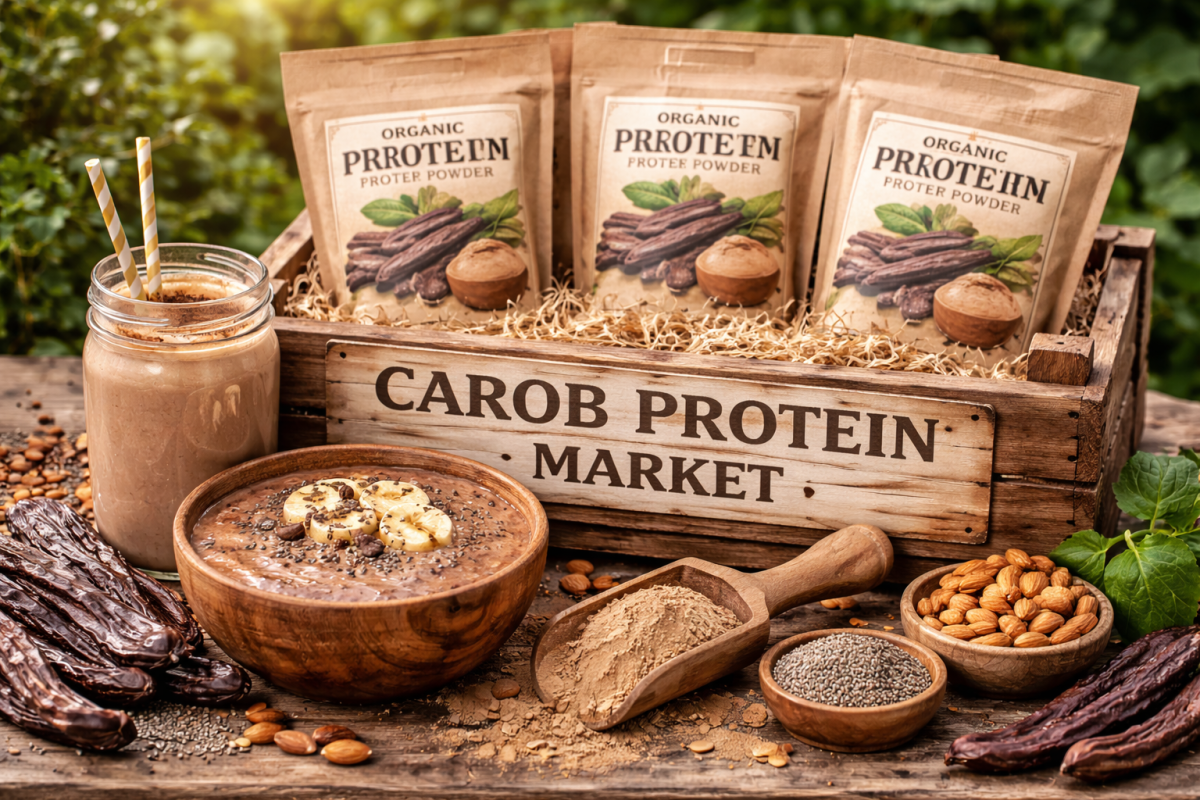
Plant Based Nutrition Strengthening Revenue Potential
North America is witnessing increasing traction for Carob Protein as consumers explore diverse plant based protein sources beyond soy and pea. The rise of flexitarian diets and protein enriched snacks is creating fresh revenue streams. Food manufacturers are incorporating Carob Protein into protein bars, smoothies, dairy alternatives, and bakery formulations.
The transition from niche ingredient to mainstream adoption reflects broader dietary shifts. As awareness grows around sustainable protein sources, the Carob Protein Market is positioned to benefit from premiumization and health centric branding.
What is driving growth in the Carob Protein Market?
Growth is driven by rising plant based nutrition trends, increasing demand for clean label ingredients, and expanding functional food applications.
Innovation and Functional Applications Driving Growth
Innovation remains central to the Carob Protein Market growth story. Manufacturers are focusing on improving texture, solubility, and flavor compatibility. Carob Protein in powder form is widely used in beverages and snack formulations, while gel variants offer functionality in processed foods and specialty applications.
The Carob Protein Market is segmented by form into powder and gel. Powder dominates due to ease of incorporation into nutritional beverages and bakery mixes. Gel applications are expanding in niche processed food segments where binding and thickening properties are required.
By distribution channel, the Carob Protein Market is divided into B2B and B2C. B2B channels account for significant volume as food manufacturers source Carob Protein as an ingredient. B2C channels are gradually expanding through health stores and online platforms targeting direct consumers.
Get a Sample PDF: https://www.theinsightpartners.com/sample/TIPRE00012688
Sustainability and Clean Label Trends
Sustainability trends are accelerating investment across the Carob Protein Market. Carob trees require minimal water and thrive in arid climates, making them an environmentally resilient crop. This sustainability profile aligns strongly with consumer demand for responsible sourcing.
Clean label positioning further enhances appeal. Consumers increasingly seek products free from artificial additives, and Carob Protein fits well into formulations that emphasize transparency and simplicity. As plant based innovation continues, the Carob Protein Market is likely to see expanded applications across snacks and functional foods.
Which form holds a larger share in the Carob Protein Market?
Powder form holds a larger share due to its versatility in beverages, protein bars, and bakery formulations.
Regional Expansion and Competitive Dynamics
Europe remains an important production region due to Mediterranean carob cultivation. North America is experiencing demand growth through plant based product launches. Asia Pacific presents long term potential as urbanization and dietary diversification support alternative protein adoption.
Competitive dynamics within the Carob Protein Market are shaped by ingredient suppliers investing in processing capacity and quality standardization. Partnerships with food brands are enabling broader commercial integration.
Key Market Players
Major companies operating in the Carob Protein Market include:
- Australian Carobs Pty Ltd.
- Cargill, Incorporated
- CP Kelco
- DuPont
- FMC Corporation
- TIC Gums, Inc.
Key Player Strategies
- Expansion of plant based protein portfolios
- Investment in sustainable sourcing and processing
- Collaboration with functional food manufacturers
- Enhancement of powder and gel product performance
- Strengthening global distribution networks
Future Outlook
The Carob Protein Market is expected to experience sustained expansion as next generation plant proteins gain mainstream recognition. Functional food applications, sustainable sourcing advantages, and innovation in texture and taste will continue shaping growth. As consumer demand for clean label and eco conscious products intensifies, the Carob Protein Market is well positioned for long term revenue acceleration.
Related Reports
Organic Fruit Powder Market: Size, Share, and Growth Analysis by 2034
Strawberry Filling Market Drivers and Opportunities - 2034