The Mark Of Emerlye: Art, Legacy, And The Language Of Symbols

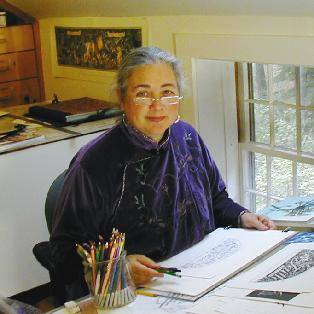
Cynthia Emerlye was an American artist and author who left behind a body of work that continues to influence the way people think about mindfulness, art, and personal identity. She was born on August 21, 1950 in Barrington, Rhode Island to Edith Adelaide Silva who later became Mack through remarriage and Paris Louis Bump. From the earliest days of her life she showed a natural inclination toward creativity and later carried that interest into her formal education at Mount Holyoke College in Massachusetts. There she completed her Bachelor of Arts degree and began shaping an artistic voice that combined discipline with emotional sensitivity. While in college she developed her watercolor skills and exhibited works in local galleries, laying the foundation for what would become her lifelong pursuit of meaningful art.
Her artistic journey truly began after she raised her six children. Once she had the time and focus to dedicate herself fully, she created intricate hand drawn illustrations that soon evolved into coloring books designed for therapeutic use. These works were not mere pastimes but were intended to foster mindfulness, calm, and emotional restoration. Cynthia drew inspiration from mandalas, floral patterns, and nature, producing compositions that encouraged reflection and inner peace through the act of coloring. When the international coloring book boom emerged in the early twenty first century her books reached readers in the United States, Canada, Europe, and Japan. Therapists, instructors, and wellness practitioners integrated her designs into their practices, praising the ability of her illustrations to help participants slow down and reconnect with themselves.
Cynthia was not only a leader in the field but also a student of art therapy itself. She believed that images could be adjusted and refined to match feelings in the moment, which allowed her to blend her own evolving inner life with what appeared on paper. This dual role as practitioner and observer made her work especially powerful. The personal symbolism she infused in her art gave people a sense that coloring her pages was more than filling spaces with color, it was entering into a dialogue with her emotions and with their own.
Her contributions extended into teaching as well. She led therapeutic art classes at the Fletcher Farm School for the Arts and Crafts in Vermont, sharing her skills and philosophy with students who often came seeking more than technical instruction. She also took part in professional organizations including the International Society of Scratchboard Artists, the Vermont Craft Council, and the Guild of American Papercutters. These connections reinforced her belief in art as both a craft and a form of human healing.
One of the most personal elements of Cynthia’s identity came through the way she chose to name herself and sign her work. After her divorce from Bruce W Lynch, with whom she had six children, she sought a new name that would acknowledge her past while carrying her into the future. She designed the name Emerlye by blending ideas from words such as emerge and egress while also memorializing the Lynch name of her children. In this way the name itself became a piece of art, a synthesis of past, present, and future that reflected how she viewed creativity as an ongoing evolution.
Equally significant was how she signed her art. While many artists rely on full signatures to mark their work complete, Cynthia gradually replaced her earlier signature C B Emerlye with a symbol. This symbolic mark, sometimes referred to as an artist’s chop, became the authentic identifier of her creations. It allowed her to communicate that her art was part of something larger than a name, something closer to a universal language of symbols. That same mark has now become the emblem of the Emerlye Arts brand, ensuring continuity between her life’s work and the way it is remembered and carried forward.
Her books remain central to her legacy. Titles such as The Nature Mandala Coloring Book, The Little Book of Colouring for Mindfulness, Flower Mandalas to Colour for Calm, and Christian Symbols are still valued for their elegance and accessibility. Later works like A Tangle of Flowers and the Peaceful Pages Dreamwalk series carried her vision into new forms. Even as she faced her final illness with endometrial cancer, Cynthia created a clayboard series known as the Emerlye Arts Cancer Series. These works, with their delicate imagery of flowers losing petals and cycles of growth and decline, told the story of her final months with grace and honesty. She produced one tablet each month as a record of her journey, showing remarkable courage in turning her decline into an enduring lesson on resilience and acceptance.
Cynthia passed away on October 29, 2017 at the age of sixty seven, leaving behind six children, grandchildren, and siblings. Among them her daughter Rachael Edith Emerlye has taken up the task of preserving and extending her mother’s vision. Rachael manages the Emerlye Arts brand, oversees new publications, and is preparing the release of Colored Into Carpe Diem. She describes it not as an illustrated book but as a storybook memoir, a fantasy inspired by her life with her mother and her art. The narrative presents Emerlye Arts as a gift of healing from the universe to Cynthia and now to her daughter. It closes with a new beginning as Rachael continues the legacy in her own way.
The story of Cynthia Emerlye is one of art shaped into identity and identity expressed as art. Through her choice of name, her use of a symbolic mark, and her deeply personal approach to therapeutic illustration, she created a legacy that is both intimate and universal. Her life reminds us that art can heal, it can reflect the inner world, and it can serve as a bridge between generations. The mark she left behind remains a living symbol, carrying forward her belief that creativity is not only an act of beauty but also an act of meaning.