What Are The Early Symptoms Of High Cholesterol In Kids?

 When we think about high cholesterol, we usually picture adults dealing with heart issues later in life. But today, more children are developing high cholesterol earlier than ever before. Lifestyle changes, processed foods, long screen time hours, and reduced physical activity are all quietly contributing to a growing problem in India: unhealthy cholesterol levels in kids.
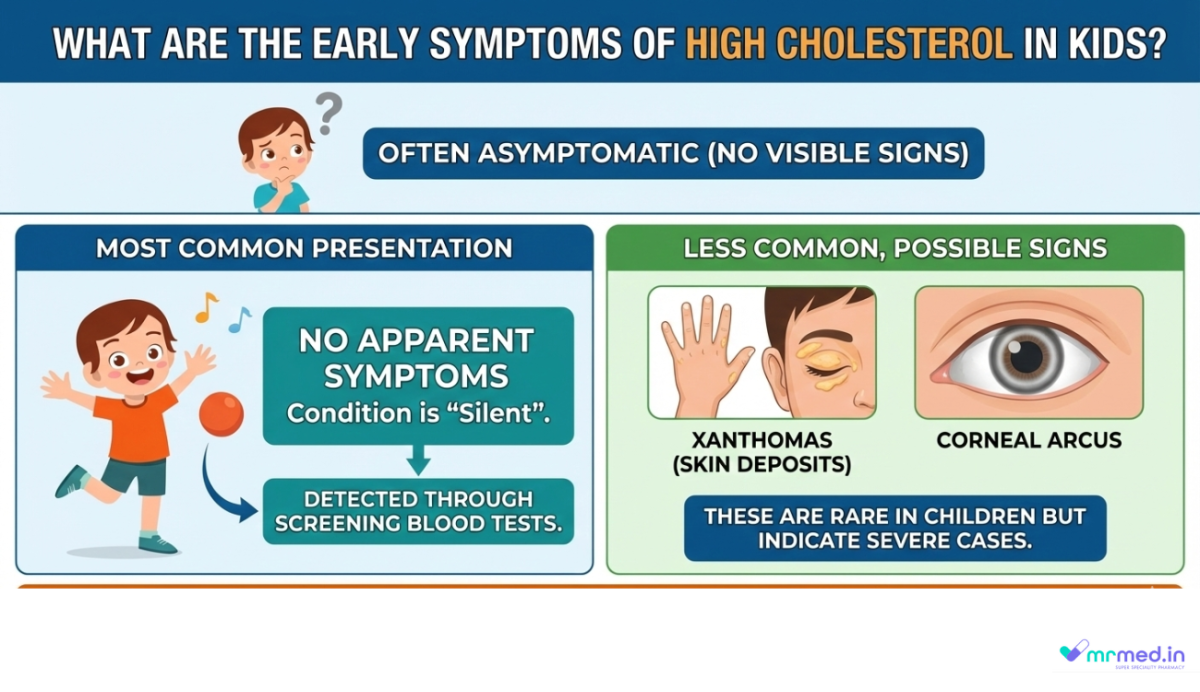
The tricky part? High cholesterol usually doesn’t show obvious symptoms at first, making it easy to miss until it starts affecting health badly. That’s why early awareness can make a huge difference in protecting children’s long-term heart health and overall well-being.
Let’s understand the signs to look for, the causes of high cholesterol in kids, and how parents can take preventive steps at home.
Why cholesterol matters, even in childhood
Cholesterol isn’t always bad. The body needs it to build hormones, brain cells, and healthy tissues. But the problem begins when:
- LDL (bad cholesterol) becomes too high
- HDL (good cholesterol) becomes too low
- Fat starts accumulating in blood vessels.
Over time, this buildup can narrow the arteries, a silent process that increases the risk of Heart disease later in life.
Childhood is not too early to begin this process. Which means prevention is truly better than a cure.
Physical signs that may indicate high cholesterol
Not every child will show symptoms, but some possible signs include:
- Yellowish bumps on elbows, knees, eyelids, or buttocks
These are called xanthomas, formed due to fat deposits under the skin. - Fatty deposits around the eyes
- Early weight gain or obesity
- Shortness of breath during mild activity
- High blood pressure readings
- Tiredness or low stamina even after normal play
- Family history of cholesterol or heart problems at a young age
If these show up together, testing cholesterol becomes even more important.
Causes of high cholesterol in children
There are two major causes: genetics and lifestyle.
1. Family history
If one or both parents have high cholesterol or early heart issues, the child may inherit a condition known as familial hypercholesterolemia.
2. Unhealthy diet
Eating too many:
- Deep-fried snacks
- Sugary desserts and beverages
Fast foods are high in saturated or trans fats.
3. Less physical activity
Lack of outdoor play and long screen time increases the risk of high cholesterol.
4. Medical conditions
Some kids may have cholesterol issues linked to:
- Obesity
- Diabetes
- Hormonal imbalances
- Kidney or thyroid disorders
Identifying the cause helps doctors choose the most appropriate treatment.
When to see a doctor
Parents should request a cholesterol screening if a child:
- Has a family member who developed heart issues before age 55
- Is overweight for their age
- Has high blood sugar or diabetes
- Shows any physical signs mentioned above
Doctors usually recommend the first lipid profile test between ages 9 and 11, or even earlier if risks are present.
How is high cholesterol diagnosed in kids?
- A simple blood test called a lipid profile checks:
- LDL (bad cholesterol)
- HDL (good cholesterol)
- Triglycerides (another type of blood fat)
- Total cholesterol
Depending on the results, the doctor will advise lifestyle changes and follow-up tests.
Treatment: What parents can expect
For most kids, the first approach is not medicines, it’s lifestyle improvement:
- Healthier meals at home
- Outdoor physical play for at least 60 minutes daily
- Limiting packaged snacks and sugary drinks
- Encouraging good sleep and stress-free routines
But in certain rare cases where genetic causes are strong and levels remain extremely high, advanced treatments may be considered. For example, cholesterol-lowering therapies like Evolocumab are prescribed under specialist supervision when lifestyle and first-line medicines are insufficient. In some resistant cases, children who qualify may receive modern injectable options such as Repatha Sure Click 140mg Injection as part of a closely monitored treatment plan.
Diet guidance for parents
Food plays a huge role in cholesterol control. Here’s what helps:
Foods to add:
- Whole grains (oats, brown rice)
- Fruits and vegetables
- Lean proteins like fish, eggs, paneer, and dals
- Healthy fats like nuts and seeds
- Low-fat dairy products
Foods to limit:
- Burgers, pizzas, fries
- Biscuits and packaged snacks
- Chocolate drinks and sodas
- Ghee and butter in excess
- A simple rule: Colourful plates = healthier hearts
Daily habits to prevent high cholesterol
- 1 hour of physical activity every day
- Limit gadgets and screens to a max of 2 hours per day.
- Encourage cycling, running, skipping, and sports.
- Keep hydration high: more water, fewer sugary drinks.
- Regular family checkups if risk factors exist
Healthy habits built early become lifelong protection.
Emotional support matters too
Kids may feel embarrassed about their size or diet restrictions. Parents can help by:
Making lifestyle changes as a family, not isolating the child
Praising effort, not just results
Replacing junk food slowly, not suddenly
Making exercise fun, not a punishment
A healthy heart is not just physical; it’s also connected to confidence and happiness.
Final Thoughts
High cholesterol in kids may not show loud symptoms, but its effects can quietly build up over the years. The earlier families recognise risks and take action, the brighter the child’s future health becomes. Smart nutrition, daily movement, regular checkups, and timely medical advice give kids the strongest protection against future heart problems.
Healthy habits today safeguard a healthy heart tomorrow, and that’s a gift every child deserves.