Women In STEM: Marilyn Carlson And The Equation For Change

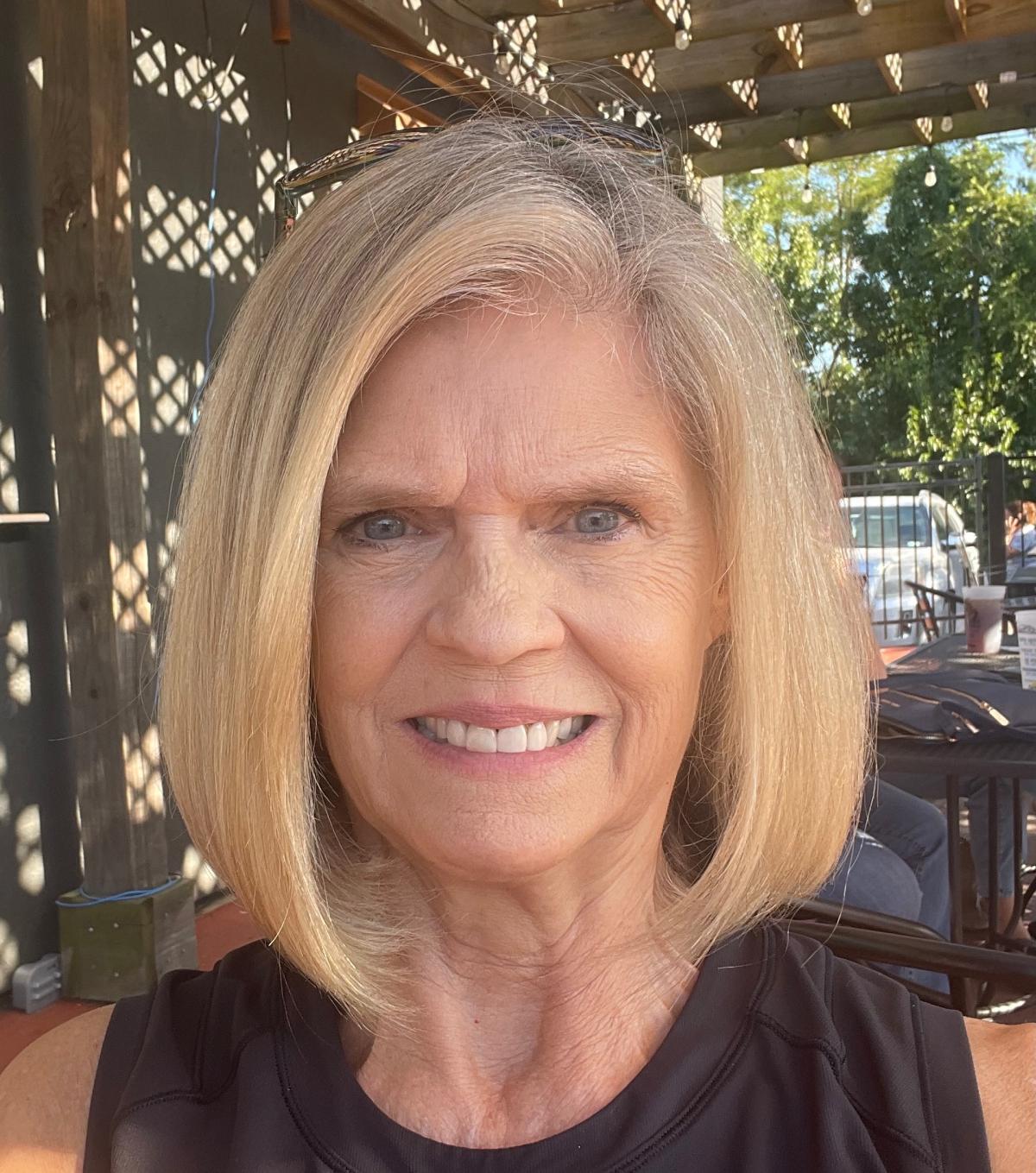
When Dr. Marilyn P. Carlson began her academic journey, the phrase “Women in STEM” was hardly a cultural slogan; it was a quiet act of resistance. Decades before diversity and inclusion became institutional priorities, Carlson was already breaking through barriers that few women before her had approached. Her story, spanning from a rural Midwestern farm to the forefront of mathematics education reform, reveals both how far women in STEM have come and how vital persistence remains.
Carlson was born in Kansas City, Missouri, and raised on a small family farm where hard work was valued. Her early years were defined by long days outdoors, close-knit community life, and a passion for learning. At Cass Midway High School, a graduating class of only 38 students meant that talent didn’t go unnoticed. Her aptitude for mathematics was evident early, but it was matched by an extraordinary athletic ability that made her stand out even more.
By the early 1970s, when women’s sports were still fighting for recognition, Carlson was already rewriting expectations. She competed in the National Junior Olympics in track and field in 1971 and 1972 and captured the one-on-one basketball championship at the National AAU tournament in 1973. As a high school junior, she was named Missouri Valley’s Most Outstanding Female Athlete of the Year. Her achievements led to a historic milestone: she became the first woman to receive a full athletic scholarship to Central Missouri State University (now the University of Central Missouri). There, she majored in mathematics and physical education, graduating cum laude in 1977, and continued her athletic excellence. She earned All-America honors five times in track and field: three times in the 800-meter run, once in the 400-meter hurdles, and once in the 100-meter hurdles. This was at a time when all college women's national competitions were in one division.
It would be easy to tell Carlson’s story as one of relentless athletic and academic success, but the real thread that ties her journey together is vision, the ability to see potential where others see limitations. After earning her M.S. in computer science and later her Ph.D. in mathematics education at the University of Kansas, Carlson turned her attention to a problem that had frustrated educators for decades: the lack of progress in how precalculus and calculus were taught. Despite fifty years of research and reform efforts, students continued to struggle to understand the fundamental concepts that form the backbone of higher mathematics.
At Arizona State University, Carlson became not only a professor but a reformer. Her response was not to blame students for their difficulties but to ask a deeper question: what if the problem lay in how the subject itself was being taught? That question would drive the next 30 years of her career and lead to the development of one of the most impactful education initiatives in the field: The Pathways Project.
The Pathways Project, led by Carlson and her collaborators, is grounded in a simple but radical premise: that mathematics learning should be about reasoning, not rote memorization. Using findings from cognitive research, Carlson’s team built the Pathways Precalculus curriculum from the ground up, focusing on helping students understand the relationships between changing quantities, rather than just mastering procedural steps. The result has been transformational. Across more than 20 universities and colleges, institutions using Pathways have reported not only improved conceptual understanding but also dramatic increases in passing rates, in some cases, rising by over 40 percent compared to traditional methods.
But what truly distinguishes Carlson’s work is how deeply it is tied to mentorship and empowerment. She has advised 18 Ph.D. students and served on committees for more than 20 others, many of whom have gone on to lead their own research programs or influence mathematics education policy. Among them are women who credit Carlson for showing them that leadership in mathematics is not about fitting in; it’s about transforming the space you enter.
Carlson’s leadership style mirrors her teaching philosophy: patient, deliberate, and rooted in respect for the learning process. She believes that change in education, like progress in mathematics, happens incrementally through reflection, collaboration, and persistence. Her research-based model, combining theory with practice, has set a new standard for how reform should happen in higher education. As she often notes, “You don’t change a system by demanding it perform differently. You change it by helping people see differently.”
Her accomplishments have not gone unnoticed. Carlson has received the National Science Foundation CAREER Award, the MAA Selden Award for Research in Undergraduate Mathematics Education, and Arizona State University’s Outstanding Faculty Mentor Award. Yet she remains grounded in her purpose: improving the way students experience mathematics and supporting the educators who teach it.
For women in STEM, Carlson’s story carries particular resonance. Her career is not defined by a single breakthrough moment but by sustained commitment to her students, to her field, and to the belief that understanding mathematics can be a transformative human experience. She exemplifies the quiet strength that has long propelled women forward in science and education: the discipline to do the hard work, the courage to ask better questions, and the vision to build what doesn’t yet exist.
Today, as the Pathways curriculum enters its tenth edition, Marilyn Carlson continues to refine, test, and expand her model for learning. Her work reminds us that progress in STEM is not just about innovation in technology or theory, but about persistence in helping others see and think differently. In a world still struggling to bring equity and depth to STEM education, Carlson’s life offers a clear equation for change, one that balances intellect with empathy, and research with humanity.