Why Critics Are Calling Bugonia The Most Important Film Of This Year

The holidays just got significantly more unsettling. Yorgos Lanthimos and Emma Stone's latest collaboration, Bugonia, arrived on Peacock on December 26, bringing one of 2025's most provocative films directly to your living room. This isn't just another streaming drop. It's a disorienting plunge into conspiracy theories, corporate greed, and the question of what happens when paranoia meets power.
What Makes Bugonia Stand Out in 2025's Crowded Sci-Fi Landscape
While blockbusters like Avatar: Fire and Ash dominated conversations, Bugonia quietly carved out its own territory as a deeply unconventional psychological thriller. The film operates at the intersection of dark comedy, science fiction, and social commentary without ever settling comfortably into any single category.
At its core, the story follows two conspiracy theorists, Teddy and his autistic cousin Don, who kidnap Michelle Fuller, the CEO of pharmaceutical giant Auxolith. They're convinced she's an alien from Andromeda plotting humanity's destruction. What begins as a seemingly straightforward kidnapping thriller rapidly evolves into something far more slippery and thought-provoking.
Lanthimos doesn't ask you to choose sides. Instead, he traps you in the basement alongside the characters, forcing you to experience their delusions, rage, and desperation firsthand. The film never tells you who to believe, which makes it both maddening and brilliant.
The Performances That Drive the Madness
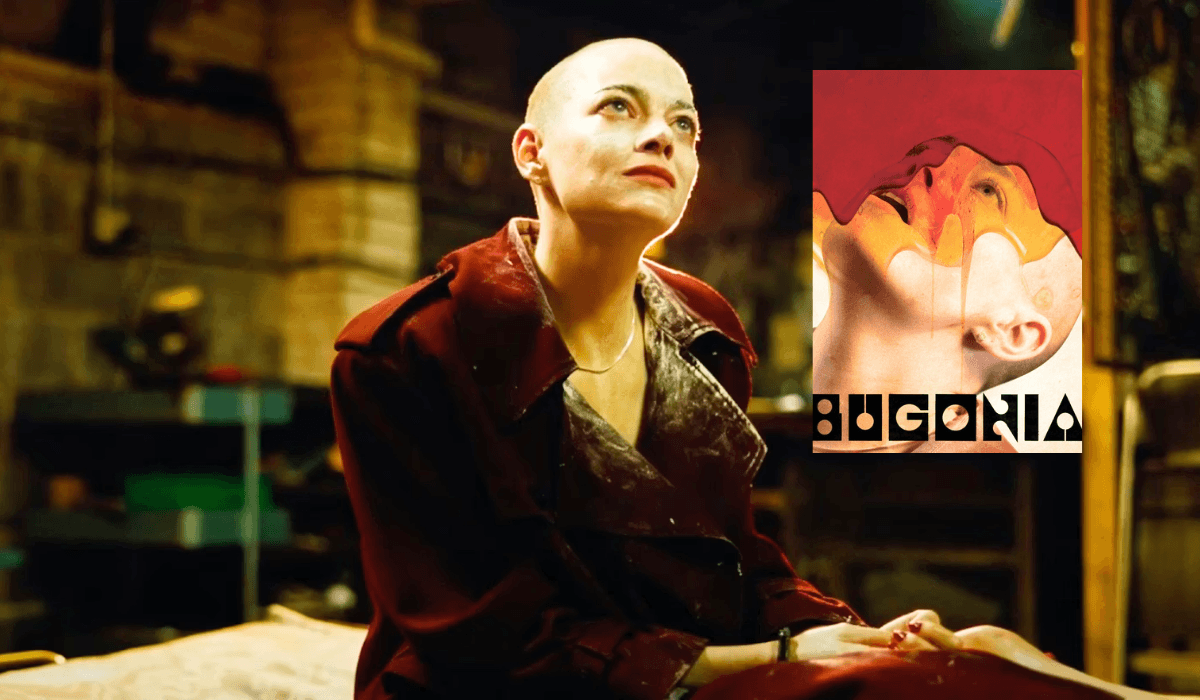
Emma Stone delivers one of her most controlled yet unsettling performances as Michelle Fuller. She embodies the slick, passive-aggressive veneer of corporate doublespeak, the kind of executive who speaks in soothing tones while potentially ruining lives. Stone's ability to project both vulnerability and ruthless calculation creates an ethical tightrope that keeps viewers perpetually off-balance.
Jesse Plemons matches her intensity as Teddy, the beekeeper turned kidnapper. His performance captures the terrifying quiet of someone slowly losing their grip on reality. Plemons doesn't play Teddy as a ranting lunatic. He's measured, methodical, and disturbingly sincere in his convictions. The result feels uncomfortably real in our current climate of online radicalization and conspiracy culture.
Both actors earned Golden Globe nominations for their work here, and deservedly so. The film received three total Golden Globe nods, including Best Motion Picture in the Musical or Comedy category, a classification that speaks to Lanthimos's refusal to fit into traditional boxes.
Why Critics and Audiences Can't Stop Talking About It
Bugonia holds an 87% critics score on Rotten Tomatoes from 313 reviews, with audiences rating it at 84%. That alignment between critics and viewers is rare for a film this deliberately confrontational. The consensus? Stone and Plemons elevate what could have been an absurdist exercise into something genuinely gripping.
What resonates most powerfully is how the film mirrors our fractured reality without preaching. We live in a time when corporate malfeasance and conspiracy theories both feel plausible, when it's genuinely difficult to distinguish legitimate skepticism from paranoid delusion. Bugonia doesn't solve that problem. It amplifies it until the discomfort becomes almost unbearable.
The film was named to the American Film Institute's Top 10 Films of 2025 and received nominations from Critics Choice Awards for Best Picture, Best Actress, and Best Adapted Screenplay. These aren't participation trophies for a weird art film. They recognize genuine cinematic achievement.
The Lanthimos Touch Applied to Modern Anxiety
If you've seen The Favourite or Poor Things, you know Lanthimos operates with a distinctive visual and tonal style. Bugonia represents his most expensive film to date, with a budget between $45 and $55 million, and that investment shows in every meticulously crafted frame.
Cinematographer Robbie Ryan, in his fourth collaboration with Lanthimos, shot nearly the entire film on 8-perf 35mm VistaVision cameras, making it the most extensive use of that format since 1961. The result is both beautiful and alienating, with each shot feeling carefully composed yet emotionally distancing.
The film's structure relies heavily on alternating close-ups during interrogation scenes. Lanthimos largely denies viewers traditional reaction shots, which creates a subtle but persistent tension. You hear something provocative, but you never see the immediate response. This forces you to sit with the discomfort rather than processing it through familiar visual cues.
Jerskin Fendrix's paranoid score amplifies this unease, ensuring that even quieter moments feel charged with impending disaster.
From Korean Original to Contemporary American Remake
Bugonia adapts Jang Joon-hwan's 2003 South Korean cult classic Save the Green Planet!, though screenwriter Will Tracy deliberately avoided creating a faithful reproduction. He watched the original once before writing, then deliberately diverged to allow both films to exist independently.
The most significant change involves gender-swapping the central CEO character from male to female, a decision that adds layers to the power dynamics at play. Producer Ari Aster championed this choice, understanding how it would complicate audience sympathies in productive ways.
Jang Joon-hwan remained attached as executive producer after stepping down from directing duties due to health concerns. He publicly praised Lanthimos as a fitting choice, recognizing that the Greek filmmaker's sensibilities aligned well with the material's dark absurdism.
The title Bugonia refers to an ancient Mediterranean folk ritual described in texts including Virgil's Georgics, involving bees and regeneration. That classical reference adds mythological weight to what might otherwise seem like pure contemporary satire.
The Box Office Reality and Awards Season Momentum
Despite strong reviews, Bugonia struggled theatrically, earning $39 million worldwide against its substantial budget. It opened in limited release on October 24 with the year's best per-screen debut before expanding wide on Halloween. Those numbers tell a familiar story about ambitious, challenging films in the current theatrical landscape.
However, awards attention may provide a second life. Beyond the Golden Globes recognition, both Stone and Plemons remain in Oscar consideration, though they're described as being "on the bubble" for nominations. Will Tracy appears to have a stronger shot at an adapted screenplay nomination.
The Peacock streaming release positions the film perfectly for voters who want to revisit it or experience it for the first time. Streaming platforms have become essential for maintaining momentum during the long awards campaign season.
Who This Film Is Actually For
Let me be direct about this. Bugonia isn't for everyone, and pretending otherwise would be dishonest. It's rated R for bloody violent content including a graphic suicide, disturbing imagery, and strong language. This is heavy, confrontational material that doesn't offer easy catharsis or comfortable resolution.
If you're looking for straightforward entertainment, this probably isn't your movie. If you want heroes and villains clearly delineated, you'll be frustrated. Bugonia is designed to make you uncomfortable, to challenge your assumptions about who deserves sympathy and what constitutes villainy in late-stage capitalism.
That said, if you appreciate films that trust their audience's intelligence, that refuse to spoon-feed meaning, and that remain ambiguous in productive rather than lazy ways, Bugonia delivers. It's the kind of film that improves with reflection and rewards discussion.
The 118-minute runtime feels deliberately paced rather than rushed. Lanthimos and Tracy understand that tension built through sustained discomfort hits harder than constant action beats.
A Necessary Mirror for Uncomfortable Times
Having watched Bugonia twice now, I find myself increasingly convinced it's one of the most important American films of 2025, even if it's not always enjoyable. That distinction matters.
The film captures something essential about our current moment: the vertigo of not knowing what to believe, the exhaustion of trying to parse reality from fiction, and the creeping suspicion that both conspiracy theorists and corporate executives might be right about each other.
Lanthimos refuses to let either side off the hook. Yes, Teddy's methods are abhorrent and his worldview is poisoned by internet radicalization. But the film also suggests that Michelle's pharmaceutical company genuinely has caused harm, that corporate-speak really does function as a sophisticated form of lying, and that sometimes paranoia emerges from actual patterns of abuse rather than pure delusion.
This moral complexity makes the film frustrating but vital. We're not living in times that permit simple narratives, and Bugonia honors that difficulty rather than simplifying it for comfort's sake.
The ending, which I won't spoil, has divided audiences. Some find it transcendent; others consider it a cop-out. I fall somewhere in between, viewing it as deliberately ambiguous rather than resolved. Lanthimos seems to be asking whether humanity even deserves resolution at this point.
Technical Excellence Meets Thematic Ambition
What keeps Bugonia from becoming pure intellectual exercise is the commitment of everyone involved to making it viscerally engaging. This isn't a film that exists only in your head. The violence feels sickeningly real. The basement location becomes genuinely claustrophobic. The performances create authentic stakes even when the premise teeters on absurdity.
Ryan's cinematography captures both the sterile modernism of Michelle's world and the decaying analog reality of Teddy's farmhouse. These visual contrasts underscore the class dynamics without ever becoming didactic about them.
The production design deserves particular praise. Teddy and Don's makeshift interrogation chamber, filled with homemade contraptions and conspiracy wall collages, feels both pathetic and threatening. It's the physical manifestation of internet rabbit holes translated into three-dimensional space.
Why Stream It Now on Peacock
The Peacock streaming release eliminates the biggest barrier to experiencing Bugonia: accessibility. This was never going to be a massive theatrical hit, but it's exactly the kind of film that finds its audience through word-of-mouth and home viewing.
Streaming also allows for the kind of repeated viewing that benefits Bugonia. The first watch can feel overwhelming or confusing. The second reveals patterns, foreshadowing, and thematic threads that weren't apparent initially. Details in the production design that seemed random acquire significance. Dialogue that felt throwaway proves more important.
For those doing Oscar homework before nominations, this is essential viewing. For anyone interested in where American independent cinema intersects with European art-house sensibilities, it's a fascinating case study. For fans of Stone and Plemons, it showcases both actors working at career-best levels.
The Broader Conversation About Conspiracy and Truth
Beyond its qualities as cinema, Bugonia enters a larger cultural conversation about conspiracy theories, corporate power, and epistemological crisis. The film doesn't provide answers because it understands that our current predicament resists simple solutions.
Teddy believes he's seeing through the lies to fundamental truth. Michelle believes she's operating within legal and ethical boundaries despite obvious harm. Both are partially right and disastrously wrong. The film suggests that our systems of meaning-making have broken down so completely that distinguishing reality from fantasy has become nearly impossible.
This isn't nihilism for its own sake. It's an attempt to honestly depict a society that has lost shared frameworks for determining truth. Whether that diagnosis feels accurate or exaggerated will likely depend on your own position in contemporary debates about media, science, and institutional authority.
Worth Your Time Despite the Discomfort
Bugonia won't be everyone's favorite film of 2025, but it might be the one that haunts you longest. Its willingness to remain unresolved, to offer critique without easy alternatives, and to find dark comedy in our collective dysfunction makes it both challenging and oddly essential.
The performances alone justify the viewing. Stone and Plemons create a fascinating dance of manipulation and desperation, each trying to control a situation that neither fully understands. The supporting cast, including Aidan Delbis as Don and Alicia Silverstone in a small but crucial role as Teddy's mother, fill out a world that feels simultaneously heightened and grimly plausible.
Is it Lanthimos's best film? That's debatable. Poor Things remains more emotionally accessible, while The Favourite feels more precisely constructed. But Bugonia might be his most urgent, his most directly engaged with contemporary American anxieties about truth, power, and the fragile boundaries of sanity.
If you're spending the holiday week looking for something genuinely different, something that won't hold your hand or promise easy catharsis, Bugonia delivers. Just don't expect to feel good afterward. That's the point.
Stream Bugonia now exclusively on Peacock and decide for yourself whether its vision of America teetering between delusion and dystopia hits too close to home or provides the kind of clear-eyed diagnosis our moment requires.