Bugonia Asks The Question We're All Afraid To Answer: What If The Conspiracy Theorists Are Right?

The most disturbing thing about Bugonia isn't the violence, the body horror, or even the shocking ending. It's how uncomfortably plausible the conspiracy theory at its center actually feels. Yorgos Lanthimos's latest provocation, now streaming on Peacock, forces viewers into a moral and epistemological trap with no clear exit. By the time the credits roll, you're left wondering not just what you believe, but whether belief itself still means anything in a world where both corporate malfeasance and paranoid delusion feel equally credible.
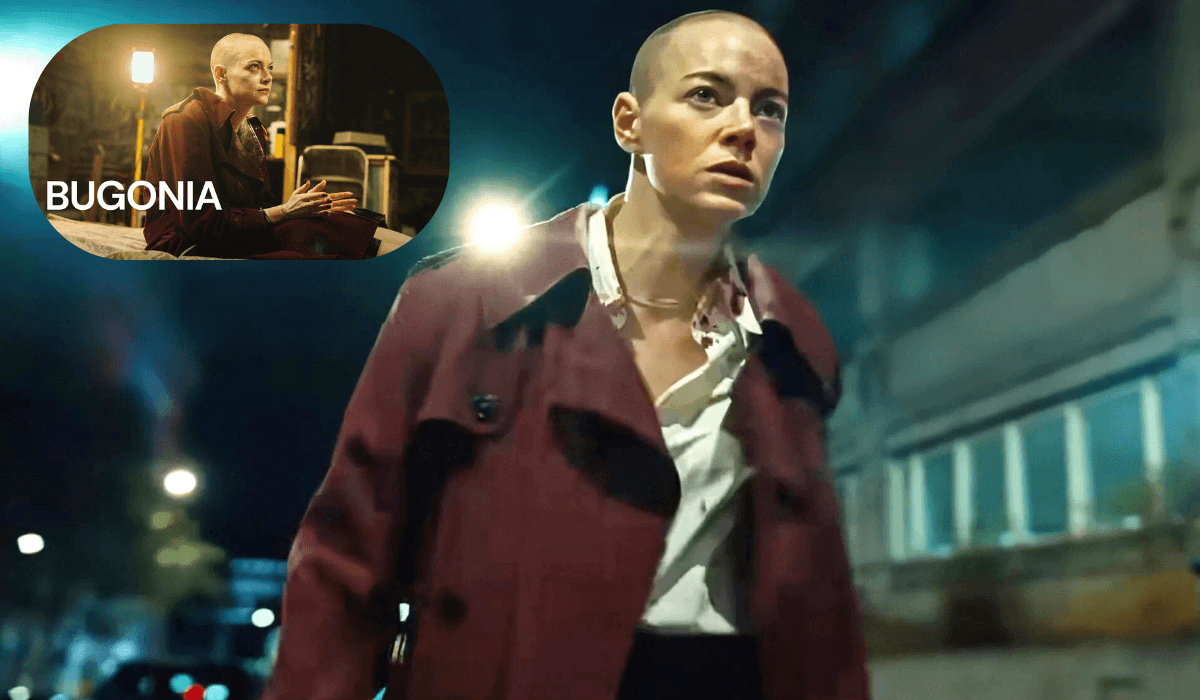
This is intentional, calculated, and deeply unsettling. Bugonia doesn't ask you to pick a side. It asks you to recognize that both sides might be catastrophically correct about each other.
The Setup: A Conspiracy Theory That Sounds Absurd Until It Doesn't
Teddy Gatz, played with terrifying sincerity by Jesse Plemons, is a warehouse worker and beekeeper who has spent years researching what he believes is humanity's greatest threat. He's convinced that Michelle Fuller, the CEO of pharmaceutical giant Auxolith, is actually an Andromedan alien sent to enslave humanity through corporate control, pharmaceutical manipulation, and environmental destruction.
On paper, this sounds like textbook internet-fueled conspiracy theory madness. Teddy has all the hallmarks: the obsessive research, the connection between disparate data points that no one else sees, the absolute certainty that he alone understands the truth. He's shaved Michelle's head because he believes aliens communicate through their hair. He's covered her in antihistamine cream to suppress her supposed powers. He's imprisoned her in his basement to force her to confess and take him to her mothership.
The film could have easily positioned Teddy as a straightforward villain, a cautionary tale about online radicalization and the dangers of conspiracy thinking. It doesn't. Instead, Lanthimos and screenwriter Will Tracy systematically present evidence that Teddy's underlying grievances, stripped of their alien framework, are completely legitimate.
Auxolith really has harmed people. Teddy's mother Sandy, played by Alicia Silverstone, lies comatose in a hospital after participating in one of Auxolith's experimental drug trials. The company paid Teddy off and is covering her medical expenses, but money doesn't bring back his mother. The corporation's response to its own negligence is to throw cash at the problem and hope it disappears.
The film shows us Auxolith systematically destroying bee populations, decimating local ecosystems, and trapping working-class communities in cycles of hazardous wage slavery. Michelle Fuller, despite her rhetoric about innovation and healing, runs a company that profits from human suffering. Her job literally requires her to prioritize shareholder value over human life.
So when Teddy calls her an alien bent on destroying humanity, he's not entirely wrong about the destruction part. He's just wrong about the mechanism.
Or is he?
The Pharmaceutical Industry's Real Track Record Makes Conspiracy Feel Rational
Here's the uncomfortable truth that Bugonia exploits masterfully. Pharmaceutical companies actually have concealed harmful side effects, manipulated data, and prioritized profits over patient safety. This isn't conspiracy theory. It's documented fact.
Research published in 2025 found that pharmaceutical industry-linked conspiracy theories are widespread, with a study in Poland showing that 63.1% of respondents believed pharmaceutical companies conceal drug side effects. That's not a fringe belief. That's a majority opinion.
And they're not entirely wrong to be suspicious. Merck concealed cardiovascular risks associated with Vioxx. Servier hid dangers related to Mediator. The opioid epidemic in the United States was fueled significantly by pharmaceutical marketing that downplayed addiction risks. These are not theoretical harms. These are documented cases where corporations knowingly harmed people for profit.
Ben Goldacre's 2012 book "Bad Pharma" meticulously documented how drug companies mislead doctors and harm patients through selective publication of clinical trials, manipulation of research data, and aggressive marketing tactics. Goldacre himself rejects conspiracy theories, but he makes clear that legitimate criticism of the pharmaceutical industry is both warranted and necessary.
The problem is that once you acknowledge that pharmaceutical companies really do hide negative data, really do prioritize profits over patient safety, and really have caused preventable deaths through corporate negligence, where exactly do you draw the line between reasonable skepticism and paranoid conspiracy?
Bugonia suggests there might not be a clear line anymore.
Michelle Fuller Is Both Victim and Villain
Emma Stone's performance as Michelle Fuller is a masterclass in moral ambiguity. She plays the character with remarkable restraint, never quite tipping into outright villainy or sympathetic victimhood. Michelle is terrifying not because she's openly evil, but because she genuinely believes in what she's doing.
Watch her carefully in the early scenes before the kidnapping. She announces that Auxolith employees can now leave at 5:30 pm, framing it as a generous policy change. Then she immediately adds passive-aggressive comments about "those who are truly committed" staying later. This is corporate doublespeak perfected into an art form. She offers freedom with one hand while manufacturing guilt with the other.
Michelle speaks in the language of innovation, disruption, and healing. Her company's slogan is "Healing Tomorrow, Today." But what does that actually mean? It means experimental drugs that put people like Sandy Gatz into comas. It means prioritizing future profits over present harm. It means using the language of care to justify exploitation.
Stone plays all of this with a smooth, practiced ease that feels sickeningly familiar. We've all encountered people like Michelle, executives who genuinely seem to believe their own rhetoric even as their companies cause measurable harm. The performance is so effective precisely because it's so recognizable.
But Michelle is also genuinely terrified. She's a woman completely in the power of two armed, mentally unstable men with legitimate grudges against her company. Her attempts to negotiate, to use her rhetorical skills to escape, are both manipulative and completely understandable. She's fighting for her life using the only weapons she has.
The film refuses to let you pick a side. Michelle is both a corporate sociopath whose company has destroyed lives and a kidnapping victim being tortured by delusional conspiracy theorists. Both things are true simultaneously.
Teddy's Methods Are Abhorrent But His Analysis Isn't Wrong
Jesse Plemons plays Teddy not as a ranting lunatic but as someone who has thought deeply about systemic problems and arrived at completely insane conclusions. His calm, methodical approach makes him more frightening than if he were simply unhinged.
Teddy has correctly identified that something is profoundly wrong with how pharmaceutical companies operate. He's correctly identified that corporations prioritize profit over human welfare. He's correctly identified that people in power use sophisticated language to obscure harmful actions. He's correctly identified that working-class communities like his own are being systematically destroyed by economic forces beyond their control.
Where Teddy goes wrong is in attributing these structural problems to literal aliens rather than to the predictable outcomes of unregulated capitalism. His mistake isn't seeing the pattern. It's misidentifying the cause.
But here's what makes Bugonia so unsettling. The film suggests that Teddy's alien theory might actually be a more emotionally manageable explanation than confronting the reality that humans are doing this to each other voluntarily. If Michelle is an alien, then her behavior makes sense. She's a different species with different goals. But if she's human, then we have to confront the fact that humans really will destroy their own species for quarterly earnings reports.
Which explanation is more comforting? That aliens are secretly running everything, or that we've built systems that incentivize people to act exactly like aliens would?
The film also shows how Teddy's conspiracy thinking makes him vulnerable to manipulation. When Michelle tells him that antifreeze is actually the cure for his mother's coma, he believes her because he's so desperate for his worldview to be validated. He wants his mother's suffering to mean something, to fit into a larger narrative where he's the hero fighting alien oppressors.
So he injects antifreeze into his mother's IV, killing her. This is the ultimate tragedy of conspiracy thinking. It doesn't just disconnect you from reality. It makes you an active participant in the harm you're trying to prevent.
The Ending Validates Everything While Resolving Nothing
I'm going to spoil the ending because it's essential to understanding what Lanthimos is doing here. Michelle really is an alien. Teddy was right. The conspiracy theory, stripped of all the elaborate details, turns out to be fundamentally accurate.
Michelle enters what appears to be a closet in her office, types a code into a calculator, and teleports to the Andromedan mothership. She's not just an alien. She's the empress. The Andromedans created humans as an experiment, and Michelle has been working to develop drugs to suppress humanity's violent and selfish tendencies. When that fails, she and her fellow Andromedans decide to end the experiment, placing a dome over Earth and killing all humans instantly.
The film ends with Michelle gazing at an Earth now free of human life as bees slowly return to Teddy's apiary.
This ending has divided audiences. Some see it as transcendent. Others consider it a cop-out that undermines everything that came before. I fall firmly into a third camp. The ending is brilliant precisely because it doesn't resolve the moral questions the film raises.
Yes, Teddy was technically right about aliens. But he still killed his own mother. He still tortured a kidnap victim. He still acted monstrously based on beliefs that happened to align with a reality he couldn't actually verify at the time.
Yes, Michelle was technically a threat to humanity. But she was also genuinely trying to help humans overcome their worst impulses. Her methods were manipulative and harmful, but her goal was arguably benevolent from an Andromedan perspective.
The revelation that aliens are real doesn't suddenly make everything clear. It makes everything more complicated.
What This Says About Our Current Moment
Bugonia isn't really about aliens. It's about living in a society where institutional trust has collapsed so completely that conspiracy theories and documented corporate malfeasance have become indistinguishable.
We know pharmaceutical companies have concealed harmful data. We know corporations prioritize profits over people. We know that executives use sophisticated rhetoric to obscure their complicity in systemic harm. These aren't theories. These are established facts.
But we also know that conspiracy thinking leads people to inject bleach, refuse vaccines, and believe that pizza restaurants house child trafficking rings. We know that paranoid delusion causes real harm to real people.
The problem is that we need some way to distinguish between legitimate criticism of powerful institutions and paranoid fantasy. Bugonia suggests we might have lost that ability entirely. When corporations really do harm people and really do lie about it, how do you prevent those legitimate concerns from metastasizing into full-blown conspiracy theories?
The film offers no solution because there might not be one. We've created a system where corporate incentives align so perfectly with harm that distinguishing between malevolence and simple profit-seeking becomes impossible. Michelle Fuller doesn't need to be an alien to act like humanity's enemy. The system she operates within already incentivizes exactly that behavior.
The Film Is Uncomfortably Accurate
Having watched Bugonia twice now, I'm convinced it's one of the most important American films about conspiracy thinking precisely because it refuses to dismiss conspiracy theorists as simply crazy. Teddy is wrong about aliens but right about everything else. His analysis of how power operates, how corporations harm communities, and how systems of control disguise themselves in the language of care is fundamentally accurate.
What makes him dangerous isn't that he's wrong about the problems. It's that he's attached those accurate observations to an unfalsifiable belief system that justifies violence and makes him incapable of accepting any evidence that contradicts his worldview.
This is exactly how conspiracy theories function in reality. They take legitimate grievances, real instances of institutional failure, and documented cases of elite malfeasance, and they bolt those observations onto an explanatory framework that makes productive engagement impossible.
The pharmaceutical industry really has caused tremendous harm. Legitimate criticism of how drugs are developed, marketed, and monitored is not only reasonable but necessary. But when that criticism morphs into the belief that all pharmaceutical companies are secretly working together to keep humanity sick, you've crossed from justified skepticism into territory that makes solving actual problems impossible.
Bugonia captures this dynamic with brutal precision. It shows how conspiracy thinking emerges from real grievances but then traps believers in a worldview that makes addressing those grievances impossible. Teddy can't fight for better pharmaceutical regulation or corporate accountability because he's convinced the problem is aliens, not capitalism.
The film also forces viewers to confront our own epistemological crisis. How do we know what's real anymore? When corporations really do lie, when governments really do conceal information, when elites really do operate in ways that harm ordinary people, what tools do we have left for distinguishing truth from fiction?
I don't think Bugonia offers an answer to that question. I think it's arguing that we might not have one anymore.
The Uncomfortable Reality That Both Sides Are Right
The genius of Bugonia is that it validates both perspectives while condemning both sets of actions. Teddy is right that Michelle represents an existential threat to humanity. Michelle is right that Teddy's methods are monstrous and his beliefs are delusional. Both truths coexist without canceling each other out.
This is what makes the film so difficult to process. We're trained to look for the moral center, to identify who we should root for. Bugonia refuses that comfort. It insists that you sit with the contradictions rather than resolving them into a clean narrative.
The pharmaceutical industry does cause preventable harm. Corporate executives do use language that obscures their complicity in that harm. Working-class communities are being destroyed by economic forces that benefit the wealthy. All of this is true and observable.
But believing that the solution is to kidnap CEOs and torture them into confessing their alien origins won't address any of those problems. In fact, it makes addressing them impossible by shifting focus from systemic reform to individual villains.
This is the trap we're caught in culturally. The problems are real. The harm is real. But the proposed solutions from conspiracy theorists don't address the actual mechanisms of that harm. They just provide an emotionally satisfying narrative that makes people feel like they understand what's happening while doing nothing to change it.
Why This Matters Beyond Entertainment
Bugonia arrives at a moment when distinguishing between legitimate institutional criticism and conspiracy-driven paranoia has become genuinely difficult. Trust in pharmaceutical companies, government agencies, and corporate media has collapsed. Some of that distrust is earned. Companies really have lied. Governments really have concealed information. Media outlets really do have conflicts of interest.
But the response to that earned distrust has often been to embrace increasingly elaborate conspiracy theories that make productive engagement with these institutions impossible. If you believe that pharmaceutical companies are intentionally keeping people sick to maximize profits, you're not going to participate in the regulatory reforms that could actually improve outcomes. You're going to reject all pharmaceutical interventions entirely, which often leads to preventable harm.
Bugonia captures this dynamic without offering easy answers. It shows conspiracy thinking emerging organically from real grievances. It shows how corporate rhetoric really does sound like the sophisticated manipulation Teddy accuses Michelle of employing. It shows how both sides can be simultaneously right and catastrophically wrong.
The film's ending, where Michelle really is an alien who decides to end humanity, doesn't resolve this tension. If anything, it intensifies it. Teddy was right about the threat but wrong about almost everything else. His being right about the central claim doesn't vindicate his methods, doesn't make his torture of Michelle justified, and doesn't make his worldview any less delusional.
This is the uncomfortable truth Bugonia forces us to confront. Sometimes conspiracy theorists might be directionally correct about threats while being completely wrong about mechanisms, solutions, and methods. Validating their accuracy on one point doesn't mean accepting their entire framework.
The Performance Layer: Stone and Plemons as Dueling Realities
What elevates Bugonia beyond mere thought experiment is the commitment of its two leads to making their characters feel fully human despite the absurdist premise. Emma Stone and Jesse Plemons both earned Golden Globe nominations for their work here, and deservedly so.
Stone plays Michelle with remarkable restraint. She never winks at the camera or signals that the character is secretly villainous. Michelle genuinely believes she's doing important work. She genuinely thinks Auxolith's innovations will help people. The fact that her company has harmed people doesn't compute for her as a fundamental contradiction. She sees those harms as unfortunate but necessary costs of progress.
This is how real corporate executives think. They're not cackling villains. They're people who have internalized a worldview where their actions serve a greater good even when those actions cause measurable harm. Stone captures this perfectly, making Michelle simultaneously sympathetic and terrifying.
Plemons matches her by playing Teddy not as unhinged but as someone who has thought very carefully about these problems and arrived at insane conclusions through what seems like logical reasoning. His performance captures the quiet intensity of someone absolutely convinced they're right, someone who has done the research and connected the dots and now sees a pattern no one else can see.
The chemistry between them, built over their previous collaboration in Kinds of Kindness, creates a fascinating dynamic. You're watching two highly intelligent people talk past each other using completely different frameworks to interpret the same events. Michelle sees a kidnapping. Teddy sees a necessary intervention to save humanity. Both are correct within their own frameworks. Neither can reach the other.
This is the current state of political and cultural discourse in America. We're not disagreeing about solutions anymore. We're disagreeing about what reality is. Bugonia dramatizes that breakdown without offering false hope that understanding or compromise might be possible.
The Question We're Afraid to Answer
So what if the conspiracy theorists are right? What if the paranoid interpretations of corporate behavior, while wildly incorrect about mechanisms, are directionally accurate about threat levels? What if the people we dismiss as delusional cranks have actually identified real problems that our institutions refuse to address?
Bugonia suggests the answer is: it doesn't matter. Being right about the problem doesn't make the proposed solution any less monstrous. Teddy's accurate assessment that Michelle represents a threat to humanity doesn't justify kidnapping and torture. Michelle's genuine desire to help humanity overcome its flaws doesn't excuse the harm Auxolith causes.
Both truths coexist. Both characters are simultaneously victim and perpetrator. Both worldviews contain elements of accuracy and massive blind spots.
The film ends with humanity extinct and bees returning to the earth. Is this tragedy or justice? Is Michelle's decision to end the human experiment an act of genocide or mercy? Does it matter that humans really were destroying the planet if the solution is to eliminate humans entirely?
Lanthimos refuses to answer. He presents the scenario and lets viewers wrestle with their own discomfort.
This is brave filmmaking precisely because it offers no catharsis, no resolution, and no moral clarity. In a moment when audiences increasingly demand that films tell them what to think, Bugonia insists that you figure it out yourself. It provides all the information, presents both perspectives as compellingly as possible, and then walks away while you're still processing.
A Mirror We'd Rather Not Look Into
Bugonia is not an easy watch. It's deliberately uncomfortable, morally ambiguous, and refuses to offer the kind of resolution that would make it possible to walk away feeling good about anything. The film is designed to lodge in your brain and continue troubling you long after the credits roll.
That discomfort is the point. We're living through a moment of profound epistemological crisis where distinguishing truth from fiction has become genuinely difficult. Institutions really have failed us. Corporations really do prioritize profit over people. But the conspiracy theories that emerge from those legitimate grievances often make solving the underlying problems impossible.
Bugonia asks us to sit with that contradiction rather than resolving it cleanly. It asks us to recognize that being right about problems doesn't automatically make your proposed solutions valid. It asks us to acknowledge that sometimes the people we dismiss as delusional have identified real threats even if they've misunderstood the mechanisms.
Most importantly, it asks us to confront the possibility that we might have lost our shared frameworks for determining what's real. When Michelle tells Teddy she's not an alien, he doesn't believe her because she's already established herself as someone who uses sophisticated rhetoric to obscure truth. When Teddy tells Michelle that her company is destroying humanity, she doesn't believe him because he's already established himself as delusional.
Neither can reach the other. Both are trapped in their own epistemological bubbles. And in Bugonia's world, both are right.
That's the question we're all afraid to answer. What if the conspiracy theorists are right about the threats while being catastrophically wrong about everything else? What if legitimate criticism of power and paranoid delusion have become so intertwined that we can't separate them anymore? What if we've built a world where the difference between reasonable skepticism and dangerous conspiracy has collapsed entirely?
Bugonia doesn't answer these questions. It just holds up a mirror and asks if you recognize what you're seeing. The fact that the reflection is this disturbing might be the most honest thing American cinema has produced in 2025.
Related Reads: Bugonia's Ending Is Either Brilliant Or A Total Cop-Out And Here's Why Both Views Are Valid