Bugonia Understands Conspiracy Theories Better Than Any Documentary Ever Could

Documentaries about conspiracy theories have a fundamental problem. They approach their subjects from the outside, with clinical distance and journalistic objectivity. They interview believers, analyze the psychology, trace the origins, and ultimately explain why these theories are wrong. This creates a comfortable barrier between viewer and subject. You're safely positioned as the rational observer watching people lose their grip on reality.
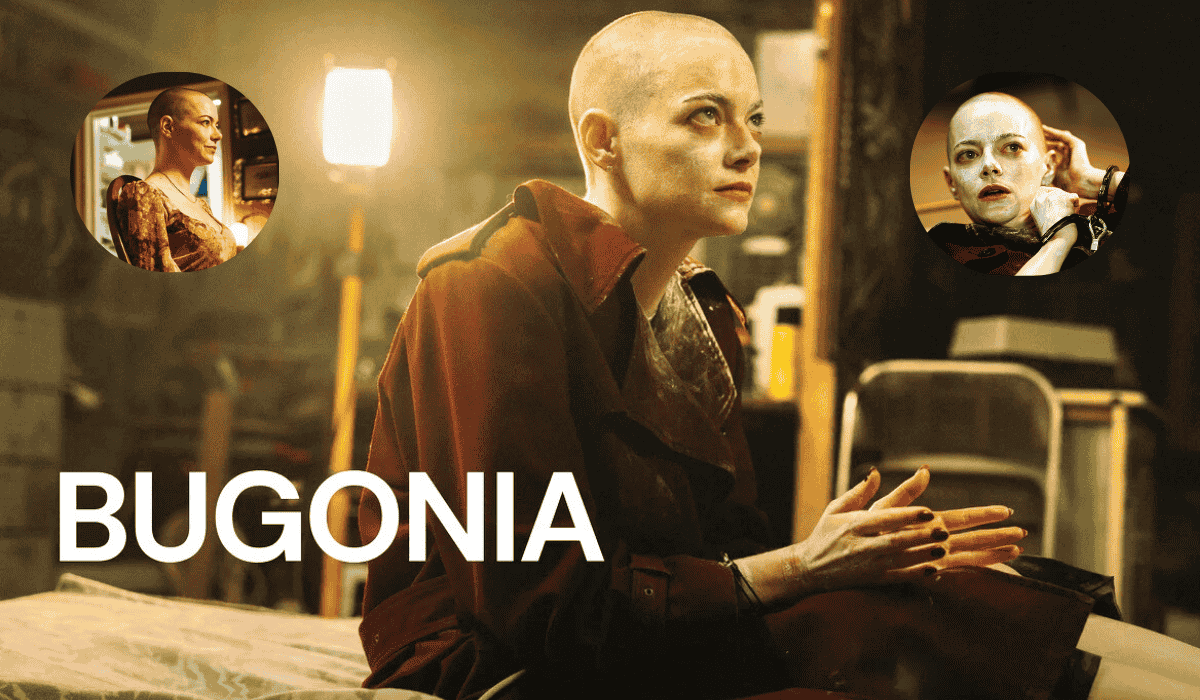
Bugonia, now streaming on Peacock, takes the opposite approach. Yorgos Lanthimos's darkly comic thriller doesn't explain conspiracy thinking. It traps you inside it, forcing you to experience the paranoia, desperation, and twisted logic from within. The result is the most accurate and unsettling portrait of conspiracy culture in American cinema.
Why Fiction Reveals Truth About Radicalization
Jesse Plemons plays Teddy Gatz, an amateur beekeeper and low-level warehouse employee who kidnaps Michelle Fuller, the CEO of pharmaceutical giant Auxolith. Teddy believes Michelle is an alien from Andromeda sent to destroy humanity, starting with killing off the world's honeybees. His autistic cousin Don helps with the abduction. They imprison her in a basement, shave her head to prevent communication with the mothership, and cover her in antihistamine cream.
On paper, this sounds absurd. In practice, it's terrifying because Lanthimos never treats Teddy as simply delusional. The film gradually reveals how he arrived at these beliefs through a series of legitimate grievances that spiraled into paranoid fantasy.
Years earlier, Teddy's mother Sandy participated in an Auxolith drug trial for opioid withdrawal. The experimental treatment left her in a persistent vegetative state. Teddy works for the same company that destroyed his mother, watching his bee colonies collapse from what he suspects are the same chemicals. His rage is justified. His conclusion that Michelle is an alien is not, but the path from one to the other feels horrifyingly plausible.
This mirrors the real mechanics of conspiracy radicalization better than any documentary interview. Research published in Current Opinion in Psychology has examined how conspiracy theories function within the 3N model of radicalization, where narratives meet personal needs for significance within validating social networks.
Legitimate concerns about corporate malfeasance, political corruption, or institutional failure become entry points for increasingly extreme beliefs. Social media algorithms amplify these grievances while suggesting ever more outlandish explanations.
The Echo Chamber Made Physical
What Bugonia captures brilliantly is how conspiracy thinking creates its own closed system of meaning. Teddy has done extensive research. He knows details about Andromedan spacecraft design. He's studied alien communication methods. He's connected patterns across seemingly unrelated events. To him, this isn't madness. It's scholarship.
The film takes place almost entirely in Teddy's basement during the interrogation. Lanthimos uses alternating close-ups, denying viewers traditional reaction shots. When Teddy says something provocative, we don't cut to Michelle's response. We stay on his face, trapped in his perspective. Only when it's her turn to speak do we see her reaction to what he's already said.
This creates a subtle but profound psychological effect. You experience the conversation the way Teddy does, from within his worldview rather than observing it from outside. The technique mimics the experience of online radicalization, where you consume content that reinforces your existing beliefs without exposure to alternative perspectives.
Studies on QAnon radicalization have documented how followers create echo chambers through selective information consumption. The conspiracy theory originated on 4chan in October 2017 and quickly spread across social media platforms. Research from Georgia State University documented a 174 percent increase in QAnon-related posts during the COVID-19 pandemic as the movement expanded globally.
Teddy represents the logical endpoint of this process. His basement is the physical manifestation of an online rabbit hole.
Why Ambiguity Is the Point
Here's where Bugonia does something most conspiracy documentaries cannot. It refuses to clearly establish whether Teddy is entirely wrong.
Michelle Fuller, played by Emma Stone in one of her most controlled performances, embodies the slick corporate doublespeak that fuels legitimate skepticism. She's cold, calculating, and speaks in the passive-aggressive language of HR departments and quarterly earnings calls. When pressed about Auxolith's drug trials, she deflects with practiced ease. The company did nothing illegal, she insists. Clinical trials have acceptable risk levels. Sandy's outcome was unfortunate but within normal parameters.
This is technically accurate but morally monstrous. Auxolith did destroy Teddy's mother for profit while operating within legal boundaries. The pharmaceutical industry does cause measurable harm while maximizing shareholder value. Corporate executives do use language designed to obscure responsibility.
During the interrogation, Michelle eventually tells Teddy an elaborate story about Andromedans. She claims they arrived during the dinosaur era, accidentally caused that extinction event, and created humanity in their image as penance. Now they're desperately trying to save humans from self-destruction through climate change, war, and other evils.
The film never clarifies whether this is true or whether Michelle is manipulating Teddy. Both interpretations are supported by evidence within the narrative. This ambiguity has frustrated some viewers who want clear answers, but it's precisely what makes the film so effective as conspiracy analysis.
Real conspiracy theories thrive in ambiguous spaces where provable facts blend with speculation. QAnon followers interpreted vague statements from political figures as coded messages. The movement's core claims were never substantiated, yet followers found patterns everywhere because they were looking for them.
Bugonia recreates this epistemological crisis without offering easy resolution. You're forced to sit with the discomfort of not knowing what's real, which is exactly how conspiracy believers experience the world.
The Violence Conspiracy Thinking Enables
Teddy's methods grow increasingly brutal as the film progresses. He uses electricity to torture Michelle, trying to force a confession. He builds a homemade suicide vest. His desperation escalates because he believes the stakes are existential. If Michelle really is an alien plotting humanity's destruction, any action is justified.
This logic has real-world consequences. A study published in Terrorism and Political Violence examining 429 U.S. participants found that belief in QAnon conspiracy theories correlated significantly with intentions for radical political action and support for the January 6, 2021 insurrection at the U.S. Capitol.
The research revealed how conspiracy beliefs create a sense of urgency that justifies violence. If you genuinely believe a cabal of pedophiles controls the government, storming the Capitol seems like heroic resistance rather than domestic terrorism.
Bugonia doesn't glorify this violence, but it shows how it emerges organically from conspiracy logic. Teddy isn't presented as evil. He's presented as someone who has constructed a worldview where torture and murder are rational responses to perceived threats.
The film's ending is deliberately controversial. Without spoiling specifics, Teddy turns out to be partially correct about certain claims. This has divided audiences and critics. Some argue it validates conspiracy thinking. Others see it as a commentary on how broken systems create conditions where paranoid fantasies and uncomfortable truths become indistinguishable.
I fall in the latter camp. The film isn't saying conspiracy theorists are right. It's saying the institutions they distrust have genuinely failed them, creating fertile ground for radicalization.
What Documentaries Miss About Conspiracy Psychology
Traditional documentaries about conspiracy theories follow a predictable structure. They explain the theory's origins, interview believers and experts, present contrary evidence, and conclude with why the conspiracy is false. This approach treats conspiracy thinking as an intellectual error that can be corrected through better information.
Research published in Perspectives on Psychological Science shows this fundamentally misunderstands the phenomenon. Evolutionary psychologists Jan-Willem van Prooijen and Mark van Vugt argue that conspiracy beliefs serve psychological and social functions that facts alone cannot address. Their research suggests conspiracy theories provide explanations for complex problems, create community through shared belief, and offer a sense of special knowledge that elevates believers above the deceived masses.
Analysis published in Current Psychology found that conspiracy theories function as a "radicalizing multiplier" that holds extremist groups together and pushes them toward more extreme and sometimes violent directions. The need for personal significance, combined with validating social networks and compelling narratives, creates pathways to radicalization that simple fact-checking cannot disrupt.
Bugonia captures these dynamics by immersing viewers in Teddy's psychology rather than analyzing it from outside. You understand why he believes what he believes not through explanation but through experience. The film recreates the isolation conspiracy thinking produces, how it severs relationships with friends and family who refuse to accept the revealed truth.
Don, Teddy's cousin, represents the audience surrogate. He's initially loyal but grows increasingly skeptical as Teddy's claims become more extreme. Aidan Delbis, cast as a non-professional neurodivergent actor, brings authenticity to the role. Don's gradual disillusionment mirrors what happens to many people pulled into conspiracy movements by loved ones.
The film shows how conspiracy belief creates unbridgeable divides even between people who care about each other. Teddy interprets Don's skepticism as betrayal or brainwashing. Don sees Teddy losing his grip on reality. Neither can communicate across this gap because they no longer share a common framework for determining truth.
The Corporate Villainy That Feeds Paranoia
Emma Stone's performance as Michelle Fuller deserves particular attention because it captures something documentaries often miss about why conspiracy theories resonate. Michelle is terrifying not because she might be an alien but because she definitely represents a system that prioritizes profit over human welfare.
Her calm, measured responses to Teddy's accusations are masterclasses in corporate language designed to deflect accountability. When confronted about drug trials that harmed participants, she doesn't deny the harm. She reframes it as acceptable risk in the pursuit of medical advancement. When asked about environmental damage, she cites regulatory compliance while ignoring measurable destruction.
This is how actual pharmaceutical executives, oil company CEOs, and financial industry leaders communicate. They're not cartoonish villains twirling mustaches. They're polished professionals who have internalized a logic where maximizing shareholder value justifies almost any collateral damage.
Stone plays Michelle as someone who genuinely believes in her own rhetoric. She's not consciously evil. She's thoroughly convinced that Auxolith operates ethically within established parameters. This makes her more frightening than any traditional villain because her worldview is the mainstream position of corporate capitalism.
Research from the Public Religion Research Institute has documented how institutional distrust fuels conspiracy thinking. Their 2021 study of nearly 20,000 Americans found that 16 percent qualified as QAnon believers, completely or mostly agreeing that the government, media, and financial sectors are controlled by Satan-worshipping pedophiles. The percentage increased to 23 percent by 2023, suggesting the movement has grown despite deplatforming efforts.
Bugonia suggests that both Teddy and Michelle represent different forms of broken thinking. His conspiracy theories are delusional, but her corporate doublespeak is a different kind of delusion that society has simply normalized. The film doesn't resolve this tension because contemporary reality doesn't either.
Why the Ending Works Despite Division
Critics and audiences have passionately debated Bugonia's conclusion. I won't spoil the specific details, but the ending validates aspects of Teddy's worldview while simultaneously showing the destruction his actions cause. Some viewers see this as the film having its cake and eating it too. Others argue it undermines the critique of conspiracy thinking by suggesting the theorists might be onto something.
My view is that the ending perfectly captures our current epistemological crisis. We live in a time when corporate malfeasance and conspiracy theories both feel plausible because institutions have lost credibility through repeated failures and deceptions. Pharmaceutical companies have caused genuine harm while claiming to help people. Government agencies have lied about surveillance programs, war justifications, and public health threats.
This doesn't make QAnon true or validate belief in Andromedan aliens. But it creates an environment where distinguishing legitimate skepticism from paranoid delusion becomes genuinely difficult. Bugonia's ambiguous ending refuses to pretend this problem has easy solutions.
Director Yorgos Lanthimos has said in interviews that he wanted viewers to remain confused about what to believe and who to root for. He sees this confusion as productive rather than frustrating. In a world where objective facts have become contested territory, the film argues that uncertainty is the only honest position.
The Title's Ancient Warning
The title Bugonia refers to an ancient Greek ritual described in Virgil's Georgics. According to myth, bees could be spontaneously generated from the carcass of an ox sacrificed without spilling blood, a method that resulted in prolonged suffering for the animal. Screenwriter Will Tracy chose this obscure reference deliberately.
The metaphor works on multiple levels. Teddy sees himself as performing a necessary sacrifice, killing Michelle to birth new understanding about the alien threat. But the title also suggests that violence often produces unexpected regeneration rather than the intended results. The ox suffers, bees emerge, but the outcome may not justify the cruelty of the method.
This connects to broader themes about how conspiracy movements justify harm through apocalyptic thinking. If you believe the world is ending unless you act, extreme measures seem not just acceptable but morally obligatory. Research published in Frontiers in Psychology has documented how conspiracy theories create permission structures for violence by framing it as necessary resistance against existential threats.
The film's final images show bees returning to their hives after humanity's collapse, suggesting that perhaps humans were the problem all along. This darkly comic conclusion asks whether our species deserves survival if this is how we treat each other.
Fiction as Truth-Telling
Having watched Bugonia twice and spent considerable time with conspiracy theory research, I'm convinced the film does something documentaries cannot. It makes you feel what conspiracy believers feel rather than just understanding their beliefs intellectually.
Documentaries maintain distance. They're educational, informative, and ultimately reassuring because they position you as someone who knows better. You watch flat-earthers or QAnon followers and feel grateful you're not susceptible to such obvious nonsense.
Bugonia denies this comfort. It shows how conspiracy thinking emerges from legitimate pain and justified rage that gets channeled into destructive fantasy. It demonstrates how corporate systems create the conditions for radicalization through their casual disregard for human welfare. It refuses to clearly distinguish heroes from villains because that distinction has collapsed in contemporary America.
This makes for an uncomfortable viewing experience. The film doesn't offer catharsis or clear moral lessons. It sits with ambiguity in ways that feel deeply unsatisfying if you want entertainment that resolves cleanly.
But satisfaction isn't the point. Accuracy is. And Bugonia captures the fractured epistemology of conspiracy culture with devastating precision.
The performances amplify this effect. Jesse Plemons makes Teddy neither sympathetic nor monstrous. He's frighteningly ordinary, the kind of person you might know who has slowly become radicalized through online content and personal grievances. Emma Stone makes Michelle chillingly recognizable as the face of normalized corporate harm. Neither character is entirely wrong or entirely right, which is exactly the problem.
The film's technical achievements serve this thematic purpose. Robbie Ryan's cinematography, shot primarily on 35mm VistaVision, gives everything a tactile, analog quality that contrasts with the digital conspiracies Teddy consumes. The basement setting becomes genuinely claustrophobic. Jerskin Fendrix's paranoid score ensures even quiet moments feel charged with impending disaster.
All of this combines to create an experience that stays with you long after viewing. You can't easily dismiss Teddy as crazy because the film has shown you exactly how his thinking developed. You can't fully sympathize with Michelle because she represents systems of harm that operate through plausible deniability. You're left with the uncomfortable recognition that both perspectives contain partial truths that cannot be reconciled.
The Documentary We Actually Need
If Bugonia were a documentary, it would fail. You can't tell this story through interviews and expert analysis while maintaining its psychological impact. The power comes from experiencing the conspiracy worldview from inside rather than observing it from outside.
This reveals something important about conspiracy culture that documentaries miss. The problem isn't just that people believe false things. It's that they inhabit a completely different framework for determining truth. They've constructed elaborate systems of meaning that are internally consistent even when disconnected from observable reality.
Fighting conspiracy thinking with facts alone fails because the issue isn't information deficit. Research on radicalization has shown that presenting contrary evidence often strengthens conspiracy beliefs by confirming the believer's sense that they're being lied to by authorities.
What's needed instead is understanding the psychological, social, and political conditions that make conspiracy thinking appealing. Research published in the journal Nature Reviews Psychology suggests people join these movements because they provide explanations for suffering, community with fellow believers, and a sense of agency in a world that feels out of control.
Bugonia addresses these deeper motivations by showing how Teddy's conspiracy beliefs serve all three functions. His theory explains why his mother is comatose and his bees are dying. It connects him with Don and an online community of fellow believers. It gives him a mission that transforms him from powerless victim to heroic truth-seeker.
The film also shows why this is ultimately destructive. Teddy's quest for truth leads to torture, murder, and his own death. His relationship with Don deteriorates. His worldview becomes so rigid that he can no longer distinguish between genuine threats and imagined ones.
Why This Matters Beyond Entertainment
Bugonia arrives at a moment when conspiracy theories have moved from fringe to mainstream. The Public Religion Research Institute's longitudinal research found that QAnon belief increased from 14 percent of Americans in March 2021 to 23 percent by 2023. Among Republicans, one in four qualified as QAnon believers by the end of the study period.
The movement has proven remarkably resilient despite deplatforming efforts. It continues to evolve, incorporating new grievances and attracting fresh followers through coded language and hashtag manipulation. The research identified media consumption as the strongest predictor of conspiracy beliefs, with Americans who trust far-right news outlets like One America News Network or Newsmax being nearly five times more likely to believe QAnon claims than those who trust mainstream sources.
Traditional approaches to countering conspiracy theories have largely failed. Fact-checking bounces off sealed worldviews. Deplatforming drives believers to alternative sites where radicalization accelerates. Educational campaigns about media literacy reach people who aren't vulnerable to these movements while missing those who are.
What Bugonia offers instead is empathy without endorsement. It shows how conspiracy thinking happens without validating the conclusions. It demonstrates why people become radicalized without excusing the violence that results. This approach might not change minds, but it creates understanding that could inform more effective interventions.
Research on deradicalization suggests that helping people exit conspiracy movements requires addressing the underlying needs the conspiracy fulfilled rather than just arguing about facts. It requires understanding what drove someone toward conspiracy thinking in the first place.
Bugonia provides that understanding through narrative immersion. After watching it, you comprehend why someone like Teddy exists even if you completely reject his conclusions. That comprehension is the first step toward meaningful intervention.
The Uncomfortable Mirror
Ultimately, Bugonia works as conspiracy analysis because it holds up a mirror to our fractured society without offering easy answers. Teddy represents the radicalized believer willing to commit violence for his truth. Michelle represents the normalized violence of corporate systems that destroy lives through bureaucratic processes. Both are monstrous in different ways.
The film suggests that until we address the institutional failures that breed conspiracy thinking, we'll continue producing more Teddys. As long as pharmaceutical companies can destroy lives for profit while remaining legally compliant, as long as economic inequality continues accelerating, as long as political systems feel rigged against ordinary people, conspiracy theories will flourish.
This is an uncomfortable diagnosis because it implies that countering conspiracy movements requires fundamental systemic change rather than just better information campaigns. It means acknowledging that some of what conspiracy theorists rage against is actually happening, even if their explanations are wildly incorrect.
Documentaries rarely go this far because it undermines their authority as fact-based media. They need to maintain clear lines between truth and falsehood. Fiction like Bugonia can wade into ambiguous territory and show how those lines have blurred in contemporary America.
The result is a film that disturbs rather than reassures, questions rather than explains, and refuses to release its audience with easy resolution. That makes it the most honest and penetrating examination of conspiracy culture in American cinema.
Whether viewers appreciate this honesty is another question entirely. Bugonia earned strong reviews with an 87 percent on Rotten Tomatoes but flopped theatrically with only $39 million worldwide. Many audiences found it too challenging, too ambiguous, too uncomfortable to embrace.
That's precisely why it matters. The easy path would have been making Teddy clearly delusional and Michelle clearly innocent. The brave choice was showing how both perspectives contain elements of truth and elements of destructive fantasy. The result is a film that understands conspiracy theories better than any documentary precisely because it refuses to simply explain them away.
Related Reads: Jesse Plemons Is Hollywood's Most Underrated Character Actor And Bugonia Proves It