Jesse Plemons Is Hollywood's Most Underrated Character Actor And Bugonia Proves It

There's a moment in Bugonia where Jesse Plemons sits across from Emma Stone's kidnapped CEO, his face barely moving, his voice eerily calm as he explains why he believes she's an alien plotting humanity's destruction. It's the kind of scene that would invite scenery-chewing from most actors. Plemons does the opposite. He makes terror feel mundane, delusion feel rational, and violence feel inevitable through sheer restraint.
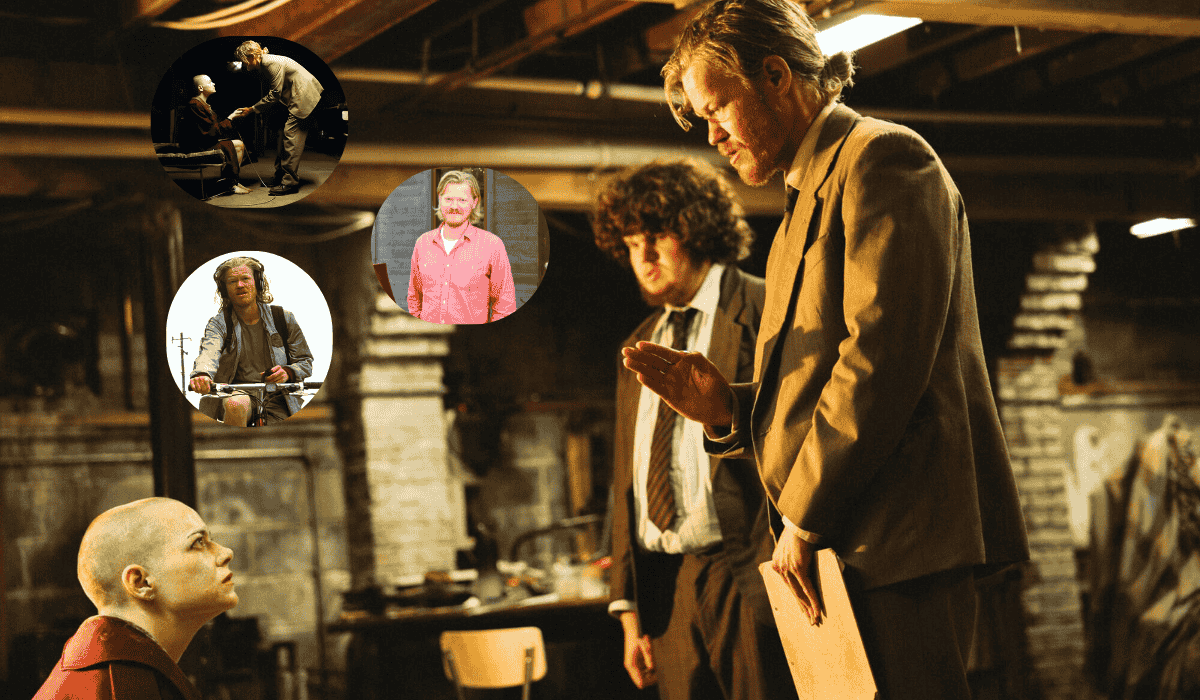
This is what Jesse Plemons does better than almost anyone working today. He disappears into characters who should be cartoons and makes them feel uncomfortably real. Yet despite an Oscar nomination, three Emmy nods, a Cannes Best Actor win, and collaborations with Martin Scorsese, Paul Thomas Anderson, Jane Campion, and Yorgos Lanthimos, Plemons remains oddly undervalued. He's the actor everyone in Hollywood wants to work with, but the general public still struggles to name.
Bugonia, now streaming on Peacock with three Golden Globe nominations including one for Plemons, might finally change that.
The Pattern of Playing Quiet Monsters
Jesse Plemons has built his career on a specific type of character, one that's become more relevant and terrifying with each passing year. He plays men who seem normal, even pleasant, right up until the moment they reveal something profoundly disturbing lurking beneath. These aren't villains who announce their evil with theatrical flourishes. They're the people who make you uncomfortable at a party without you being able to articulate exactly why.
The archetype crystallized with Todd Alquist in Breaking Bad. Plemons joined the series in its final season as a young meth cook working for Walter White's operation. Todd was polite, eager to please, almost puppy-like in his enthusiasm. Then in one of the series' most shocking moments, he casually shot a child who had witnessed their operation, his expression barely changing.
Fans nicknamed him "Meth Damon" for his resemblance to Matt Damon, a comparison that feels apt beyond physical appearance. Like Damon, Plemons projects an all-American normalcy that makes his characters' capacity for cruelty even more unsettling. The nickname stuck, though Plemons noted in 2022 that fewer people were using it as his career expanded beyond that role.
Breaking Bad was the breakthrough, but the pattern was already established. As Landry Clarke in Friday Night Lights from 2006 to 2011, Plemons played the lovable best friend and backup quarterback, the kind of kid who seemed incapable of harm. Then the show had Landry kill someone defending a friend, and suddenly that nice-guy persona became complicated. Even in roles designed to be sympathetic, Plemons brought an undercurrent of something unknowable.
The Directors Who Recognize His Gift
The most accomplished filmmakers in cinema have built their recent work around Plemons's unique talents. Paul Thomas Anderson cast him in The Master as the son of Philip Seymour Hoffman's charismatic cult leader. The role was small but crucial, and Plemons's physical resemblance to Hoffman added another layer to the family dynamics at play.
Steven Spielberg used Plemons twice, in Bridge of Spies and The Post. These weren't showy roles, but they demonstrated range. Plemons could play a Soviet spy and a government official with equal authenticity. He understood how to inhabit institutional power without calling attention to the performance.
Martin Scorsese recognized something essential in Plemons and cast him in The Irishman as Chuckie O'Brien, the man suspected of involvement in Jimmy Hoffa's disappearance. Then Scorsese brought him back for Killers of the Flower Moon as FBI agent Tom White. Originally, Leonardo DiCaprio was set to play White, but after a script revision, the role went to Plemons. That decision speaks volumes about how directors view his capabilities.
Jane Campion's The Power of the Dog earned Plemons his first Oscar nomination for Best Supporting Actor. Playing George Burbank opposite Benedict Cumberbatch's toxic masculinity, Plemons embodied a different kind of quiet strength. George was soft-spoken, kind, and deeply human in a story about the damage done by performing toughness. The role showcased Plemons's ability to play vulnerability without weakness.
The film also reunited him with Kirsten Dunst, his real-life partner whom he first worked with on Fargo. Both received Oscar nominations for The Power of the Dog, though neither won. They married in 2022 and now have two sons together.
The Lanthimos Collaboration That Defines Current Work
Yorgos Lanthimos has become the most important director in Plemons's current trajectory. Their first collaboration, Kinds of Kindness in 2024, featured Plemons in three separate roles across an anthology structure. The film was quintessential Lanthimos, deliberately unsettling and resistant to easy interpretation. Plemons won the Best Actor award at the 2024 Cannes Film Festival for the performance, a significant honor that placed him alongside cinema's most respected talents.
Winning at Cannes wasn't just recognition for a single performance. It was acknowledgment that Plemons had mastered a particular approach to acting that aligned perfectly with contemporary anxieties. His characters in Kinds of Kindness embodied control, paranoia, and the collapse of meaning in ways that felt uncomfortably relevant.
Now Bugonia represents the second Lanthimos collaboration, with more likely to follow given how well they work together. In the film, Plemons plays Teddy, a beekeeper who kidnaps pharmaceutical CEO Michelle Fuller, convinced she's an alien from Andromeda. His cousin Don, who has autism, assists in the plot. Together they torture Fuller in a basement, attempting to extract the truth about her extraterrestrial origins and plans to destroy Earth.
The role demands everything Plemons does best. Teddy believes absolutely in his conspiracy theories, which have consumed him after years of internet radicalization. Plemons never plays this for laughs or invites us to mock Teddy's delusions. Instead, he makes us understand how someone arrives at these conclusions, how the logic becomes airtight within a closed system of paranoid reasoning.
What's remarkable is the physicality Plemons brings to the role. Teddy moves with the careful deliberation of someone who has thought through every action. He's not frantic or wild. He's methodical, which makes him far more frightening. When he explains his theories to Michelle, it sounds almost reasonable in the moment, like he's simply connecting obvious dots that the rest of us are too blind to see.
Why Hollywood Knows His Name But Audiences Don't
Here's the frustrating reality about Jesse Plemons's career. He has appeared in seven Best Picture nominees, a feat achieved by only a handful of actors including Marlon Brando, Katharine Hepburn, and Laurence Olivier. He's worked with virtually every major American director of the past decade. His performances consistently earn critical praise and industry recognition.
Yet if you ask casual moviegoers to name him, many can't. They might recognize his face, or describe him as "that guy from Breaking Bad," but he hasn't achieved the household-name status his resume suggests he should have. This isn't an accident or a failure. It's the result of specific career choices that prioritize craft over celebrity.
Plemons almost never takes the lead role. He's the supporting character who makes everyone else better. In Game Night, he played a creepy cop in what amounts to an extended cameo, but his performance spawned countless memes and is what most people remember from the film. In Vice, he narrated Adam McKay's Dick Cheney biopic, providing the connective tissue that held the unconventional structure together.
This pattern extends to television. His Emmy-nominated role as Ed Blumquist in Fargo season two paired him with Dunst in a darkly comic thriller about a couple spiraling into crime. His performance in the Black Mirror episode "USS Callister" as a sadistic tech CEO trapped in his own virtual reality earned another Emmy nomination. In Love and Death, he played a detective investigating a shocking murder in a religious community.
Each role demonstrates range, yet none positioned him as a traditional leading man. Plemons seems to actively avoid that categorization. In an interview with Charlie Kaufman for I'm Thinking of Ending Things, a rare lead role, Kaufman explained his casting choice by referencing Breaking Bad. He noted how Plemons made Todd simultaneously ordinary and monstrous, how you never saw the violence coming. That quality, Kaufman suggested, was invaluable for cinema.
The Texan Background That Shapes His Approach
Jesse Plemons was born in Dallas on April 2, 1988, and raised in Mart, Texas, a town of fewer than 2,000 people located 21 miles east of Waco. His father, Jim Bob Plemons, worked as a firefighter and competed in amateur rodeos. His mother, Lisa Cason Plemons, trained special education students. This was a working-class family in a small Texas town, about as far from Hollywood glamour as possible.
Plemons started acting at age three in a Coca-Cola commercial. Throughout his childhood, he appeared as an extra when westerns filmed in the area. Around age 11, he began making regular trips to Los Angeles for auditions, supported by parents who recognized his talent but kept him grounded in Texas reality.
He attended schools in Mart and played football through junior high and high school until acting jobs required more time. Eventually, he switched to Texas Tech University Independent School District, a distance learning program, graduating in 2007. This allowed him to maintain Texas residency while building an acting career.
That Texas background permeates Plemons's work in ways both obvious and subtle. His accent, which he's never fully lost, becomes part of characters who project unpretentious authority. There's a cowboy quality to his persona, a slowness in speech and movement that reads as either threatening or comforting depending on context. Directors recognize this and use it deliberately.
In Killers of the Flower Moon, Plemons plays Tom White, a former Texas Ranger investigating murders in 1920s Oklahoma. The role required someone who could embody frontier justice mentality while representing the early FBI's attempts at professionalism. Plemons's actual Texas roots made that contradiction feel authentic rather than performed.
More broadly, his working-class background seems to inform his approach to acting as a job rather than art. Plemons rarely gives pretentious interviews about method or craft. He shows up, does the work with exceptional skill, and goes home to his family. There's a blue-collar pragmatism to his career that's increasingly rare among actors of his caliber.
The Physical Transformations That Demonstrate Commitment
Plemons has shown willingness to alter his body dramatically for roles, though he's since expressed regret about the health implications. For Black Mass in 2015, he deliberately gained 45 pounds to portray mobster Kevin Weeks. The weight served the character, making Weeks more physically imposing, but the rapid gain was unhealthy.
In 2024, Plemons announced he had lost over 50 pounds through intermittent fasting and a diet focused on whole foods. He acknowledged that the earlier weight gain was a mistake, that the physical toll wasn't worth whatever authenticity it added to the performance. This honesty is typical of Plemons, who tends to skip the usual actor platitudes about sacrifice for craft.
The weight loss is visible in Bugonia, where Plemons appears leaner and more intense. Teddy is wiry, all nervous energy barely contained. The physicality serves the character's backstory as a beekeeper who has become radicalized, someone who spends his days in isolated labor while his mind festers with conspiracy theories absorbed online.
Beyond weight, Plemons transforms through posture, vocal patterns, and facial expressions. His Breaking Bad character Todd moved with loose-limbed casualness that made his violence more shocking. His Fargo character Ed was hunched and apologetic, physically manifesting his inability to control his circumstances. In The Power of the Dog, George stood differently depending on whether his threatening brother was present, his body literally shrinking in response to intimidation.
Actor Built for This Moment
I've watched Jesse Plemons's career with increasing fascination because he represents something cinema desperately needs right now. In an era dominated by franchise films and celebrities who are famous for being famous, Plemons embodies old-fashioned screen presence married to contemporary anxieties. He's not trying to be a movie star. He's trying to disappear into characters who reveal uncomfortable truths about American masculinity, paranoia, and the quiet violence that permeates our culture.
What makes Plemons so valuable, and what Bugonia demonstrates perfectly, is his ability to humanize the inhuman without excusing it. Teddy in Bugonia has done monstrous things. He's kidnapped and tortured someone based on delusional conspiracy theories absorbed from the internet. In a lesser actor's hands, he'd be a cartoon, a one-dimensional representation of online radicalization.
Plemons makes you understand how Teddy got here. You see the loneliness, the legitimate grievances that got twisted into paranoid delusion, the desperate need to believe that the world's chaos has explanation and enemies can be identified. This doesn't excuse Teddy's actions, but it makes them comprehensible in ways that pure villainy never could be.
This matters because we live in a time when understanding radicalization is crucial to addressing it. Teddy isn't some aberration. He's recognizable. We've all encountered men like this online, in comment sections, at family gatherings. Plemons shows us how they think without asking us to sympathize, and that's a genuinely difficult balance to strike.
The same quality defined his Breaking Bad work. Todd wasn't evil in any traditional sense. He was pragmatic, almost innocent in his amorality. When he killed that child, he wasn't reveling in cruelty. He was solving a problem the most efficient way he knew how. That matter-of-fact approach to violence was more disturbing than any sadistic pleasure would have been.
Throughout his career, Plemons has gravitated toward characters who embody the banality of evil, Hannah Arendt's concept that the worst atrocities are often committed by ordinary people following their own logical systems. This is deeply unfashionable in an entertainment landscape that prefers clear heroes and villains, good guys you can root for and bad guys you can hate without complication.
Bugonia, like much of Plemons's recent work, refuses that simplicity. The film never clarifies whether Michelle Fuller actually is responsible for corporate harm, whether the conspiracy theories have any basis in reality, or who deserves sympathy in this scenario. Plemons plays Teddy's absolute conviction without tipping the scales either direction.
The Supporting Actor Trap and Why It's Not Really a Trap
Some critics have suggested Plemons is trapped in supporting roles, that he deserves to be a leading man but Hollywood won't give him the chance. I think this misunderstands both his choices and his strengths. Plemons isn't waiting to be a traditional leading man. He's actively avoiding it.
The evidence is in his filmography. When offered lead roles like I'm Thinking of Ending Things, he takes them if the material interests him. But he's not chasing leading-man status the way most actors would. He's not trying to headline action franchises or romantic comedies. He's building a different kind of career, one where he's essential rather than central.
There's enormous power in being the actor every major director wants in their film, even in a smaller role. It means you work constantly with the best filmmakers on the most interesting projects. It means you're never responsible for a film's commercial success or failure. It means you can take risks without being blamed when they don't pay off.
Plemons has appeared in multiple films each year for over a decade, working with Spielberg, Scorsese, Anderson, Campion, and Lanthimos while maintaining a television presence. That's not a trap. That's a masterclass in career management. He's become indispensable rather than replaceable, and that's far more valuable than brief periods of leading-man fame.
Consider the alternative. Actors who break through as leads often find themselves trapped in similar roles, expected to replicate whatever made them famous. They become brands rather than performers. Plemons has avoided that entirely by never allowing any single role to define him. Todd from Breaking Bad was breakthrough, but he immediately followed it with completely different characters. No one thinks of him as defined by any particular performance.
The Golden Globe Nomination and Oscar Prospects
Bugonia earned three Golden Globe nominations, including Best Picture in the Musical or Comedy category and acting nods for both Plemons and Emma Stone. These nominations matter less for the trophies themselves than for what they signal about industry recognition and Oscar potential.
The Golden Globes serve as an early indicator of awards momentum. Plemons's nomination suggests he's "in the conversation" for his second Oscar nomination, though he's described as being "on the bubble" rather than a lock. The competitive Best Supporting Actor field includes several strong performances, and Bugonia's box office disappointment could hurt his chances.
Here's what I think happens. Plemons likely doesn't get the Oscar nomination this year. The Academy tends to reward either breakthrough performances or capstone achievements, and while his work in Bugonia is excellent, it's not obviously either of those things. He'll continue being nominated for various critics awards and possibly win a few, but the Oscar probably eludes him.
That doesn't diminish the performance or his career trajectory. Plemons is building the kind of resume that eventually results in career-recognition Oscars. He's in his mid-thirties with decades of work ahead. The industry knows his value even if the general public is still catching up. The Oscar will come eventually, probably for a role in a more commercially successful film.
What matters more is that directors keep casting him in their most ambitious projects. That's the real validation. When Scorsese needed someone to embody early FBI integrity in Killers of the Flower Moon, he wanted Plemons. When Lanthimos needed an actor who could make conspiracy-theory delusions feel rational in Bugonia, he wanted Plemons. When Campion needed to balance Cumberbatch's toxic masculinity in The Power of the Dog, she wanted Plemons.
The Emma Stone Partnership and Creative Compatibility
Plemons's work with Emma Stone in both Kinds of Kindness and Bugonia has generated significant critical attention. Their chemistry is unusual. Unlike typical romantic pairings, they excel at playing adversaries or people whose relationship exists in moral gray areas. There's no warmth between them, which makes their scenes crackle with tension.
In Bugonia, Stone plays the corporate executive with passive-aggressive calm while Plemons embodies paranoid intensity. They're perfectly matched opponents, each convinced of their righteousness, neither willing to concede. The interrogation scenes work because both actors commit completely to their characters' worldviews without indicating to the audience who's right.
Stone has become one of cinema's most adventurous actresses, willing to take on roles that challenge audience sympathy. Her partnership with Lanthimos has defined her recent career, and Plemons fits seamlessly into that world. They share a willingness to be unlikable, to play characters who make viewers uncomfortable rather than offering easy identification points.
Their work together also highlights how Plemons elevates his scene partners. Stone is obviously talented, but her scenes with Plemons in Bugonia are the film's strongest moments. He gives her something concrete to push against, a performance so grounded in specific delusion that it forces her to match his specificity. The result is two actors operating at peak level, neither trying to steal scenes but both delivering memorable work.
Why This Might Be the Moment He Breaks Through
Despite two decades of excellent work, Jesse Plemons remains underrated by general audiences. Bugonia, streaming now on Peacock during a slow entertainment period, might finally change that. The film is getting significant attention due to its Golden Globe nominations and Emma Stone's involvement. People who wouldn't have seen it theatrically are discovering it at home.
Streaming has become crucial for actor recognition. Films that disappoint theatrically often find larger audiences on platforms where the financial investment is already made. Bugonia cost nothing extra to watch for Peacock subscribers, removing the barrier of ticket prices for a challenging film. This allows Plemons's performance to reach viewers who might not have taken the chance in theaters.
The timing also matters. We're in a moment when conspiracy theories have moved from the fringe to the mainstream of political discourse. Teddy's paranoid radicalization feels relevant in ways it might not have five years ago. Audiences are primed to engage with stories about how normal people get pulled into delusional thinking, and Plemons's performance offers a masterclass in depicting that process.
If Bugonia helps push Plemons into broader recognition, it would be deserved and long overdue. He's been one of cinema's most valuable actors for years, the person every director wants and audiences should know by name. The work speaks for itself if people actually watch it.
The Future and What Comes Next
Plemons has several projects on the horizon that could further elevate his profile. He's set to appear in the Netflix thriller Zero Day, and will likely continue his collaboration with Lanthimos given how well they work together. His willingness to work consistently means he'll appear in multiple films annually for the foreseeable future.
What's interesting is watching directors discover him. Once a filmmaker works with Plemons, they tend to bring him back. Scorsese used him twice. Lanthimos has now made two films with him. This pattern suggests that directors recognize his value beyond any individual performance. He makes their films better through reliability, professionalism, and skill that never draws attention away from the story.
The question is whether Plemons ever decides he wants to be a traditional leading man. Does he pursue action franchises or romantic leads? Does he try to become a household name? Based on his career choices so far, I doubt it. He seems content being essential rather than famous, and that's a rare and admirable position.
Respect the Craft
Jesse Plemons represents something increasingly rare in modern cinema, an actor who prioritizes craft over celebrity, who builds a career through accumulated excellence rather than breakthrough stardom. His work in Bugonia exemplifies everything that makes him valuable, the ability to humanize difficult characters without excusing them, to make paranoia feel rational, and to ground absurd premises in recognizable psychology.
He's not going to be Brad Pitt or Leonardo DiCaprio, actors whose faces sell movies regardless of content. He's becoming something potentially more valuable, the actor who makes every film he's in more credible, who gives directors a reliable tool for depicting the quiet monstrousness of seemingly normal men. In an era when understanding radicalization, toxic masculinity, and the collapse of shared reality has become crucial, Plemons offers performances that illuminate without preaching.
Bugonia should be the film that introduces him to broader audiences not as "that guy from Breaking Bad" but as Jesse Plemons, one of the most skilled character actors working today. Whether it achieves that remains to be seen. But the work is there, undeniable in its quality, waiting for audiences to catch up to what every major director already knows.
If you haven't seen Bugonia yet, watch it for Emma Stone or Yorgos Lanthimos or the bizarre premise. But pay attention to Jesse Plemons. Watch how he makes delusion feel logical, how he embodies radicalization without caricature, how he creates a character who should be a monster but feels painfully human. That's mastery, even if it's the kind of mastery that doesn't always get recognized immediately.
The Golden Globe nomination is nice. The Oscar buzz is encouraging. But the real validation is that Jesse Plemons keeps showing up in the most interesting films made by the most accomplished directors. That's not luck or connections. That's being undeniably good at what you do, so good that everyone in the industry knows your value even if audiences are still learning your name.
Give it time. They'll catch up.
Related Reads: How Bugonia Proves Emma Stone's Done Playing It Safe