Emma Stone And Jesse Plemons Are On The Bubble For Oscar Nods: Here's Why They Deserve To Get In

The 2026 Oscar race is heating up, and two of the year's most electrifying performances are stuck in nomination purgatory. Emma Stone and Jesse Plemons, both Golden Globe nominees for their work in Bugonia, find themselves on what awards pundits call "the bubble." They're close enough to taste it, but not quite locked in.
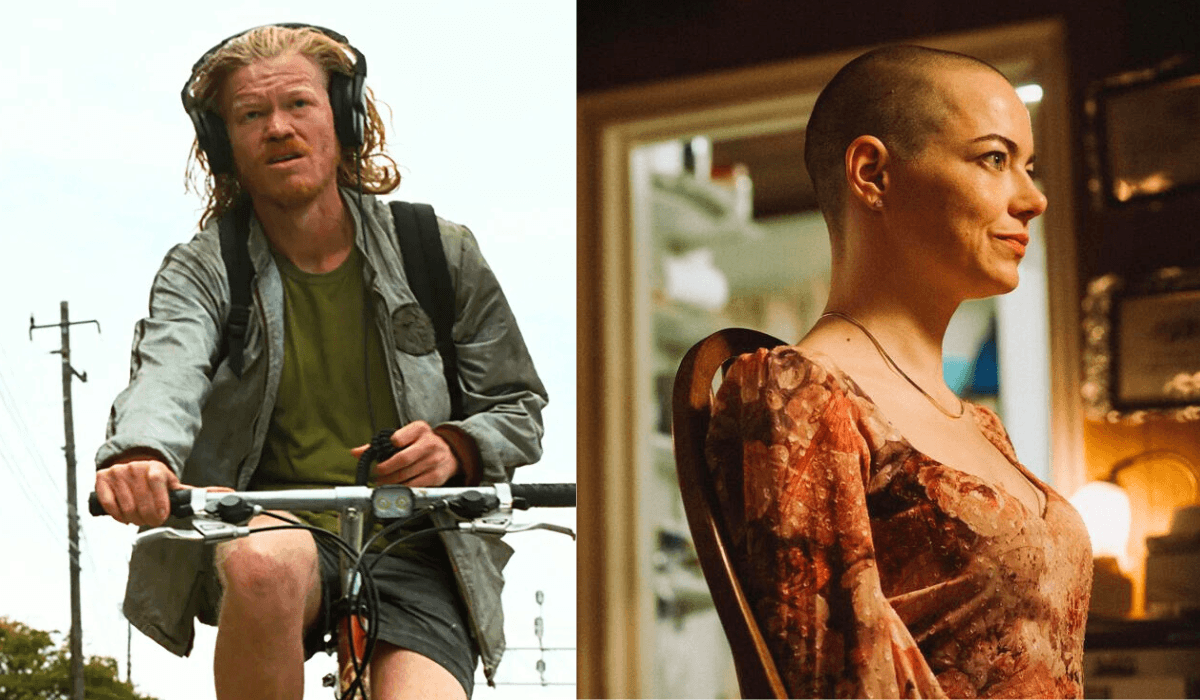
This is frustrating because both actors deliver career-defining work in Yorgos Lanthimos's confrontational thriller. And I mean genuinely career-defining, not the hyperbolic kind of praise that gets thrown around every awards season. Stone plays Michelle Fuller, a pharmaceutical CEO kidnapped by conspiracy theorists who believe she's an alien.
Plemons portrays Teddy Gatz, the beekeeper turned kidnapper whose paranoia drives the film's moral complexity. Both performances are technically masterful, emotionally complex, and honestly more interesting than half the work likely to be nominated.
Yet with Oscar nominations announced on January 22, 2026, and the ceremony on March 15, they're fighting for limited spots in stacked categories. Here's why they deserve to break through and what's standing in their way.
Where Stone and Plemons Stand Right Now
Current Oscar predictions paint a challenging picture for both actors. In Best Actress, Emma Stone is consistently ranked between fourth and sixth place across major prognosticators. Most prediction lists show Jessie Buckley for Hamnet as the runaway frontrunner, followed by Renate Reinsve for Sentimental Value, Rose Byrne for If I Had Legs I'd Kick You, and Cynthia Erivo for Wicked: For Good.
Stone appears in most prediction lineups, but she's always listed last or just outside the top five. Some forecasters have her solidly in, while others place her "on the bubble" alongside Chase Infiniti for One Battle After Another and Julia Roberts for After the Hunt.
Jesse Plemons faces even steeper odds in Best Actor. He's submitting in the lead category despite what could arguably be considered a co-lead performance with Stone. Currently, he ranks seventh or lower in most predictions, with Timothée Chalamet for Marty Supreme, Leonardo DiCaprio for One Battle After Another, Michael B. Jordan for Sinners, Wagner Moura for The Secret Agent, and Ethan Hawke for Blue Moon dominating the conversation.
Polymarket betting odds have Plemons at less than 1 percent chance of winning, with his nomination chances hovering around dark horse territory. Gold Derby lists him as a "potential nominee" rather than a frontrunner.
Both actors received Golden Globe nominations, which should have boosted their profiles. Bugonia itself earned three total Globe nods, including Best Motion Picture in Musical or Comedy. The film holds an 87 percent critics score on Rotten Tomatoes. It made the American Film Institute's Top 10 Films of 2025. By all objective measures, this is serious work being taken seriously.
So why are they on the bubble?
The Box Office Problem Nobody Wants to Discuss
Let's address the elephant in the room. Bugonia earned only $39 million worldwide against a production budget between $45 and $55 million. It flopped theatrically. Despite critical acclaim and festival buzz after premiering at Telluride, audiences didn't show up.
This matters more than it should in Oscar races. The Academy loves to reward popular films alongside prestige work. Voters are human, and they're influenced by cultural impact. A film that barely registered with general audiences faces an uphill battle convincing thousands of Academy members to watch it during a crowded season.
Compare this to Stone's previous Oscar wins. La La Land grossed $472 million worldwide and became a cultural phenomenon. Poor Things passed $100 million and generated enormous buzz around its weirdness. Both films felt like events. Bugonia, despite being just as accomplished artistically and arguably more daring thematically, didn't achieve that level of cultural penetration. This is the harsh reality of Oscar campaigns: sometimes the best work doesn't connect commercially, and that commercial failure becomes the narrative that overshadows everything else.
The Peacock streaming release on December 26 helps by making the film accessible to voters who might not have caught it theatrically. But it also reinforces the perception that this is a smaller film that struggled to find an audience. Fair or not, that perception damages Oscar chances.
Plemons faces this problem even more acutely. Best Actor voters historically favor performances in films with broader appeal or clear Best Picture chances. Bugonia appears on many Best Picture prediction lists, but usually in the seventh through tenth spots. It's a longshot for a nomination, not a frontrunner.
Without strong Best Picture momentum, individual acting nominations become harder to secure, especially in a year with multiple strong contenders.
The Category Congestion Issue
Both Stone and Plemons are competing in brutally stacked categories. Best Actress might be the most competitive Oscar race in years. Jessie Buckley's performance in Hamnet has dominated critical conversation since the film won the Toronto People's Choice Award. She's swept early critics prizes and appears virtually unbeatable.
Beyond Buckley, there's Renate Reinsve making a strong case after being snubbed for The Worst Person in the World. Rose Byrne has won multiple critics' awards for If I Had Legs I'd Kick You. Cynthia Erivo brings the weight of Wicked: For Good's commercial success and Oscar-friendly musical performance. Chase Infiniti is gaining momentum for One Battle After Another.
That's five strong contenders before we even get to Stone. With only five nomination slots available, someone excellent is getting left out. Stone's challenge is convincing voters she deserves that spot over performers in films with more obvious Oscar narratives.
Best Actor is similarly crowded. Timothée Chalamet's performance in Marty Supreme has generated enormous buzz, with many seeing this as his year to finally win after his near-miss for A Complete Unknown. Leonardo DiCaprio is chasing his second Oscar in One Battle After Another, a Paul Thomas Anderson film currently leading Best Picture predictions.
Michael B. Jordan is campaigning hard for Sinners, which is performing well both critically and commercially. Wagner Moura's work in The Secret Agent has earned widespread praise. Ethan Hawke continues his career of excellent performances with Blue Moon. Dwayne Johnson surprised everyone by winning Venice's Best Actor prize for The Smashing Machine and is being taken seriously as a contender.
Where does that leave Plemons? Competing for attention in a year when even established stars like George Clooney (Jay Kelly) and Jeremy Allen White (Springsteen: Deliver Me from Nowhere) are struggling to break through.
Why Stone Deserves Recognition Despite the Odds
Emma Stone's performance in Bugonia represents something genuinely unusual in her filmography and in cinema broadly. She's playing a character who might be a victim, might be a villain, or might be both simultaneously. The film never clarifies, and Stone's performance embraces that ambiguity completely.
Michelle Fuller speaks in corporate doublespeak, using therapy language and HR-approved phrases to deflect and manipulate. Stone captures the specific horror of someone who has learned to weaponize empathy without actually feeling it. Watch her face when she's being tortured. There's genuine pain, but also calculation. She's simultaneously suffering and looking for angles.
This is incredibly difficult acting that most performers would overplay. Stone finds the exact register between human and alien, between sympathetic and monstrous. She makes you understand why Teddy and Don believe she's not human while also showing you the very human corporate executive beneath the conspiracy theory. It's the kind of performance that requires absolute precision, where one wrong note would collapse the entire character into either pure victim or pure villain. Stone never makes that mistake, and that restraint deserves far more recognition than it's getting.
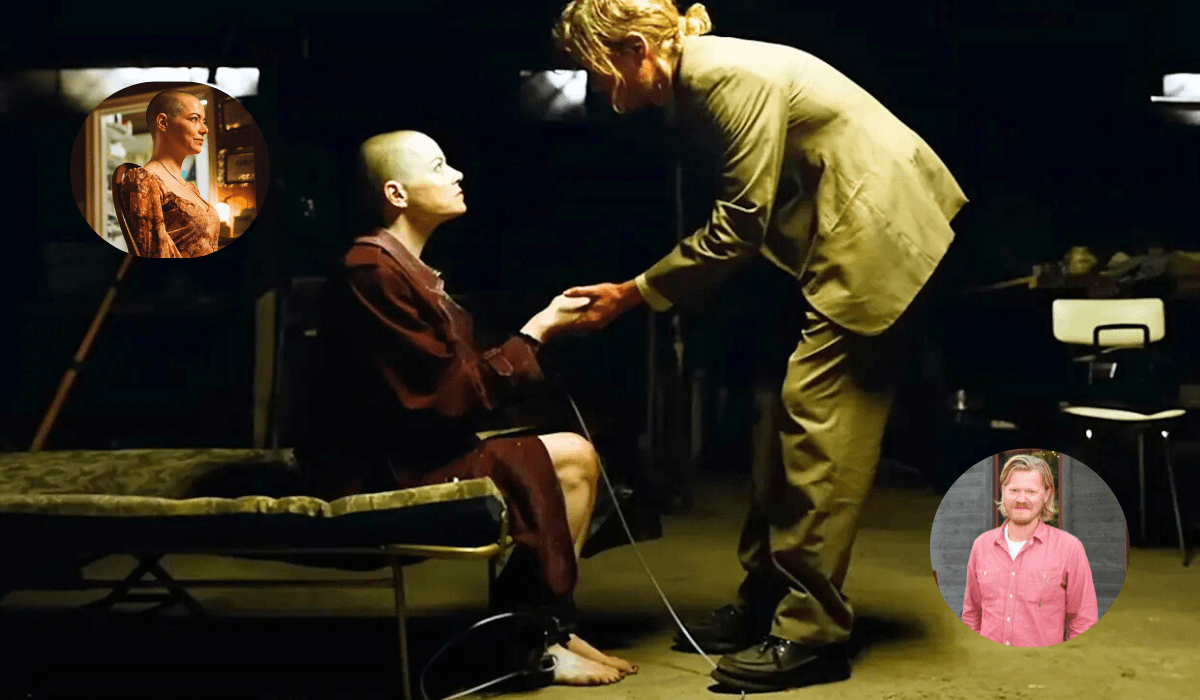
The physical transformation matters too. Stone shaved her head for the role, spending much of the film bald, bruised, and stripped of vanity. For an actress who has built a career partly on charm and beauty, this is a deliberate choice to make herself unrecognizable. It's the work of someone prioritizing character over image.
Stone also does something subtle with her voice that deserves more attention. Michelle speaks in this specific register, slightly higher and more measured than Stone's natural speaking voice. It's the voice of someone who has been media-trained, who knows that everything she says might be recorded. There's never a moment where Michelle drops this mask completely, which creates a fascinating interpretive question. Is the mask who she really is at this point? Has the corporate persona consumed the person underneath?
This is Stone's fourth collaboration with Lanthimos, and you can see how their creative partnership has evolved. Where Poor Things required her to be physically uninhibited and emotionally raw, Bugonia demands the opposite. It's all about control, about what she doesn't show. The restraint is just as impressive as the abandon in her previous work.
Compared to the other Best Actress contenders, Stone is doing something distinctly different. Most of the performances in this race involve characters in obvious emotional turmoil. Buckley in Hamnet is playing grief and Shakespeare. Reinsve is exploring loss and family trauma.
Byrne is portraying a woman in crisis. Stone is playing someone who refuses to show you what she's really feeling, which is arguably more challenging and certainly more unsettling. There's a reason controlled performances often get overlooked at the Oscars: they don't give voters the big emotional moments that feel like "acting." But restraint is its own skill, and Stone has mastered it here in ways that should be celebrated, not penalized.
Why Plemons Deserves Better Than Seventh Place
Jesse Plemons has built a career playing menacing characters with disturbing calm. From Breaking Bad's Todd to The Power of the Dog's George Burbank (which earned him his first Oscar nomination), Plemons excels at making quiet people terrifying.
What made his Power of the Dog performance so memorable was how he played the brother who seemed normal next to Benedict Cumberbatch's overtly cruel Phil, yet harbored his own quiet menace. Bugonia gives him his richest opportunity yet to explore this territory, and frankly, it's a more substantial and challenging role than George Burbank ever was.
Teddy Gatz is not a ranting conspiracy theorist. He's methodical, intelligent, and completely sincere in his convictions. Plemons plays him as someone who has done the research, who can cite sources, who genuinely believes he's saving humanity. The performance never winks at the audience or signals that we should find Teddy ridiculous.
This creates genuine moral complexity. Teddy tortures Michelle, keeps her in a basement, and plans to kill her. His methods are abhorrent. But Plemons makes you understand his logic without excusing it. You see how online radicalization works not through rants but through seemingly reasonable people connecting dots that don't actually connect.
The relationship between Teddy and his autistic cousin Don, played by Aidan Delbis, provides Plemons with opportunities to show different facets of the character. With Don, Teddy is protective, even loving. He genuinely wants to save his cousin from what he perceives as an apocalyptic threat. This isn't a one-dimensional villain. It's a portrait of how ordinary people become radicalized.
Plemons also handles the film's tonal shifts brilliantly. Bugonia moves from thriller to dark comedy to something approaching science fiction without ever feeling tonally inconsistent. Plemons grounds everything. His performance provides the throughline that makes the film's stranger elements work.
What frustrates me about Plemons's current bubble status is that he's doing exactly what the Academy claims to value. This is a transformative performance in a challenging film from a respected director. It requires him to be both sympathetic and horrifying, often in the same scene. It's technically masterful while also being emotionally complex.
Yet here we are, with him ranked seventh or lower in most predictions, treated like a longshot rather than a serious contender. If the Oscars genuinely reward the best performances rather than the most obviously "Oscar-y" ones, Plemons should be solidly in the conversation. The fact that he's not tells you everything about what the Academy actually values versus what it claims to value.
If this were a supporting role, he'd probably be locked in for a nomination. The Academy loves character actors doing interesting work in smaller parts. But because he's submitting lead, he's competing against traditional leading men in more obviously Oscar-friendly roles.
The historical context matters here. As several outlets have noted, no actor has won Best Actor for playing a clear villain since Kevin Spacey in American Beauty in 2000. Joaquin Phoenix's Joker in 2020 is sometimes cited as an exception, but that film treats its protagonist sympathetically. Bugonia doesn't. It presents Teddy as someone doing monstrous things for what he believes are righteous reasons, and it never lets him off the hook.
If Plemons were nominated and won, he'd break a 26-year pattern. That's notable, but it also suggests why he faces long odds. Oscar voters historically don't reward villainous performances in lead categories, even when they're excellent. This strikes me as a fundamental failure of imagination.
We're living through an era where understanding how ordinary people become radicalized matters enormously. Plemons has created the most psychologically accurate portrait of that process I've seen in fiction, and the Academy's likely response is to ignore it because the character makes them uncomfortable. That's cowardice disguised as taste.
The Will Tracy Screenplay Factor
One element working in both actors' favor is Will Tracy's adapted screenplay, which appears to have a stronger shot at nomination than either performance. Tracy is being mentioned consistently in Best Adapted Screenplay predictions, and screenplay nominees often boost their casts' chances.
Tracy's script does something genuinely clever. It adapts the 2003 Korean film Save the Green Planet! while completely reimagining the power dynamics by gender-swapping the CEO character. This creates new thematic layers around corporate power, gender, and who society believes when multiple parties claim victimhood.
The dialogue is sharp without being precious. Tracy captures the specific language of both conspiracy theories and corporate HR-speak, showing how both use jargon to create in-groups and out-groups. The script never tells you who to believe, which forces viewers to actively engage rather than passively consuming a thriller.
If Tracy gets nominated for screenplay, it might remind voters to revisit the performances. Sometimes a screenplay nomination creates momentum for other categories by keeping a film in the conversation. This happened with The Favourite, which ultimately earned Stone her third Oscar nomination despite initially seeming like an outside shot.
The Lanthimos Factor Cuts Both Ways
Yorgos Lanthimos is now one of the most celebrated directors in cinema, with The Favourite and Poor Things both earning Best Picture nominations and Stone winning Best Actress for the latter. His films are taken seriously by the Academy in ways that seemed impossible after the polarizing reception to Dogtooth and The Lobster.
This should help Bugonia's cast. Voters know that Lanthimos demands excellence and that his actors do challenging work. Stone and Plemons can campaign partly on the strength of being part of this director's stable of performers.
However, Lanthimos's style also creates challenges. His films are deliberately confrontational and refuse easy emotional access. Bugonia is especially difficult, with torture scenes, graphic violence including a suicide, and an ending that frustrates many viewers. Some Academy members simply won't enjoy the experience, regardless of performance quality.
And here's my honest take: those voters who can't handle challenging material probably shouldn't be voting on what constitutes the best performances of the year. If you need every film to be emotionally accessible and comforting, you're not equipped to judge the full range of what cinema can do. But that's exactly who makes up a significant portion of the Academy, which is why genuinely difficult work so often gets ignored.
The film's classification in Musical or Comedy for the Golden Globes is telling. It's a dark comedy, certainly, but not a crowd-pleaser. This genre confusion might hurt in Oscar voting, where categories are less flexible and films need clearer marketing hooks.
Lanthimos himself appears unlikely to be nominated for Best Director this year, with Paul Thomas Anderson, Ryan Coogler, Chloé Zhao, Jafar Panahi, and Joachim Trier dominating predictions. Without a Director nomination, Best Picture becomes less likely. And without Picture or Director, individual acting nominations face steeper odds.
The Streaming Release Could Change Everything
Bugonia's arrival on Peacock on December 26 creates an interesting strategic opportunity. Oscar voting for nominations begins soon after the holidays, meaning thousands of Academy members now have easy access to the film during the crucial window when they're finalizing their ballots.
This matters enormously. One of the biggest challenges for smaller films is ensuring voters actually watch them. Theatrical-only releases require voters to find time in their schedules, drive to screenings, and prioritize that film over others. Streaming removes all those barriers.
Academy members can now watch Bugonia at home on their own schedule. For a film that rewards second viewings and demands active engagement, this could be ideal. Voters who watch it once might dismiss it as too strange. Those who watch it again often appreciate the layers they missed initially.
The timing also helps. December 26 puts the film in voters' consciousness right as they're thinking about nominations. It's recent enough to feel current but not so recent that it gets lost in the January release dump. Peacock has invested in a proper awards campaign for the film, which suggests they believe streaming accessibility can overcome the theatrical disappointment.
That said, streaming releases carry their own stigma. Despite wins for films like CODA and Roma, many voters still associate streaming primarily with films that couldn't succeed theatrically. Bugonia's box office struggles might reinforce rather than contradict that perception.
Both Deserve Nominations and Probably Won't Get Them
I'm going to be honest about this. Emma Stone and Jesse Plemons both deserve Oscar nominations for Bugonia. These are exceptional performances in a genuinely challenging film that takes real risks. Stone is doing the most restrained, controlled work of her career. Plemons is creating a villain who feels disturbingly real in our current moment of conspiracy culture.
But they probably won't get nominated, and that's deeply frustrating to anyone who cares about what the Oscars supposedly represent. The Academy loves to present itself as the arbiter of cinematic excellence, the institution that recognizes and rewards the best work regardless of commercial considerations. Bugonia is the test of whether that's actually true or just marketing copy.
The reasons are partly legitimate and partly about Oscar politics that have nothing to do with quality. Legitimately, both actors are competing in stacked categories against other excellent work. There's no weak spot in either Best Actress or Best Actor this year. Someone worthy is getting snubbed regardless of who makes it through.
The politics are more annoying. Bugonia flopped, which shouldn't matter but does. It's a difficult film that requires work from viewers, which Academy members increasingly resist. Stone and Plemons are playing characters without easy sympathy, which Oscar voters historically avoid in lead categories. The film itself seems unlikely to score a Best Picture nomination, which makes individual acting nods harder to secure.
There's also something about Bugonia's moral complexity that I suspect makes voters uncomfortable, and honestly, that discomfort is exactly the point. The film refuses to tell you whether Teddy's conspiracy theories have any validity. It suggests both that Michelle's company has genuinely caused harm AND that Teddy's methods are monstrous. It won't let you off the hook by declaring a clear hero and villain. This is sophisticated storytelling that treats audiences like adults capable of holding multiple contradictory ideas simultaneously.
This ambiguity is artistically valuable. It's what makes the film relevant to our current moment, when distinguishing legitimate skepticism from paranoid delusion has become genuinely difficult. But it's also the kind of thing that makes voters nervous. If they can't figure out who to root for, they often don't vote for the film at all. This is intellectual laziness dressed up as discernment, and it's why the Oscars increasingly feel disconnected from the most interesting work happening in cinema.
Stone's chances are better than Plemons's simply because Best Actress feels slightly more open. If Rose Byrne's If I Had Legs I'd Kick You proves too alienating for voters, or if Chase Infiniti fails to break through, Stone could slip into that fifth spot. Her previous Oscar wins and industry goodwill count for something.
Plemons faces longer odds. He's competing against bigger stars in flashier roles with more obvious Oscar narratives. Unless several frontrunners collapse simultaneously, it's hard to see how he breaks into the top five. That's unfortunate because his work is easily as good as anyone predicted to be nominated.
What a Snub Would Mean for Both Careers
If Stone misses a nomination, it won't significantly impact her career. She's already a two-time Oscar winner with massive industry respect. She's not trying to prove anything to the Academy. A snub for Bugonia would be disappointing but wouldn't change her trajectory. That said, it would be embarrassing for the Academy. You'd have a two-time winner delivering arguably her most technically demanding performance, and voters would be saying it's not even among the five best of the year? That strains credibility.
What it would signal, though, is that even major stars can't overcome box office disappointments and difficult material. Stone used her clout to help get Bugonia made and properly released. If Academy voters respond by ignoring her work, it sends a message about what kind of risks are actually rewarded.
For Plemons, missing a nomination would be more consequential and frankly, more unjust. This is arguably his best shot at winning an Oscar, and it might be the best performance he ever gives. He's 36 years old at his creative peak, working with one of cinema's most celebrated directors, in a role that showcases everything he does best. If voters don't recognize this performance, when would they? What more could he possibly do to earn their attention?
Plemons has built an incredible career as a character actor who elevates everything he's in. Friday Night Lights, Breaking Bad, Fargo, The Power of the Dog, and now multiple Lanthimos films. He's consistently excellent, but character actors often struggle to break through to Oscar's lead categories. The industry seems content to keep him in the "great supporting player" box, even when he's clearly capable of carrying a film.
A nomination would have validated that he's more than just a great supporting player. A snub reinforces the perception that he's stuck in that category, regardless of the roles he takes.
The Bigger Question About What Oscar Rewards
The Stone and Plemons situation raises larger questions about what the Academy actually values. Both actors are doing challenging work in a film that takes real artistic risks. They're working with a celebrated auteur director. The film is critically acclaimed and appears on multiple year-end best lists.
What they don't have is easy commercial success, crowd-pleasing material, or characters you're supposed to simply like. That seems to be what's keeping them on the bubble.
If the Oscars are meant to reward artistic excellence in cinema, Stone and Plemons should be locks. If the Oscars are meant to reward popular films with broad appeal, they should be out entirely. The bubble suggests the Academy is split, unsure whether excellence matters more than accessibility. My suspicion? The Academy wants to believe it values excellence, but when forced to choose, it consistently picks accessibility. That's why we end up with Best Picture lineups dominated by crowd-pleasers and inspirational stories while genuinely challenging work gets relegated to technical categories or ignored entirely.
This tension has always existed in Oscar voting, but it feels especially pronounced this year. Multiple prediction lists note that Best Actress is dominated by performances of women in psychological distress, many involving screaming and emotional breakdowns. Stone is doing something quieter and arguably more difficult, but it's less obviously "Oscar-y."
Similarly, Best Actor is filled with traditional leading man performances in films with clear emotional arcs and obvious rooting interest. Plemons is playing a character you're supposed to be horrified by, which is harder to reward with a gold statue.
The Academy has been pushing toward more diverse and challenging choices in recent years. International cinema gets more recognition. Weird films like Everything Everywhere All at Once and Poor Things win major awards. But there are still limits, and Bugonia might be testing those limits. The question is whether the Academy has actually changed its fundamental values or just gotten better at appearing progressive while still defaulting to safe choices when things get genuinely uncomfortable. Based on where Stone and Plemons currently stand in predictions, I'm betting on the latter.
Watch the Film Regardless
Whether or not Emma Stone and Jesse Plemons get Oscar nominations, Bugonia deserves to be seen. It's one of the most interesting American films of 2025, a genuine provocation that treats its audience like adults capable of handling moral complexity.
Stone and Plemons are doing career-best work that pushes them into new territory. Stone has never been this cold and controlled. Plemons has never had a role this substantial that lets him explore his specific talents at length. Both performances will be discussed and studied regardless of Oscar recognition.
If I were an Academy voter, both would be on my ballot. Stone because she's doing the hardest thing an actor can do, making you completely unsure of a character's interior life while keeping you riveted. Plemons because he's creating the most psychologically accurate portrait of radicalization I've seen in fiction, showing how ordinary people embrace extraordinary delusions through seemingly rational steps.
They probably won't make it into the final five in their respective categories. The math is against them, the box office failed them, and the film's difficulty works against easy embrace. But they absolutely deserve to, and voters who skip Bugonia are missing performances that will matter long after this Oscar season ends.
The Academy has a choice here. Reward safety and accessibility, or reward genuine artistic ambition. Stone and Plemons represent the latter. Whether Oscar voters have the courage to recognize that remains to be seen when nominations are announced on January 22.
I'm not optimistic, and that pessimism comes from years of watching the Academy claim to value one thing while consistently rewarding another. But I'm still hoping the Academy surprises me, because recognizing Stone and Plemons would signal that the Oscars still matter as a measure of actual artistic achievement rather than just industry politics and box office returns.
If they get snubbed, it will be one more piece of evidence that the Oscars have become increasingly irrelevant to anyone who cares about cinema as an art form rather than just as entertainment. And that would be a genuine loss, not just for these two performers, but for what the Oscars supposedly represent.
Related Reads: Bugonia Asks The Question We're All Afraid To Answer: What If The Conspiracy Theorists Are Right?