How Bugonia Proves Emma Stone's Done Playing It Safe

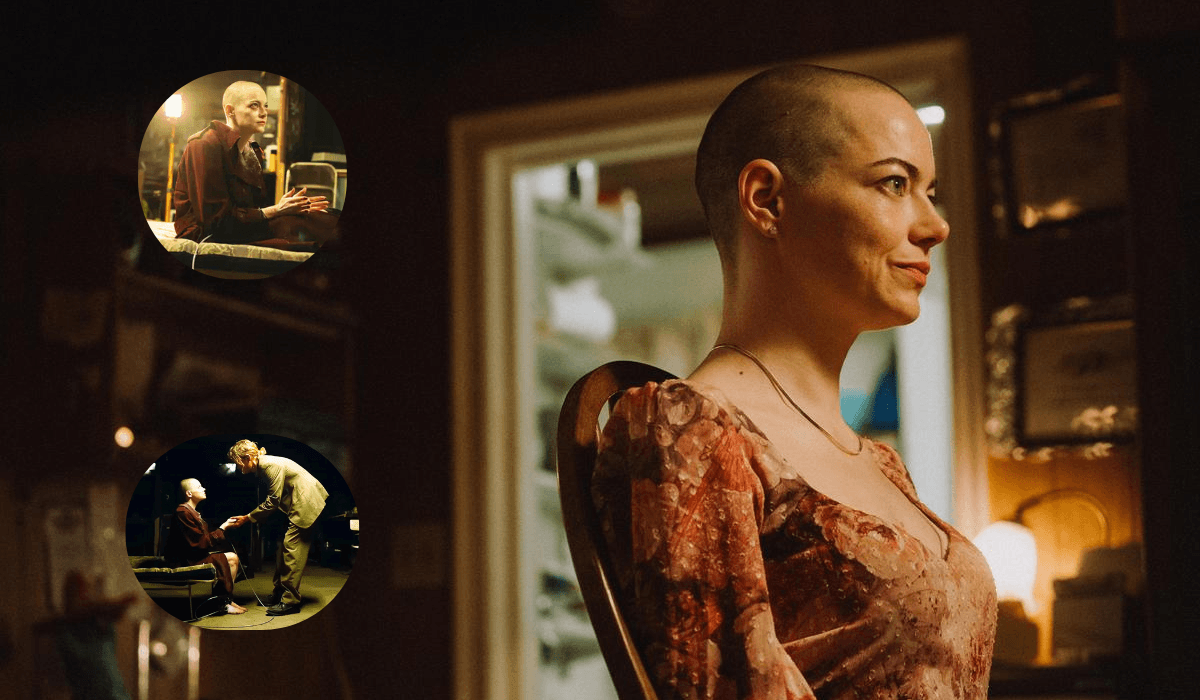
Emma Stone shaving her head to play a kidnapped CEO suspected of being an alien isn't just another role. It's a statement. With Bugonia now streaming on Peacock, Stone has completed her transformation from America's sweetheart into one of Hollywood's most fearless performers. The journey from Easy A's charming high schooler to this bald, terrified pharmaceutical executive reveals an artist systematically dismantling the safety nets that made her famous.
This isn't accidental. Stone has methodically constructed a career that refuses comfort, and her four-film collaboration with director Yorgos Lanthimos represents the culmination of that strategy.
The Rom-Com Years Built the Foundation But Couldn't Contain Her
Stone's early career reads like a masterclass in Hollywood ascension. After breaking through with Superbad in 2007, she became the go-to actress for smart, witty comedy. Zombieland showcased her range within genre work. The House Bunny proved she could shine in ensemble casts. But Easy A in 2010 was the inflection point.
That film earned her a Golden Globe nomination and established a clear brand. Stone was the approachable girl-next-door with impeccable comic timing. She could anchor a romantic comedy with Ryan Gosling in Crazy, Stupid, Love while maintaining enough edge to keep things interesting. Hollywood had found its new Julia Roberts, and the industry was perfectly happy keeping her there.
The Amazing Spider-Man franchise from 2012 to 2014 solidified her commercial viability. Playing Gwen Stacy opposite Andrew Garfield, Stone became one of the most bankable young actresses in Hollywood. The films grossed hundreds of millions worldwide. Her chemistry with Garfield, whom she dated during filming, was palpable and turned the franchise into a genuine cultural phenomenon beyond typical superhero fare.
Here's what's fascinating about that period. Stone was succeeding wildly at being likeable and accessible. Time magazine would later name her one of the 100 most influential people in the world. In 2017, she became the world's highest-paid actress. She had everything she needed to coast on charm for decades.
She chose not to.
The First Cracks in the Comfort Zone
Stone began signaling her intentions earlier than most recognized. Her role in Birdman in 2014 was the first major departure. Playing a recovering drug addict and the emotionally volatile daughter of Michael Keaton's washed-up actor, Stone revealed a rawness that her rom-com work had only hinted at. The film won Best Picture, and Stone earned her first Oscar nomination for Best Supporting Actress.
This wasn't an actress testing dramatic waters. This was someone announcing that comedy had taught her everything it could, and she was moving on.
Battle of the Sexes in 2017 continued this trajectory. Stone transformed physically and emotionally to portray tennis legend Billie Jean King in the famous 1973 match against Bobby Riggs. She underwent intense athletic training and worked directly with King to capture not just her playing style but her internal struggle with sexuality and the fight for equal pay. The performance earned Golden Globe and Screen Actors Guild nominations.
These weren't safe choices for someone who could have starred in five rom-coms annually and retired wealthy. Stone was systematically building a different kind of career, one where risk and transformation mattered more than guaranteed paychecks.
Then came La La Land in 2016, which seemed like a return to the romantic territory that made her famous. It wasn't. Playing aspiring actress Mia Dolan opposite Ryan Gosling's jazz pianist, Stone delivered a performance of such depth and vulnerability that it transcended the musical genre. Her rendition of "Audition" remains one of the most emotionally devastating scenes in recent cinema. She won the Oscar for Best Actress, a BAFTA, and a Golden Globe.
The victory could have been a career peak, a moment to cash in and coast. Instead, Stone used it as leverage to go darker.
The Lanthimos Partnership Changes Everything
Meeting Yorgos Lanthimos over lunch to discuss The Favourite around 2014 was the moment Stone's career changed permanently. In interviews, she's described being struck by how warm and approachable Lanthimos was, nothing like the disturbing films he creates. That disconnect intrigued her. Here was a filmmaker whose work explored power, manipulation, and the grotesque underbelly of human behavior, all while maintaining surgical precision and dark comedy.
The Favourite in 2018 marked their first collaboration. Stone played Abigail Masham, a fallen aristocrat who manipulates her way into the favor of Queen Anne, played by Olivia Colman. The role required Stone to be calculating, ruthless, and sexually fluid. She struggled with the British accent, felt challenged by an all-British cast, but delivered a performance that earned her third Oscar nomination.
What's crucial here is the creative choice itself. Stone didn't need to play a scheming courtier in an 18th-century period piece. She was already an Oscar winner with massive commercial appeal. Taking this role meant accepting that not everyone would follow her into stranger territory. It meant risking alienating the audience that loved her for being relatable.
She took that risk anyway because the character demanded things comedy never could.
Poor Things in 2023 was even more audacious. Playing Bella Baxter, a woman brought back to life with an infant's brain transplanted into her adult body, Stone delivered the most physically and emotionally unhinged performance of her career. The film required full-frontal nudity, explicit sexual content, and a complete surrender of vanity as she learned to walk, talk, and think like a newborn in an adult body.
Stone didn't just act in Poor Things. She co-produced it, using her clout to ensure the film got made. The result was her second Oscar win for Best Actress and a Best Picture nomination. More importantly, it proved she could lead projects that challenged audiences rather than comforting them.
The partnership with Lanthimos intensified. Kinds of Kindness in 2024 featured Stone in three separate roles across an anthology structure, each character trapped in systems of control and manipulation. The film was Lanthimos at his most uncompromising, with Stone leaning fully into the darkness. Critics noted her willingness to disappear into characters that offered no easy audience identification points.
Now we have Bugonia, the fourth Lanthimos collaboration in less than seven years. Stone shaved her head for the role of Michelle Fuller, a pharmaceutical CEO kidnapped by conspiracy theorists who believe she's an alien. The performance is controlled, terrifying, and utterly lacking in the warmth that defined her early career.
What Bugonia Reveals About Stone's Philosophy
Bugonia isn't just another film in Stone's collaboration with Lanthimos. It's the clearest statement yet of what she values as an artist. The role offers no vanity, no charm, and no easy empathy. Michelle Fuller might be a victim of kidnapping, but she's also potentially complicit in corporate harm. The film refuses to tell you who to root for, and Stone plays that ambiguity with chilling precision.
In interviews surrounding the film's premiere, Stone described Lanthimos as her "muse" and said she trusts him more than any director she's worked with. That trust matters because it reveals her priorities. Stone has chosen to align herself with a filmmaker who makes audiences uncomfortable, who refuses easy answers, and who demands that actors strip away protective layers.
Compare this to where she could be. Stone could have become the next Sandra Bullock, anchoring crowd-pleasing comedies and occasional prestige dramas while maintaining universal appeal. Instead, she's become something more interesting and more challenging. She's an actress who uses her commercial viability to finance work that most studios would consider too risky.
The three Golden Globe nominations Bugonia received, including Best Picture in Musical or Comedy and acting nods for both Stone and Jesse Plemons, validate this strategy. So does the film's 87% on Rotten Tomatoes despite being deliberately confrontational. Stone has proven that audiences will follow her into difficult territory if the work is good enough.
The Risk of Alienating Your Base Is Real
Let's be honest about the downside. Bugonia earned only $39 million worldwide against a $45 to $55 million budget. It flopped theatrically. Kinds of Kindness was even more polarizing, with many viewers finding it impenetrable. Some of Stone's original fanbase has clearly checked out, unwilling to follow her into Lanthimos's strange worlds.
The financial reality matters. Stone can't keep making films that lose money, no matter how acclaimed. At some point, the industry demands commercial success to justify continued investment. Her next choices will need to balance artistic ambition with financial viability.
But here's what I respect about Stone's approach. She's not pretending these films are for everyone. She's not apologizing for difficulty or trying to ease audiences into discomfort. She's making exactly the films she wants to make, with a director who shares her vision, and letting the audience decide whether to come along.
That's become vanishingly rare in modern Hollywood. Most actors of Stone's stature carefully curate their choices to maintain maximum appeal. They'll do one challenging indie between franchise installments, carefully balancing risk and reward. Stone has flipped that model. Her default is now challenging work, with occasional detours into more commercial territory like Cruella serving as the palette cleanser rather than the main course.
What Sets Stone Apart From Her Peers
Jennifer Lawrence, Stone's closest contemporary in terms of career trajectory, has largely retreated into franchise work and prestige projects with guaranteed appeal. Scarlett Johansson balances Marvel movies with awards-bait dramas. Even Saoirse Ronan, who consistently chooses quality work, rarely ventures into territory as confrontational as Lanthimos's films.
Stone is operating differently. She's built a production company, Fruit Tree, with her husband Dave McCary, to finance work that studios might pass on. She co-produced Poor Things and has used her producing role to champion projects like Jesse Eisenberg's When You Finish Saving the World and A Real Pain. She's actively shaping the kind of cinema that gets made rather than just acting in what's offered.
This matters because it reveals ambition beyond personal success. Stone could spend the rest of her career winning Oscars for safe prestige dramas. Instead, she's using her position to push cinema toward stranger, more challenging places. The Lanthimos collaboration is central to this, but it's not the entire story. Stone is building infrastructure to support the kind of filmmaking she believes in.
Her Broadway debut in Cabaret in 2014 fits this pattern. Playing Sally Bowles, a role that demands vocal ability and emotional vulnerability, wasn't a safe choice for a film star. It was Stone proving she could perform live without the safety net of multiple takes. Director Damien Chazelle saw that performance and cast her in La La Land as a direct result.
Stone's television work, limited though it's been, shows similar instincts. Maniac in 2018 paired her with Jonah Hill in a psychological miniseries that deliberately confused and challenged viewers. The Curse in 2023 was even darker, a Nathan Fielder and Benny Safdie creation that examined economic inequality and exploitation through deeply uncomfortable comedy.
These aren't choices designed to maintain mass appeal. They're choices designed to explore what acting can do when freed from the constraints of likability.
Stone Is Building Something Rare and Valuable
I'll be direct about this. Emma Stone is the most interesting mainstream actress working today, and it's not particularly close. What she's doing requires a kind of courage that's become almost extinct in Hollywood. She's walking away from guaranteed success to chase work that might fail, that might confuse audiences, that might not even have a clear market.
Bugonia is the perfect encapsulation of this philosophy. The film is difficult, occasionally frustrating, and absolutely refuses to give viewers the catharsis they expect. Stone's performance offers no easy entry points, no moments where we're invited to simply like her. She plays a character who might be evil, might be misunderstood, or might be both simultaneously. The film never clarifies, and Stone never begs for sympathy.
This is the work of an artist who has transcended the need for approval. Stone has two Oscars, massive wealth, and nothing left to prove in conventional terms. She could spend the next 20 years starring in prestige dramas that guarantee nominations and universal praise. Instead, she's chosen to work with a director whose films divide audiences, who demands complete physical and emotional transformation, and who refuses to make anything resembling a crowd-pleaser.
I find this deeply admirable, even when the results aren't perfect. Kinds of Kindness didn't work for me as well as The Favourite or Poor Things. Parts of Bugonia drag. But the willingness to fail while attempting something genuinely strange matters more than consistent commercial success.
Stone is also doing something crucial for cinema broadly. By using her star power to finance and promote challenging work, she's keeping alive a tradition of mainstream actors supporting experimental filmmaking. This was common in the 1970s when stars would alternate between commercial work and avant-garde projects. It's nearly disappeared in the franchise-dominated modern landscape.
The fact that Bugonia got made at all, with a $45 to $55 million budget and a wide theatrical release, is a small miracle. No studio greenlights a film about conspiracy theorists kidnapping a CEO they believe is an alien without a major star attached. Stone's involvement made the film possible, which in turn created opportunities for Jesse Plemons, Aidan Delbis, and the entire creative team to do career-defining work.
The Industry Impact and Future Implications
Stone's career choices are already influencing how other actresses approach their work. The success of Poor Things, which passed $100 million at the box office despite being deeply weird, proved that audiences will show up for challenging content if it's good enough and marketed properly. The film's eight Oscar nominations, including Best Picture, demonstrated that the industry respects artistic ambition even in strange packages.
Younger actresses are watching and learning. Florence Pugh has talked openly about Stone's influence on her own choices. Saoirse Ronan has cited Stone's willingness to take risks as inspiration. A generation of performers is realizing that commercial success doesn't require artistic compromise, that you can maintain star power while making genuinely strange work.
The Lanthimos partnership specifically has become a model for actor-director collaborations. It's rare for an A-list actress to commit to four films in seven years with a single director, especially one whose work is as polarizing as Lanthimos's. But the results speak for themselves: two Oscar wins, multiple nominations, and some of the most memorable performances in recent cinema.
Stone has also proven that actresses don't have to choose between being producers and being performers. She's excelling at both, using her Fruit Tree production company to champion challenging work while continuing to deliver career-defining performances. This dual approach allows her to shape the industry from multiple angles simultaneously.
Where Does She Go From Here?
The question facing Stone now is how to maintain this trajectory without completely abandoning commercial viability. Bugonia's box office disappointment matters, as does the mixed audience reaction to Kinds of Kindness. At some point, the industry will demand that her films make money, regardless of their artistic merit.
Stone seems aware of this tension. She's attached to several projects that balance ambition with broader appeal. The Cruella sequel will likely perform well commercially while still allowing her to play a villain with complexity. Other projects in development suggest she's looking for that sweet spot where strange meets accessible.
But I hope she doesn't overcorrect. The reason Stone's current work matters is precisely because it's willing to fail. The moment she starts calculating every choice for maximum commercial appeal, she becomes just another talented actress playing it safe. The industry has plenty of those already.
What we need, what cinema needs, are artists willing to use their privilege and platform to make work that challenges, that risks confusion, that refuses to offer easy answers. Stone is one of the few major stars doing this consistently. Bugonia, with its ambiguous ending and refusal to clarify who the real villains are, exemplifies this approach.
The film asks viewers to sit with discomfort, to question their assumptions about conspiracy theorists and corporate executives, to recognize that our systems of meaning-making have broken down so completely that distinguishing heroes from villains has become nearly impossible. That's not entertainment in the traditional sense. It's provocation.
Stone doesn't need to make provocative films. She's already secured her legacy. But she's chosen to anyway, and that choice reveals something essential about her as an artist. She's not interested in being universally loved. She's interested in being genuinely challenging.
The Broader Context: What Stone's Choices Mean for Cinema
Hollywood is in crisis. Franchise fatigue has set in. Streaming has fractured audiences. Mid-budget adult dramas are nearly extinct. Into this landscape, Stone has positioned herself as someone who can still get strange films made and released theatrically. That's not just personally impressive. It's culturally significant.
Poor Things wouldn't have been financed without Stone. Bugonia wouldn't have gotten a wide theatrical release. Kinds of Kindness wouldn't have premiered at Cannes. Her involvement makes these films possible in ways that matter beyond her individual performance.
This is the kind of star power that actually moves the industry forward. Not the ability to open a franchise film to $200 million, which any number of actors can do. The ability to greenlight challenging work that wouldn't otherwise exist, to create space for filmmakers like Lanthimos to operate at the highest budget levels available for their sensibilities.
Stone's collaboration with Lanthimos has also elevated his profile immensely. The Favourite and Poor Things reached audiences who would never have watched Dogtooth or The Lobster. By bringing mainstream attention to his work, Stone has created a pathway for other experimental filmmakers to access larger budgets and broader distribution.
The ripple effects extend throughout the industry. When Bugonia gets three Golden Globe nominations despite flopping theatrically, it signals to the industry that quality still matters, that challenging work can be recognized even when it doesn't find a huge audience. That's crucial for keeping alive the possibility of genuine artistic ambition in mainstream cinema.
An Actress Defining Her Legacy in Real Time
Emma Stone is 36 years old with two Oscars and nothing left to prove. She could spend the next two decades playing it safe, accepting prestige drama roles that guarantee nominations, maintaining her image as America's sweetheart with an edge. The money would keep rolling in. The acclaim would continue. Her legacy would be secure.
She's choosing something harder and more interesting. With Bugonia, Stone has now starred in four consecutive Lanthimos films, each one stranger and more challenging than the last. She's shaved her head, performed explicit sexual content, played characters with no redeeming qualities, and refused to give audiences the comfort of clear moral frameworks.
This is the career of an artist who has transcended the need for approval. Stone has internalized the lesson that took many actors their entire lives to learn: the work matters more than the reception. Making something genuinely strange and challenging matters more than making something universally loved.
Bugonia proves Stone is done playing it safe in the most literal way possible. She's playing a character who might be a victim or a villain, in a film that refuses to tell you which, directed by a filmmaker who specializes in moral ambiguity. There's no safety net here, no easy path to audience sympathy, no guarantee that people will even understand what they're watching.
That's exactly the point. Stone has earned the right to make work this challenging, and she's using that right to push cinema into stranger, more uncomfortable territory. Whether every individual film succeeds is almost beside the point. The larger project of keeping alive space for genuine artistic ambition in mainstream cinema is what matters.
Bugonia might not be Stone's best film with Lanthimos. Poor Things holds that distinction in my opinion, with The Favourite a close second. But Bugonia might be the purest distillation of what their collaboration represents: a complete rejection of safe choices, a commitment to difficulty, and a belief that audiences deserve to be challenged rather than comforted.
Whether viewers appreciate that challenge is up to them. Stone has made her choice, and she's sticking with it. That's rare, valuable, and exactly what contemporary cinema needs from its biggest stars.
Related Reads: Why Critics Are Calling Bugonia The Most Important Film Of This Year