Why Bugonia's Portrait Of Corporate Evil Feels More Terrifying Than Any Horror Movie

Horror movies give us monsters we can recognize. Demons have red eyes. Vampires drink blood. Killers wear masks and wield knives. But what happens when the real monster wears a tailored suit, speaks in soothing corporate platitudes, and destroys lives through spreadsheets instead of violence? That's the question at the heart of Bugonia, now streaming on Peacock, and the answer is more unsettling than any creature feature could ever be.
Emma Stone's Michelle Fuller, CEO of pharmaceutical giant Auxolith, represents a villain far more chilling than Jason Voorhees or Freddy Krueger. She embodies systemic evil, the kind that operates within the law, hides behind quarterly earnings reports, and leaves body counts that dwarf any slasher franchise while never personally wielding a weapon. And here's what makes her truly terrifying: she genuinely believes she's done nothing wrong.
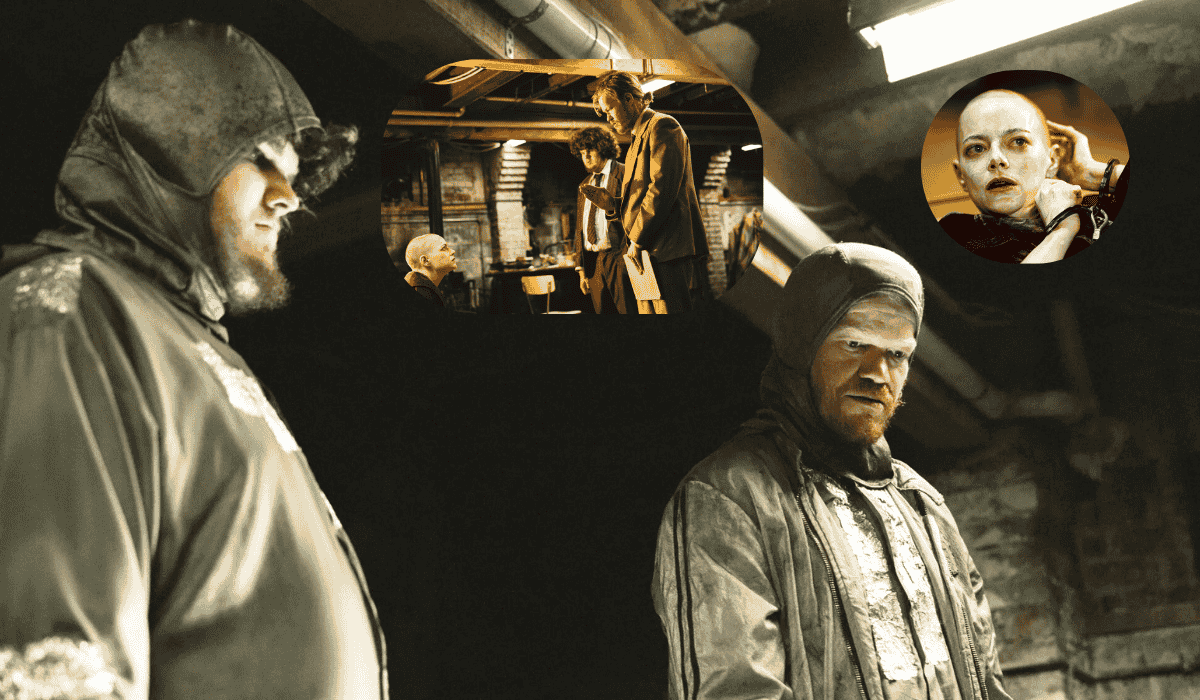
The Banality of Pharmaceutical Harm
In Yorgos Lanthimos's psychological thriller, Michelle Fuller gets kidnapped by Teddy Gatz, a conspiracy theorist beekeeper who believes she's an alien from Andromeda plotting humanity's destruction. The setup sounds absurd. The reality it mirrors is anything but.
Teddy's mother Sandy went into a persistent vegetative state after participating in a clinical trial for an experimental Auxolith drug designed to treat opioid withdrawal. The company paid for her treatment, paid off Teddy, and moved on. No apology. No admission of wrongdoing. Just calculated risk management and financial compensation that can never replace a human life.
This narrative mirrors actual pharmaceutical industry practices with disturbing precision. Since 1999, nearly 1.3 million Americans have died from drug overdoses, with opioids accounting for approximately 76% of those deaths. The opioid crisis was fueled by companies that knowingly downplayed addiction risks while aggressively marketing pain medications. Purdue Pharma, maker of OxyContin, paid $635 million in federal settlements in 2007. The company's executives faced no jail time.
Let me be clear about what that means. More than a million Americans dead, and the people responsible for triggering that catastrophe walked free. They paid fines that represented fractions of their profits and continued operating. That's not justice. That's a business expense.
More recently, McKinsey and Company agreed to pay $650 million in December 2024 for helping "turbocharge" OxyContin sales. Again, no executives faced prosecution. The pattern repeats endlessly. Corporations pay settlements that sound massive but represent fractions of their profits, admit no wrongdoing, and continue operating.
Michelle Fuller is fiction. The system she represents is devastatingly, horrifyingly real.
Corporate Speak as a Form of Violence
What makes Stone's performance so effective, so deeply unsettling, is how she weaponizes the language of modern corporate culture. Michelle doesn't rant or threaten. She speaks in the passive voice, frames harm as "unfortunate outcomes," and deploys phrases like "let's unpack the problem here" while chained in a basement.
This is the linguistic armor that real pharmaceutical executives use to distance themselves from consequences. It's a form of violence all its own, using language to erase human suffering from the equation. When AmerisourceBergen executives were caught in emails referring to OxyContin as "hillbilly heroin" and opioid addicts as "pillbillies," they still avoided criminal prosecution. The company paid $6.6 billion as part of a larger settlement in 2022. No admission of guilt.
Michelle embodies what scholars call "corporate psychopathy," the ability to cause massive harm while feeling no personal responsibility. She represents a system where individual culpability dissolves into organizational structures. Nobody is personally guilty, yet hundreds or thousands suffer.
In one scene, Michelle calmly explains market forces and regulatory compliance to her captors while covered in antihistamine cream they believe will prevent her from contacting her alien mothership. The absurdity of the situation doesn't diminish the accuracy of her corporate doublespeak. Real executives sound exactly like this when discussing "acceptable risk tolerances" and "cost-benefit analyses" that translate to human deaths.
The film asks viewers to sit with a disturbing possibility. What if Michelle's smooth explanations about clinical trials, FDA approvals, and fiduciary duties are more monstrous than admitting she's an alien? What if the real horror is that she genuinely believes she's done nothing wrong?
I find myself convinced that this is precisely the point. Michelle isn't pretending. She's internalized a value system so fundamentally broken that causing preventable deaths registers as routine business operations rather than moral catastrophe.
The Mathematics of Acceptable Death
Pharmaceutical companies operate under a business model that treats harm as a line item. If potential profits from a drug exceed projected lawsuit settlements, the drug gets marketed aggressively. This isn't conspiracy theory. It's documented business practice, and it should horrify us more than it apparently does.
In 2019, John Kapoor, CEO of Insys Therapeutics, became the first pharmaceutical executive successfully prosecuted for crimes related to opioid marketing. He and four other executives were convicted of bribing doctors to prescribe Subsys, a fentanyl spray approved for cancer pain. This was described as the first successful prosecution of top pharmaceutical executives for opioid-related crimes.
The first. In 2019. After nearly 1.3 million deaths over two decades.
Let that sink in. The opioid epidemic killed more Americans than World War I, World War II, the Korean War, the Vietnam War, the Gulf War, the wars in Iraq and Afghanistan, and the 9/11 attacks combined. And the first successful criminal prosecution of pharmaceutical executives came twenty years into the crisis.
Bugonia dramatizes this reality through Auxolith's fictional experimental drug trials. Sandy's vegetative state becomes acceptable collateral damage in pursuit of breakthrough addiction treatment. Michelle likely attended meetings where actuaries calculated how much her company could afford to pay families like Teddy's while still maintaining profitability.
Recent Justice Department actions have revealed the scope of this problem. In February 2025, ten pharmaceutical distributor executives, sales representatives, and brokers were charged with unlawfully distributing nearly 70 million opioid pills with a black market value exceeding $1.3 billion. They specifically targeted Houston, turning it into a known "hot zone" for pharmaceutical diversion.
These aren't isolated incidents. They represent standard operating procedures across the industry. And that's what makes Michelle Fuller so terrifying. She's not exceptional. She's typical.
Why CEOs Never Face Real Consequences
One of Bugonia's most provocative elements is the gender-swapped CEO. In the 2003 Korean original Save the Green Planet!, the corporate executive was male. Screenwriter Will Tracy and producer Ari Aster deliberately changed the character to female, adding layers to the power dynamics.
Michelle Fuller becomes more complex as a woman navigating male-dominated pharmaceutical leadership. She's mastered the art of appearing progressive while maintaining ruthless efficiency. This mirrors how actual corporate culture weaponizes diversity, equity, and inclusion language while continuing harmful practices.
But regardless of gender, pharmaceutical CEOs rarely face prosecution. Paul Pelletier, a former Department of Justice attorney who worked on Purdue Pharma investigations, describes the pattern bluntly. The corporation pays the fine and moves on. Individual wrongdoers remain untouched even when evidence of serious misconduct exists.
Consider Craig Landau, Purdue Pharma's CEO. Despite the company pleading guilty to criminal charges in 2020, Landau received millions in bonuses. When questioned by Congress about returning $3 million in bonuses to opioid victims, he declined. Purdue Pharma defended his compensation, noting he "delivered results for stakeholders" despite "unprecedented headwinds."
The language is eerily similar to Michelle Fuller's basement monologues. Harm becomes headwinds. Victims become stakeholders. Death becomes disruption. This isn't artistic exaggeration. It's documentary realism dressed in thriller packaging.
Charles Elson, an expert on corporate governance at the University of Delaware, told NPR it's common for American corporations to reward executives with hefty bonuses even when things go catastrophically wrong. Michelle's composure while imprisoned reflects this reality. She knows that even if Teddy's accusations prove true, she'll likely face minimal personal consequences.
And she's right. That's the horror Lanthimos captures so effectively.
The Revolving Door Between Regulators and Industry
Bugonia hints at regulatory capture without explicitly dramatizing it. Michelle references FDA approvals and clinical trial protocols with confidence because she knows the system is designed to protect companies like Auxolith more than patients.
The opioid crisis exposed how thoroughly pharmaceutical companies compromised regulatory agencies. Two FDA reviewers who originally approved Purdue's oxycodone application later took positions at Purdue. Over 20 years, several FDA staff involved in opioid approvals left to work for opioid manufacturers.
In January prior to the opioid crisis becoming undeniable, the head of the FDA's analgesic division retired to start a consulting business promising drug makers "help" to "successfully and efficiently bring your products to market" leveraging "more than 30 years of experience at the FDA."
A 2018 study found that 11 of 16 FDA medical reviewers involved in approving 28 products now work for the companies whose products they regulated. This revolving door creates powerful incentives for regulators to prioritize industry relationships over public health.
Michelle Fuller doesn't need to bribe officials or break laws. The system is already structured to enable her company's priorities. That's why she speaks with such confidence even while kidnapped. She understands that institutional capture runs deeper than any individual conspiracy.
This is what frustrates me most about discussions of corporate harm. We focus on individual bad actors when the real problem is systemic design. Michelle Fuller could be replaced tomorrow with someone who genuinely wants to do good, and that person would face the exact same incentive structures that produce the exact same harmful outcomes.
The Clinical Trial Shell Game
One of the film's most chilling elements is how it handles experimental drug testing. Sandy's vegetative state resulted from participating in what she believed was a promising treatment for opioid addiction. She trusted medical professionals. She followed protocols. She still ended up in a permanent coma.
This isn't fiction exaggerating reality. It's reality slightly compressed for dramatic effect.
Pharmaceutical companies manipulate clinical trial results through sophisticated methods. They design studies using methodologies that make drugs appear more effective than they are. They selectively publish favorable results while burying negative findings. They ghostwrite academic papers and pay doctors to sign them, creating false impressions of independent medical consensus.
The FDA's decision to rely on certain trial methodologies for opioids came from private meetings between FDA officials and pharmaceutical executives. Companies paid up to $35,000 each to attend these meetings and shape regulatory policy. This represents legalized corruption, the kind that doesn't require back-alley deals because it happens openly through industry-funded conferences.
Michelle Fuller likely oversaw exactly these kinds of arrangements. The film never explicitly shows Auxolith manipulating data, but the implication hangs heavy. When she discusses clinical trials with her captors, she uses technically accurate language while omitting crucial context. It's lying through precision.
Research agenda distortion represents another subtle harm. Pharmaceutical funding influences which questions researchers explore and which they ignore. In the opioid crisis, this triggered expansion of opioid use to non-cancer patients and continues to emphasize pharmacological solutions over non-drug alternatives that might be more effective but less profitable.
Auxolith's experimental addiction drug that harmed Sandy likely followed this pattern. The company needed a pharmaceutical solution to opioid addiction, partly because opioids themselves represented a profitable product line. Creating treatments for the harms caused by your other products is excellent business. Whether it's good medicine is secondary.
And that's the system Michelle Fuller defends with such calm conviction.
The Horror of Routine Corporate Violence
Michelle Fuller terrifies precisely because she's ordinary within her context. She's not a cartoon villain twirling a mustache. She's a competent executive navigating stakeholder expectations, regulatory requirements, and market pressures. The fact that this routine corporate existence creates massive harm is the point.
Academic researchers have developed a concept called "routine horror" to describe corporate harms inflicted through everyday practices and products. Purdue Pharma didn't set out to kill people. They set out to maximize shareholder value by aggressively marketing a profitable product while minimizing perception of risks.
In 2023, approximately 105,000 people died from drug overdoses, with nearly 80,000 of those deaths involving opioids. That's about 76% of all overdose deaths. In 2022, there were 107,941 drug overdose deaths. The opioid epidemic represents nearly ten times the death rate from 1999, when the crisis began.
These numbers dwarf anything achievable by individual serial killers or terrorist organizations. Yet pharmaceutical executives rarely face criminal charges because their violence is mediated through legal business structures. Michelle Fuller's calm corporate-speak while imprisoned reflects this disconnect. She's genuinely confused why Teddy sees her as monstrous when she's simply optimizing operational efficiency.
Stone's performance captures this cognitive dissonance perfectly. Michelle isn't pretending to believe in her innocence. She actually believes it. That's what makes her character so deeply unsettling. Real pharmaceutical executives demonstrate the same sincere bewilderment when confronted with harm their companies caused.
I've watched this film twice now, and Stone's performance becomes more disturbing on second viewing. The first time, you're processing the plot. The second time, you notice how completely Michelle has compartmentalized the harm her company causes. She never wavers. She never doubts. She never questions whether Auxolith's business practices might actually be harmful. That unwavering conviction is more frightening than any demon.
The Failure of Criminal Law to Address Corporate Harm
Criminal law is expressive. It communicates that behavior is wrong and sufficiently blameworthy to justify punishment. The failure to criminalize pharmaceutical companies for their role in the opioid epidemic sends a clear message. These harms are acceptable. These behaviors will continue.
Available criminal offenses like nuisance and racketeering don't adequately capture the nature of pharmaceutical wrongdoing. A great deal of academic attention has focused on finding appropriate charges, but the fundamental problem remains. Our legal system isn't designed to hold corporations and their executives accountable for systemic violence.
Bugonia externalizes this frustration through Teddy's kidnapping plot. Unable to get justice through legal channels, he resorts to vigilante action. The film doesn't endorse his methods, which are clearly abhorrent. But it understands his rage.
When institutions fail to protect people from corporate harm, when executives collect bonuses while presiding over public health catastrophes, when settlements represent cost-of-doing-business calculations rather than accountability, faith in systems collapses. Teddy's conspiracy theories about aliens destroying humanity through corporate vehicles start sounding less crazy than they should.
The four major settlements totaling approximately $26 billion from Johnson & Johnson, AmerisourceBergen, Cardinal Health, and McKesson sound substantial. They represent roughly 3.7 percent of the estimated opioid crisis costs. None of the companies admitted wrongdoing. Executives kept their positions and bonuses.
Michelle Fuller would survive her kidnapping ordeal and likely return to work within weeks. That's the real horror. And that's why this film matters more than any traditional horror movie.
Why This Villain Matters More Than Movie Monsters
Traditional horror villains exist outside social systems. Michael Myers is pure evil personified. The Xenomorph from Alien is a mindless predator. Even sophisticated horror antagonists like Hannibal Lecter operate as exceptional individuals whose crimes shock precisely because they violate social norms.
Michelle Fuller is different. She represents institutional evil, harm embedded in structures we're taught to respect. Pharmaceutical companies employ millions. They fund medical research. They develop life-saving treatments. They also calculate acceptable death tolls and market dangerous products while lobbying to weaken regulations.
This complexity is what makes Bugonia more disturbing than straightforward horror. The film forces viewers to confront that the real monsters wear business attire, speak politely, and operate within the law. They're not aberrations. They're successful products of systems designed to prioritize profit over human wellbeing.
Stone's performance resists simplification. Michelle never becomes a cackling villain or reveals hidden sadism. She remains composed, rational, and convinced of her righteousness throughout. When she finally admits to being an alien in the film's twist ending, it almost feels less monstrous than if she'd been human all along.
At least aliens have an excuse for not caring about humanity. What's Michelle's excuse if she's actually human? That's the question that haunts me days after watching.
The Most Honest Villain in Modern Cinema
Having watched Bugonia twice and spent considerable time researching pharmaceutical industry practices, I'm convinced Michelle Fuller represents the most important villain archetype in contemporary cinema. Not the best executed, not the most entertaining, but the most necessary.
We desperately need to see corporate evil dramatized not as exceptional corruption but as business as usual. Michelle's calm explanations about risk-benefit analyses and regulatory compliance aren't lies. They're accurate descriptions of how pharmaceutical companies actually operate. The horror is that these processes, followed correctly, still result in massive preventable harm.
Stone's choice to play Michelle without obvious villainy is crucial and brave. Real pharmaceutical executives aren't secretly evil. They're people who've internalized a value system where shareholder returns matter more than patient outcomes. They genuinely believe their explanations about market forces and fiduciary duties. The cognitive dissonance required to maintain this worldview while presiding over public health catastrophes doesn't register as hypocrisy to them. It's professional compartmentalization.
What frustrates me about some critical responses to Bugonia is the tendency to treat Michelle as either victim or villain, as if those categories capture the complexity. She's both and neither. She's a product of systems that reward exactly her kind of ruthless efficiency while punishing whistleblowers and reformers.
The film's ambiguous ending, where Michelle confesses to being an Andromedan while potentially manipulating Teddy into killing his mother, resists easy interpretation. Is she really an alien? Is she gaslighting a delusional kidnapper? Does it matter? The harms Auxolith caused remain real regardless of Michelle's species.
I appreciate that Lanthimos refuses to let viewers off the hook. We can't simply hate Michelle and move on feeling righteous. We're forced to recognize that she's exceptional only in her proximity to power. The systems that enable her exist everywhere. The choices she makes are incentivized throughout corporate America.
That uncomfortable recognition is exactly what makes this film valuable. It's not entertainment in the traditional sense. It's a mirror held up to systemic violence, and most viewers won't like what they see reflected back.
The Cultural Moment for Corporate Horror
Bugonia arrives at a moment when trust in institutions has collapsed across political divides. Conspiracy theories flourish partly because actual conspiracies exist. Pharmaceutical companies did lie about opioid addiction risks. They did bribe doctors. They did manipulate research and capture regulatory agencies. These aren't paranoid fantasies. They're documented facts with body counts in the hundreds of thousands.
The film captures this epistemological crisis better than any documentary could. By making Michelle actually an alien in the end, Lanthimos suggests that the conspiracy theorists are simultaneously right and wrong in ways that don't resolve neatly. Yes, there's a plot to harm humanity. No, believing you've identified it doesn't mean you understand it.
Michelle as corporate villain embodies late-stage capitalism's fundamental horror. The system produces catastrophic harm not through exceptional evil but through ordinary operations. Nobody needs to be personally monstrous. Everyone just needs to do their job, maximize their metrics, and trust that market forces will sort things out.
They don't sort things out. They sort bodies into spreadsheets. And executives like Michelle sleep fine at night because they've convinced themselves that maximizing shareholder value is a moral imperative that supersedes all other considerations.
Why Traditional Villains Feel Safe by Comparison
I'd rather face Freddy Krueger than Michelle Fuller, and I mean that literally. At least Freddy is honest about wanting to kill you. At least his motives are clear. At least you can potentially fight back with blessed weapons or dream manipulation or whatever genre-appropriate solution applies.
What do you do against a villain who operates through regulatory capture, lobbying, selective research funding, and marketing campaigns? How do you fight evil that hides behind layers of plausible deniability? How do you hold accountable a system where no individual feels responsible?
Bugonia doesn't answer these questions because they're largely unanswerable within existing frameworks. That's why Teddy resorts to kidnapping. Legal channels failed him. Regulatory agencies failed him. The medical system failed him. When institutions designed to protect people instead enable their harm, vigilante justice starts looking rational.
The film doesn't endorse Teddy's methods. His torture of Michelle is horrifying and wrong. But it understands his desperation. Sometimes the real monsters are so thoroughly protected by legal structures that illegal action feels like the only option. That's a dangerous conclusion. It's also understandable given the circumstances.
Michelle Fuller survives her ordeal in the film. Real pharmaceutical executives continue collecting bonuses and promotions despite presiding over public health catastrophes. The system protects them because the system was designed for them. That's the horror Bugonia captures so effectively.
The Uncomfortable Truth About Villainy
Stone deserves immense credit for playing Michelle without softening her edges or begging for sympathy. Lesser performers would have added humanizing moments, scenes showing her internal conflict or personal sacrifice. Stone resists that impulse entirely. Michelle remains coldly professional throughout because that's accurate.
Real pharmaceutical executives sleep fine at night. They attend their children's soccer games and donate to charity and consider themselves good people. The ability to cause massive harm while maintaining sincere self-image as ethical requires extraordinary compartmentalization, but it's common among corporate leadership.
Michelle never breaks character, never reveals doubt, never questions whether Auxolith's business practices might actually be harmful. She's not in denial. She genuinely believes in the system she represents. That unwavering conviction makes her more frightening than any demon.
The film's marketing presented it as a sci-fi thriller about alien conspiracies. That framing probably helped it secure financing. But Bugonia is actually a horror film about corporate capitalism's ability to cause catastrophic harm while maintaining plausible deniability. The aliens are just metaphorical cover for the real monsters.
Michelle Fuller, pharmaceutical CEO, represents evil far more pervasive and destructive than any fictional creature. She's terrifying because she's real. Not as an individual, but as an archetype repeated across industries and institutions. She's the face of systemic violence, the voice of acceptable harm, the embodiment of profit-maximizing logic applied to human suffering.
A Mirror We Need Even If We Hate Looking Into It
That's why Bugonia's portrait of corporate evil feels more terrifying than any horror movie. Because when the credits roll, the real Michelle Fullers are still out there, still optimizing shareholder value, still calculating acceptable death tolls, still speaking in soothing platitudes about stakeholder management and regulatory compliance.
And we can't stop them by finding their mothership. We can't defeat them with holy water or silver bullets. The horror is that they're protected by the very systems that are supposed to protect us from harm.
Stone's performance in Bugonia will haunt me longer than any traditional horror villain precisely because it's so accurate. She's captured something essential about how institutional evil operates in contemporary America. Michelle Fuller isn't a monster pretending to be human. She's a human who's convinced herself that monstrous actions are justified by market logic.
The film asks us to sit with the uncomfortable possibility that Teddy might be right about everything except the aliens. That Michelle's company genuinely has caused preventable harm. That corporate executives really do speak in sophisticated forms of deception designed to obscure responsibility. That sometimes paranoia emerges from actual patterns of abuse rather than pure delusion.
Whether we're ready to accept those possibilities says more about us than about the film. Bugonia works as horror precisely because it refuses to offer comfort or resolution. The real monsters win. They always have. And they'll continue winning until we fundamentally restructure systems that currently treat human suffering as an acceptable cost of doing business.
That's not the ending anyone wants. But it might be the ending we need to see clearly enough to finally change.
Related Reads: Bugonia Understands Conspiracy Theories Better Than Any Documentary Ever Could