What I want to know is whether Jaafar's own singing voice is in the film at all or if it is entirely Michael's original recordings.
19
Sign up to see more
SignupAlready a member?
LoginBy continuing, you agree to Sociomix's Terms of Service, Privacy Policy

What I want to know is whether Jaafar's own singing voice is in the film at all or if it is entirely Michael's original recordings.
This is one of those series where knowing it exists and is being adapted is already changing how I spend my weekends. Started the manhwa three days ago and I have responsibilities that are not getting done.
Is it worth reading the manhwa now or should I just wait for the anime? Genuinely torn because I do not want to spoil myself but also two years of waiting feels rough.
The manhwa community has been buzzing with anticipation ever since MAPPA Studio announced their adaptation of Omniscient Reader's Viewpoint. With a spring 2026 release date confirmed and 24 episodes planned for the first season, this adaptation represents one of the most ambitious manhwa-to-anime projects ever undertaken. But what makes this series so special that it warranted such a massive production commitment? If you're hearing about Omniscient Reader's Viewpoint for the first time or wondering whether the hype is justified, this guide will prepare you for what promises to be one of the biggest anime releases of the year. We'll cover the story premise, why it's captured millions of readers worldwide, what MAPPA's involvement means, and everything else you need to know before the first episode airs

Someone above asked about large monorepos. From my experience, Windsurf's codebase awareness degrades when you cross around 200k lines. It still works but the suggestions get less precise.
Can we talk about the pricing transparency issue? Usage-based models sound great but a complex agent run can cost way more than expected if you are not careful. Some friends have gotten surprise bills that were pretty alarming.
The part about enterprises like Duolingo and Zillow using this for real production work shifted my perspective. I assumed it was mostly indie developers and hobbyists. Enterprise adoption at that scale says something different.
Woke up, checked my phone, saw the $72K price, immediately went back to sleep because I've been through enough of these to know to check again in 48 hours before getting excited.
The point about smaller and mid-sized banks is getting lost in all the big bank CEO coverage. Those institutions are the most exposed because they lack the security budgets and often run the oldest legacy code.
The article's point about semiconductor development operating on three to five year timelines is the key constraint that I do not think gets enough emphasis. This is not like shipping a software update. You commit resources today for outcomes that land in a completely different competitive environment.
The article is right that this is more than just typo fixing. It is about reducing the friction and anxiety around contributing to public conversations. Knowing you have a grace period changes how boldly you are willing to comment in the first place.
The fact that both Google and Microsoft are partners despite being direct competitors in the AI space is either a sign that the threat is serious enough to override competitive dynamics or a sign that everyone wants inside the tent. Probably both.
The fact that every bank CEO who attended declined to say anything to the press tells you everything about the severity of what was presented in that room.
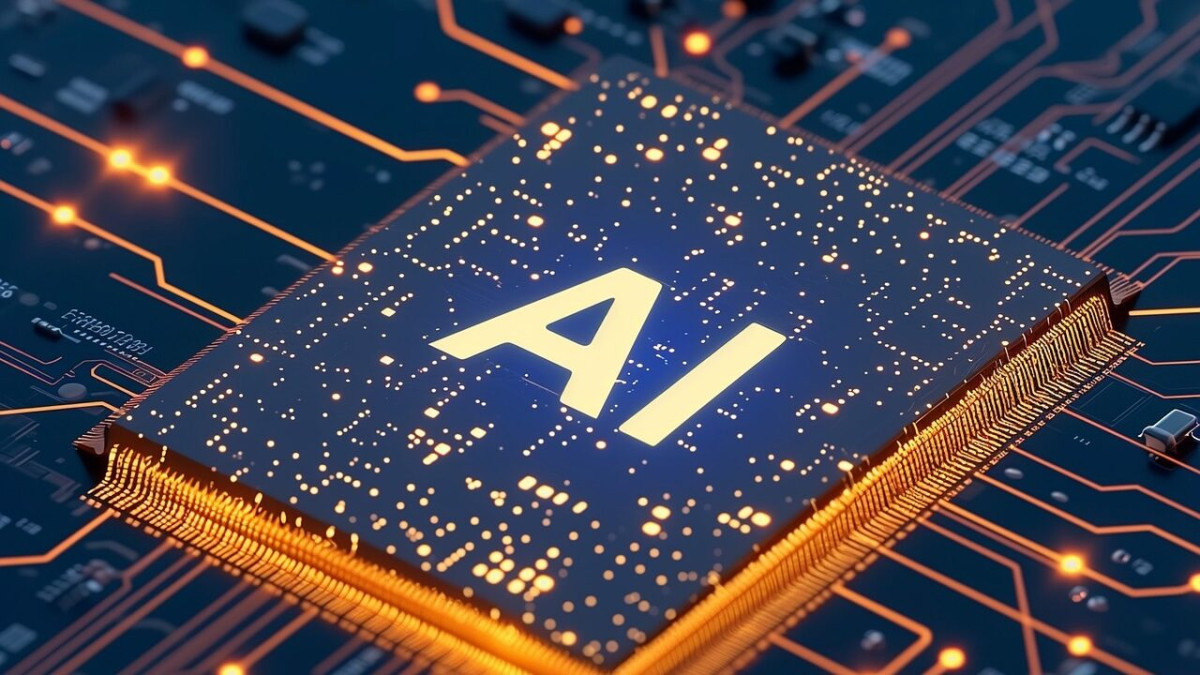
The artificial intelligence industry is entering a new phase of competition, one that extends far beyond the development of advanced language models and neural networks. Companies are now engaged in an intense struggle to secure the computational infrastructure necessary to train and deploy their AI systems. In this context, Anthropic has reportedly begun exploring the possibility of designing and manufacturing its own specialized processors to power Claude, its flagship conversational AI platform, along with its broader suite of artificial intelligence technologies. This strategic consideration emerges at a critical moment in the global AI sector. The exponential growth in model complexity and capability has created unprecedented demand for high-performance computing resources. Sources familiar with the matter indicate that Anthropic is conducting feasibility studies to determine whether developing proprietary semiconductor technology could reduce its dependence on external hardware vendors while ensuring reliable access to the computing power required for its operations.
the supply chain risk classification while simultaneously inviting Anthropic into a coalition to fix the very problem it supposedly created is some kind of regulatory pretzel logic.
My only concern would be the velvet getting crushed while sitting. Anyone have tips for maintaining velvet shoes?