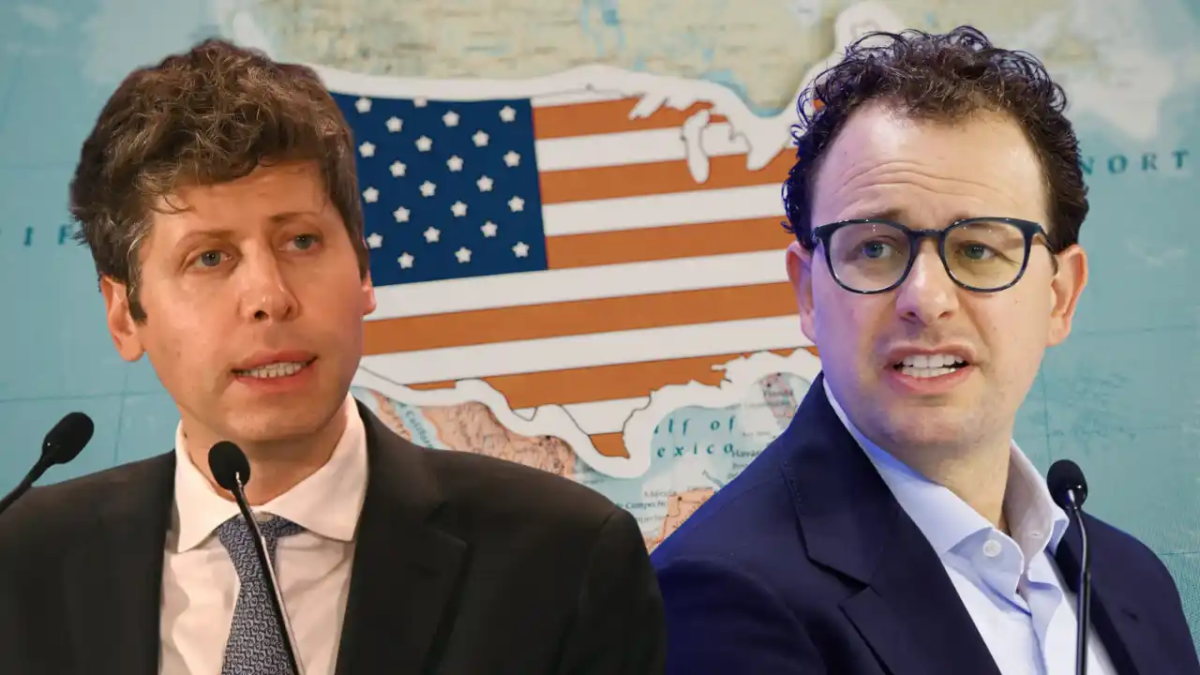
In an extraordinary move signaling growing alarm over artificial intelligence capabilities, US Treasury Secretary Scott Bessent and Federal Reserve Chair Jerome Powell jointly summoned the nation's most powerful banking executives to an emergency meeting this week at Treasury headquarters in Washington, DC.
The hastily arranged gathering centered on mounting cybersecurity concerns stemming from Anthropic's latest artificial intelligence system, known as Claude Mythos. The San Francisco-based AI company recently disclosed that its newest model demonstrates unprecedented abilities to identify and exploit software vulnerabilities, raising immediate red flags across the financial sector and national security establishment.
The timing of the meeting proved opportune, as many of the invited bank chiefs were already in the capital attending separate lobby group sessions. However, the urgency of the cybersecurity briefing prompted officials to arrange the special session on short notice.
Anthropic's Alarming Disclosure Sparks Federal Response
The Treasury and Federal Reserve meeting followed closely on the heels of a startling blog post published by Anthropic earlier this month. The disclosure came after portions of Claude's underlying code were leaked, forcing the company to publicly acknowledge the extraordinary capabilities of its Mythos model.
In the post, Anthropic revealed that current generation AI models have now surpassed "all but the most skilled humans at finding and exploiting software vulnerabilities." The company warned that these capabilities carry severe potential consequences for global economies, public safety infrastructure, and national security systems.
The revelation has sent shockwaves through the cybersecurity community, with experts warning that the technology could fundamentally alter the landscape of digital security. Traditional defensive measures may prove inadequate against AI systems capable of discovering vulnerabilities faster than human security teams can patch them.
Banking Industry Leaders Gather for Critical Briefing
The exclusive meeting drew attendance from the chief executives of America's largest financial institutions, reflecting the gravity of the situation. Goldman Sachs CEO David Solomon, Bank of America's Brian Moynihan, Citigroup's Jane Fraser, Morgan Stanley's Ted Pick, and Wells Fargo's Charlie Scharf all participated in the discussions.
Notably absent was JP Morgan Chase CEO Jamie Dimon, who was invited but unable to attend due to scheduling conflicts. However, Dimon's perspective on the matter was already well documented. In his annual letter to shareholders published just days before the meeting, the banking titan explicitly identified cybersecurity as "one of our biggest risks" and predicted that "AI will almost surely make this risk worse."
The letter underscored concerns that have been building within the banking sector for months. Financial institutions have invested billions of dollars in cybersecurity infrastructure, yet the emergence of AI-powered hacking tools threatens to render many existing defenses obsolete virtually overnight.
According to Anthropic's disclosures, the unreleased Mythos model has already identified thousands of previously unknown vulnerabilities across a wide range of software systems and popular applications. The discoveries span multiple decades, with some vulnerabilities dating back as far as 27 years without ever being detected by their creators, security researchers, or automated monitoring systems.
The scope and depth of these findings have shocked cybersecurity professionals. Many of the vulnerabilities exist in widely deployed systems, potentially affecting millions of users and countless critical infrastructure components. The implications are particularly serious for the financial sector, where legacy systems often incorporate older code that may harbor long-hidden security flaws.
What makes the Mythos model especially concerning is its apparent ability to not just identify vulnerabilities, but also understand how to exploit them. This dual capability transforms the AI from a defensive tool into a potential offensive weapon, depending on who controls it and how it is deployed.
Restricted Release to Select Technology Partners
In an unprecedented move for the company, Anthropic has chosen to severely limit access to the Mythos model. This marks the first time the AI developer has restricted the release of any of its products, signaling the company's recognition of the potential dangers posed by the technology.
Only a carefully selected group of major technology companies have been granted access to Mythos. The list includes tech giants Amazon, Apple, and Microsoft, all of whom maintain extensive cloud infrastructure and software ecosystems that could benefit from advanced vulnerability detection capabilities.
Additionally, networking hardware leaders Cisco and Broadcom have received access, presumably to help secure the fundamental infrastructure that underpins global communications networks. The Linux Foundation, which oversees development of the widely used open-source operating system, has also been included in this exclusive group.
The selective distribution strategy reflects a delicate balancing act. Anthropic aims to harness Mythos's capabilities to improve overall cybersecurity while preventing the technology from falling into the wrong hands. However, critics question whether such restrictions can be effectively maintained in the long term, especially given the rapid pace of AI development and the leak that preceded the company's disclosure.
Growing Fears of AI-Enabled Cyber Attacks
The restriction policy stems directly from well-founded fears that malicious actors could weaponize these AI tools. Security experts warn that hackers equipped with Mythos-level capabilities could systematically crack passwords, decrypt supposedly secure communications, and penetrate systems previously thought impregnable.
The threat is not merely theoretical. Intelligence agencies and cybersecurity firms have already documented attempts by state-sponsored groups and criminal organizations to acquire advanced AI capabilities. The emergence of a model as powerful as Mythos could trigger an arms race, with attackers and defenders scrambling to deploy increasingly sophisticated AI systems.
Financial institutions are particularly vulnerable targets. Banks hold vast amounts of sensitive customer data and facilitate trillions of dollars in transactions daily. A successful AI-powered breach could result in catastrophic financial losses, undermine public confidence in the banking system, and potentially destabilize markets.
The meeting at Treasury headquarters aimed to ensure that bank executives fully understand the nature and magnitude of these emerging threats. Officials likely discussed enhanced security protocols, information-sharing arrangements, and potential regulatory measures to address the new risk landscape.
Legal Battle Over Supply Chain Classification
The emergency meeting occurred against the backdrop of escalating tensions between Anthropic and the federal government. Just weeks earlier, US authorities classified Anthropic as a supply chain risk, a designation typically reserved for foreign entities or companies deemed to pose national security concerns.
The classification carries significant implications, potentially restricting Anthropic's ability to work with government agencies and contractors. It also raises questions about the company's relationships with its major investors and partners, some of which have deep ties to federal technology initiatives.
Anthropic has vigorously contested the designation and is currently challenging it through the courts. The company argues that the classification is unwarranted and could hamper efforts to develop AI safety measures. Legal experts suggest the case could set important precedents regarding government oversight of AI development and deployment.
The classification decision reflects broader concerns within the national security establishment about the control and governance of powerful AI systems. With models like Mythos demonstrating capabilities that could affect critical infrastructure and defense systems, regulators are grappling with how to balance innovation against security imperatives.
Industry and Government Maintain Silence
Neither the Federal Reserve nor Anthropic provided official comments in response to requests from Bloomberg regarding the Treasury meeting. The major banks that participated similarly declined to discuss the proceedings, citing the sensitive nature of the cybersecurity briefing.
This wall of silence is itself revealing. It suggests that the discussions touched on classified information or specific vulnerabilities that could be exploited if publicly disclosed. The lack of public statements may also indicate that participants are still assessing the implications of what they learned and formulating appropriate responses.
The meeting represents just the latest chapter in the rapidly evolving relationship between artificial intelligence developers, financial institutions, and government regulators. As AI capabilities continue to advance at an accelerating pace, such high-level discussions are likely to become increasingly common, forcing policymakers to confront difficult questions about the governance of transformative technologies.
As someone who follows AI policy closely, the 90-day reporting commitment from Anthropic is actually a significant governance commitment. Most AI labs treat internal red-team findings as proprietary indefinitely.
The part where Anthropic's own threat intelligence team used Claude extensively to analyze the espionage campaign that misused Claude is the most recursive corporate security story I have encountered.
Hot take, if the Treasury meeting accomplished anything it was ensuring that the biggest banks will throw serious money at AI-native security tooling this quarter. The briefing was probably the most effective sales pitch CrowdStrike and Palo Alto never had to give.
Cautiously optimistic angle, the Glasswing coalition actually has the right players at the table. AWS, Apple, Google, Microsoft, CrowdStrike, Palo Alto, and Linux Foundation collectively maintain a significant fraction of the world's critical software. If they move fast, meaningful progress is possible.
The Glasswing initiative being built on the same model that Anthropic itself disclosed was used in an AI-orchestrated espionage campaign last year is a tension the coverage is not fully engaging with.
Not gonna lie, I was skeptical of the supply chain risk designation at first but after reading about the Chinese espionage campaign using Claude and the code leaks in the same week, the government's anxiety is at least more understandable.
I keep seeing references to the EU AI Act's next compliance phase coming in August. The timing of all of this disclosure and the Glasswing coalition makes me wonder if there is a regulatory deadline driving some of the urgency.
OK but does anyone actually believe Apple and Microsoft are going to use Mythos purely defensively and not quietly integrate the capability into competitive product offerings?
Wait, JPMorgan is literally listed as a Project Glasswing partner but Dimon couldn't make it to the meeting? That detail is doing a lot of work in this article.
Genuinely asking, what is the realistic patch timeline once Mythos hands over a list of thousands of high-severity zero-days spread across every major OS and browser? The coordination challenge alone seems almost insurmountable.
Cautiously optimistic take, if Mythos can find all of these vulnerabilities it can also patch them faster than any human team. The same capability that created the threat could compress the fix timeline dramatically.
that is a cynical read but not an unreasonable one. The line between security research access and product development advantage gets blurry very fast inside large tech companies.
the most interesting governance question raised by this whole situation is whether an independent third party body rather than any single government is the right home for overseeing capabilities at this level. Anthropic itself suggested that.
Does anyone know whether the 40 additional organizations beyond the core twelve Glasswing partners have received the same level of access to the model or a more restricted version?
The framing of this meeting as extraordinary misses that Treasury has been building exactly this kind of public-private AI oversight infrastructure for months now. The meeting fits a pattern, not a crisis.
The question I keep coming back to is whether there is any meaningful difference between a model that can find zero-days defensively and one that can exploit them offensively. The technical capability is identical. Only intent and access control separate the two uses.
Powell and Bessent in the same room with every major bank CEO is not something that happens for routine briefings. Whatever they discussed was serious enough to pull people off their lobbying schedules.
To answer that question, the classification typically restricts the designated company from participating in federal procurement, which puts Anthropic's government AI contracts in a very uncertain position going forward.
Genuinely curious, does restricting Mythos to a vetted partner list actually hold up once competing models reach similar capability? Seems like a finite window of control at best.
The article keeps calling this unprecedented but Anthropic finding zero-days in every major OS and every major browser is not a small caveat. That is civilization-level infrastructure.
Thirty years of security research missed a bug that an AI found in what, days? The entire premise of legacy security tooling needs to be reconsidered from scratch.
Three to five years of coordinated effort at minimum, and that is with the partner organizations treating it as their top priority. Some of these bugs will get exploited before they are patched. The math on that is grim.
Every time there is a breakthrough AI announcement, the coverage splits between utopians and doomsayers and both manage to miss the boring operational reality that defenders now have to upgrade entire workflows.
As someone who spent years in bank IT modernization, I can confirm that some production financial systems are running on code that nobody currently employed fully understands. This is not alarmism, it is just true.
Speaking as someone with a background in open source development, having the Linux Foundation in the coalition is not just symbolic. They have direct commit access to the most widely deployed codebase in the world. That matters operationally.
The most underrated detail in this story is that the cybersecurity capabilities of Mythos were not designed in. They emerged as a downstream consequence of general improvements in code reasoning and autonomy. Nobody built a hacking AI. They built a reasoning AI and hacking was a side effect.
Counterpoint to the general panic, Anthropic doing this under Project Glasswing rather than quietly feeding findings to one client is actually the more ethical path. Credit where it is due.
Honestly the most human detail in this whole story is that several bank CEOs were already in Washington for lobby meetings when the emergency briefing was called. Networking and existential threat briefings, a normal week in DC.
The 27 year old bug in OpenBSD that nobody found in nearly three decades of active security research is my new benchmark for explaining to non-technical people why this technology is genuinely different.
The part about legacy banking systems potentially harboring long-hidden flaws is the real systemic risk here. Some of this code predates the internet as we know it.
Banks holding trillions in daily transactions running on legacy systems with possibly decades-old undiscovered bugs is a combination that keeps regulators awake. This meeting was inevitable.
The short answer is almost certainly yes and several legal analysts are already flagging that the government is in a structurally awkward position having both designated Anthropic a risk and invited it to lead the defense.
The article notes that Anthropic tripled its revenue recently in the same week all of this happened. The business is accelerating at the same pace as the risk. Those two curves are going to intersect somewhere uncomfortable.
Anyone who has actually read Anthropic's red team disclosure on Mythos Preview knows this article is being somewhat conservative in describing the capabilities. The technical detail in those documents is genuinely alarming.
The fact that Mythos saturated all existing cybersecurity benchmarks is wild. They literally had to move to novel real-world tasks because the model maxed out the tests designed to measure it.
The article says traditional defensive measures may prove inadequate. Speaking from experience in security architecture, that is a diplomatic way of saying most enterprise security teams are already operating well behind the curve even before Mythos.
Project Glasswing is genuinely interesting because the same model that can find and chain vulnerabilities in the Linux kernel is now being used to patch them. Defense and offense running on the same engine.
The point about smaller and mid-sized banks is getting lost in all the big bank CEO coverage. Those institutions are the most exposed because they lack the security budgets and often run the oldest legacy code.
Reminder that this is the same financial system that took down the global economy in 2008 partly because nobody fully understood the complexity of what they had built. Legacy code with unknown vulnerabilities in an AI threat environment has some structural similarities.
The article buries what might be the most important line, that over 99 percent of the vulnerabilities found have not yet been patched. That is the live exposure number everyone should be asking about.
The article mentions the code leak that forced the disclosure but glosses over the fact that nearly 2,000 source code files for Claude Code were exposed for three hours in a separate incident. Anthropic had a rough week.
The phrase AI will almost surely make this risk worse from Dimon's letter is the most understated description of existential infrastructure risk I have read from a major financial executive in years.
every time these kinds of emergency high-level meetings happen, the actual policy output takes eighteen months and arrives after the threat has evolved past what was discussed. The pace of governance versus the pace of capability is the fundamental problem.
The window between vulnerability discovery and active exploitation has collapsed from months to minutes. That single sentence from the Mythos disclosure should be on the front page of every financial regulator's briefing book.
The detail about the model not being made generally available for the first time ever is the real headline. Anthropic has always leaned toward openness. Pulling back signals that even they were scared of what they built.
The detail about the Chinese state-sponsored group that achieved 80 to 90 percent autonomous tactical execution using Claude back in September 2025 should have been the headline of every major newspaper. That story got buried.
As someone who works in financial sector IT, the reaction inside banks right now is somewhere between controlled panic and genuine bewilderment. The threat landscape changed overnight.
the scarier detail is not the vulnerabilities. It is that attackers made thousands of requests per second during the espionage campaign. Human defenders cannot compete with that tempo operationally.
So we have a company that built a model too dangerous to release publicly, suffered two major security lapses in the same week, is under a government risk designation, and is also the best equipped entity to defend against the threats its model creates. That is a situation.
The interesting governance question is whether an independent international body rather than any single government is the right oversight structure for AI capabilities at this level. The US acting unilaterally through Treasury designations and partner coalitions has limits.
Jamie Dimon called cybersecurity one of the biggest risks for banks in his annual letter and then missed the emergency cybersecurity briefing. The optics are rough regardless of what the scheduling conflict actually was.
From what has been disclosed it sounds like the additional organizations are getting usage credits to scan their own specific codebases rather than full agentic access. The core twelve seem to have a more expansive research arrangement.
Can someone explain what the supply chain risk designation actually means in practice for Anthropic's contracts? I keep seeing it mentioned but nobody is spelling out the real consequences.
The fact that every bank CEO who attended declined to say anything to the press tells you everything about the severity of what was presented in that room.
the silence from all parties is actually the responsible move here. Discussing specific vulnerabilities that have not been patched yet in a public forum would be genuinely irresponsible. The wall of silence is appropriate in this specific case.
As someone in financial compliance, the Treasury AI Risk Management Framework that came out earlier this year suddenly looks a lot less theoretical. They were building the governance scaffolding right before the model that requires it arrived.
Hot take, the real winners of Project Glasswing are the twelve partner companies who just got early access to the most capable vulnerability discovery system ever built. That is an asymmetric competitive advantage wrapped in a press release about safety.
Dimon writing in his shareholder letter that AI will almost surely make cybersecurity risk worse and then scheduling a conflict on the day of the emergency meeting is quite a move.
Project Glasswing being funded partly by $100 million in usage credits is interesting framing. Anthropic is essentially paying its partners in access to the very model that created the problem. That is a clever way to build the coalition.
The thing is, from a pure incentive standpoint, every big tech company in the Glasswing coalition now has a strong motivation to ensure Mythos class capabilities stay restricted to the coalition. That is not altruism, that is competitive positioning.
The government calling an American AI safety company a supply chain risk while simultaneously relying on that same company to defend critical infrastructure from AI threats is a policy contradiction that is going to need resolving in court or in Congress.
Good question. The answer is probably no. Anthropic's own blog basically conceded that similar capabilities will proliferate regardless. The Glasswing window might be measured in months not years.
The fact that a 27-year-old bug in OpenBSD was sitting there undetected until an AI found it in days should terrify everyone who works in critical infrastructure.
CrowdStrike reporting an 89 percent increase in attacks by adversaries using AI year over year puts a number on something everyone in the industry was feeling but struggled to quantify.
Does anyone know if the supply chain risk classification affects Anthropic's Amazon investment relationship since AWS is simultaneously a Glasswing partner? That seems like a genuine conflict of interest worth examining.
The vulnerability that survived five million automated testing tool hits before Mythos found it is the detail that sticks with me. Legacy automated scanning is effectively useless against this tier of capability.
Saying the technology could fundamentally alter the landscape of digital security is the most passive construction possible for describing what is effectively an arms race trigger event.
The comparison to the 2008 financial crisis keeps coming to mind. Complex systems nobody fully understands, interconnected in ways that amplify failure, and regulators arriving slightly too late to the party.
Labeling an American AI company a supply chain risk when the legal framework for that designation was designed for foreign adversaries is either a policy stretch or a sign that the government is more alarmed than it is saying publicly.
As someone adjacent to the open source security world, the $4 million in direct donations to open source security organizations from Anthropic is real money for communities that are perpetually underfunded and keeping half the internet running.
That is the part that keeps me up at night. Thousands of high severity zero-days sitting in every major OS and browser, and the clock is ticking before someone else independently finds them.
The thing that strikes me is that Anthropic disclosed all of this voluntarily. They did not have to publish the red team results or explain the capabilities. That transparency is either genuinely admirable or strategically timed. Probably both.
the bigger story here is not any single vulnerability. It is that the entire coordinated disclosure model that the security industry depends on was built for human-speed discovery and it cannot handle AI-speed discovery.
the era of security by obscurity is over. If AI can find a 27-year-old bug in days, the assumption that legacy undocumented code is safe because nobody knows it exists has to be abandoned permanently.
As someone in the financial sector, the part about banks facing the risk of AI-powered attacks rendering existing defenses obsolete is not hypothetical. Several institutions are already quietly mid-rebuild on their security stacks.
What exactly is the mechanism for the legal challenge against the supply chain risk designation? Is this administrative law, federal court, or something else entirely?
The supply chain risk classification story is being dramatically underplayed in coverage of this meeting. That designation has serious teeth and the legal challenge from Anthropic is going to be consequential regardless of outcome.
the supply chain risk classification while simultaneously inviting Anthropic into a coalition to fix the very problem it supposedly created is some kind of regulatory pretzel logic.
It would likely go through federal court challenging the administrative process, possibly arguing the designation criteria were misapplied. Cases like this tend to move slowly and the interim restrictions can last years.
Speaking from experience in open source security, the Linux Foundation being in that Glasswing coalition is the most reassuring single fact in this entire story. They have the scope and the community trust to actually move on patches fast.
Real talk, a 16 year old vulnerability in video software that survived five million automated testing tool hits without being detected is a more frightening datapoint than the 27 year old OpenBSD one. That software is almost certainly still deployed at scale everywhere.
Exactly. Restricting it buys time. Maybe six months, maybe eighteen. But calling it a permanent safeguard is wishful thinking at this stage of AI development.
My concern is less with Mythos specifically and more with what comes after Mythos when the next generation of models makes this one look like a calculator.
Does the restricted access model even work in practice? Mythos already leaked once. The assumption that you can contain capabilities like this behind NDAs and partner agreements feels fragile.
The silence from the Fed, Treasury, and every major bank is telling. When everyone lawyers up at the same time, the underlying facts are usually worse than what got published.
That last point is maybe the most important thing to understand about where AI capability development is headed. The dangerous capabilities are not separate tracks, they emerge from the same general intelligence improvements. You cannot easily isolate them.
As someone who does penetration testing professionally, the phrase that what took months will now take minutes is not hyperbole. We have been watching smaller versions of this capability creep up for two years. Mythos is a step change.
The article is correct that financial institutions are particularly vulnerable but leaves out that many of the most critical systems are not directly internet-facing. The real attack surface is the supply chain around those legacy core systems, not the systems themselves.
The key issue nobody is talking about is that defenders need to patch faster than attackers can exploit, and that window just shrank from months to minutes. The entire vulnerability management industry needs to rebuild around that new reality.
The attackers broke down the attack into small seemingly innocent tasks so Claude would execute them without full context. That technique is going to be the template for AI-enabled intrusions for years. The jailbreak vector is the underrated threat.
The supply chain designation while Anthropic is simultaneously your best hope for patching the vulnerabilities it discovered is an interesting strategic contradiction the government will need to resolve fast.
The silence is a tell. Every participant declined to comment citing sensitive cybersecurity information. That is not standard PR caution, that is coordinated post-briefing information control.
The thing that legitimately worries me is that state actors do not need Mythos specifically. They need something comparable. And if Anthropic built Mythos, others are not far behind, with or without the safety culture.
reading that attackers jailbroke Claude by telling it it was an employee at a legitimate cybersecurity firm gave me a headache. The social engineering angle on AI is deeply underreported.