
That is a fair and important distinction. The post is clearly written from a general wellness perspective, not a clinical management one. Those are different use cases.
15
Sign up to see more
SignupAlready a member?
LoginBy continuing, you agree to Sociomix's Terms of Service, Privacy Policy

That is a fair and important distinction. The post is clearly written from a general wellness perspective, not a clinical management one. Those are different use cases.
To the person asking about just watching the anime, I'd say wait. Season two of the anime ends at a certain point in Jinwoo's arc and Ragnarok assumes you know everything including how his story fully resolves. You'd be missing massive context.
Kim Dokja spending over a decade as the only remaining reader of an abandoned web novel before it becomes real is the kind of premise that sounds absurd until you sit with it and realize how quietly devastating it is.
In a manhwa landscape dominated by dungeon crawling, regression narratives, and power fantasies, The Greatest Estate Developer stands out by asking a simple question: what if the protagonist's greatest weapon wasn't a sword or magic system, but civil engineering knowledge? This bizarre premise transforms into one of the most entertaining, genuinely funny, and surprisingly heartfelt series currently running, proving that innovation in storytelling comes from unexpected places. The series takes the familiar isekai setup where a modern person finds themselves in a fantasy world and completely subverts expectations. Instead of becoming an adventurer or hero, protagonist Kim Suho uses his engineering knowledge to revolutionize construction, infrastructure, and economic development. What sounds like it should be boring becomes absolutely captivating through sharp writing, excellent comedic timing, and genuine passion for showing how infrastructure improves lives.

In a medium filled with talented artists producing stunning work, making a claim about any series having the "best" art feels bold. Yet Nano Machine consistently delivers combat sequences so fluid, detailed, and visually innovative that even readers who don't typically care about martial arts stories find themselves captivated by the sheer spectacle on display. The series combines traditional murim aesthetics with futuristic sci-fi elements, creating a unique visual identity that stands apart from typical cultivation manhwa. The nano machine implanted in protagonist Cheon Yeo-Woon's body doesn't just give him power. It becomes a storytelling device that allows the artist to visualize techniques, energy flows, and combat analysis in ways other series can't replicate.

The argument that this becomes standard enterprise infrastructure feels right to me. Video for internal communications used to be a luxury. The cost curve Synthesia created makes it accessible enough to become default.
The regression subgenre has exploded in popularity over the past few years, becoming one of the most beloved narrative frameworks in Korean manhwa. The core premise is deceptively simple: a protagonist dies or fails catastrophically, then returns to an earlier point in time with their memories intact. Armed with future knowledge, they get a second chance to change their fate, save loved ones, gain power, or pursue revenge against those who wronged them. What makes regression stories so compelling is the combination of dramatic irony, strategic satisfaction, and emotional depth they provide. Readers know what the protagonist knows, creating tension when other characters make mistakes we can see coming. We feel smart alongside protagonists who use foreknowledge to outmaneuver enemies. And we experience the emotional weight of carrying memories of futures that haven't happened yet, of people who died who are currently alive, of betrayals that haven't occurred.

The designer-developer relationship has been tense for decades. Designers create pixel-perfect mockups in Figma. Developers translate them to code and somehow everything looks slightly wrong. Fonts don't match. Spacing is inconsistent. Buttons have different corner radiuses. Both sides get frustrated, blame each other, and the product suffers. V0 by Vercel is fixing this problem by generating production-quality React components that look exactly like the designs. The rebrand from v0.dev to v0.app in January 2026 signaled expanded ambitions beyond just UI component generation. Vercel positioned the tool for full-stack web development, though its core strength remains frontend excellence. That strategic clarity matters because trying to be everything often means excelling at nothing. V0 chose to dominate the handoff between design and code before expanding into other areas.

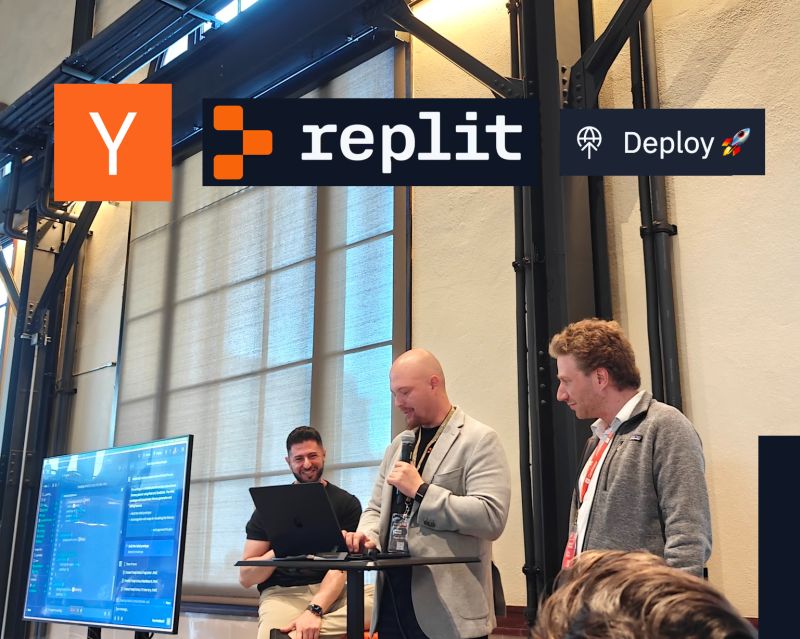
When a company's revenue jumps from $10 million to $100 million in nine months, you pay attention. When that growth comes from an AI agent that builds entire applications autonomously, you realize something fundamental just changed in software development. Replit Agent represents that change, and the numbers prove developers are ready for it. Replit started as a browser-based coding environment for education. Students could write Python or JavaScript without installing anything locally. Teachers loved it because setup time vanished. But the company saw something bigger. If you could run code in the browser, why not let AI write that code? That question led to Agent 3, an AI that doesn't just suggest code completions. It builds entire applications from scratch.
For what it's worth, I tried Codex after Altman bragged about 3 million weekly users and then went straight back to Claude Code within two days. The gap in output quality for complex multi-file projects is still meaningful.
OK but does anyone actually believe Apple and Microsoft are going to use Mythos purely defensively and not quietly integrate the capability into competitive product offerings?
Anyone else notice that Microsoft uses Claude Code internally even though they sell GitHub Copilot? That detail should be a lot bigger news than it is.
Crypto markets in 2025 are genuinely difficult to trade because you're managing Bitcoin spot moves, derivatives pressure, geopolitical news flow, and Fed policy all simultaneously. The complexity is a lot.
She was also in Europe for the first time in three years. That detail alone makes this more than a fashion week appearance to me.
Not sure about the watch, feels a bit too minimal. Maybe a chunkier metal one would add more edge?