
Every manhwa on this list is worth reading but they all share one flaw. Once you've read enough of them the stat screen reveals and level up moments stop feeling surprising because the formula is so predictable.
19
Sign up to see more
SignupAlready a member?
LoginBy continuing, you agree to Sociomix's Terms of Service, Privacy Policy

Every manhwa on this list is worth reading but they all share one flaw. Once you've read enough of them the stat screen reveals and level up moments stop feeling surprising because the formula is so predictable.
The regression subgenre has exploded in popularity over the past few years, becoming one of the most beloved narrative frameworks in Korean manhwa. The core premise is deceptively simple: a protagonist dies or fails catastrophically, then returns to an earlier point in time with their memories intact. Armed with future knowledge, they get a second chance to change their fate, save loved ones, gain power, or pursue revenge against those who wronged them. What makes regression stories so compelling is the combination of dramatic irony, strategic satisfaction, and emotional depth they provide. Readers know what the protagonist knows, creating tension when other characters make mistakes we can see coming. We feel smart alongside protagonists who use foreknowledge to outmaneuver enemies. And we experience the emotional weight of carrying memories of futures that haven't happened yet, of people who died who are currently alive, of betrayals that haven't occurred.

Being honest: I was a Runway skeptic through Gen-1 and Gen-2. Gen-3 started to change my mind. Gen-4.5 is the first version where I am recommending it to clients without qualifications.
Just finished Solo Leveling season 2 of the anime and now I need MORE. Someone please tell me which manhwa to read next.
Forty million dollars in annual recurring revenue. Six months. One browser-based platform. Those numbers would be impressive for any software company, but for Bolt.new, they represent something more significant: the moment when development environments moved permanently into the cloud and never looked back. Traditional software development has always required setup. Install Node.js, configure your environment, manage dependencies, set up local servers, troubleshoot version conflicts. Before writing a single line of code, developers spend hours or even days preparing their machines. Junior developers often spend their first week just getting their environment working. Bolt.new eliminated all of that with WebContainers technology.
The AI video generation race just got a clear winner. Runway Gen-4.5 topped the Video Arena leaderboard with a 1,247 Elo score, surpassing both Google Veo 3 and OpenAI Sora 2. For those unfamiliar with Elo ratings, this is the same system used to rank chess players and competitive games. A higher score means more wins in head-to-head comparisons. When real users compare videos side by side without knowing which AI generated them, they consistently choose Runway's output. Runway didn't start as an enterprise video tool. It began as a playground for artists and filmmakers who wanted to experiment with AI-generated visuals. The early versions produced fascinating but inconsistent results. Sometimes you'd get stunning cinematic footage. Other times you'd get distorted motion and unrealistic physics. Gen-4.5 changed that equation by achieving breakthrough consistency in motion quality and physical accuracy.

The comparison to WeChat as a super app is interesting but incomplete. WeChat's dominance came from geography and regulatory protection in a single market. Meta is trying to pull off a similar integration across dozens of markets with radically different regulatory environments. That is a fundamentally harder problem.
Anthropic would still need TSMC or Samsung to actually manufacture whatever they design. Custom chip design and custom chip manufacturing are completely different things. The article covers this but it gets lost in the broader narrative.
This whole story is really about the fact that the AI industry is maturing. The early phase was about who could build the best models. The current phase is about who controls the infrastructure those models run on. These are very different competitions.
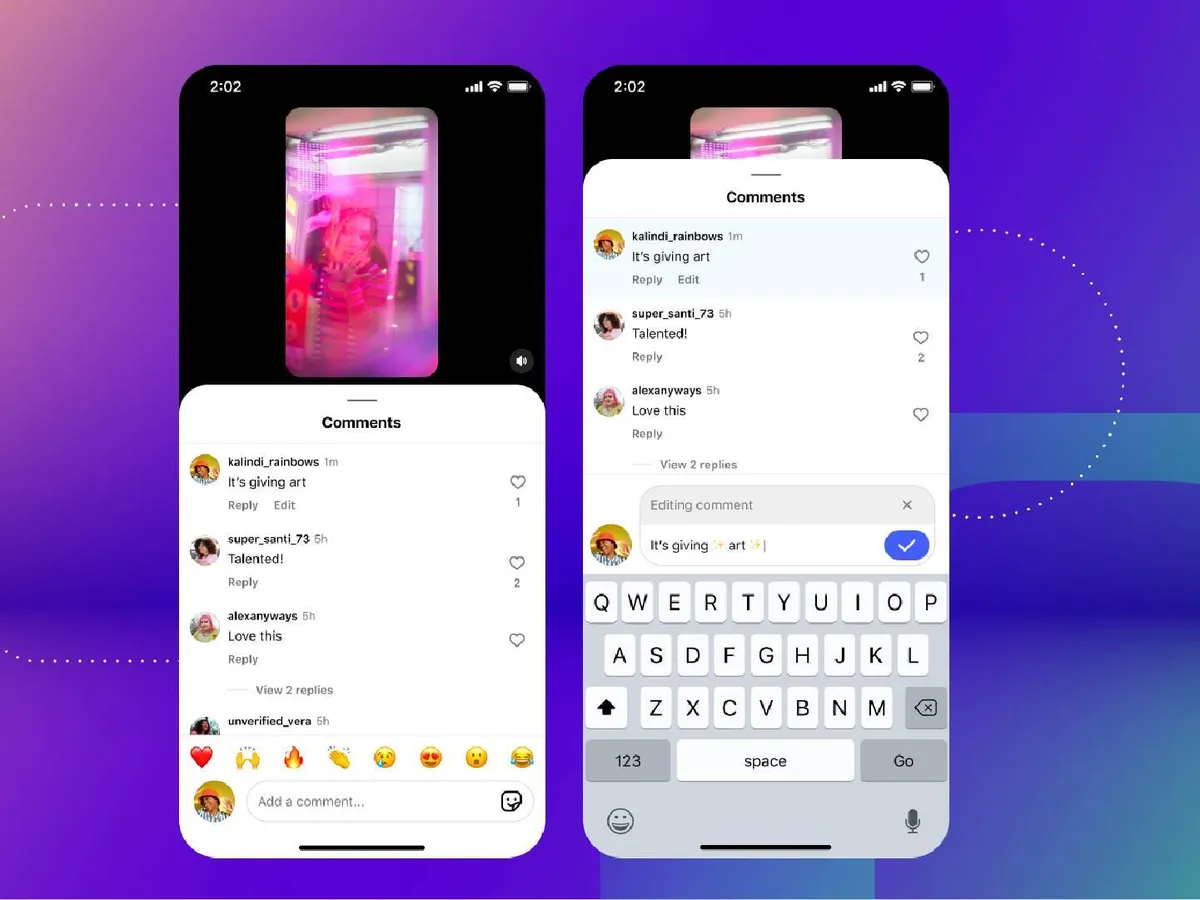
Instagram has rolled out a small but long overdue feature that users have been asking for years. You can now edit your comments after posting them. This simple change solves a very real frustration. Until now, fixing even the smallest typo meant deleting your comment and writing it all over again. That friction is finally gone. But there is a boundary. You get a 15 minute window after posting to make edits. Within that time, you can update your comment as many times as you want. There is also a layer of transparency built in. Once a comment is edited, others will be able to see that it has been modified. However, unlike platforms such as iMessage, Instagram does not show the edit history. What was originally written stays hidden.
The article does a good job laying out the challenges but I think it undersells how much the competitive landscape has already shifted. It is not just Anthropic exploring this. Basically every company with sufficient scale is moving in this direction simultaneously.
15 minutes is actually plenty of time to catch a typo. If you have not noticed your mistake within 15 minutes you probably were not going to notice it at all.
Meta has just had one of its most important AI moments yet and the early signals are hard to ignore. Following the launch of its newest AI model Muse Spark, the company’s standalone Meta AI app surged dramatically in popularity, hinting at a much larger shift that is beginning to take shape. The release is particularly significant because it marks the first major AI model rollout under Alexandr Wang, who joined Meta to reboot its AI strategy. This is not just another incremental update. It represents a more aggressive and focused push into the AI race. According to data from Appfigures, Meta AI jumped from number 57 to number 5 on the U.S. App Store within a day of the launch. That kind of movement rarely happens without a strong underlying pull from users. It signals not curiosity but intent.
I'd totally rock this with a French tuck and maybe add a belt with some silver hardware to match those sunnies